Published: 16 June 2026. The English Chronicle Desk. The English Chronicle Online.
Political Analysis & Current Affairs
The administration of Donald Trump has initiated a comprehensive, institutional assault on the voting infrastructure of the United States. This aggressive operational campaign leverages lawsuits from the Department of Justice and intensive federal investigations. It also relies on sweeping executive actions specifically tailored to curtail access to postal balloting systems. Leading constitutional experts and veteran election administrators describe these developments as an coordinated attempt to restrict fundamental democratic participation. The entire federal initiative closely mirrors the president’s persistent, unsubstantiated assertions regarding his defeat during the historic presidential contest of four years ago. This coordinated strategy represents a profound structural shift in how federal law enforcement interacts with local democratic systems.
Since commencing his second term in office, Trump has systematically placed numerous election deniers within vital national law enforcement institutions. These individuals now occupy influential administrative roles throughout the Justice Department and the Federal Bureau of Investigation. Their presence has shifted organizational priorities toward the aggressive pursuit of long-discredited claims of widespread electoral malfeasance. Observers warn that these targeted federal actions serve to intimidate local election workers across the country. The pressure is felt most acutely within key swing states that voted against Trump during the previous cycle. This systemic installation of loyalists has effectively repurposed federal civil rights apparatuses into instruments of intense political pressure. The resulting atmosphere has caused widespread anxiety among the nonpartisan civil servants who manage local polling operations.
The Department of Justice has launched numerous legal challenges demanding highly confidential voter information from thirty separate states. This federal demand persists despite clear constitutional frameworks designating state governments as the primary managers of elections. Concurrently, the Federal Bureau of Investigation has initiated sweeping inquiries into thoroughly debunked allegations of fraud. These investigations focus heavily on Wisconsin, Georgia, and other critical territories that swung the previous election. This aggressive centralization of electoral authority directly challenges the traditional American model of decentralized voting administration. By demanding comprehensive state records, the federal government appears to be overstepping its statutory boundaries. Legal analysts suggest these maneuvers are designed to create a pretext for invalidating future adverse outcomes.
+----------------------------------------------------------------------------+
|                   TRUMP ADMINISTRATION VOTING INITIATIVES                  |
+----------------------------------------------------------------------------+
|  • DoJ Lawsuits: Demanding sensitive voter data from 30 states.            |
|  • FBI Investigations: Probing debunked fraud claims in key swing states.  |
|  • Postal Mandate: Authorising the USPS to restrict mail-in ballots.      |
|  • Personnel Shifts: Installing 2020 election deniers in key agencies.     |
+----------------------------------------------------------------------------+
In late March of this year, the president issued a far-reaching executive order. This directive severely restricts national mail-in voting procedures, a system Trump has consistently targeted without evidence. The executive mandate grants the United States Postal Service unprecedented administrative powers to draft restrictive distribution guidelines. These new rules are explicitly designed to make the utilization of postal ballots significantly more difficult. This specific mechanism directly impacts millions of citizens who rely on mail voting for accessibility reasons. The administration’s multi-front campaign continues despite robust statutory protections empowering states to govern their own procedures. The overreach has triggered immediate legal retaliation from localized authorities and prominent civil rights organizations.
Early April witnessed immediate pushback as officials from twenty-three democratic states initiated major litigation. This legal coalition, which includes California and Washington DC, seeks to block the controversial postal order. Their lawsuit contends the executive action represents an unconstitutional infringement upon state sovereignty regarding election management. Attorneys general argue that the federal executive branch lacks the jurisdiction to dictate mail delivery conditions for ballots. This legal battle highlights the growing constitutional crisis between federal mandates and state-level statutory authority. The outcome of this litigation will likely reshape the balance of power in American elections. Meanwhile, the administration shows no signs of pausing its restrictive operational rollout ahead of autumn.
This aggressive restructuring of national voting procedures arrives amidst deep anxiety within the ruling Republican party. Trump and his congressional allies frequently express concern regarding the upcoming midterms scheduled for November. Internal polling suggests that the Democratic party could realistically regain legislative control of the House. There are parallel fears that the Senate might also shift back to a opposition majority. Such an outcome would drastically constrain the president’s domestic policy agenda during his second term. Furthermore, a hostile legislature would elevate the distinct political possibility of subsequent impeachment proceedings. The fear of legislative oversight appears to be a primary catalyst for the current voting restrictions.
During a private legislative retreat in January, Trump explicitly articulated these high stakes to Republican lawmakers. He emphasized that the midterm results would directly dictate the long-term survival of his second administration. The president warned that a opposition victory would inevitably result in immediate investigations into his cabinet. “You must win the midterms because they will find a reason to impeach me,” Trump stated. This candid admission confirms that the current push to alter voting rules is linked to political survival. The strategy focuses on suppressing opposition turnout in volatile districts to secure a legislative majority. Consequently, federal agencies are being utilized to achieve specific legislative outcomes for the ruling party.
Former federal officials possessing extensive experience in voting law remain fiercely critical of these recent maneuvers. They argue that using unverified fraud allegations to justify federal intervention undermines the rule of law. Eileen O’Connor, a distinguished senior counsel with the nonpartisan Brennan Center, has spoken out extensively. Having spent nearly a decade within the civil rights division of the Justice Department, her critique carries weight. O’Connor maintains that the department possesses no legal authority to accumulate comprehensive state voter rolls. These sensitive databases contain highly private information, including social security numbers and driver’s license details. The systematic collection of this data represents an unprecedented breach of privacy for millions of citizens.
+----------------------------------------------------------------------------+
|                       LEGAL AND INSTITUTIONAL STATUS                       |
+----------------------------------------------------------------------------+
|  • Active DoJ Lawsuits Against States: 30                                  |
|  • Federal Court Decisions to Date:    8 Losses for DoJ / 0 Wins           |
|  • Core Legal Conflict: Federal Executive Order vs State Sovereign Power    |
+----------------------------------------------------------------------------+
The Justice Department currently maintains thirty active lawsuits against various state governments to force record turnover. Thus far, federal courts have issued rulings in eight of these highly contentious registry cases. In every single instance, the department has failed to convince presiding judges of their legal standing. O’Connor emphasizes that these lawsuits represent merely one component of a broader, more disruptive administrative campaign. The current administration has repeatedly targeted individual local election officials with intense federal scrutiny and pressure. Furthermore, the White House has consistently elevated prominent conspiracy theorists to senior positions within law enforcement. The president has also pardoned individuals involved in previous attempts to disrupt the peaceful transfer of power.
The administration has additionally raised the highly controversial prospect of deploying immigration officers to polling stations. However, established federal statutes explicitly forbid military or civil officers from interfering with active voting spaces. Armed federal agents are legally prohibited from appearing at any location where an election is occurring. Larry Noble, a former general counsel at the Federal Election Commission, has expressed deep alarm. He notes that the president continues to rely on fabricated narratives regarding non-citizen voting activities. This phenomenon remains exceptionally rare and is already strictly prohibited under existing national statutory frameworks. Noble emphasizes that numerous comprehensive audits have completely failed to uncover any meaningful fraud historically.
Noble observes that the administration operates under the assumption that any opposition victory confirms electoral manipulation. This perspective is reinforced by the president’s public statements suggesting his opponents can only win through cheating. Such rhetoric has not deterred senior officials at the Justice Department from defending their current investigations. Acting Attorney General Todd Blanche recently asserted to national broadcasters that extensive evidence of past manipulation exists. However, the department has repeatedly declined to produce this alleged evidence within formal court proceedings. This discrepancy highlights the purely political nature of the administration’s ongoing law enforcement initiatives.
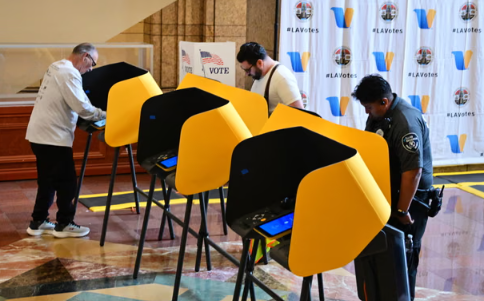
In a clear sign of potential future challenges, Trump recently attacked the California primary results. The president alleged widespread manipulation after a backed mayoral candidate lost an early lead in Los Angeles. Local experts note that the state’s thorough ballot verification processes naturally require extended tabulation periods. Trump quickly utilized social media to label the jurisdiction as equivalent to a third-world nation. He subsequently claimed without evidence that the local election was under active federal criminal investigation. The Justice Department then deployed a special federal prosecutor to monitor ongoing ballot processing within California. This intervention represents a clear escalation in the administration’s willingness to interfere with local tallies.
The structural transformation of the Justice Department’s voting section became evident shortly after the 2025 inauguration. The specialized unit was thoroughly reorganized to align directly with the president’s specific views on past elections. Long-serving career attorneys were systematically pushed out, reducing the core legal staff by over fifty percent. To replace these nonpartisan experts, the department recruited attorneys known for challenging previous election outcomes. In April, the administration selected an outspoken former congressman to spearhead a national anti-fraud task force. This individual had previously spent only five months serving as a regional federal prosecutor before promotion.
+----------------------------------------------------------------------------+
|                    STRUCTURAL CHANGES TO THE DOJ VOTING SECTION            |
+----------------------------------------------------------------------------+
|  BEFORE 2025:                                                              |
|  [30 Career Lawyers] ---> Priority: Enforcing & expanding voter protection |
|                                                                            |
|  AFTER 2025:                                                               |
|  [15 Loyalists]      ---> Priority: Demanding data & restricting access   |
+----------------------------------------------------------------------------+
Independent investigative journalists have revealed further partisan appointments within the senior ranks of the voting section. A prominent attorney involved in previous litigation to overturn certified results was quietly hired as senior counsel. Court documents indicate this attorney immediately assumed control of federal lawsuits targeting localized voting records in Georgia. Additional reviews indicate that the current acting head of the section maintains deep ties to alternative election groups. These specific personnel adjustments mark a total departure from the historical mission of protecting minority voting access. The department now routinely defends redistricting plans that provide distinct structural advantages to the ruling party.
Simultaneously, the Federal Bureau of Investigation has drastically increased its surveillance of regional election offices. Federal agents have conducted highly public raids on county voting hubs, seizing sensitive ballot images and data. In May, these intrusive investigations were expanded to target municipal election administrators across the state of Wisconsin. Federal agents have reportedly conducted unannounced home visits to interview current and former local election employees. These actions have drawn sharp criticism for creating a climate of fear among local civil servants. Experts warn that these tactics could cause a mass resignation of experienced election administrators before autumn.
The controversial March executive order continues to generate immense legal friction and widespread public concern across America. The directive effectively commands the postal service to determine the legitimacy of individual mail-in ballots. It authorizes the non-delivery of ballots from individuals missing from newly established federal mailing databases. Crucially, the mandate introduces severe criminal penalties for postal workers who deliver ballots to disputed individuals. Voting rights advocates warn that these provisions will create immense operational chaos throughout the delivery network. The Department of Homeland Security has also been ordered to compile alternative citizen databases using incomplete information.
Constitutional experts emphasize that these federal data compilation efforts are inherently unreliable and prone to error. The resulting discrepancies could easily lead to the accidental disenfranchisement of millions of eligible American voters. Several federal courts have already intervened to temporarily block key portions of the administration’s previous voting orders. Specifically, judges have struck down mandates requiring citizens to present physical passports to complete basic registration. Veteran conservative strategists have also expressed deep concern regarding the constitutional legitimacy of these executive overreaches. They reiterate that the American constitution explicitly grants individual states, not the federal government, the power to manage elections.
Related News:
 Saudi Officials Report Zubaidi Flee Before Yemen Peace Talks
 UK Targets in New York Bomb Threat Hoax: Man Jailed
 Gambia Supreme Court Hears Case to Overturn FGM Ban
 Trump targets Iran trade with 25% tariff warning
 US Senate rejects resolution limiting Trump military powers
 Gulf states warn Trump Iran strikes risk wider Middle East war
 Machado Trump medal gesture reshapes Venezuela power struggle
 Geopolitical football: Iran, Trump and the World Cup clash
 Shinzo Abe’s killer receives life sentence in Japan
 China General Under Investigation Amid Leadership Purge
 Philippines ferry disaster leaves 15 dead, dozens missing
 Cambridge Faces Scrutiny Over Arms Investment Transparency
 Concerns rise for Canberra boy amid Iran detention fears
 Ukraine Sends Drone Experts to Defend US Bases in Jordan
 Abramovich Chelsea Sale Cash Faces Jersey Probe
 Yvette Cooper: UK Must Follow Principles, Not US Pressure
 Jury Rules Meta and YouTube Liable for Addictive Design
 The Woman Guarding Earth From the Threat of Asteroids
 Exiled Tycoon Warns of New Russian Attacks on UK Soil
 LA 2028: Millions of Affordable Olympic Tickets Announced
 Trump Slams Europe as Transatlantic Tensions Boil Over
 Inside the Deceptive Machine: A Former Producer Speaks Out
 Spain Faces Backlash Over Xenophobic Chants in Egypt Draw
 A Global Voice For Justice: Stephen Lewis Dies At Age 88
 Hope and Fear as Iranians Flee Across the Turkish Border
 Reform UK Pledges To Halt Visas Over Reparations Demands
 US and Iran Agree to Two-Week Provisional Ceasefire
 Starmer visits Gulf as US and Iran agree ceasefire
 Pakistan Brokers Historic Peace Deal Amid Rising Tensions
 Trump Signals Hope for New Iran Talks as Ceasefire Fades
 US and Iran Pursue Extension of Ceasefire via Pakistan
 Trump’s Islamabad Gamble: The High Stakes of a New Iran Deal
 The General’s Gambit: Pakistan’s New Role in Global Peace
 Mexico, Spain and Brazil call for Cuba dialogue amid crisis
 Pakistan’s Ambitious Bid for Middle East Peace
 Israeli Soldiers Jailed Over Vandalism of Lebanese Statue
 Trump Weighs Sending Afghan Allies to the Congo
 Trump Threatens UK With Big Tariff Over Tech Tax
 Prominent Voices Challenge Palestine Action Ban
 Security Scrutiny After Washington Shooting Incident
 Merz Criticises US Approach in Iran Conflict
 UK Envoy Sparks Controversy Over Special Relationship Claims
 Ukraine Urges UK to Seize Russian Oil Tankers
 US Calls Australia Media Law “Foreign Extortion”
 The Billionaire’s Secretary and the £1m Fraud
 Ukraine strikes Tuapse as oil disaster worsens
 Brewing Tension: Taiwan Baristas Rebrand for World Stage
 Tensions Emerge in Netanyahu-Trump Alliance
 Mission to the World’s Edge: A Heroic Rescue in Tristan
 US and Mexico Face Heatwave as Floods Batter South Africa
 Mexico’s Missing: State Complicity in a Growing Crisis
 French Patient Told Hantavirus Was Just Anxiety
 The Long Way Home: Australia’s High-Stakes Virus Mission
 Putin Signals War End as Russian Momentum Stalls
 Romania’s Judicial Crisis: A System Under Siege
 Lee Lai Makes History with Landmark Stella Prize Victory
 Philippine Senator Flees After Days Under Senate Siege
 Alberta Separatist Bid Blocked by Canadian Court
 Big Tobacco Under Fire Over Controversial New Ad Campaign
 Bolsonaro Son Tape Scandal Sparks Massive Brazil Backlash
 Court Upholds Landmark Win for Transgender Rights
 Liberal Senator Criticises Immigration Rhetoric
 Senate Moves to Restrict Trump’s War Powers on Iran
 ICC Arrest Warrant Threat Sparks West Bank Retaliation
 Taliban Codifies Strict New Marriage and Divorce Legislation
 Tony Abbott Returns as New Liberal Party President
 Tulsi Gabbard exits after turbulent intelligence tenure
 Discontent grows around Putin amid war strain
 Trump Diplomacy Faces Hurdles from Tehran to Tbilisi
 Trump Faces Legal Blow Over Global Tariffs
 Washington Brokerage Sparking Hope Amid Regional Firestorms
 New York Consumer Watchdog Tackles Corporate Lawbreaking
 Global Tech Giants Face Off Against Australia Over Media Levies
 Ukraine Turning the Tide: Zelenskyy Reclaims the Initiative Against Isolated Russia
 Millions in British Charity Funds Linked to Illegal Settlements
 Firearm Fine for Missing Boy’s Grandmother
 Historic Peace Deal Reached Between United States and Iran
 A New Era of Diplomacy Sparks Confusion on the World Stage
 AI to Help Botanists Win the Critical Race Against Extinction
 Battle for Washington: Mayoral Race Braces for Trump