Published: 25 July 2026. The English Chronicle Desk. The English Chronicle Online.
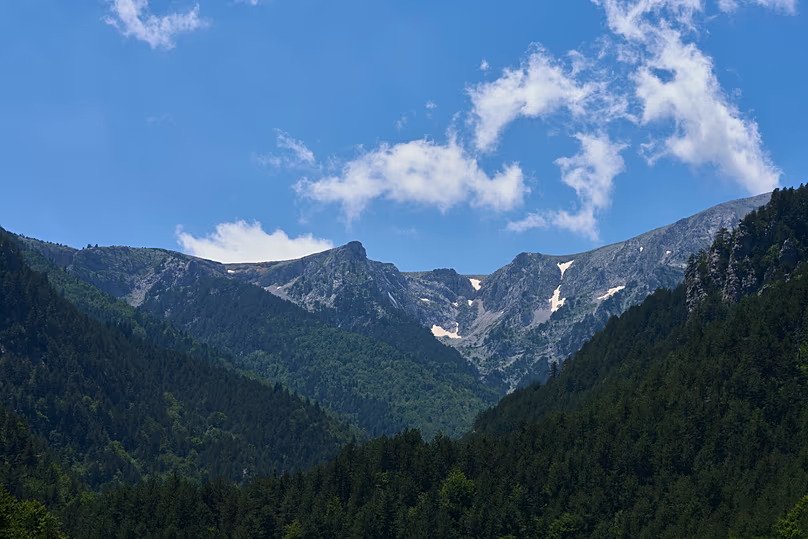
For thousands of years, Mount Olympus has stood as one of the world’s most recognisable symbols of mythology, history and natural beauty. Rising 2,918 metres above sea level in northern Greece, the country’s highest mountain has long been revered as the legendary home of Zeus and the Olympian gods. Now, after more than a decade of determined lobbying, Greece is once again hoping that the iconic peak will receive one of the world’s highest cultural honours by being inscribed on UNESCO’s World Heritage List.
The decision is expected to be considered during the 48th session of UNESCO’s World Heritage Committee in Busan, South Korea, where delegates are reviewing nominations from around the globe. For Greece, the outcome represents far more than international recognition. Officials believe the designation would strengthen long-term conservation efforts while preserving one of Europe’s most treasured landscapes against increasing environmental and tourism pressures.
Among those leading the campaign is Evangelos Geroliolios, the mayor of Dion-Olympus, whose personal connection to the mountain stretches back more than forty years. Geroliolios vividly remembers his first climb to Olympus, describing the experience as unforgettable.
Standing atop the legendary summit where ancient Greeks believed Zeus ruled over the gods, he recalled feeling overwhelmed by a unique combination of awe, history and spiritual significance. That experience, he says, continues to inspire his determination to secure global recognition for the mountain.

According to Geroliolios, Mount Olympus is not simply a natural landmark. It is a place where mythology, biodiversity, archaeology and centuries of cultural tradition come together in an extraordinary landscape unlike anywhere else in the world.
The mountain was first nominated for UNESCO World Heritage status by Greece in 2014. Authorities argued that Olympus possesses exceptional cultural and environmental value deserving of international protection. Despite widespread support, the application has remained under review for years as experts requested additional documentation and clarification regarding conservation measures.
Olympus already enjoys several layers of environmental protection. In 1938, it became Greece’s first national forest, recognising the ecological importance of its remarkable landscape. The region contains dense forests, alpine meadows, deep gorges, waterfalls, dramatic cliffs and freshwater springs, all located within a short distance of the Aegean coastline.
Its exceptional biodiversity led UNESCO to designate Mount Olympus as a Biosphere Reserve in 1981. More recently, a presidential decree elevated the area to national park status in 2021, further strengthening legal protection.
Even with these safeguards, local officials argue that World Heritage status would provide stronger international support, greater technical expertise and additional financial resources needed to preserve the mountain for future generations.
Geroliolios believes Olympus deserves recognition alongside some of humanity’s most celebrated landmarks, including the Great Wall of China, the Egyptian Pyramids and India’s Taj Mahal.
He argues that protecting Olympus is not solely Greece’s responsibility but a global obligation because the mountain represents a shared human heritage that has influenced literature, philosophy, religion and Western civilisation for millennia.
The importance of Mount Olympus extends well beyond mythology. Archaeological discoveries have revealed evidence of ancient religious practices on its lower slopes, including an open-air sanctuary believed to have been dedicated to Zeus. Historians believe the philosopher Plutarch referred to the sanctuary in the second century AD when describing ritual animal sacrifices made in honour of the king of the gods.
Centuries later, Christianity also left its mark on the mountain. Byzantine monasteries, chapels and places of worship were constructed throughout the region, blending ancient traditions with Orthodox religious heritage. Olympus is believed to host the highest-altitude chapel in the Orthodox Christian world, adding another layer to its remarkable cultural significance.
Today, the mountain attracts visitors from across the globe. Climbers, hikers, photographers, wildlife enthusiasts and history lovers travel to the region every year to experience its dramatic scenery and legendary reputation.
The nearby town of Litochoro, situated just five kilometres from stunning Mediterranean beaches, serves as the main gateway to Olympus. The unique combination of mountain landscapes and coastal scenery has made the destination increasingly attractive to international travellers.
Visitor numbers have risen sharply during the past decade. Approximately 500,000 people explored the mountain last year alone, placing growing pressure on its fragile ecosystems.
Officials expect those figures to increase even further following renewed global fascination with ancient Greek mythology. Christopher Nolan’s blockbuster film The Odyssey, released on 17 July, has generated enormous worldwide interest in Homer’s epic poems, with parts of the production filmed in Greece.
While the renewed attention is welcomed by local businesses, conservation experts warn that increased tourism must be carefully managed.
Dimitris Pappas, deputy director of the Olympus National Park management agency, says UNESCO recognition could play a crucial role in balancing tourism with environmental protection.
According to Pappas, additional international funding could support stronger wildfire prevention measures, improve walking trails, restore bridges, enhance visitor facilities and strengthen emergency infrastructure across the mountain.
He identifies climate change as the greatest long-term threat facing Olympus.
Rising temperatures and increasingly severe drought conditions have significantly increased the risk of devastating forest fires across southern Europe in recent years. Wildfires have repeatedly damaged ecosystems throughout Greece, making preventive investment more urgent than ever.
Improved maintenance of hiking routes, expanded firebreaks and better emergency shelters could significantly reduce future risks, he says.
UNESCO World Heritage designation often provides technical expertise alongside financial assistance, enabling countries to better conserve sites of outstanding universal value. It also encourages governments to adopt stricter management plans while raising international awareness about conservation challenges.
Many visitors already believe Olympus deserves the honour.
Among them is Czech tourist Lenka Hotmarova, who described the proposed designation as both justified and long overdue. She believes improved conservation measures would benefit visitors while ensuring the mountain’s extraordinary natural environment remains intact for future generations.
Nevertheless, Greece’s campaign still faces uncertainty.

Reports indicate that advisory bodies from the International Council on Monuments and Sites (ICOMOS) and the International Union for Conservation of Nature (IUCN) have requested further information before recommending full inscription.
Draft documents prepared for the UNESCO meeting suggest the nomination could once again be referred back to Greek authorities for additional work, delaying the country’s ambitions even further.
Despite that possibility, supporters insist their commitment remains unchanged.
Geroliolios acknowledges that Mount Olympus is already experiencing the consequences of growing visitor numbers, warning that its environmental carrying capacity is approaching its practical limits.
Whether or not UNESCO grants World Heritage status this year, he believes stronger conservation measures cannot be delayed.
For Greece, the campaign represents far more than achieving another international title. It is about preserving a landscape that has inspired mythology, religion, literature and civilisation for thousands of years. As UNESCO deliberates in South Korea, the future protection of one of humanity’s most iconic mountains hangs in the balance, while local communities continue to argue that there is no time left to waste.
Related News:
 Chornobyl Still at Risk 40 Years After Disaster
 Two Dead in Adelaide Airport Plane Crash Fire
 Pope Meets Families in Italy Toxic Waste Zone
 Essex valley emerges as rising English wine hub
 Man killed in shark attack on Great Barrier Reef
 Thailand Tightens Visa Rules to Curb Tourist Misbehavior
 England and Norway Fans Turn Miami Into World Cup Carnival
 London Tube Heat Reaches Dangerous Levels
 Italy’s Beach Lunch Ban Sparks Holiday Backlash
 South Africa’s Garden Route Gem Faces Looming Water Crisis
 Hindu Man’s Stand Sparks Hope in India
 Middle East Airspace Crisis Strands Thousands
 EU Biometric Border Checks Delayed for UK Travellers
 Peretz Targets FA Cup Upset Amid War Concerns
 Storm Dave Disrupts Travel but Conditions Set to Ease
 Moldova River Crisis Exposes War’s Hidden Cost
 10 Scenic Stays in Scotland’s Highlands & Islands
 Canadian astronaut French words ease language row
 Athens Mayor Moves to Tackle Overtourism Crisis
 Exploring Italy’s Forgotten Dolomites Beyond Crowds
 RAF Typhoons scrambled amid Russian drone threat near Nato
 Ukraine Urges UK to Seize Russian Oil Tankers
 Escobar’s Hippos May Be Moved to India Zoo
 Older Than Dinosaurs: Secrets of Mayfly Dance Revealed
 Capitalism ‘Suicidal’, Warns Petro at Climate Summit
 Coalition pushes fossil fuel phaseout plan
 Border Chaos: UK Travellers Face Massive EU Delays
 China Fireworks Factory Blast Kills 21 in Hunan
 France Faces Record Presidential Crowded Race Amid Far-Right Surge
 Norway Doubles Down on Oil and Gas for Europe Energy Security
 Bad Weather Threatens Hantavirus Cruise Ship Evacuation
 Search Intensifies for Missing Hiker on WA Bibbulmun Track
 Doomsday Clock Nears Midnight Amid Global Crises
 Tractor Breakdown Tests Lincolnshire Farmers
 Britons Build Emergency Supplies Amid Rising Fears
 Australia Welcomes the Iconic Michelin Guide
 France Quarantines Cruise Ship After Suspected Virus Death
 Sycamore Gap Artwork Chosen After Public Vote
 Trump’s Revenge Drive Deepens GOP Divide
 Farage and Reform UK Reshape British Politics
 Starmer Leadership Under Pressure After Setbacks
 UN Issues Urgent Warning: Imminent Return of El Niño
 Germany Summons Chinese Envoy Over Russian Troop Training
 Le Pen’s Popularity Holds Despite Conviction
 Bryne Backs Haaland Before England World Cup Clash
 Dreyfus Statue Finally Gets Permanent Paris Home
 Teen Charged After Layla Jeffery Found Dead
 UK Schools Struggle as Classrooms Top 40C
 Venezuela Quake Death Toll Surpasses 4,000
 Wildfires Force Mass Evacuations in France And Spain
 Three-Quarters of England’s Riverbanks Still Off Limits
 Powerful 7.7-Magnitude Earthquake Hits Eastern Indonesia
 Is America Ready for an AOC Presidential Run?
 London’s 2026 ‘Great Stink’ Raises Sewer Concerns
 Five Years of Taliban Rule Leave Afghanistan in Crisis
 Wildfires rage across Europe as hundreds arrested in France
 Burnham unveils £65m drought aid for farmers
 Gen Z turns to BirdTok for a gentler digital escape
 BBC to Apologise Over Edited Trump Speech Amid Backlash
 Greene Pushes Epstein Files Amid Trump Fallout
 Zelenskyy Signs Fighter Jet Deal Amid Russian Drone Attacks
 Shadow Fleet at Sea: Europe’s Battle Against Illicit Oil Shipping
 US Suspends Afghan Immigration After White House Shooting
 ‘Extinct’ Antelope Returns to Sahara, Bringing Hope
 Irish Beach Tragedy: Irish Drown at Whitehaven Beach in Australia
 UK and US Drop in Global Corruption Index Rankings
 Canberra Poster Seizure Sparks Free Speech Row
 Jacinda Ardern Move Sparks Kiwi Reflection
 Kelly Wilkinson Inquest Reveals Bail Failure
 Injured Mojtaba Khamenei Elevated as Iran Leader
 The Kill Line: A Shifting Vision of the American Dream
 Battle of Britain Tower to House Tourists and Bats
 Ben Roberts-Smith Denies War Crime Allegations in First Statement
 RFU Backs Borthwick Despite England’s Poor Six Nations
 Trump Rejects Tehran Peace Plan as Regional Truce Crumbles
 Maldives Cave Diving Tragedy Raises Safety Alarm
 Britain’s Crowning Butterfly Takes the Nation by Storm
 Fifa Official Under Investigation Over Hand Gesture Controversy
 Grief and Devotion Amidst the Rubble of Nabatieh
 Houthis Strike Saudi Arabia as Middle East Tensions Rise