Published: 27 July 2026 | The English Chronicle Desk | The English Chronicle Online
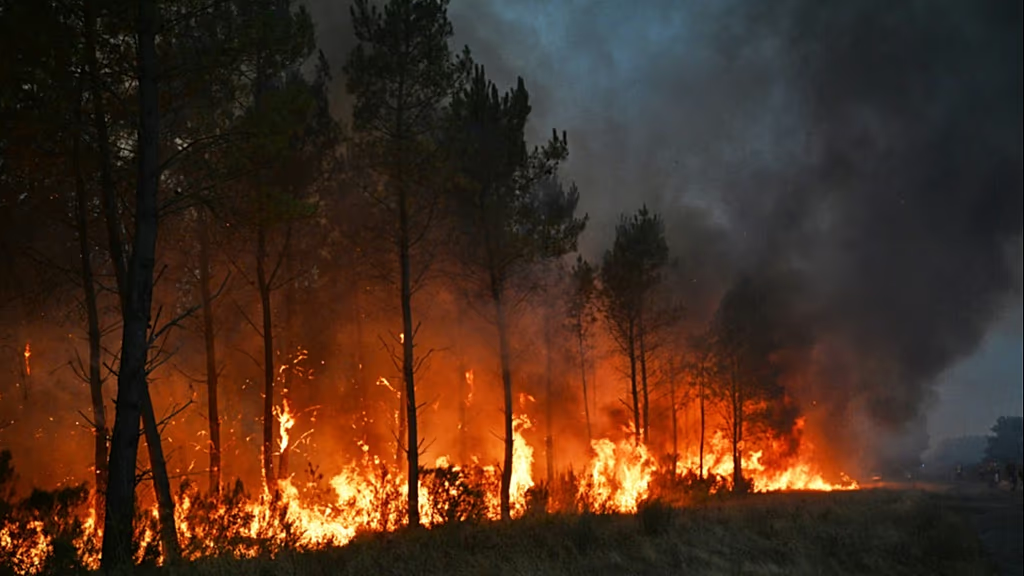
Wildfires burning across southwestern France have advanced toward agricultural land near Bordeaux, threatening farms, vineyards and rural communities as firefighters continue battling one of the region’s most challenging fire emergencies in recent years.
Authorities have intensified firefighting operations after flames spread through dry woodland and scrubland, edging closer to farmland that forms the backbone of one of Europe’s most productive agricultural regions. Thousands of emergency personnel have been deployed to contain the blazes, while residents in vulnerable communities remain on high alert as shifting winds continue to complicate firefighting efforts.
The latest developments have renewed concerns about the growing impact of extreme weather and prolonged drought on France’s agricultural sector. As temperatures remain high and rainfall remains scarce, conditions have created an environment in which even small fires can rapidly develop into large-scale emergencies.

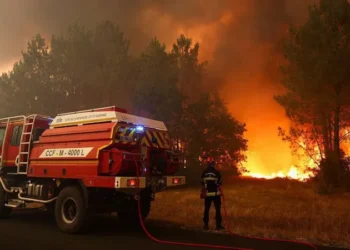
Emergency officials said crews were working around the clock to establish containment lines and prevent flames from reaching cultivated fields, farm buildings and residential areas. Aircraft equipped to drop water and fire retardant have supported firefighters on the ground, while helicopters have monitored the movement of the fires to identify new hotspots.
Although officials reported that some residential communities had been protected through coordinated emergency operations, they warned that the situation remained highly unpredictable.
The region surrounding Bordeaux is internationally renowned for its vineyards and agricultural production. Beyond its globally recognised wine industry, the area produces cereals, vegetables, fruits and livestock, making agriculture a vital contributor to both the regional and national economy.
The spread of wildfires toward farmland has therefore raised concerns extending beyond immediate property damage. Farmers worry about the loss of crops, damage to agricultural infrastructure and the long-term effects that smoke and heat may have on production.
For vineyard owners, wildfire presents a unique challenge.
While vineyards themselves are generally less combustible than dense forests because vines contain relatively high moisture levels and are planted in managed rows, surrounding vegetation, woodland and grasslands can carry flames into agricultural areas.
Smoke exposure has also become an increasing concern within the wine industry. Agricultural specialists note that prolonged exposure to heavy smoke during the growing season can affect grape quality in some circumstances, influencing the flavour and aroma of future wines.
Although experts caution that the extent of smoke impact depends on several factors, vineyard operators are closely monitoring conditions as firefighters continue working nearby.
Many farmers have begun moving agricultural machinery, livestock and equipment away from areas considered at greatest risk. Others have created emergency firebreaks around fields where possible in an effort to reduce the chances of flames spreading onto cultivated land.
Local authorities have advised agricultural workers to remain alert to evacuation notices and avoid taking unnecessary risks while attempting to protect property.
The wildfires come during another difficult summer for much of southern Europe, where prolonged heatwaves have combined with exceptionally dry conditions to create ideal circumstances for large fires.
Scientists have repeatedly warned that climate change is increasing the frequency, intensity and duration of extreme weather events, including wildfires.
While wildfires have always formed part of the natural environment in many Mediterranean regions, experts say recent fire seasons have become increasingly severe as hotter temperatures dry vegetation and extend the period during which fires can spread rapidly.
In southwestern France, several years of recurring wildfire emergencies have prompted authorities to strengthen prevention measures, improve surveillance systems and expand firefighting capabilities.
However, emergency planners acknowledge that increasingly extreme weather continues to test available resources.
Firefighters working near Bordeaux have faced challenging conditions as strong winds repeatedly altered the direction of advancing flames. Such changes can quickly create new danger zones, forcing crews to reposition equipment and adjust their containment strategies.
Ground teams have also worked to protect isolated farmhouses and rural communities located close to forested areas.
Emergency officials said coordination between local authorities, firefighters, police and civil protection agencies has been essential in managing evacuations and protecting vulnerable areas.
Residents have praised emergency crews for their rapid response, although many remain uncertain about when they will be able to return safely to their homes or agricultural properties.
For many farming families, the crisis extends beyond immediate evacuation.
Agriculture depends on carefully timed seasonal activities, and prolonged disruption during critical growing periods can have lasting financial consequences. Delayed harvesting, damaged irrigation systems and destroyed storage facilities can affect production well beyond the wildfire itself.
Agricultural organisations have urged governments to provide assistance where necessary to help affected farmers recover from losses.
The tourism industry has also been affected.
Bordeaux attracts millions of visitors each year who come to experience its vineyards, historic architecture and internationally recognised food and wine culture.
Wildfire warnings, road closures and smoke have disrupted travel plans for many visitors, while some tourist attractions have temporarily closed as a precaution.
Local businesses that rely heavily on summer tourism now face uncertainty during one of their busiest seasons.
Environmental organisations have expressed concern about the long-term ecological consequences of the fires.
Beyond the immediate destruction of forests and wildlife habitats, repeated wildfires can alter soil quality, reduce biodiversity and increase erosion, making landscapes more vulnerable to future environmental damage.
The loss of mature forests also reduces natural carbon storage, adding further pressure to global efforts to address climate change.
Air quality has deteriorated in areas affected by the fires, with smoke travelling considerable distances depending on wind conditions.
Health authorities have advised residents, particularly children, elderly people and those with respiratory illnesses, to minimise outdoor activity during periods of heavy smoke and follow official health guidance.
Hospitals and local health services remain prepared to respond to patients experiencing breathing difficulties linked to smoke exposure.
Authorities continue investigating the causes of individual fire outbreaks.
Although lightning occasionally ignites wildfires, many incidents originate through accidental human activity, including machinery, vehicles, discarded cigarettes or outdoor burning during periods of extreme fire risk.
Officials have urged the public to follow all fire restrictions and immediately report signs of new fires to emergency services.
The French government has reaffirmed its commitment to supporting firefighting operations and strengthening long-term wildfire preparedness.
Recent investments in satellite monitoring, aerial firefighting resources and early-warning systems have improved authorities’ ability to detect and respond to emerging fires.
Nevertheless, climate experts argue that adaptation measures must continue expanding as extreme weather becomes increasingly common.
For communities surrounding Bordeaux, the coming days will be crucial.

Firefighters remain focused on preventing further spread toward farmland and populated areas while hoping for weather conditions that may help slow the advance of the flames.
Rainfall or reduced winds could significantly improve containment efforts, but forecasts suggest continued caution will be necessary.
As France confronts another destructive wildfire season, the fires near Bordeaux illustrate the growing challenge facing agricultural regions across Europe.
Protecting farmland, preserving rural livelihoods and adapting to a changing climate are becoming increasingly interconnected priorities.
For now, firefighters, farmers and local residents remain united in a common effort to protect one of France’s most important agricultural landscapes from a wildfire threat that continues to evolve.
Related News:
 Norway Doubles Down on Oil and Gas for Europe Energy Security
 Deadly Spain Wildfire Leaves 11 Dead, 19 Missing
 Wildfires Threaten Bordeaux as Mass Evacuations Grow
 Millions Left Without Power as Grid Fails
 The ‘Svuota Londra’ Effect: Why the Super-Rich are Swapping Dubai for Milan
 Capitalism ‘Suicidal’, Warns Petro at Climate Summit
 The Great May Meltdown: Europe Braces for a Historic Swing from Arctic Chill to Extreme Late-Spring Heat
 Pope Meets Families in Italy Toxic Waste Zone
 Albania Protests Erupt Over Luxury Resort Plan
 Global Chicken Consumption Soars, UN Reports
 EU Summit to Reaffirm Balkan Membership Goals
 Asia Prepares for Severe El Niño Threat
 Deadly Earthquake Hits Philippines
 Spain Tourism Surges as Travellers Avoid Middle East
 Drone Attacks Overshadow Russia Economic Forum
 Spain Sees Tourism Boom as Travellers Shift Away From Middle East
 African Fishermen Blame Chinese Trawlers for Declining Catches
 Thousands Evacuated in France as Wildfires Spread Across Regions
 France Evacuates Tourist Area as Wildfires Spread
 Wildfires Force Mass Evacuations in France And Spain
 China’s crackdown on civil servant perks sparks economic concerns
 Shein UK Faces Allegations of Shifting Majority of Profits to Singapore to Reduce UK Tax
 Canada Passes Carney’s First Budget in Tight Parliamentary Vote
 EU weighs response amid Greenland tariff crisis with Trump
 EU Says US Ties Have Suffered ‘Big Blow’ After Greenland Crisis
 UK New Car Discounts Near £6,000 as Prices Are Slashed
 Portugal Election Delivers Socialist Win as Far Right Surges
 Snow and Rain Warnings as Cold Snap Continues in the UK
 Eight Skiers Found Dead After California Avalanche
 How Do You Modernise Mango Farming? India’s Growers Urged to Innovate as Climate Change Hits
 Live Nation Sees Strong Ticket Sales as Monopoly Lawsuit Looms
 Storm Hernando: Edinburgh Airport Flights Cancelled in US Travel Chaos
 Louvre Museum Director Resigns Months After High‑Profile Heist
 Bill Gates ‘Took Responsibility’ Over Epstein Ties in Staff Meeting, Foundation Says
 Orbán Accuses Ukraine of Disrupting Oil Supplies to Hungary
 Limited Flights Leave UAE But Disruption Continues Amid Iran Strikes
 Macron Finds ‘Freedom Fries’ Redemption in Iran Crisis
 Study Says Only Two Nations May Survive Nuclear War
 Finland Plans to Lift Decades‑Old Ban on Hosting Nuclear Weapons
 Oil Prices Surge Above $100 Amid Iran War
 Ukraine War Becomes Flashpoint in Hungarian Election
 Oil Price Jumps Despite Deal to Release Record Amount of Reserves
 Trump Threatens Iran With Total Infrastructure Destruction
 Russia: The Unforeseen Winner of the Iran Conflict
 US Senators Slam Ticketmaster Over Sneaky New Fee Hikes
 Oil and Diplomacy: Russian Refineries Burn as Zelenskyy Secures Middle East Shield
 “A Perfect Storm”: UK Small Businesses Face Doubling Energy Bills as Iran War Rattles Markets
 Electric Shock: Australians Buy Record Number of New EVs as Fuel Crisis Bites
 War, Windfalls, and the Carbon Trap: The Iran Conflict’s Brutal Energy Math
 ‘The Soul of Spain’: Politicians Clash Over Renewed Push to Move Picasso’s Guernica
 The Great Chokehold: Why the Strait of Hormuz is the Epicenter of the 2026 Crisis
 Moldova River Crisis Exposes War’s Hidden Cost
 California fireworks blast: murder charges filed in case
 Diplomatic Deadlock: Lebanon Enters High-Stakes Border Talks with ‘No Cards to Play’
 Blockbuster Resurrection: Avengers Reassemble and Top Gun Returns as Studios Tease 2026 Slate
 The Fog of War and the Ticker Tape: Suspicious Trades Rile Washington
 Brinkmanship in Islamabad: Tehran Vows ‘New Battlefield Cards’ as Ceasefire Wanes
 ‘The £100,000 Hammer’: War in Iran Forces UK Businesses to Absorb Historic Fuel Hikes
 ‘A Fragile Calm’: Oil Prices Dip as Trump Extends Iran Ceasefire, But Blockade Holds Firm
 “Industrial-Scale Extraction”: White House Memo Accuses China of Mass AI Theft
 Beyond the Swoosh: Anta Sports Overtakes Rivals to Become Global Top Three
 Ukraine Urges UK to Seize Russian Oil Tankers
 The Silent Scythe: How the Iran War is “Starving” Asian Paddy Fields Before the Harvest
 Ukraine strikes Tuapse as oil disaster worsens
 US to Escort Trapped Ships Through the Strait of Hormuz
 Trump Threatens UN Budget Cuts as US Pushes ‘Trade Over Aid’ Agenda
 US Awaits Iran Reply on New Ceasefire Proposal
 High Street Crisis: Fears Grow Over Post Office Closures
 Oil Markets Face ‘Red Zone’ Threat Amid Iran Crisis
 UN Issues Urgent Warning: Imminent Return of El Niño
 Zelensky Invites Putin to Direct Peace Talks
 Trump Approves $700m Coal Industry Investment

 UK Economy Suffers a Sharp Downturn as Iran Conflict Bites
 Why Extreme Heat Can Cause Trees to Collapse and What Experts Say Can Be Done
 Severn Trent CEO Reward Package Doubled Despite Public Anger
 Bangladesh Balances China Ties as India Relations Improve
 Trump’s New Vision for 250 Years of US Expansion
 Le Pen to Run for President Despite Embezzlement Conviction
 US Unveils Fresh Tariffs on Global Trading Partners