Published: 22 August 2026. The English Chronicle Desk. The English Chronicle Online.
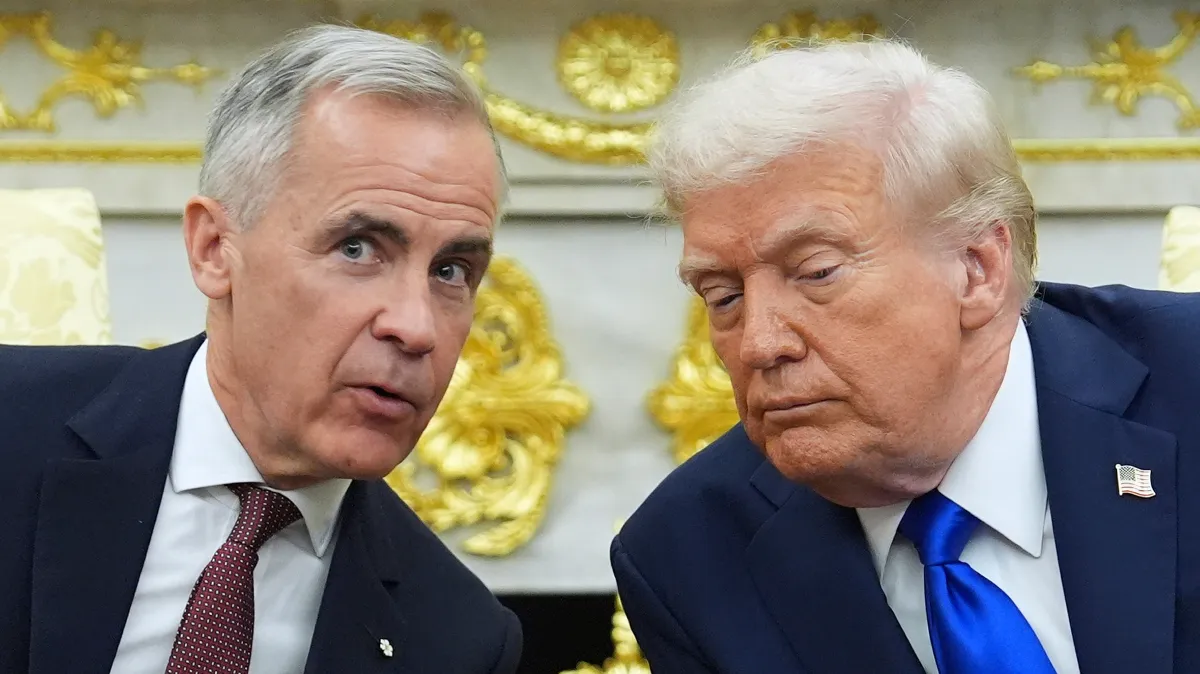
Canada has vowed to match US tariffs “dollar for dollar” after trade negotiations with Washington collapsed without an agreement, opening a new and potentially damaging chapter in the economic relationship between two of North America’s closest allies.
Canadian Prime Minister Mark Carney said Ottawa had negotiated in good faith but could not accept what he described as unfair and uneconomic changes made by the United States at the final stage of the discussions. The failure to reach an agreement came shortly before midnight on Friday, following a three-day extension granted by US President Donald Trump to give negotiators more time to settle their differences.
The collapse of the talks means that tariffs imposed by Washington on a range of Canadian goods will go ahead, affecting products worth around US$20 billion. In response, the Canadian government has committed to imposing equivalent tariffs on American goods, signalling that the dispute is moving beyond negotiation and into a new phase of direct economic retaliation.

Carney said the Canadian government had entered the negotiations with the intention of securing the best possible agreement for Canadian workers, businesses and the wider economy. However, he argued that the latest changes proposed by Washington undermined the possibility of reaching a reliable and sustainable deal.
The Canadian prime minister stressed that Ottawa was not prepared to accept an agreement simply to meet a deadline. He said Canada’s objective had never been to secure a deal at any price, but rather to obtain an arrangement that protected the country’s economic interests.
The decision represents a major escalation in a trade dispute that has already placed considerable pressure on relations between Ottawa and Washington. The United States and Canada have traditionally maintained one of the world’s most integrated economic partnerships, with goods and services moving across their shared border on an enormous scale every year.
The two countries exchanged roughly US$880 billion worth of goods and services last year, highlighting the potential consequences of prolonged trade restrictions. Canadian manufacturers, exporters and small businesses depend heavily on access to the US market, while American companies also rely on Canadian suppliers, customers and raw materials.
The new American tariffs are expected to affect about 5% of the goods Canada exports to the United States each year. The affected products range from everyday consumer items to industrial goods, meaning the impact could eventually reach businesses and consumers far beyond the companies directly involved in cross-border trade.
Canadian negotiators had sought concessions from Washington in several strategically important sectors, including steel, aluminum, vehicles and lumber. These industries employ large numbers of workers and have deep connections with American manufacturing and construction supply chains.
However, the Trump administration was unwilling to provide all of the concessions Ottawa had requested. US Trade Representative Jamieson Greer said Canada had failed to finalise an agreement under terms that Washington believed had been accepted earlier in the week.
Greer described the breakdown as a missed opportunity for Canada and argued that the United States had offered favourable treatment compared with other major exporters to the American market. According to the US position, the proposed arrangement would have gone beyond trade and created a broader economic and national security partnership between the two countries.
Washington also accused Ottawa of introducing new demands and withdrawing from earlier commitments. The US administration said those changes disrupted what it considered a carefully balanced agreement developed during several days of negotiations.
Canada, however, has rejected that interpretation and maintained that the changes introduced by Washington at the last minute were unacceptable. The contrasting accounts underline how far apart the two governments remain despite several rounds of intensive discussions.
The dispute has also raised concerns about the future of the wider North American trade framework involving the United States, Canada and Mexico. The three economies are deeply connected through manufacturing, agriculture, energy, transportation and technology. Many companies operate supply chains that cross national borders several times before a final product reaches consumers.
A prolonged tariff conflict could therefore increase production costs, complicate investment decisions and force businesses to reconsider established supply networks. Companies that have spent years building integrated North American operations may face difficult choices if tariffs remain in place for an extended period.
For Canadian businesses, the uncertainty is particularly concerning because the United States remains the country’s dominant trading partner. Higher tariffs can make Canadian products more expensive in the American market, potentially reducing demand and putting pressure on exporters.
The consequences may also be felt in the United States. Canadian products are used as inputs by American manufacturers and businesses, meaning higher import costs can eventually be passed on to companies and consumers. This is one reason business organisations on both sides of the border have warned against allowing the dispute to become permanent.
Candace Laing, president and chief executive of the Canadian Chamber of Commerce, described the tariffs as a serious blow to North American competitiveness. She warned that the measures could increase costs for Americans while threatening Canadian consumers, businesses, investment and smaller companies.
The political response in Canada has so far been supportive of Carney’s decision to retaliate. Ontario Premier Doug Ford backed the federal government’s position and called for national unity in responding to the American tariffs. Ontario has a particularly strong economic connection with the United States, especially through the automobile and manufacturing industries.
Ford said Canada needed to remain united and prepared to use all available options to protect its sovereignty and economic security. His support indicates that the tariff dispute could become an important domestic political issue as Canadian businesses and workers assess the consequences.
Carney has also promised additional measures to support workers and businesses affected by the tariffs. The details of those measures are expected to be announced in the coming days as Ottawa assesses the economic impact of the new trade environment.
The timing of the dispute is significant. The tariffs were originally scheduled to take effect earlier in the week, but Trump extended the deadline by three days to allow negotiations to continue. The extension created a final opportunity for both sides to compromise, but negotiators ultimately failed to bridge their differences.
No further talks have been formally scheduled following the breakdown, leaving uncertainty over when the two governments might return to the negotiating table.
Despite the increasingly confrontational language, the scale of economic integration between Canada and the United States means that neither country can easily separate itself from the other. Millions of jobs on both sides of the border are connected directly or indirectly to bilateral trade.
The dispute could therefore become a test of political patience as well as economic resilience. If the tariffs remain in place for a long period, companies may begin shifting suppliers, changing production locations or seeking alternative markets. Such changes could make it more difficult to restore the previous level of economic integration even after a future agreement is reached.
For consumers, the immediate effects may not be dramatic in every sector, but prolonged tariffs could gradually push up prices and reduce the range of competitively priced goods available in both markets. For exporters, the challenge is more immediate because access to the neighbouring market can determine whether a product remains commercially viable.
The collapse of the latest negotiations has consequently transformed what was already a difficult trade dispute into a broader confrontation over economic sovereignty and the terms of the Canada-US relationship.

Carney’s decision to respond to US tariffs with equivalent Canadian measures sends a clear message that Ottawa does not intend to accept unilateral trade pressure without resistance. At the same time, the economic costs of retaliation could be substantial, particularly if the dispute continues without a negotiated settlement.
For now, both governments are defending their positions and blaming the other side for the failure of the talks. But the close economic relationship between the two countries means that continued confrontation will carry risks for both.
The next stage of the dispute will depend on whether Washington and Ottawa can eventually return to negotiations and find common ground. Until then, businesses and workers across North America will have to navigate a more uncertain trading environment, while governments on both sides prepare for the possibility that the tariff conflict could last longer than initially expected.
Related News:
 UK Wage Growth Slows as Jobs Market Holds Firm
 US Awaits Iran Reply on New Ceasefire Proposal
 UK Pushes for New EU Goods Trade Deal
 Reeves Fights to Keep Treasury Role Amid Labour Turmoil
 Europe Weighs Hormuz Navigation Fee Plan
 UPS Cargo Plane Crash in Kentucky Kills Seven
 US private equity set to acquire UK online retailer Very Group
 Switzerland Rolls Out Charm Offensive to Cut Trump’s 39% Tariffs
 Canada Passes Carney’s First Budget in Tight Parliamentary Vote
 India’s Labour Law Overhaul Sparks Fierce Debate
 Carney’s Alberta Pipeline Deal Sparks Immediate Pushback
 Mark Carney Walks Diplomatic Tightrope on China Visit
 Wall Street shaken by Trump tariff shock as markets tumble
 ‘Black Tax’: Burden, Pride and Survival for African Workers
 UK New Car Discounts Near £6,000 as Prices Are Slashed
 Coles Discounts Under Fire in Federal Court
 Trump Tower Gold Coast to Redefine Skyline
 Rory Amon Trial: Alleged Victim Speaks in Court
 Oil Prices Surge as Iran War Jolts Markets
 Gulf shipping crisis as war risk cover pulled
 Global markets face turmoil as Hormuz crisis deepens
 Petrol Prices Soar as Retailers Accused of Gouging Amid Global Tension
 Oil Prices Surge Above $100 Amid Iran War
 Asia Scrambles to Confront Energy Crisis Amid Iran War
 The Truth Behind Rising Energy Costs and Fossil Fuel Myths
 UniCredit’s Bold Move to Reshape European Banking
 RBA rate hike sparks fears amid global crisis
 UK Doubles Steel Tariffs to 50% to Protect Domestic Plants
 Oil Slides, Stocks Jump on Trump Peace Signals
 ABC Staff Strike Over Pay and AI Concerns
 Middle East Conflict to Hit UK Economy Hardest
 Australian Growth Slows as Global Inflation Spike Looms
 The Strategic Failure of Trump’s Conflict With Iran
 Trump to Deploy “God Squad” Over Gulf Wildlife Protections
 Trump Threatens Iran With Total Infrastructure Destruction
 Iran Drone Strike Hits Kuwaiti Oil Tanker in Dubai Port
 Russia: The Unforeseen Winner of the Iran Conflict
 US Senators Slam Ticketmaster Over Sneaky New Fee Hikes
 Apple at 50: Three Products That Changed How We Live
 California fireworks blast: murder charges filed in case
 IMF Warns Iran War Could Spark Deep Global Recession
 Trump Slams UK Ties and Threatens To Rewrite Trade Deal
 Trump Faces Crisis as Iran Reopens Hormuz Tensions
 Iran Reimposes Strait of Hormuz Restrictions Amid Tension
 Southeast Asia Turns to Russia Amid Energy Crisis
 Ukraine Urges UK to Seize Russian Oil Tankers
 US Calls Australia Media Law “Foreign Extortion”
 Aid Crisis Grows as Hormuz War Disrupts Supply
 Albanese Rejects Gas Export Tax Push
 Capitalism ‘Suicidal’, Warns Petro at Climate Summit
 Oil Prices Surge Above $120 Amid Iran Blockade Fears
 $13bn World Cup Set to Break All Revenue Records
 Coalition pushes fossil fuel phaseout plan
 BBC News Faces Deep Cuts in 2,000 Job Plan
 US to Escort Trapped Ships Through the Strait of Hormuz
 Trump approval plunges amid Iran war fears
 Ohio’s Battle for Trust: Democrats Vying to Flip the Buckeye State
 Trump Threatens UN Budget Cuts as US Pushes ‘Trade Over Aid’ Agenda
 Global Conflict Hits Home As Bullock Warns Of Economic Pain
 Middle East Crisis Escalates as Oil Routes Shake Markets
 Norway Doubles Down on Oil and Gas for Europe Energy Security
 High Street Crisis: Fears Grow Over Post Office Closures
 Beijing Becomes Centerstage for Global Diplomatic Ballet
 Oil Markets Face ‘Red Zone’ Threat Amid Iran Crisis
 Kevin Warsh sworn in as Fed chair amid economic backlash
 Hormuz Talks Near Critical Stage
 China mine blast death toll rises to 90
 Albanese Defends Tax Reforms Amid Emotional Speech
 Victoria Labor Launches Apprenticeship Expansion Plan
 UK rejects EV charging VAT cut amid Treasury clash
 UK firms accused of ‘AI washing’ boom
 Discontent grows around Putin amid war strain
 Trump Claims Iran Peace Deal Near Completion
 Gen Z Graduates Face Economic Uncertainty
 Japan Suffers Plastic Shortage Due to Middle East Crisis
 UK Economy Suffers a Sharp Downturn as Iran Conflict Bites
 Ukraine Creates Long-Range Strike Command
 Weight-Loss Drugs Transform Fashion Shopping Habits
 Labour MPs Urge Burnham to Revive UK Aid Target
 EasyJet Takeover Sparks Fears Over Passengers’ Future