Published: 31 August 2026. The English Chronicle Desk. The English Chronicle Online
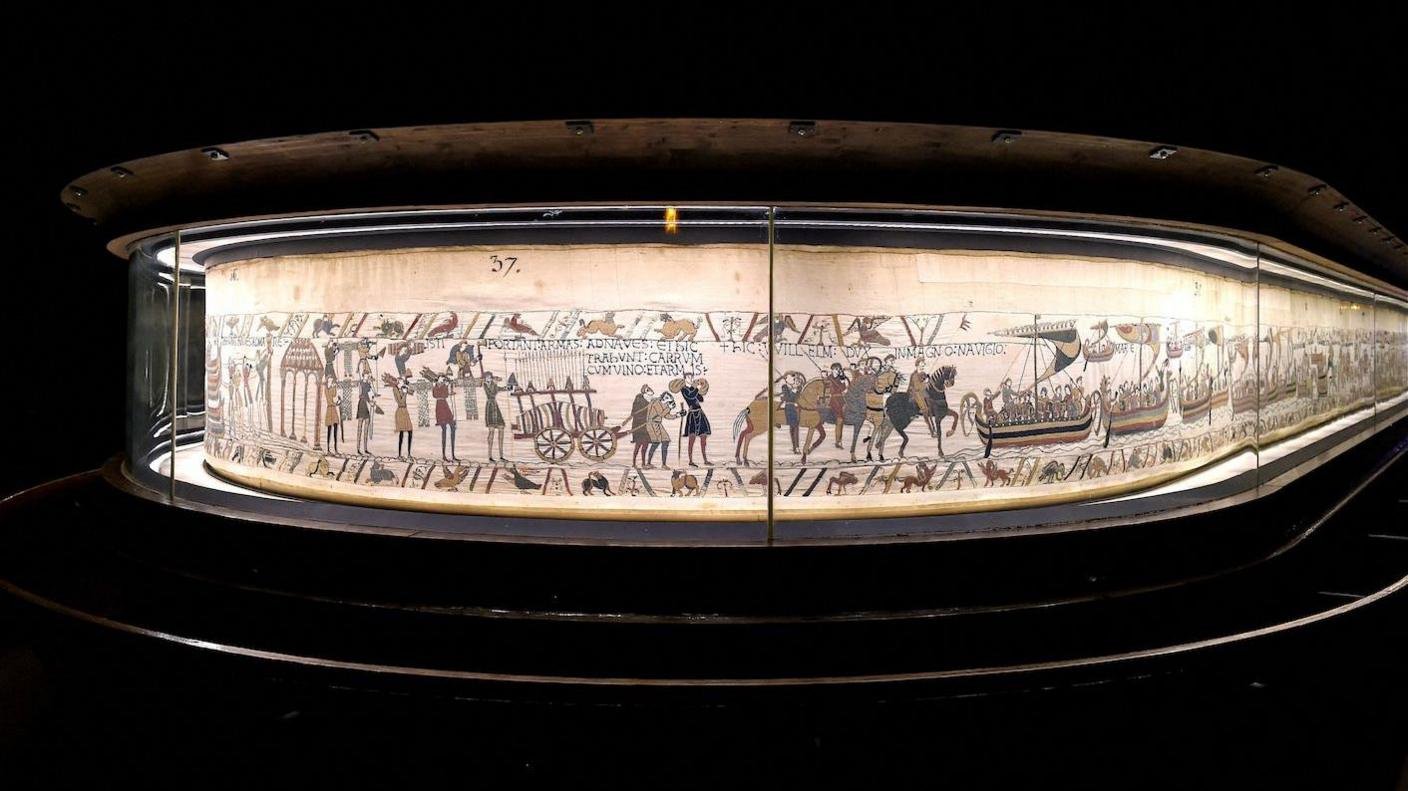
The British Museum is facing fresh questions over reports that technology billionaire and Palantir founder Peter Thiel was granted a private viewing of the Bayeux Tapestry before the historic artwork opened to the wider public.
The reported visit has prompted concern among some museum staff and renewed debate about access, privilege and the stewardship of one of Europe’s most fragile and culturally significant historical artefacts. Particular attention has focused on the limited amount of time the tapestry can safely be exposed to light and whether private access should be granted while public demand for tickets remains exceptionally high.
According to reports surrounding the visit, Thiel was privately hosted in the exhibition space earlier in August while preparations for the public display were still under way. The viewing was reportedly arranged through senior figures connected with the museum’s development operation.
The British Museum has carefully managed access to the Bayeux Tapestry because of its age and fragile condition. The nearly millennium-old embroidered artwork requires strict conservation measures, including limits on its exposure to light. Museum professionals often use cumulative light exposure measurements to protect sensitive objects from deterioration over time.

That conservation requirement has become central to concerns raised about the reported private viewing. Some staff members are said to have questioned whether scarce exhibition exposure should be used for private guests, particularly when thousands of members of the public have shown strong interest in seeing the tapestry.
The issue is especially sensitive because public demand has been enormous. When tickets for the exhibition were first made available, online queues reportedly stretched for hours as tens of thousands of people attempted to secure access.
For many visitors, the opportunity to see the Bayeux Tapestry represents a rare cultural moment. The artwork is one of the world’s most celebrated surviving pieces of medieval storytelling, depicting events surrounding the Norman conquest of England in 1066.
Its arrival for exhibition in London has therefore generated extraordinary public interest. That enthusiasm has also intensified questions about how access should be managed and whether prominent individuals should receive opportunities unavailable to ordinary visitors.
Reports indicate that museum officials maintained that the private viewing did not reduce the allocation of light exposure reserved for public visitors. However, concerns have continued over the broader perception of preferential access at a time when demand for tickets has been exceptionally high.
The controversy has also drawn attention because of Peter Thiel’s prominent position in the global technology industry and his political connections.
Thiel is widely known as a co-founder of PayPal and as the founder of Palantir Technologies, a software company specialising in data integration, analytics and artificial intelligence systems. Palantir works with governments, public institutions and major corporations in several countries.
The company has become an increasingly prominent and controversial player in Britain’s technology and public-sector landscape. Its involvement in government data systems and contracts, including work connected with the National Health Service, has generated significant political and public debate.
Critics have raised concerns about the use of large-scale data platforms, privacy and the growing influence of private technology companies in public institutions. Supporters argue that sophisticated data systems can improve decision-making, efficiency and the coordination of complex public services.
Palantir has also attracted international attention because of its work with military and security organisations. The company has defended its role in providing technology to government and defence clients, while critics have questioned the ethical implications of some applications of its software.
These wider controversies have contributed to the sensitivity surrounding reports of Thiel’s private visit to one of Britain’s most important cultural institutions.
The British Museum, meanwhile, has spent recent years navigating wider questions about governance, funding, public confidence and the role of major institutions in modern British society. Museums increasingly rely on complex networks of donors, patrons, corporate partners and private supporters while simultaneously facing demands for greater transparency and equal public access.
The Bayeux Tapestry episode illustrates the difficult balance cultural institutions must maintain between hosting important guests and ensuring that the public does not believe access to national treasures is determined by wealth, influence or personal connections.
The reported visit has also renewed discussion about what constitutes legitimate private access to fragile cultural objects. Museums frequently arrange private viewings for researchers, government representatives, donors, diplomats and other stakeholders. Such access can be necessary for conservation, academic research, international cooperation and fundraising.
However, the circumstances surrounding each visit can become controversial when an artefact has extremely limited exposure capacity or when public access is heavily restricted.
The Bayeux Tapestry presents an especially complicated case because conservation requirements are unusually strict. Every period of exposure must be carefully considered, and museum professionals must balance public display with the long-term preservation of the object.
For that reason, even a relatively brief private viewing can become symbolically significant when thousands of members of the public are waiting for their own opportunity to enter the exhibition.
Reports have indicated that senior museum figures were aware of the visit, although questions remain over the precise arrangements and the criteria used for granting access.
The issue has also generated discussion about transparency. Cultural institutions are increasingly expected to explain how special access is granted, particularly when publicly significant collections are involved.
Transparency does not necessarily mean that every private visit is inappropriate. But critics argue that clear policies can help prevent perceptions that influential individuals receive privileges simply because of their wealth, political connections or social status.
The British Museum has a particular responsibility in this debate because it is one of the most internationally recognised cultural institutions in the world. Its collections attract millions of visitors and include objects that carry enormous historical significance for Britain and other countries.
The Bayeux Tapestry exhibition has become one of the museum’s most closely watched cultural events of the year. For historians, the tapestry provides an extraordinary visual account of medieval Europe, warfare, monarchy and political transformation.
For the wider public, it represents something equally important: a direct connection with a distant past that continues to shape British and European identity.
That emotional and historical significance helps explain why access to the exhibition has become such a sensitive issue.
At the centre of the current controversy is a fundamental question faced by many public institutions: who should get access first when a cultural treasure is available only under strict limitations?
Should museums prioritise public visitors, researchers, donors, political figures or institutional partners? And how should they explain those decisions when demand dramatically exceeds capacity?
There are no simple answers. Major museums operate within financial, diplomatic and institutional realities that often require private events and special access. At the same time, public confidence depends heavily on the belief that nationally significant cultural treasures are ultimately held for the benefit of society as a whole.

The debate surrounding the reported private viewing is therefore likely to continue beyond this individual incident.
For now, attention remains focused on the British Museum’s management of access to the Bayeux Tapestry and whether the institution can reassure staff and visitors that conservation rules and public interests remain at the heart of its decisions.
As further tickets become available and more visitors prepare to see the tapestry, the controversy serves as a reminder that the management of cultural heritage is about more than preserving objects.
It is also about preserving trust.
For institutions responsible for the world’s most valuable historical treasures, that trust may be among the most important assets they possess.
Related News:
 Undercover officer deceived women with ‘grotesque and cruel’ lies, spycops inquiry told
 Walsall Rapist Jailed After Hate-Filled Online Trail
 Two Children Die in Wolverhampton House Fire Tragedy
 Barrister Criticises Trial After Suicide Case Verdict
 Sycamore Gap Artwork Chosen After Public Vote
 Westminster Council Threatens Charing Cross Soup Kitchen
 BBC Warned About Missing Clothes of Murder Victim
 Cambridge Professor Jason Arday Found Dead at Home
 RAF Barnham Protests Fuel Tensions in Norfolk Town
 UK Banks Maintain £100 Contactless Limit Despite FCA Rule Change
 Rising Costs Force Families to Rethink Days Out
 Archbishop Prays for Middle East Peace in First Easter Sermon
 Storm Dave Disrupts Travel but Conditions Set to Ease
 Exhibition Revisits Life of 18th-Century Black Court Figure
 Prevent Failings Exposed After Southport Attack
 Starmer would have blocked Mandelson role, says Lammy
 10 Scenic Stays in Scotland’s Highlands & Islands
 Kezia Dugdale Warns of Possible Reversal of Equal Rights Gains
 Iran Threats Target Journalists in UK
 Richard Tice Faces £100k Tax Controversy
 Synagogue Arson Attempt Sparks Security Fears
 City & Guilds Sale Sparks Fees and Pay Uproar
 NHS Safety Fears as Nurses Cover Doctor Gaps
 Chornobyl Still at Risk 40 Years After Disaster
 Reform UK funding: mystery billionaire revealed
 Farke’s Leeds revival: from pressure to FA Cup glory chase
 Unveiling Hidden Masters: Female Artists Take Centre Stage
 Police Suspect Help in Missing Alice Springs Girl Case
 John Terry Faces Backlash Over Political Posts
 UK may ban protests amid rising antisemitism fears
 Greens Face Internal Row Over Antisemitism Claims
 Florida Surgeon ‘Devastated’ Over Fatal Surgery Error
 City & Guilds Faces Governance Crisis Over Sale
 Immigration Judges Fear Pressure in Trump Era
 Tractor Breakdown Tests Lincolnshire Farmers
 Labour Members Turn Against Starmer Leadership
 Britons Build Emergency Supplies Amid Rising Fears
 Whistler’s Mother and why its fame frustrated artist
 Victim says non-custodial rape sentence ‘rock in my face’
 Farage and Reform UK Reshape British Politics
 Starmer Leadership Under Pressure After Setbacks
 Public Confidence in University Degrees Plummets in the UK
 UK Nations Brace for Potential Breakup Amid Reform Surge
 Cornwall Van Dwellers Face Eviction in Housing Crisis
 British Teens in EU Face Soaring UK University Fees
 Murder Probe Continues After Arrest Release
 Dreyfus Statue Finally Gets Permanent Paris Home
 UK Schools Struggle as Classrooms Top 40C
 London Tube Heat Reaches Dangerous Levels
 Three-Quarters of England’s Riverbanks Still Off Limits
 Is America Ready for an AOC Presidential Run?
 London’s 2026 ‘Great Stink’ Raises Sewer Concerns
 Five Years of Taliban Rule Leave Afghanistan in Crisis
 Burnham unveils £65m drought aid for farmers
 Queue row erupts on Wales’ highest mountain
 Ghent Professors Questioned Cofnas Appointment
 UK Households Could Save £173 on Fixed Energy Deals
 Starmer Faces Parliamentary Battles Over UK-EU ‘Reset’ Plan
 Met Police Vetting Failures Let Serial Rapists Remain
 Fatal Bolton Taxi Crash Claims Three Teens and Driver
 ScottishPower Tops List of Worst UK Energy Suppliers
 Judi Dench Champions Fight to Save London’s Green Spaces
 Crowborough Camp Welcomes First Asylum Seekers
 BBC Funding Crisis: Tim Davie Warns of Jeopardy Ahead
 Artificial intelligence will cost jobs, admits Liz Kendall
 Older Women Vanish from BBC Screens, Review Confirms Bias
 Streeting moves on doctor pay to end strike dispute
 UK Shoppers Face Prolonged Price Rises At Tills
 Tube Strike Brings Capital to a Standstill Over Shift Disputes
 Makerfield Voters Demand Real Change as Election Looms
 Ryanair Faces Probe Over Mandatory Family Seating Fees
 Britain’s Crowning Butterfly Takes the Nation by Storm
 Stirchley Community Housing Scheme Faces Crisis
 Watchdog Warns Ministers to Pause Impending HS2 Reset
 EU Slashes Steel Quotas But Grants UK Favourable Rates
 Welfare System Faces Radical Overhaul After Timms Review
 Burnham Pledges New Era of Open Debate for Labour MPs
 England and Norway Fans Turn Miami Into World Cup Carnival
 Sydney Arts Venue Faces Eviction After Religious Protests
 Olympus Awaits Unesco Heritage Recognition