Published: 07 September 2026. The English Chronicle Desk. The English Chronicle Online
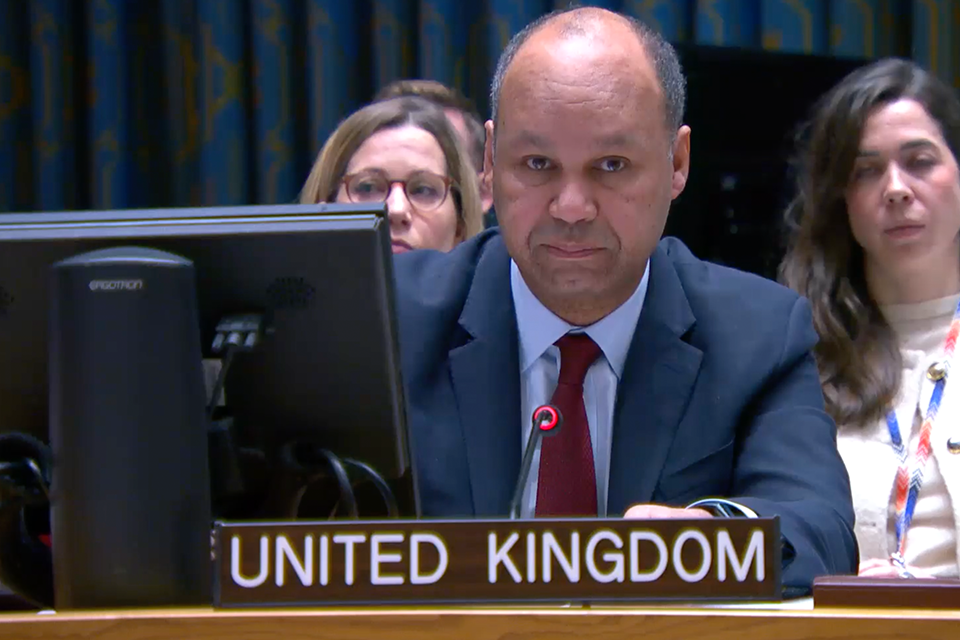
The United Kingdom’s planned move to restrict trade with Israeli settlements in the occupied Palestinian territories has been welcomed by United Nations Special Rapporteur Francesca Albanese as a potentially important change in British policy, but she has warned that the measure will have little meaning unless it is backed by broader and more concrete action.
Speaking about the policy shift, Albanese said a ban on settlement goods would represent an important departure from the UK government’s previous position. At the same time, she cautioned against judging the proposal before its details are announced, saying its significance should ultimately be measured by its practical effect rather than by political statements.
British Foreign Secretary Ed Miliband is expected to announce a new package of measures concerning Israel and the occupied Palestinian territories on Tuesday. The move comes after the UK government signalled that it intends to take a tougher approach to Israeli settlement expansion and other policies affecting the Palestinians.
The planned measures are being closely watched by Palestinian groups, human rights organisations and international observers, who have been waiting to see whether the British government’s stated change in approach will translate into substantive policy.

Albanese argued that a restriction focused only on products originating from Israeli settlements would not be sufficient to produce what she described as a genuine change in Britain’s relationship with the Israeli occupation. In her view, settlement goods represent only a small part of the economic structures that support the occupation.
She said the British government would need to consider a much broader range of measures, potentially including services, arms licensing and forms of security and intelligence cooperation. She also raised concerns about the use of British-linked facilities and infrastructure in the region and argued that the government should examine whether such arrangements contribute to policies it opposes.
The debate has intensified as Israel continues to advance settlement plans in the occupied West Bank. One of the most contentious developments is the E1 settlement project, which the UK government has already strongly criticised.
In August, Miliband condemned Israel’s decision to issue a tender for the E1 project, warning that development in the area could separate East Jerusalem from other parts of the West Bank and further undermine prospects for a two-state solution. The British government also summoned Israel’s chargé d’affaires and demanded that the tender be withdrawn.
The E1 area has long been considered particularly sensitive because of its geographical position between East Jerusalem and large parts of the West Bank. Palestinian and international critics have argued that construction there could fragment Palestinian territory and make the creation of a contiguous Palestinian state more difficult.
Albanese said the British government should not allow the E1 process to move forward without consequences. She pointed out that there is a distinction between the closing of tenders and the eventual construction and financing of a settlement project.
In her assessment, large-scale construction would require financial institutions, insurers and construction companies. She argued that the UK could therefore use sanctions or other measures against companies that participate in the development of the project.
The issue is particularly significant because Israeli Finance Minister Bezalel Smotrich has publicly described the E1 project in terms linked to preventing the establishment of a Palestinian state. Albanese said this made the project more than simply another instance of settlement expansion and placed it within a wider debate over the future territorial structure of the occupied West Bank.
The UK government has increasingly emphasised its support for a two-state solution while criticising settlement expansion. British officials have repeatedly said that settlements undermine the possibility of a viable Palestinian state and breach international law.
The policy reset also comes amid continued international concern over humanitarian conditions in Gaza. Miliband has said information he received about restrictions affecting aid delivery had reinforced his view that Britain needed to act more decisively.
Those comments triggered a sharp response from US Ambassador to Israel Mike Huckabee, who accused the British government of being motivated by antisemitism. Israeli officials have also rejected British criticism concerning aid restrictions and argued that medicines are not being deliberately blocked from entering Gaza.
The exchange highlights the increasingly difficult diplomatic environment surrounding Britain’s relationship with Israel. London remains an ally of Israel but has simultaneously become more vocal in its criticism of settlement expansion, humanitarian restrictions and policies that it believes threaten the possibility of a negotiated two-state settlement.
Albanese believes the UK’s response should also be considered in the context of international legal obligations. She referred to the 2024 advisory opinion of the International Court of Justice concerning Israel’s presence in the occupied Palestinian territories.
The court’s advisory opinion concluded that Israel’s continued presence in the occupied Palestinian territory is unlawful and said states have obligations concerning recognition and assistance relating to the situation. Albanese argued that Britain should therefore consider whether its wider economic, military and diplomatic relationships contribute to maintaining conditions that international legal institutions have criticised.
Her position goes considerably further than a narrow trade restriction. She has called for Britain to examine arms export licences, intelligence cooperation and other forms of state-to-state assistance as part of what she believes should be a comprehensive policy change.
She also urged the British government to engage more actively with international legal proceedings involving Israel and other states. According to Albanese, Britain has an opportunity to demonstrate whether its foreign policy is based primarily on strategic alliances or on broader principles of international law.
Another concern raised by Albanese involves the International Criminal Court. She called on the UK to issue guidance to British companies and financial institutions concerning sanctions imposed by the United States on officials associated with the court.
She said such sanctions had created difficulties for individuals involved in judicial work and for human rights organisations cooperating with international investigations. Her comments reflect a wider dispute over the role of international institutions in investigating alleged war crimes and other serious violations.
The British government’s forthcoming announcement is therefore likely to be closely scrutinised not only for what it includes but also for what it leaves out. A settlement-goods ban could mark a significant symbolic departure, but its effectiveness will depend on the scope of the restrictions, enforcement mechanisms and whether companies can avoid them through alternative commercial arrangements.
The question of enforcement is particularly important because settlement-related economic activity involves complex international supply chains. Products can move through different jurisdictions before reaching consumers, while financial services, insurance, logistics and construction contracts can connect companies to settlement projects without directly selling settlement-produced goods.

For Palestinian groups and international rights advocates, the test will ultimately be whether the UK’s new policy changes behaviour on the ground. For Israel and its supporters, however, the measures are likely to be viewed through the broader question of Britain’s strategic relationship with Israel and its approach to regional security.
The coming announcement could therefore represent an important moment in Britain’s Middle East policy. Miliband’s decision to pursue a more comprehensive approach has already generated criticism from Israel and the United States, while Albanese and other critics are demanding measures that go beyond symbolic declarations.
For now, the precise contents of the British package remain the central question. If the measures are limited to settlement goods, Albanese has warned that they may fall short of the broader policy transformation she believes is required. If London expands the measures to cover other economic, military and institutional relationships, the consequences for UK-Israel relations could be considerably greater.
The debate ultimately reflects a wider international struggle over how governments should respond to settlement expansion, the humanitarian crisis in Gaza and questions of accountability under international law. Britain’s next steps will show whether its promised policy reset represents a limited adjustment or the beginning of a substantially different approach to Israel and the Palestinian territories.
Related News:
 Emails Show Epstein Funded Mandelson’s Husband After Jail
 Files Link Andrew to Epstein Dinner After Prison Release
 Activists allege abuse after Gaza flotilla seizure
 US judge dismisses Kilmar Abrego Garcia indictment
 Former ICC prosecutor condemns US sanctions
 Taliban global ties grow as rights fears mount
 Israeli Strike in Southern Lebanon Kills Seven
 Argentina Orders Return of Nazi-Looted Painting
 Charlie Kirk Killing Used to Mobilise UK’s Largest Far-Right Rally in Decades
 Jailed Georgian Opposition Leaders Warn UK of Iranian Links to Ruling Party
 It’s time to come clean on the China spy case
 Pregnant UK Teen to Be Freed from Georgian Jail
 French Taxi Driver Cleared in David Lammy Theft Case After Fare Dispute
 Just Stop Oil Protesters Convicted Amid Climate Defence Row
 Met Police Culture Makes Racial Harm ‘Inevitable’
 British Grandmother to Return Home After Death Sentence in Bali
 Remaining rebel Labour MPs have whip restored
 Second world war veterans honoured as King leads Remembrance Sunday
 UK and EU Signal Fresh Push for Defence Cooperation Talks
 Labour Attacks Reform Candidate Over Tommy Robinson Backing
 Thousands Protest ICE Operations in Nationwide US Day of Action
 Thousands Protest ICE in New York Against Trump Deportation Campaign
 UK Prepares Aircraft Carrier for Middle East Crisis
 Yvette Cooper: UK Must Follow Principles, Not US Pressure
 Mass Arrests at London Palestine Protest Spark Debate
 Ukraine Urges UK to Seize Russian Oil Tankers
 Cartel crackdown raises fears of fresh violence
 Judge halts deportation of Yemeni refugees in US
 Asylum deal sparks fears over Syria deportations
 UK may ban protests amid rising antisemitism fears
 Ceasefire Standoff Deepens in Ukraine War
 Middle East Crisis Escalates as Oil Routes Shake Markets
 Trump Announces 3-Day Russia–Ukraine Ceasefire Deal
 Putin Declares Russia Victory at Scaled Victory Day Parade
 Israeli Strikes in Lebanon Kill 10 Amid Ceasefire Strain
 China mine blast death toll rises to 90
 Ebola outbreak in DRC overwhelms health system as cases surge
 Victim says non-custodial rape sentence ‘rock in my face’
 Hunger increasingly weaponised in global conflicts
 Gunman Killed After White House Security Shootout
 Irish Gangland Figure Fails in Dublin Election Bid
 Murder Probe Continues After Arrest Release
 New Footage Revives Peter Falconio Mystery
 Ukraine Creates Long-Range Strike Command
 Dreyfus Statue Finally Gets Permanent Paris Home
 Houthis Strike Saudi Arabia as Middle East Tensions Rise
 Russian Missiles Intensify Pressure on Kyiv
 Trump Calls Strait of Hormuz ‘American Territory’
 Trump Faces Iran War Crisis Before Midterm Vote
 Former Diplomats Urge UK and France to Act on Palestine
 US immigration arrests hit record high in July
 Exeter Approves Saudi Military Training Partnership
 Ukraine Villagers Demand Answers After Deadly Arms Depot Strike
 Daughter Finds Bones in Parents’ Burned-Out Car
 Masked Protesters Bring Dover Port Traffic to Standstill
 Major Rent Reform Ends No-Fault Evictions in England
 Greene Pushes Epstein Files Amid Trump Fallout
 Trump Deploys DHS to Charlotte in Major Arrest Operation
 Serial Rapist and Former Cop Found Guilty Again
 Most Tories Expect to Support a Farage-Led Government
 Trump Tariffs Threat Spark UK and EU Alarm
 Proposed Law Leaves Gap for Children of Convicted Paedophiles
 Gordon Brown urges court for crimes against children
 Starmer Praised for Stance on Trump and Iran Conflict
 Army Probes Apache Flyover at Kid Rock’s Nashville Estate
 Relationship with Trump may be beyond repair, Starmer warned
 Report Says Pezzullo Acted ‘Recklessly’ in Dealings
 Suspected Plot Targets Pipeline Before Hungary Vote
 Ben Roberts-Smith Denies War Crime Allegations in First Statement
 Learner Driver Charged After Expo Tragedy
 Prominent Voices Challenge Palestine Action Ban
 UK Stands Firm on Falklands Amid US Rift
 Oil Prices Surge Above $120 Amid Iran Blockade Fears
 Trump orders US troop pullout from Germany
 Barrister Criticises Trial After Suicide Case Verdict
 Fear and Betrayal: The Chilling Case of Kouri Richins
 Farage and Reform UK Reshape British Politics
 Westminster Council Threatens Charing Cross Soup Kitchen
 Unions Warn Labour Over Zero-Hours Contract Reforms
 Bayeux Tapestry Revives Franco-British Ties