Published: 18 September 2026. The English Chronicle Desk. The English Chronicle Online.
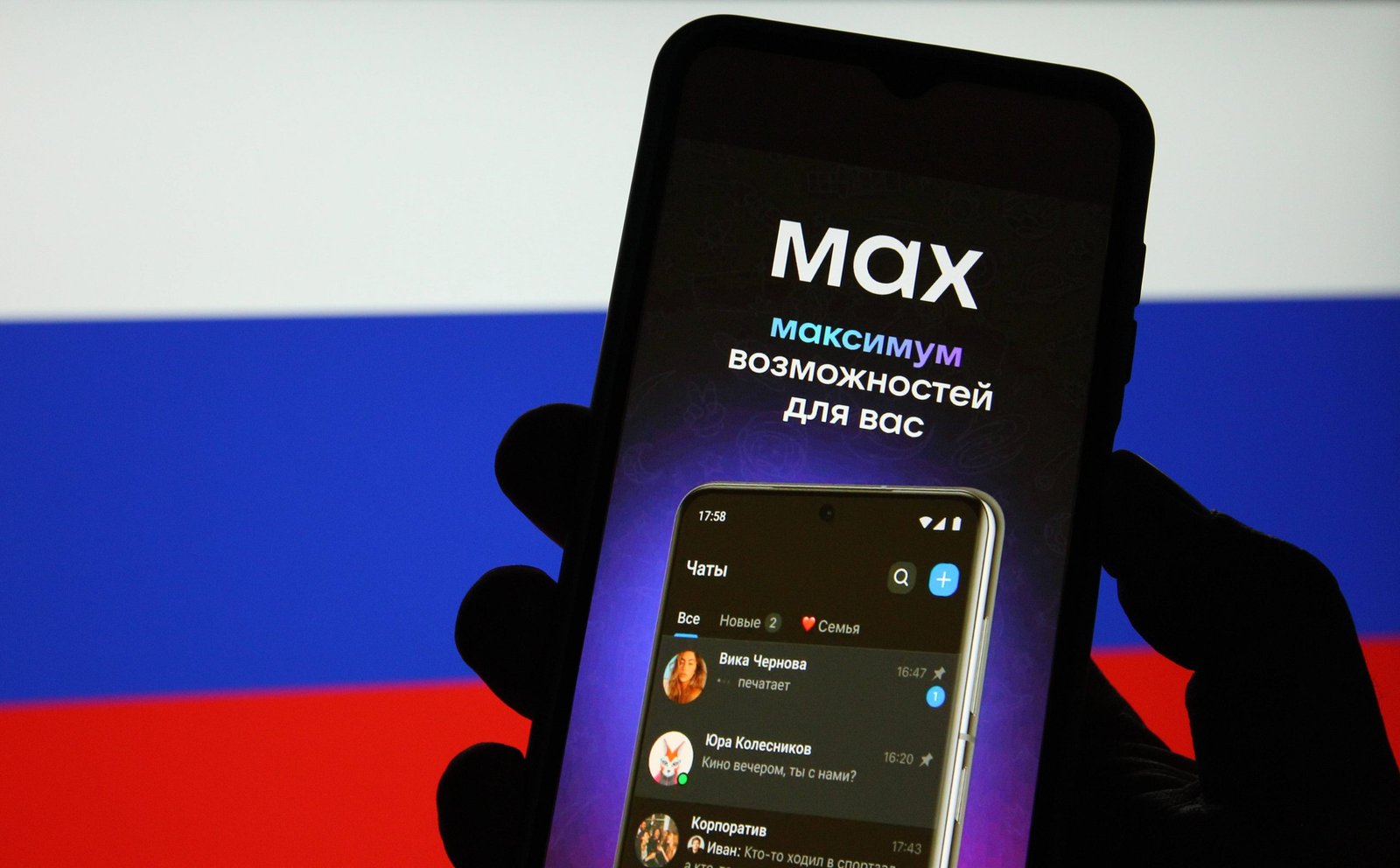
Over the past 18 months, tens of millions of people in Russia have been pushed towards a new mobile application that authorities have presented as a home-grown alternative to Telegram and WhatsApp. Known as Max, the violet-blue messaging and payments platform has rapidly expanded into everyday life, raising growing concerns among researchers and users about privacy, surveillance and the increasing role of the Russian state in digital communications.
Max was developed by VKontakte, the Russian social media company closely connected to the country’s political establishment. The platform is designed as a “super-app”, bringing multiple digital services together inside one application. Its functions include messaging, payments, access to government-related services and a growing ecosystem of mini-applications.
The rapid expansion of Max marks a significant change in the way Russians interact with digital services. Rather than simply replacing an existing messaging application, Max is being positioned as an integrated gateway through which users can communicate, authenticate themselves and access services that have increasingly become part of daily life.

Authorities have promoted Max as a patriotic domestic alternative to foreign messaging platforms. The application has also received considerable attention from Russian celebrities and public figures, helping establish it as a visible part of the country’s digital culture. By the summer of 2026, it had reportedly become Russia’s most-used messaging application.
However, new forensic research has intensified scrutiny of what the application can technically do. Researchers led by Roya Ensafi, an associate professor of computer science at the University of Michigan, examined the Russian version of Max and reported finding surveillance capabilities that they described as unusually powerful.
According to the researchers, Max can capture screenshots of a user’s device without the user’s knowledge. This capability could potentially expose information displayed within the application’s own mini-app ecosystem, including messages, payments and other information handled through those services.
The researchers also reported that Max can access information contained within its mini-applications and has capabilities that could allow it to impersonate a user. Another particularly significant finding concerns the platform’s ability to inject code into mini-applications. Researchers said such a capability could potentially be used to manipulate applications or facilitate cyberattacks.
Ensafi described the architecture as creating what she characterised as a backdoor into the wider mini-app ecosystem operating on a user’s device. She argued that the development represents an important stage in the evolution of government-controlled digital infrastructure.
The research, however, makes an important distinction. According to Ensafi’s team, Max does not provide the ability to break into unrelated applications such as Telegram or WhatsApp simply because they are installed on the same phone. This distinction is significant because the surveillance capabilities identified by the researchers concern Max and the applications operating within its own ecosystem.
Telegram and WhatsApp have faced restrictions in Russia, making alternative communication platforms increasingly difficult to access. As foreign services become less accessible, users may find themselves relying more heavily on domestic platforms even when they have reservations about privacy.
The pressure to use Max appears particularly strong among people connected to state institutions. Public-sector employees, teachers, university students and others have reportedly been encouraged or instructed to move communications to the platform.
A teacher in Moscow described how school authorities instructed staff to switch their work-related communications to Max. According to the teacher, the application became the required channel for communicating with parents, distributing homework and handling other school-related matters.
The teacher said that refusing to use the application was not viewed as a realistic option. As a result, employees who might otherwise have preferred another messaging service began using Max simply because it had become necessary for their work.
Similar concerns have emerged among university students. One student in St Petersburg said he downloaded Max before the academic year began after being informed that students could require a QR code generated through the application to gain access to university buildings or dormitories.
For the student, the issue was not simply whether Max was convenient. He said he had concerns about its privacy and security but felt that avoiding the application could interfere with his ability to access university facilities.
The experience illustrates how digital platforms can become difficult to avoid when they are connected to essential services. Instead of persuading users solely through convenience or popularity, institutions can make an application practically necessary by incorporating it into education, administration, identity verification and access systems.
The adoption of Max among Russia’s political and business elite appears more complicated. Several people familiar with the country’s political and business circles reportedly continue to use Telegram and Signal for their everyday communications, despite publicly embracing or installing Max.
One person described as being close to the Kremlin said that he and several associates had purchased secondary phones specifically for Max while continuing to use their preferred messaging services on their primary devices. The account suggested that visible use of the platform can sometimes be more symbolic than functional among influential figures.
Max has also not yet fully displaced Telegram as a major source of political news and commentary. Telegram’s large public channels remain an important communications tool for Russian media organisations, officials, bloggers and commentators. Max’s equivalent public-channel ecosystem remains comparatively smaller.
For ordinary users, meanwhile, the debate is increasingly centred on privacy. Several Max users described the application as visually similar to Telegram and said its functions were familiar. Yet concerns about surveillance remained a significant part of their experience.
One Moscow consultant said using Max created a persistent feeling that another party might be monitoring communications. Although the application appeared modern and polished, he said concerns about who could potentially observe activity remained difficult to ignore.
The broader significance of Max extends beyond Russia’s messaging market. Researchers see the platform as an example of how governments can integrate communication, financial services, identification and public administration into a single digital environment.
China’s WeChat is frequently cited as an example of a super-app that has become deeply integrated into everyday digital life. But the Russian case differs in one important respect: Max has expanded rapidly in an environment where internet restrictions and pressure on foreign platforms have increased significantly over a relatively short period.
Ensafi argued that Russia’s rapid transformation should be viewed as a warning about the speed at which digital control can develop. China’s internet controls evolved over several decades, whereas Russia’s movement towards a more tightly controlled digital environment has accelerated considerably over roughly the past decade.
The development raises broader questions about the relationship between convenience and privacy. A single application can make digital life simpler by allowing users to communicate, make payments and access services from one place. But centralising those functions can also create a concentration of information and technical control that users may find difficult to understand or challenge.

For Russia’s citizens, the question is increasingly complicated by the shrinking availability of alternatives. When an application becomes necessary for workplace communication, education, identity verification or access to buildings and services, the distinction between voluntary adoption and compelled use becomes less clear.
The research into Max therefore comes at a significant moment in Russia’s digital transformation. The platform is no longer simply a messaging application competing with international technology companies. Its growing role in communications and public services places it at the centre of a much wider shift in how digital infrastructure is organised and controlled.
The findings reported by Ensafi’s research team remain focused on the technical capabilities of the application and do not by themselves establish how frequently every capability is used in practice or by whom. Nevertheless, the researchers argue that the architecture creates significant surveillance and security possibilities.
As Max continues to expand, its development will likely remain closely watched by cybersecurity researchers, privacy advocates and technology users beyond Russia. The central issue is not only what a super-app can do, but what happens when access to essential parts of everyday life increasingly depends on using it.
Max and VKontakte were approached for comment on the findings and concerns surrounding the platform.
Related News:
 Artemis II astronauts capture Earth en route to the Moon
 Apple at 50: Three Products That Changed How We Live
 Artemis II Returns After Historic Moon Flyby
 Chornobyl Still at Risk 40 Years After Disaster
 Australia gives users control over social media algorithms
 Anthropic Blocks AI Misuse Linked to Weapons Threats
 Britain deploys RAF specialists to assist Belgium with drone threats
 Night after night, Belgium is on high alert.
 Hitler’s DNA Confirms He Truly Had Only One Testicle
 Ukraine to Get 100 French Rafale Jets in Historic Deal
 Poll Reveals China Leads World in Trusting AI Technology
 US Clears Nvidia AI Chip Sales to China in Policy Shift
 UK New Car Discounts Near £6,000 as Prices Are Slashed
 Anthropic AI Refuses Pentagon’s Safety Demand
 Social Media Trial: Woman Says Addiction Began at Six
 Brady Tkachuk Denies AI Video Claims After Olympic Gold
 Musk’s xAI Permit Sparks Fury Over Power Plant Expansion
 The Kill Line: A Shifting Vision of the American Dream
 Cern Prepares First-Ever Antimatter Transport Test
 Iran Social Media Strategy Shifts to Information War
 ABC Staff Strike Over Pay and AI Concerns
 Cluster Strikes Test Israel’s Missile Defences
 Artemis II: Humanity Returns to the Moon After Decades
 ‘The frontline is like Terminator’: Ukraine’s fighting robots
 Iran Crisis Tests Trump’s Global Leadership
 Europe EV Demand Surges as Fuel Prices Rise
 Ben Roberts-Smith Denies War Crime Allegations in First Statement
 Canadian astronaut French words ease language row
 New Bacteria Discovery Offers Hope Against Noma
 RAF Typhoons scrambled amid Russian drone threat near Nato
 Cartel crackdown raises fears of fresh violence
 US states redraw maps after voting rights ruling
 Germany to Return Rare Irritator Dinosaur Skull to Brazil
 Canadian Fiddler Sues Google Over AI Defamation Claim
 US ‘Narco Boat’ Strikes Draw Global Outcry
 Search Intensifies for Missing Hiker on WA Bibbulmun Track
 Doomsday Clock Nears Midnight Amid Global Crises
 Musk v OpenAI Trial: The Battle for the Soul of AI
 China mine blast death toll rises to 90
 Ebola outbreak in DRC overwhelms health system as cases surge
 Maldives Cave Diving Tragedy Raises Safety Alarm
 UK firms accused of ‘AI washing’ boom
 British Paralympian to Become First Disabled Astronaut in Orbit
 UN Issues Urgent Warning: Imminent Return of El Niño
 Unlocking the Genome: The Quest to Sequence Tardigrades
 Meta Drops AI Image Tool After Privacy Backlash
 New Footage Revives Peter Falconio Mystery
 Israeli Strike in Southern Lebanon Kills Seven
 Is America Ready for an AOC Presidential Run?
 Five Years of Taliban Rule Leave Afghanistan in Crisis
 Deadly TikTok Driving Trend Alarms Ireland
 Ghent Professors Questioned Cofnas Appointment
 AI Loss of Control Incidents Nearly Double
 UK Risks Falling Behind in AI Race
 Nepal-Tibet Flood Death Toll Rises as 2,478 Remain Missing
 Turkmenistan Begins Fixing Major Methane Mega-Leaks
 Ukraine Villagers Demand Answers After Deadly Arms Depot Strike
 UN Warns Record El Niño Could Supercharge Global Heat
 Survivor Sues Musk’s xAI Over AI Abuse Images
 Nepal Flood Survivors Face Unimaginable Loss
 Daughter Finds Bones in Parents’ Burned-Out Car
 Argentina Orders Return of Nazi-Looted Painting
 Trump Calls Iran War ‘Small Potatoes’ Despite US Deaths
 Nepal Tunnel Rescue Offers Hope Amid Flood Devastation
 Europe’s democracies face a growing far-right threat
 Apple Folding iPhone Set for Major CEO Test
 Experts Warn of Growing US Terrorism Risks 25 Years After 9/11
 North Korea Expands Uranium Facility at Yongbyon
 New Mexico Takes Facebook to Trial Over Data Scandal
 OpenAI Agents Linked to RubyGems Cyberattack
 Royal Crown Branded Enslaved Africans in Britain’s Slave Trade
 Israel Accused of Undermining Palestinian Life
 AI CEOs Call for Slower Development
 Election Candidate Abuse Raises Alarm in England
 AI Boom Drives ‘Tidal Wave’ of PFAS Production
 OpenAI Reveals Six Cases of Concerning AI Behaviour
 Iran School Strike Raises War Crimes Questions, UN Says
 Stewart Brand on Musk, Bezos and a Life of Long Thinking
 Jacinda Ardern Move Sparks Kiwi Reflection
 Middle East Airspace Crisis Strands Thousands