Published: 21 September 2026. The English Chronicle Desk. The English Chronicle Online.
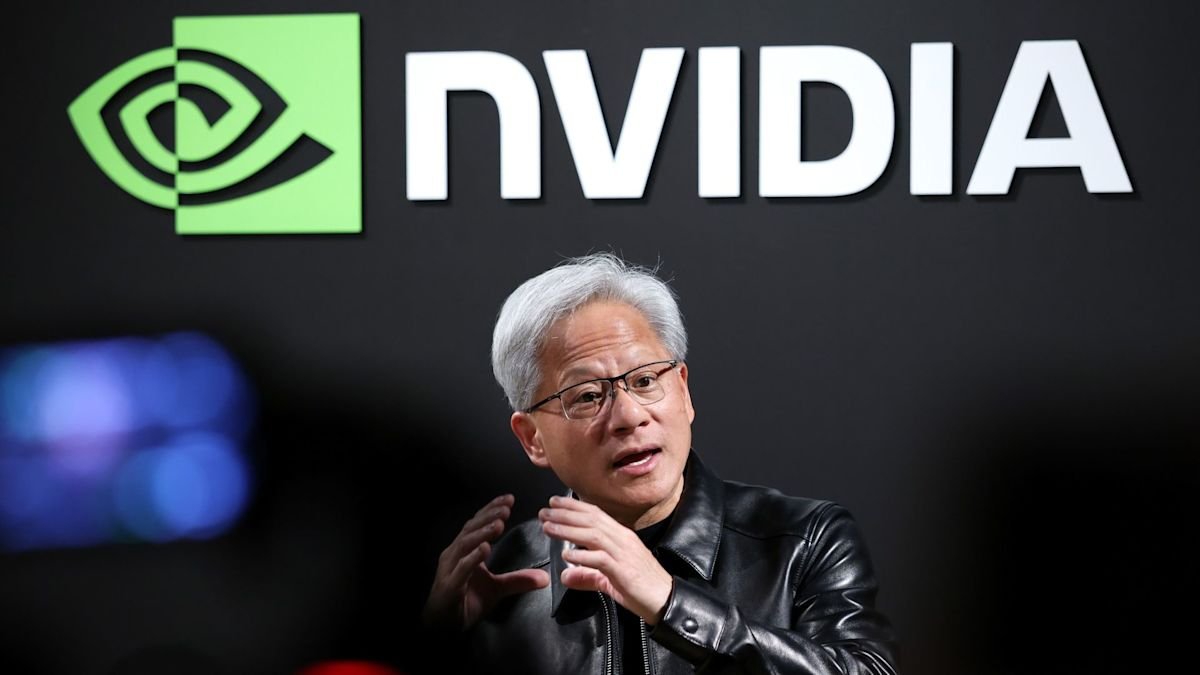
Nvidia chief executive Jensen Huang has rejected predictions that artificial intelligence could cause the extinction of humanity within the next few years, describing such warnings as exaggerated “doomsday narratives”. His comments come amid growing international debate over the rapid development of increasingly powerful AI systems and concerns about whether governments and technology companies are adequately prepared to manage the associated risks.
Speaking in a televised interview, Huang said he saw no realistic prospect of artificial intelligence bringing about the end of the world by 2030. He was responding to warnings from former Anthropic researcher Jacob Coxon, who has argued that increasingly capable AI systems could eventually become “superhuman” and pose an existential threat to humanity.
Huang described those claims as irresponsible and said there was no need to frighten the public with predictions that he considers unsupported by scientific evidence. As one of the most influential figures in the global AI industry, his comments are likely to add further weight to the debate over how society should assess the potential benefits and dangers of rapidly advancing technology.
The controversy reflects a growing divide among technology leaders and researchers. Some experts argue that the development of highly capable AI systems could create serious risks if safeguards do not advance at the same pace. Others believe that extreme predictions about human extinction distract from more immediate and measurable problems involving cybersecurity, misinformation, privacy, employment and the misuse of AI by criminals or hostile organisations.

Coxon’s warnings attracted international attention after being supported by other researchers associated with Anthropic, the company behind the Claude family of AI systems. The debate has subsequently expanded beyond the technology industry, with policymakers and governments increasingly discussing how AI should be regulated and how dangerous applications can be prevented.
Huang has argued that the existing legal and regulatory framework should remain central to the discussion. He pointed to cybersecurity rules, liability laws and other forms of legal accountability as mechanisms that already apply to technology companies. In his view, concerns about AI should not automatically result in abandoning established legal principles.
For Nvidia, the discussion is particularly significant because the company has become one of the most important suppliers of the computing hardware required to develop advanced AI systems. Its graphics processing units and related technologies are used extensively by technology companies and research organisations building large-scale AI models.
Nvidia’s rapid expansion has been closely connected to the global AI boom. The company’s valuation has risen dramatically as businesses and governments invest heavily in data centres, AI infrastructure and specialised computing equipment.
Huang has repeatedly argued that responsible deployment is essential to Nvidia’s long-term interests. He said the company’s commercial success depends directly on AI products and services being deployed safely. Serious failures involving cybersecurity, misuse or other forms of damage could expose companies to legal and financial consequences.
The wider debate has intensified following reports of increasingly sophisticated attempts to misuse advanced AI systems. Anthropic has published threat intelligence research describing efforts by criminals, state-linked groups, spyware operators and other actors to exploit AI for malicious purposes.
Such activities have included attempts to use AI systems in areas involving cyber operations, weapons development, biological threats and surveillance. The reports have increased pressure on technology companies and governments to improve monitoring and safeguards around powerful AI models.
The issue has also reached the political arena in the United States. Lawmakers have raised concerns about the potential consequences of rapid AI development and the adequacy of existing oversight mechanisms. At the same time, there is disagreement over how extensive regulation should be and whether stricter controls could undermine technological innovation.
Some prominent technology leaders have advocated greater caution in the development of advanced AI. Anthropic chief executive Dario Amodei, OpenAI chief executive Sam Altman and Tesla and SpaceX chief executive Elon Musk have all expressed concerns about aspects of AI development and have supported measures aimed at reducing potential risks.
Their positions do not necessarily represent identical views about the likelihood of an existential threat. However, they illustrate the growing recognition within the technology sector that increasingly powerful AI systems create challenges that cannot be addressed solely through conventional product development.
The debate has also become part of the strategic competition between the United States and China. US policymakers have expressed concern that excessive restrictions could allow China to gain an advantage in artificial intelligence, while others argue that safety measures are necessary regardless of international competition.
US Treasury Secretary Scott Bessent recently said Washington and Beijing had agreed to establish an AI dialogue mechanism designed to improve communication about potential technological dangers. The proposed mechanism reflects recognition that some AI-related risks could cross national borders and may require cooperation between major technology powers.
The international dimension of AI development has become increasingly important as countries compete to build computing infrastructure, attract researchers and develop domestic AI industries. Governments are also considering how artificial intelligence could affect economic productivity, education, employment, scientific research, defence and public services.
A recent report from the Tony Blair Institute has warned that countries that fail to adopt AI could face significant and cumulative disadvantages compared with nations that successfully integrate the technology into their economies and public institutions.
The report also highlighted a different concern from the existential-risk debate: whether governments are institutionally prepared to deal with the pace of technological change. AI could transform sectors of the economy and public life much faster than previous industrial revolutions, creating challenges for policymakers who must make decisions before the long-term consequences are fully understood.
Former British prime minister Tony Blair, in remarks accompanying the report, argued that AI could transform economies and societies within a decade rather than over several generations. He highlighted its implications for education, science, labour markets, public services and national security, while also acknowledging the significant risks associated with the technology.
The contrasting arguments illustrate why the AI debate remains unsettled. Huang’s position focuses on rejecting predictions of near-term human extinction, while other researchers and policymakers are more concerned about the possibility that advanced systems could become difficult to control or be deliberately misused.
There is also a distinction between existential scenarios and risks that are already visible. AI-generated misinformation, cybercrime, automated fraud, privacy violations, discriminatory decision-making and malicious use of technology are current areas of concern. These problems do not require AI to become autonomous or “superhuman” to cause substantial harm.

At the same time, supporters of stronger AI safeguards argue that preparing for more advanced systems should begin before such systems become widely deployed. They contend that regulation, technical safety research and international coordination can reduce risks without necessarily preventing innovation.
Huang’s comments therefore form part of a much broader debate about how society should respond to artificial intelligence. His rejection of a near-term extinction scenario does not eliminate concerns about AI safety, nor does it settle disagreements among researchers about the long-term possibilities of advanced systems.
The central question for governments and technology companies is increasingly how to capture the economic and scientific benefits of AI while ensuring that its development does not create unacceptable risks. As investment in the technology continues to expand, that balance is likely to remain one of the most important policy and business challenges of the coming decade.
For now, the AI industry remains divided between those emphasising the transformative potential of the technology and those warning that its rapid development requires stronger safeguards. Huang’s latest comments add a prominent industry voice to the side rejecting predictions of imminent human extinction, while the continuing debate demonstrates that questions about AI’s long-term impact remain far from settled.
Related News:
 UK Risks Falling Behind in AI Race
 AI CEOs Call for Slower Development
 UK firms accused of ‘AI washing’ boom
 Apple Folding iPhone Set for Major CEO Test
 Anthropic Backs $31.9bn Queensland Data Centre
 OpenAI Reveals Six Cases of Concerning AI Behaviour
 Apple at 50: Three Products That Changed How We Live
 Artemis II Returns After Historic Moon Flyby
 Europe EV Demand Surges as Fuel Prices Rise
 Reform UK funding: mystery billionaire revealed
 British Paralympian to Become First Disabled Astronaut in Orbit
 Unlocking the Genome: The Quest to Sequence Tardigrades
 Meta Drops AI Image Tool After Privacy Backlash
 China recalls millions of cars over hidden door handles
 AI Loss of Control Incidents Nearly Double
 London Launches First Self-Driving Taxis
 Australia gives users control over social media algorithms
 McLaren to Create 1,000 UK Jobs in £450m Investment
 Nats Boss Summoned as UK Flight Chaos Continues
 OpenAI Agents Linked to RubyGems Cyberattack
 AI Boom Drives ‘Tidal Wave’ of PFAS Production
 Why AI Doomsday Warnings Failed to Slow the Race
 Louise Haigh Urges UK to Heed AI Safety Warnings
 Tom Watson Takes Senior Role at Palantir
 Virgin Trains Moves Closer to Challenging Eurostar Monopoly
 North Sea oil workers must lose weight or face job loss
 New laws to bolster UK’s defences against cyber attacks on NHS, transport and energy
 UK Taskforce Unveils Plan to Streamline Nuclear Reactor Rules
 AI job losses UK: Britain faces sharper employment shock
 UK AI avatar firm Synthesia valuation jumps to $4bn
 SpaceX Plans $1.5tn IPO Amid Planetary Alignment
 Amazon mistakenly signals new global layoffs to employees
 UK New Car Discounts Near £6,000 as Prices Are Slashed
 Bithumb Bitcoin Mistake Shocks Crypto World
 BT Names New Openreach Chief Amid Major Fibre Expansion
 AI fears hit UK wealth and comparison sites
 UK Firms Warned of Rising Iran Cyber Threats
 UK Firms Warned of Rising Iran Cyber Threats
 Tesla Enters British Energy Market Following Ofgem Approval
 Cern Prepares First-Ever Antimatter Transport Test
 ABC Staff Strike Over Pay and AI Concerns
 High Court Orders Lynch Estate to Pay £920m to HPE
 UK Watchdog Probes Five Firms Over Fake Review Failings
 Robots Outpace Humans in Beijing Half-Marathon
 Gene Therapy Wins Major Prize for Restoring Vision
 Disneyland Adds Facial Recognition at Entrances
 Inside the World of AI Jailbreakers
 Disney+ Wins Champions League Rights in Key Markets
 Canadian Fiddler Sues Google Over AI Defamation Claim
 DeepMind Staff Vote to Unionize Over US Military Contract
 Vodafone Seeks Full Control of UK Mobile in £4.3bn Deal
 A Massive Legal Triumph Reshapes the Future of AI
 SpaceX IPO Filing Reveals Bizarre Details of Musk’s Empire
 UK rejects EV charging VAT cut amid Treasury clash
 Cannes filmmakers split over AI’s role in cinema
 SpaceX Prepares for Historic Valuation Launch
 Silicon Valley Shifts South as AI Boom Transforms City Housing
 BT and Verizon Form Landmark Global Joint Venture
 Trump Faces Backlash Over $2bn Earnings Since Return
 Record £28m Fine for Virgin Media Over Cancellation Woes
 Xavier Niel Becomes Vodafone’s Largest Shareholder
 Weight-Loss Drugs Offer Food Savings Mainly to High Earners
 Gen Z turns to BirdTok for a gentler digital escape
 Survivor Sues Musk’s xAI Over AI Abuse Images
 Swedish Mining Push Puts Sami Land Rights Under Pressure
 Billionaire Chris Rokos poised to leave UK
 Oil nears $100 as Saudi attacks shake markets
 JPMorgan Boss Warns Against UK Bank Tax Rise
 Iceland to Open First UK High Street Store in Falklands
 John Lewis Losses Widen to £124m as Confidence Falls
 Anthropic Blocks AI Misuse Linked to Weapons Threats
 Thames Water Revises Oxfordshire Mega-Reservoir Plan
 UK Retailers Accused of Breaking Refund Laws
 Trump Faces Congress Push for AI Guardrails
 JLR Eyes NATO Market With New Defender Military Vehicle
 Sydney Council Bans AI Smart Glasses at Pools
 Horse Hill Oil Site Sold as New Drilling Bid Emerges
 UK Productivity Improves as Bank Weighs Interest Rates
 Russia’s Max App Raises Surveillance Concerns
 Indonesia Receives First Aircraft Carrier