Published: 23 September 2026. The English Chronicle Desk. The English Chronicle Online.
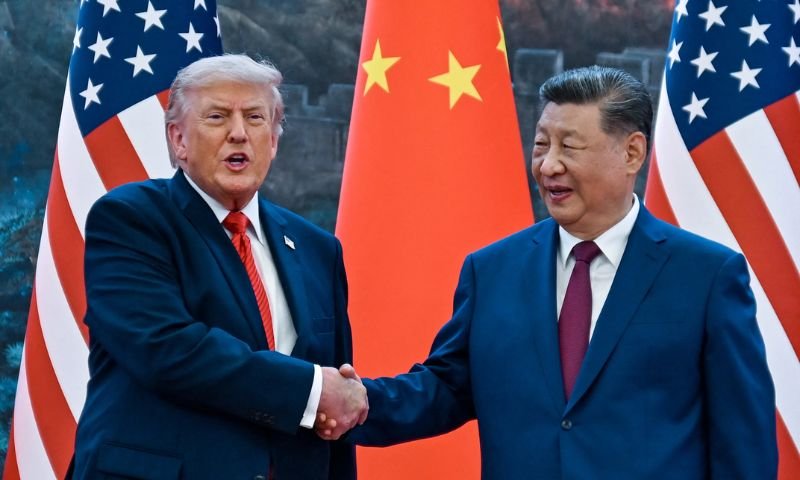
US President Donald Trump and Chinese President Xi Jinping are preparing for a closely watched meeting in Washington, with artificial intelligence, trade and Taiwan expected to feature prominently as the two countries attempt to manage a relationship marked by deep strategic distrust. Xi’s visit is his first state visit to the United States since 2015 and represents the second face-to-face meeting between the two leaders this year.
The meeting comes several months after Trump and Xi met in Beijing in May, when both sides spoke about developing what they described as a relationship of “strategic stability”. Despite those discussions, disagreements over trade, technology restrictions, export controls and geopolitical issues have continued.
The latest meeting is therefore taking place against a complicated backdrop. Washington and Beijing have both expressed an interest in preventing relations from deteriorating further, but their competing interests make substantial agreements difficult. Analysts quoted in recent reporting have described expectations for major breakthroughs as limited, with the immediate focus likely to be on managing disagreements rather than resolving them.
Artificial intelligence has emerged as one of the most significant new areas of competition between the two countries. Both governments view advanced AI technology as strategically important, while simultaneously recognising that uncontrolled development could create risks affecting national security and wider society.

Trump has repeatedly stressed the importance of maintaining the US lead in artificial intelligence. He has argued that Washington should continue developing the technology rapidly rather than slowing its progress because of concerns about regulation or safety.
At the same time, US and Chinese officials have been discussing the possibility of establishing a mechanism for communication over AI-related risks. US Treasury Secretary Scott Bessent recently proposed an AI safety mechanism following talks with Chinese Vice-Premier He Lifeng. The proposal appears to be focused on maintaining communication and responding to serious incidents rather than creating a comprehensive international agreement governing AI development.
The idea of an emergency communication channel reflects concerns that increasingly powerful AI systems could create problems that cross national borders. UN Secretary-General António Guterres has also called for greater dialogue between countries with advanced AI capabilities, comparing the need for communication to the mechanisms used by the United States and Soviet Union during the Cold War.
China has responded differently to some of the concerns raised in Washington. Beijing has introduced measures requiring certain AI-generated material to be labelled and has imposed restrictions on some applications. Chinese authorities have also sought greater control over what AI chatbots can generate, reflecting the country’s broader approach to regulating online information.
However, Chinese officials have rejected claims that the country’s AI development should be slowed because it represents an exceptional threat. Beijing has criticised what it regards as attempts to portray China’s technological progress as dangerous and has argued that confrontation could undermine efforts to establish effective global AI governance.
The disagreement is closely connected to the wider technology competition between the two countries. Washington has imposed restrictions on China’s access to some advanced semiconductors that are important for developing sophisticated AI systems. The United States has also introduced other technology-related measures affecting Chinese companies and products.
Chinese officials and analysts have argued that such restrictions are intended not only to address security concerns but also to limit China’s technological development. That perception creates an additional obstacle to cooperation on AI safety, because Beijing may view US proposals for safeguards through the broader lens of strategic competition.
Trade is another major issue expected to dominate the Trump-Xi discussions. The two countries reached a temporary trade truce at a summit in South Korea last year. The arrangement included a pause on some tariff measures and an agreement involving Chinese exports of rare earth materials that are important to industries around the world.
That arrangement is due to expire in November, giving both sides an incentive to discuss whether it should be extended. Beijing has an interest in longer-term relief from tariffs, while Washington has sought to retain economic leverage in negotiations with China.
Rare earths are particularly important because they are used in a wide range of technologies and industrial products. Any disruption to their supply could affect manufacturers that depend on Chinese exports.
Despite the trade tensions, China’s exports have remained strong. The resilience of Chinese trade gives Beijing an important economic factor to consider as it approaches negotiations with Washington.
Taiwan represents another highly sensitive issue. Beijing regards Taiwan as part of China and has repeatedly opposed US military support for the island. Washington, meanwhile, has longstanding security commitments and arms sales arrangements involving Taiwan.
The issue has become more prominent since the previous Trump-Xi meeting. The US president agreed to pause a major package of arms sales to Taiwan after the Beijing summit, and further US weapons sales have since become part of the wider discussion surrounding relations with China.
The possibility that Taiwan could become linked to broader US-China negotiations has generated concern among some US lawmakers. The issue is particularly sensitive because Beijing considers Taiwan a core national interest and has repeatedly warned against external involvement.
China’s ambassador to the United States said ahead of the meeting that Taiwan and human rights were among Beijing’s red lines, underscoring the limited room for compromise on some issues.
The Taiwan question also demonstrates why the relationship cannot be reduced to trade and technology. Washington and Beijing are competing over military influence, regional security and the future balance of power in the Indo-Pacific.
Beyond Taiwan, the two governments also have significant differences over international conflicts. China has maintained close relations with Russia since Moscow’s full-scale invasion of Ukraine in 2022, while Washington continues to support Ukraine.
China’s relationship with Iran is another issue. Beijing is one of Iran’s major trading partners and a major buyer of its oil. The US has sought to pressure countries maintaining economic ties with Tehran, while China has criticised aspects of Washington’s approach to the Middle East.
These differences are likely to limit the scope for a broader strategic agreement between Trump and Xi. Although both governments have reasons to avoid a further deterioration in relations, they continue to pursue different objectives on many major international issues.
The presence of leading technology executives at a White House state dinner for Xi also reflects the growing importance of AI and technology in the bilateral relationship. Executives from major US technology companies are expected to attend, highlighting the commercial and strategic significance of artificial intelligence.
The meeting also carries symbolic significance. Xi’s visit to Washington comes more than a decade after his previous US state visit, while Trump has adopted a different tone towards China at various points during his current presidency. Public gestures of cooperation have increased at times even as disagreements over technology, trade and security have persisted.
The two governments are therefore attempting to manage an unusual combination of cooperation and rivalry. They remain economically interconnected while competing for technological leadership and influence in Asia and beyond.
For AI, the immediate objective may be to establish communication mechanisms that can reduce the risk of serious incidents rather than to settle the broader competition over technological supremacy. Proposals for an AI notification or emergency mechanism suggest that both sides recognise the need for some form of direct communication even while disagreeing over regulation and development.

The broader challenge is that trust remains limited. US officials remain concerned about China’s technological ambitions, while Chinese officials view American restrictions as attempts to contain China’s rise. That mutual suspicion makes even areas of potential cooperation difficult to separate from the larger strategic competition.
The Trump-Xi meeting is consequently expected to focus heavily on maintaining stability and managing disputes. Trade, AI, Taiwan, technology restrictions and wider geopolitical questions will all test the ability of the two governments to keep communication open.
The outcome will be closely watched because decisions made by Washington and Beijing can have consequences well beyond their bilateral relationship. Their policies affect global technology supply chains, international trade, semiconductor markets, rare-earth supplies and security arrangements across the Indo-Pacific.
For now, the central question is not whether the United States and China have resolved their strategic differences, but whether their leaders can establish enough communication and practical cooperation to prevent those differences from escalating. AI has become an important part of that challenge, adding a rapidly developing technological dimension to an already complex relationship between the world’s two largest economies.
Related News:
 US Awaits Iran Reply on New Ceasefire Proposal
 Hormuz Talks Near Critical Stage
 China mine blast death toll rises to 90
 Indonesia Receives First Aircraft Carrier
 US Clears Nvidia AI Chip Sales to China in Policy Shift
 UK New Car Discounts Near £6,000 as Prices Are Slashed
 ABC Staff Strike Over Pay and AI Concerns
 Apple at 50: Three Products That Changed How We Live
 Artemis II Returns After Historic Moon Flyby
 Robots Outpace Humans in Beijing Half-Marathon
 Reform UK funding: mystery billionaire revealed
 Southeast Asia Turns to Russia Amid Energy Crisis
 Trump approval plunges amid Iran war fears
 Trump Threatens UN Budget Cuts as US Pushes ‘Trade Over Aid’ Agenda
 Canadian Fiddler Sues Google Over AI Defamation Claim
 Doomsday Clock Nears Midnight Amid Global Crises
 Trump: Preventing Nuclear Iran Is ‘The Only Thing That Matters’
 UK firms accused of ‘AI washing’ boom
 Houthis Strike Saudi Arabia as Middle East Tensions Rise
 China recalls millions of cars over hidden door handles
 Trump announces major US oil deal with Venezuela
 UK Risks Falling Behind in AI Race
 Turkmenistan Begins Fixing Major Methane Mega-Leaks
 London Launches First Self-Driving Taxis
 Trump Hardens Canada Trade Stance as Talks Stall
 Trump Calls Iran War ‘Small Potatoes’ Despite US Deaths
 Australia gives users control over social media algorithms
 Trump Pledges $5,000 if Republicans Win Midterms
 North Korea Expands Uranium Facility at Yongbyon
 Anthropic Blocks AI Misuse Linked to Weapons Threats
 Saudi Arabia Shuts Oil Pipeline After Drone Attack
 AI CEOs Call for Slower Development
 Why AI Doomsday Warnings Failed to Slow the Race
 South Korea Rules Out Military Role in Iran War
 Tom Watson Takes Senior Role at Palantir
 Middle powers seek new alliances amid Trump era
 Macron and Carney deepen France-Canada ties
 Nvidia chief rejects AI extinction fears
 Trump’s UN Speech Faces Global Scrutiny
 British Columbia Sues OpenAI Over School Shooting
 Trump Eyes Major Belarus Fertiliser Deal Amid Canada Trade Dispute
 Virgin Trains Moves Closer to Challenging Eurostar Monopoly
 Britain deploys RAF specialists to assist Belgium with drone threats
 New laws to bolster UK’s defences against cyber attacks on NHS, transport and energy
 Canada Passes Carney’s First Budget in Tight Parliamentary Vote
 Two National Guard Soldiers Critically Injured Near White House
 American Mother Extradited From UK to U.S. on Murder Charges
 China Halts Nvidia H200 Chips Despite US Export Approval
 Trump Fed bid heads to Supreme Court
 ‘Black Tax’: Burden, Pride and Survival for African Workers
 AI job losses UK: Britain faces sharper employment shock
 Thousands Protest ICE Operations in Nationwide US Day of Action
 BT Names New Openreach Chief Amid Major Fibre Expansion
 The Kill Line: A Shifting Vision of the American Dream
 Oil Slides, Stocks Jump on Trump Peace Signals
 Artemis II: Humanity Returns to the Moon After Decades
 UK Stands Firm on Falklands Amid US Rift
 Oil Prices Surge Above $120 Amid Iran Blockade Fears
 Trump orders US troop pullout from Germany
 DeepMind Staff Vote to Unionize Over US Military Contract
 US ‘Narco Boat’ Strikes Draw Global Outcry
 Global Conflict Hits Home As Bullock Warns Of Economic Pain
 Fear and Betrayal: The Chilling Case of Kouri Richins
 High Street Crisis: Fears Grow Over Post Office Closures
 Oil Markets Face ‘Red Zone’ Threat Amid Iran Crisis
 Kevin Warsh sworn in as Fed chair amid economic backlash
 Maldives Cave Diving Tragedy Raises Safety Alarm
 Discontent grows around Putin amid war strain
 Is JD Vance the Ultimate Fall Guy for Trump’s Shaky Iran Deal?
 Trump Faces Backlash Over $2bn Earnings Since Return
 Ukraine Creates Long-Range Strike Command
 Powerful 7.7-Magnitude Earthquake Hits Eastern Indonesia
 Gen Z turns to BirdTok for a gentler digital escape
 AI Loss of Control Incidents Nearly Double
 Swedish Mining Push Puts Sami Land Rights Under Pressure
 UK plans tougher Israel stance with settlement trade ban
 New Mexico Takes Facebook to Trial Over Data Scandal
 OpenAI Reveals Six Cases of Concerning AI Behaviour
 US Networks Suspend Trump White House Pool Coverage
 Tropics May Wait Longest for Net-Zero Climate Benefits