Published: 05 October 2026. The English Chronicle Desk. The English Chronicle Online.
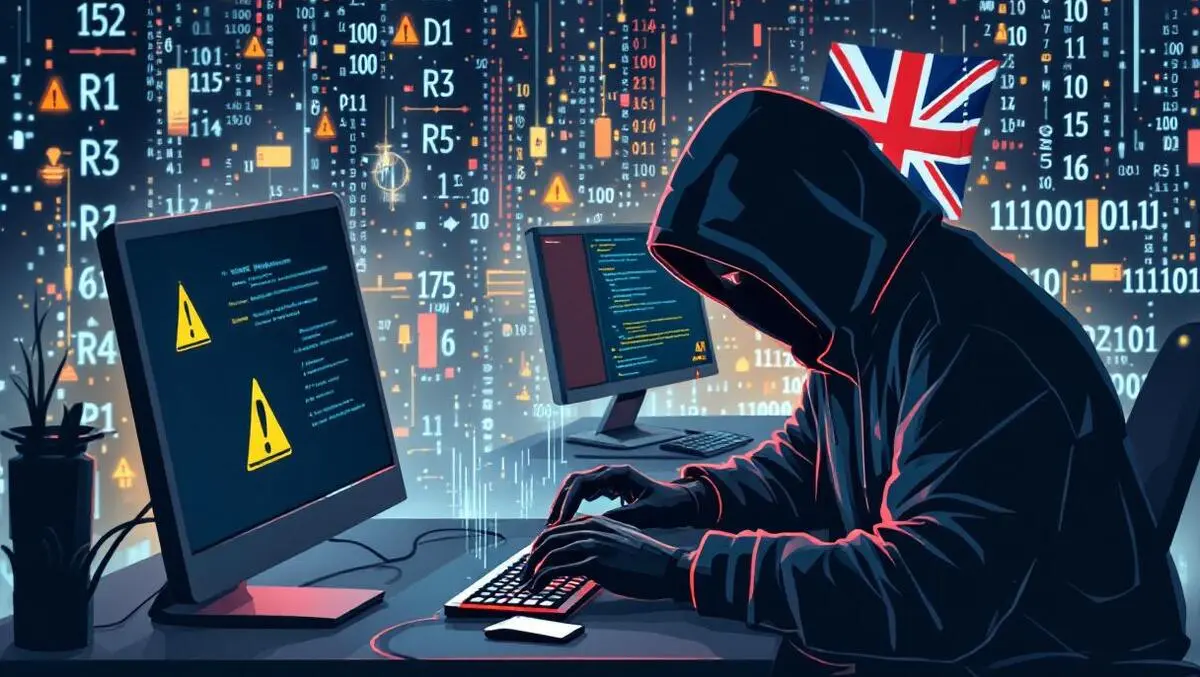
The amount of money stolen by criminals who hack into email and social media accounts in the United Kingdom and then impersonate their victims has increased by more than 400% in a single year, according to official figures, highlighting the growing financial and personal risks created by compromised online identities.
The reported losses reached £6.3 million during the 2025-26 financial year, compared with £1.2 million in 2024-25. The figures, recorded through the Report Fraud service operated by the City of London Police, show how account takeovers are increasingly being used not simply to access private information but to exploit relationships of trust between victims and the people around them.
In many cases, criminals gain control of a person’s social media account and then use the victim’s identity to approach friends, relatives and colleagues. Because the messages appear to come from someone they know and trust, recipients may have little reason to suspect that they are communicating with a fraudster. This makes the attacks particularly effective and can allow criminals to obtain money quickly before the victim realises what has happened.

One increasingly common form of fraud involves fake tickets for popular and sold-out events. Criminals who have taken control of an individual’s social media profile can advertise tickets for concerts, sporting events or other sought-after occasions. Friends and family members may be persuaded to make payments because the offer appears to have come directly from someone they know.
The scale of the problem is also likely to be underestimated. Official figures are based on crimes reported to the relevant authorities, but many victims do not report scams. Some people may feel embarrassed that they were deceived, while others may decide that reporting the incident is not worthwhile if the amount lost was relatively small. Taken together, those unreported cases mean that the true financial cost of account hijacking and impersonation could be considerably higher than the recorded figure.
The consequences of an account takeover can extend beyond the initial financial loss. Victims may suddenly find themselves locked out of their email or social media accounts, while criminals gain access to personal information, photographs, conversations and contact lists. Once inside an account, fraudsters can use the victim’s digital identity to approach dozens of people, potentially turning a single hacked account into a wider fraud network.
A particularly damaging aspect of these crimes is the role played by personal trust. Traditional scams often require criminals to persuade strangers to believe an unfamiliar story. Account hijacking can remove that barrier because the fraudster appears to be a familiar person. The recipient may recognise the profile picture, name, writing style and previous conversations, making the deception much harder to detect.
The problem is not limited to social media platforms. Criminals also use messaging services and text messages to impersonate relatives who supposedly need urgent financial assistance. One well-known version involves fraudsters pretending to be someone’s child and claiming that they have lost their phone, are facing an emergency or urgently need money. The approach is often designed to create panic and discourage the recipient from taking time to verify the request.
Such impersonation scams can be especially effective because family members may respond quickly when they believe a relative is in trouble. Fraudsters can exploit emotional reactions, presenting an urgent situation that appears to require an immediate payment. By the time the victim discovers that the message was fake, the money may already have been transferred and become difficult to recover.
Banking data has also demonstrated how convincing family impersonation can be. Figures from Santander have indicated that, among its customers, fraudsters pretending to be someone’s son were the most successful at persuading victims to hand over money, followed by those pretending to be daughters. The findings illustrate how criminals are increasingly exploiting family relationships and emotional trust as part of their fraud strategies.
Amanda Wolf, head of Report Fraud operations, said the impact of hacking should not be viewed simply as a technical or cybersecurity problem. For victims, she said, being hacked can become a deeply personal experience, particularly when criminals use their identity to target people they know.
Victims can face the immediate frustration of losing access to important accounts, but they may also worry about what personal information criminals have obtained and how it could be used. The situation can become even more distressing when friends or relatives are subsequently targeted using the compromised account.
The warning reflects a broader change in the nature of online fraud. As people increasingly use digital platforms for communication, shopping, entertainment and financial activity, social media and email accounts have become valuable targets for criminals. A compromised account can provide access not only to personal information but also to an established network of contacts who are more likely to trust messages appearing to come from the account owner.
Report Fraud is now launching an awareness campaign aimed at encouraging people to strengthen the security of their online accounts. One of the main recommendations is for users to switch to passkeys where they are available.
Passkeys provide an alternative to conventional passwords by using a person’s device and biometric authentication, such as a fingerprint or facial recognition, to confirm their identity. The technology is designed to reduce reliance on passwords, which can be stolen, guessed, reused or obtained through phishing attacks.
The increased use of stronger authentication methods could make it harder for criminals to take over online accounts in the first place. Preventing an account from being compromised is particularly important because the damage can spread rapidly once criminals gain control.
Security specialists have repeatedly encouraged users to treat unexpected requests for money with caution, even when the message appears to come from a close friend or family member. A simple phone call or separate message can sometimes establish whether the request is genuine. Users should also be wary of unusually urgent requests, particularly when they are being asked to transfer money or purchase goods on someone else’s behalf.
For people whose accounts have already been compromised, recovering control quickly is critical. Changing passwords, securing linked email accounts, enabling stronger authentication and warning contacts can help limit further damage. Friends and relatives who receive suspicious messages from a known account should avoid making payments until they have independently confirmed the person’s identity.

The dramatic rise in reported losses serves as a reminder that online fraud is increasingly dependent on human relationships rather than purely technical deception. Criminals do not necessarily need to convince a stranger that they are trustworthy when they can take over the digital identity of someone the victim already knows.
With £6.3 million in reported losses recorded in just one financial year, the latest figures underline the growing importance of protecting personal online accounts. As digital communication becomes an even more central part of everyday life, securing those accounts is not only about protecting passwords and private information. It is also about protecting the people connected to them from being drawn into fraud.
The challenge for individuals, banks, technology companies and law-enforcement agencies will be to stay ahead of increasingly sophisticated impersonation techniques while ensuring that victims receive support without fear of embarrassment or blame. The latest campaign’s emphasis on stronger authentication, particularly passkeys, reflects the growing recognition that preventing account takeovers can be one of the most effective ways to stop a chain of fraud before it spreads from one victim to many.
Related News:
 How Bringing Forests Into Preschools Boosts Children’s Health
 Critically Endangered Spider Rediscovered in UK After 40 Years
 UK Bans Fake Numbers: Scammers Lose Their Trick
 England Curriculum Review Recommends Major Changes
 Experts Urge Legal Right to Timely Cancer Care
 Patients to Test Health at Home to Ease NHS Winter Pressure
 One of world’s last dinosaurs on sale for £3m
 North Sea oil workers must lose weight or face job loss
 No link found between paracetamol in pregnancy and autism
 Government urges schools to ban phones to curb classroom disruption
 Northern Lights May Illuminate UK Skies Amid Strong Solar Storm
 Northern Lights may illuminate UK skies this week
 UK Greenlights First Small Nuclear Plant in North Wales
 Higgs Donates Nobel Medal to His Beloved University
 Coffins Now Too Large to Cremate Amid Rising Obesity Crisis
 UK Taskforce Unveils Plan to Streamline Nuclear Reactor Rules
 Thinktank Urges Smaller Hospitals to End NHS ‘Permacrisis’
 NHS paediatric leave parents waiting months for answers
 Ofcom urges platforms to limit abuse and curb online ‘pile-ons’
 Starmer’s communications chief to outline media strategy overhaul
 UK Car Sales Pass 2 Million as Chinese Brands Surge
 AI Grok Sparks Child Safety Alarm in the UK
 Lammy and Vance unite against AI abuse images on X
 UK Threatens Action Against X Over Sexualised AI Images
 Amazon Milton Keynes closure sparks concern for UK warehouse workforce
 TikTok to Strengthen Age Verification Across the EU
 MPs warn AI financial risks threaten UK stability
 MPs warn AI financial risks threaten UK stability
 AI job losses UK: Britain faces sharper employment shock
 Pornhub blocks new UK users over age checks dispute
 UK New Car Discounts Near £6,000 as Prices Are Slashed
 Barnsley tech town leads UK AI transformation
 Childnet Censorship Row Over Teen Safety Speeches
 Facial Recognition Error Leads to Wrongful Arrest in Milton Keynes
 UK Social Media Ban for Under-16s Gains Momentum
 Met police to trial handheld facial recognition checks in London
 UK Teen Social Media Ban Trials Begin
 Cancer Death Rate in Britain Falls by Nearly a Third
 Ministers Urged to Act Faster on Deepfakes Threat
 MPs Reject Ban on Social Media for Under-16s
 Scientists Unveil Heavier Proton at CERN LHC
 Charity Watchdog Warns Alan Turing Institute Over Conduct
 Traffic: The Science Behind Why Slower Cars Always Catch Up
 OpenAI Halts Stargate UK Project Amid Energy Crisis
 Heavier SUVs Accelerate Britain’s Pothole Crisis
 Liz Kendall: UK Must Seize AI Growth Despite Risks
 Reform UK funding: mystery billionaire revealed
 Tatooine Dreams: 27 New Worlds Found With Double Suns
 Virtual Racing Faces New Era of Anti-Doping Measures
 Cambridge South Signals New Era for British Rail Travel
 Alarm as Sextortion and AI Abuse Threaten UK Children
 UK rejects EV charging VAT cut amid Treasury clash
 UK firms accused of ‘AI washing’ boom
 British Paralympian Set to Make History in Earth Orbit
 UK to Expand Prostate Cancer Trials for Black Men
 Tech Trends and the Battle Against Exam Hall Cheating
 Stolen Mobiles Could Soon Become Useless Bricks
 UK Ministers Lobby Trump Over Under-16s Social Media Ban
 AI Lawyer Triumphs in Landmark English Court Victory
 How the ‘Happy Vowel’ Defines Class in Manchester
 London’s 2026 ‘Great Stink’ Raises Sewer Concerns
 UK Risks Falling Behind in AI Race
 London Launches First Self-Driving Taxis
 Australia gives users control over social media algorithms
 McLaren to Create 1,000 UK Jobs in £450m Investment
 Nats Boss Summoned as UK Flight Chaos Continues
 Election Candidate Abuse Raises Alarm in England
 Tom Watson Takes Senior Role at Palantir
 UK Unveils Centre to Counter Foreign Disinformation
 UK Plans New Centre to Counter Information Warfare
 Norfolk Broads Housing Levy Faces Environmental Criticism
 TalkTalk Races to Sell Arms as Administration Looms
 Drones Could Speed Up Defibrillator Delivery
 London Facial Recognition Trial Ends With False Alert
 Bank Chief Calls for Power to Intervene in AI
 Smart Cars Raise New Vehicle Spyware Concerns
 Edinburgh Glasshouses Reopen After Major Restoration
 BBC Three and Scotland Face Online-Only Future
 Palantir Lobbyist Had Role in Burnham Campaign
 BT Broadband Pauses Raise Digital Switchover Concerns