Published: 11 June 2026. The English Chronicle Desk. The English Chronicle Online.
The British landscape is quietly undergoing a profound and deeply unsettling transformation underneath our very feet. Millions of residential properties face an unprecedented threat from severe climate-related subsidence over the coming decades. This urgent warning stems from an extensive and meticulous analysis conducted by the British Geological Survey. Our changing climate is actively altering the fundamental stability of the ground we build upon. Hotter and drier summers are becoming increasingly frequent across the entire United Kingdom landscape. This intensifying global heating causes clay-rich soils to shrink dramatically during extended dry spells. The sudden volumetric shrinkage actively drags down the heavy concrete foundations of vulnerable homes.
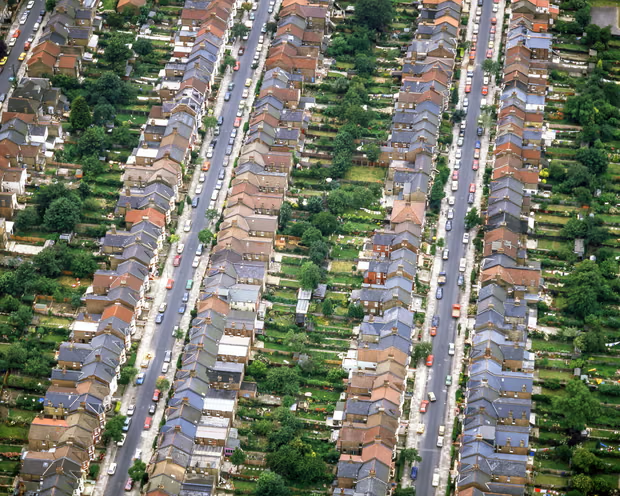
Scientists warn that urgent mitigation measures are now absolutely vital to protect our properties. The most vulnerable areas notably include London, Essex, Kent, and large swathes of East Anglia. This vulnerable geographic tranche extends all the way from Oxford up to the Wash. The underlying geology in these specific regions is particularly prone to dramatic volume changes. Property owners in these areas must prepare for a fundamentally shifting subterranean reality. The combination of vulnerable soil and shifting weather patterns creates an incredibly challenging situation. Many modern homeowners remain entirely unaware of the hidden dangers lurking beneath their gardens.
Anna Harrison is a prominent and highly respected leading scientist at the British Geological Survey. She explained the innovative methodology used by her dedicated team to uncover these findings. The brilliant researchers successfully combined complex geotechnical information with advanced long-term climate projection models. They carefully analysed potential soil volume changes alongside expected rainfall and temperature scenarios. This comprehensive approach allowed them to identify regions most susceptible to future shrink-swell subsidence. The resulting data paints a remarkably clear and deeply concerning picture for southern England. Most of the highly vulnerable zones are concentrated within the sprawling London metropolitan area.
London is unfortunately expected to experience the most dramatic shifts in future weather patterns. The capital faces a truly devastating double whammy of geological and meteorological environmental factors. London also possesses an incredibly high density of buildings compared to other UK regions. This extreme density naturally multiplies the potential economic impact of any widespread structural damage. Many historic properties feature older foundations that cannot withstand such extreme moisture fluctuations. These buildings have coped well historically but may experience significant structural movement quite soon. The situation is highly likely to worsen significantly as global temperatures continue climbing.
The immediate financial and practical consequences of property subsidence are notoriously severe and stressful. Structural shifting can substantially reduce the overall market value of a beloved family home. Furthermore, major mortgage lenders will routinely refuse to finance properties with active subsidence issues. This refusal can completely trap homeowners in unsellable properties during a financial crisis. Identifying the early warning signs of this geological phenomenon is crucial for prevention. Homeowners should look out for distinct diagonal cracks appearing around window frames. These telling cracks also frequently manifest around internal and external door frames quite suddenly.
Other common indicators of trouble include noticeably sloping floors and sticking doors or windows. Resolving these complex structural issues often requires extensive and highly specialized engineering intervention. Teams may need to stabilize the surrounding land through deep and expensive underpinning. This invasive process involves strengthening the existing foundations with additional concrete or steel supports. In many severe cases, underground utility pipes must be completely dug up and replaced. Nearby trees and heavy vegetation may also require careful removal to protect the soil. Plants draw immense moisture from the ground, which further exacerbates the shrinking process.
The historical data from recent years strongly supports these alarming scientific future forecasts. In 2025, the United Kingdom experienced its warmest spring on record by far. That same remarkable season was also officially the driest seen in over fifty years. This extreme weather triggered an immediate and unprecedented surge in home insurance claims nationwide. The UK insurance industry faced over £153m of subsidence claims within six months. This staggering financial figure demonstrates the immediate reality of the escalating climate crisis today. Hotter and drier conditions will inevitably become increasingly frequent over the next century.
Consequently, the total number of properties susceptible to shrink-swell damage is rising steadily. The advanced BGS dataset provides multiple scenarios based on future global carbon emission levels. By 2070, approximately 500,000 properties could be affected under a low emissions scenario. This optimistic outcome assumes global leaders successfully achieve the ambitious goals of the Paris agreement. However, the outlook worsens dramatically under a more realistic medium emissions scenario instead. This medium pathway aligns closely with our current global emissions trajectories and behaviors. Under this likely scenario, more than 1.8m properties will face severe subsidence risks.
Highly populated parts of London are uniquely vulnerable to these shifting subterranean forces. The specific boroughs of Camden, Islington, and Barnet face the highest overall statistical risks. The historic county of Kent in the south-east also faces immense geological pressure. Under the medium emissions scenario, the statistics for the capital are particularly stark. The number of affected properties in London will comfortably exceed 26% by 2070. This means more than one in four London homes could suffer structural damage. Such a widespread crisis would place an immense strain on the insurance sector.
Harrison emphasized that dry weather and high temperatures are the primary driving factors here. The cyclical nature of our changing seasons is becoming increasingly extreme and unpredictable. We must prepare for hotter, drier summers alongside much warmer and wetter winter periods. This seasonal volatility creates the perfect conditions for severe clay shrinkage and swelling. The constant movement breaks down the structural integrity of the soil over time. Property owners must become far more proactive in monitoring their homes for changes. Regular structural inspections could help catch minor shifting before it becomes a disaster.
The British government may need to update building regulations to reflect this risk. Future homes must be constructed with much deeper and more resilient foundation systems. Existing properties will require innovative retrofitting solutions to adapt to this changing landscape. The cost of inaction will undoubtedly be measured in billions of pounds sterling. National infrastructure, including roads and rail tracks, also faces similar geological threats. We can no longer treat the ground beneath us as an unchanging certainty. The climate crisis is actively reshaping the very foundations of our daily lives.
Addressing this quiet crisis requires a coordinated effort from scientists, insurers, and politicians. Homeowners need clear guidance on how to mitigate risks within their own properties. Planting the right trees at safe distances can make a significant protective difference. Improving local drainage systems can also help maintain stable soil moisture levels year-round. Public awareness of this creeping environmental threat remains dangerously low among average citizens. The English Chronicle will continue to track this vital story as it develops. Our collective future depends on how well we prepare for these hidden subterranean challenges.
Related News:
 ‘Extinct’ Antelope Returns to Sahara, Bringing Hope
 Norfolk Coastal Graves at Risk as Erosion Deepens Family Anguish
 Eden Project Founder Celebrates 25 Years of Nature’s Hope
 Winter plant bloom signals climate breakdown in UK
 Avocado Crisis: The Hidden Violence Behind Exports
 Smaller farms funding prioritised in England nature plans
 Storm Goretti leaves Cornwall homes without power
 Wildlife Targets at Risk in England and Northern Ireland
 BP’s Influence Sparks Controversy in UK STEM Education
 Polycrisis Anxiety Leaves Many Feeling Trapped in the Present
 Kent Residents Continue Facing Water Supply Disruptions
 No Gas Boiler Ban as UK Warm Homes Plan Backs Heat Pumps
 Judi Dench Champions Fight to Save London’s Green Spaces
 Half the World’s Largest Cities Face Rising Water Stress
 Record-Breaking Heat Looms Over South-East Australia as Catastrophic Fire Risk Escalates
 UK joins North Sea wind grid pact with nine European nations
 Devon hosts first high-density hydro power system
 US-Style Pickup Trucks Surge on UK Roads
 Storm Chandra floods Somerset, triggers major incident declaration
 Reform UK Taps Boris Ally to Shape Party Nature Agenda
 James Valentine Retires from ABC After Cancer Battle
 UK Pfas Action Plan Faces Criticism From Environmentalists
 Wigan Dump Crisis Sparks Health and Safety Alarm
 Norway’s Petrol Car Sales Hit Record Low Amid EV Surge
 Fish disco plan could save 90% of fish at Hinkley C
 Santos Wins Landmark Greenwashing Case in Court
 Gentoo Penguins First Birds on Australian Territory Hit by Bird Flu
 Flood risk homes surge across England builds
 Chikungunya Spread in Europe Climbs as Climate Warms
 Deer Shooting England: New Plan to Protect Woods
 Illegal Waste Dumping: New Drone Unit Launched
 Scotland’s Emissions Plans Face Criticism for Over-Reliance on Technology
 Germany Faces Backlash Over Scrapped Renewable Heating Mandate
 Group Expands Legal Claim Over South West Water Pollution
 Scotland’s Climate Plans Face Scrutiny Over ‘Science Fiction’ Targets
 Humans – not Mimmo the dolphin – need managing in Venice lagoon
 Ancient Stepwells Revived Amid India’s Deepening Water Crisis
 Tropical Flowers Shift Blooming Due to Climate Crisis
 Greenpeace $345m Ruling Sparks Appeal Battle
 Wood burner legal threats spark council row
 Net Zero Cheaper Than One Fossil Fuel Crisis, UK Told
 Musk’s xAI Permit Sparks Fury Over Power Plant Expansion
 London Considers New SUV Charges to Improve Road Safety
 MPs Slam Agency Over Failing Fight Against Waste Dumping
 Middle East Deluge: Freak Storms Bangle Desert Nations
 Evacuations Ordered as California Wildfires Spread Fast
 UK Records Earliest Spring as Nature Awakens Fast
 Tragic End to Outback Search as Floods Claim a Life
 UK Fossil Fuel Expansion Risks Global Climate Collapse
 Miles Jupp: How the Magic of the Ashes Sparked a Bold Blag
 RSPB Urges Summer Bird Feeder Removal to Curb Disease
 The Toxic Scent Destroying Life in a Lancashire Town
 Britain Facing Sharp Decline in Rare Butterfly Species
 15 Million Oysters Set to Revive UK Marine Ecosystems
 Fuel Prices Drop Despite Geelong Refinery Blaze
 Big Tech Lobbies EU to Hide Massive Datacentre Emissions
 Medellín’s Green Revolution: A Global Climate Blueprint
 Celestial Magic: The Lyrid Meteor Shower Returns
 Nature Watchdog Accused of Halting Vital Site Protections
 Fury in Cornwall over herbicide plan to tackle weeds
 Broken Promises: Murray-Darling River Crisis Deepens
 Governments Fail Murray-Darling River Projects
 Renewable Energy as a Strategic Shield for UK Security
 Escobar’s Hippos May Be Moved to India Zoo
 Capitalism ‘Suicidal’, Warns Petro at Climate Summit
 UK Firm Faces Backlash Over US Oil Advertising Deals
 The Lion Guard: How One Woman Heals the Zambezi Valley
 Record May Heat to Cold Front in Eastern Australia
 Ukraine strikes Tuapse as oil disaster worsens
 The Campaign To Save Britain’s Original Bramley Apple Tree
 EU Deal May Force UK Ban on Cancer-Linked Weedkiller
 Stolen Hives: The Great Australian Bee Heist
 Charities Demand Labour Deliver Urgent New Clean Air Act
 UN Faces Crucial Vote on Landmark ICJ Climate Ruling
 Saving Australia’s Koalas: The Search for a Hero
 Man killed in shark attack on Great Barrier Reef
 Hope for mountain bongos returns to Kenya
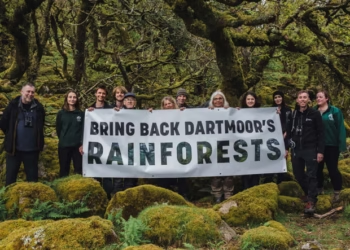 Saving Our Lost Rainforests: The Battle for Dartmoor
 Outcry Over Kushner’s Albanian Resort
 Painted Lady Invasion: Millions of Orange Butterflies Head to UK