Published: 24 August 2026 | The English Chronicle Desk | The English Chronicle Online
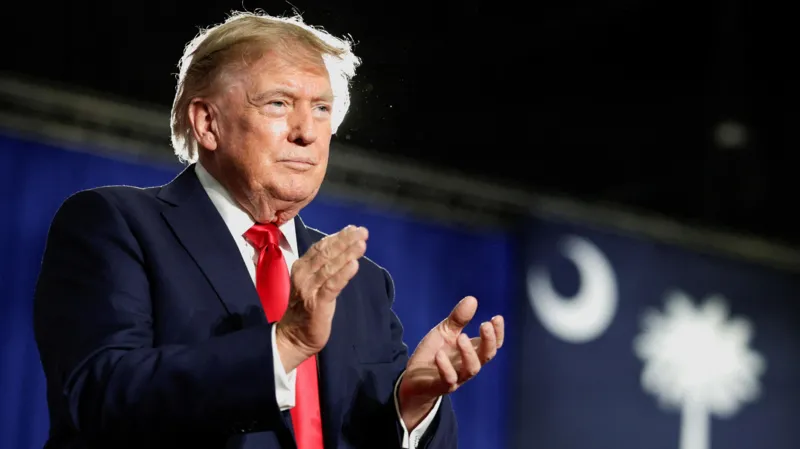
The relationship between the United States and Canada has entered a new and uncertain phase after trade negotiations collapsed, prompting President Donald Trump to impose fresh tariffs on Canadian goods and accusing Ottawa of seeking the advantages of US statehood without accepting the responsibilities that would come with it.
Trump’s latest remarks have added a political dimension to an already serious economic dispute. Speaking after the breakdown in negotiations, the US president said Canada wanted “the benefits of being a state, without being one”, reviving his repeated suggestion that Canada could become the 51st US state.
Canadian Prime Minister Mark Carney has rejected that approach and described the new American tariffs as a serious miscalculation. He said the measures were intended to “hurt and divide” Canada and confirmed that Ottawa would respond with its own tariffs.
The dispute threatens one of the world’s most deeply integrated trading relationships and could put additional pressure on businesses and consumers on both sides of the border.

Trade talks collapse after last-minute disagreements
Negotiations between Washington and Ottawa had appeared to be moving towards a possible agreement earlier in the week. However, optimism quickly disappeared as both sides accused the other of changing its position during the final stages of the discussions.
Carney said the United States had demanded too much while offering too little in return. He argued that some of Washington’s conditions would have restricted Canada’s ability to establish independent trade relationships with other countries.
“We cannot accept what they’ve offered and we will not give what they’ve asked,” Carney said.
US officials presented a different account, accusing Canada of introducing new demands and withdrawing from positions that had previously been agreed.
US Trade Representative Jamieson Greer said Washington had been prepared to reduce some tariffs as part of a proposed agreement, but negotiations ultimately failed to produce a deal.
There is currently no clear indication of when formal negotiations might resume.
New tariffs raise the stakes
Following the collapse of the talks, Trump announced new 50% US tariffs on a range of Canadian products. The measures cover approximately $20bn (£15bn; C$28bn) worth of imports, representing about 5% of total Canadian imports into the United States.
Affected products include wine, dairy products, cement, clothing and hockey equipment, among other goods.
The new duties come on top of existing American tariffs affecting Canadian steel, aluminium, automobiles and lumber.
For businesses operating across the border, the additional charges could increase production and transportation costs at a time when supply chains are already adjusting to years of trade uncertainty.
Trump has defended tariffs as an important part of his economic strategy, arguing that import duties encourage domestic manufacturing, protect American industries and create jobs.
Critics, however, warn that tariffs are ultimately paid through higher costs within supply chains and can result in increased prices for consumers.
The impact could be particularly significant in industries that depend heavily on cross-border trade, where products and components may pass between Canada and the United States multiple times before reaching consumers.
Canada promises retaliation
Carney has said Canada will respond to the new American tariffs “dollar-for-dollar”, with counter-measures expected to take effect from 8 September.
The Canadian government has described the retaliation as reluctant but necessary to defend Canadian economic interests.
“We’re at war when you get attacked. We got attacked,” Carney said, using unusually forceful language to describe the economic confrontation.
The statement reflects the seriousness with which Ottawa is treating the dispute. Although the two countries remain close allies and share one of the world’s longest international borders, economic disagreements have increasingly complicated their relationship.
Canadian political leaders from across the political spectrum have largely supported Carney’s response.
Conservative opposition leader Pierre Poilievre described the American tariffs as unjustified, while Ontario Premier Doug Ford accused Trump of being untrustworthy. British Columbia Premier David Eby also criticised Washington’s demands, saying they could reduce Canada to the economic equivalent of a US state.
Quebec Premier Christine Fréchette warned that Canadian jobs could be affected, while Alberta Premier Danielle Smith called for the two countries to return to negotiations.
Trump’s ’51st state’ comments add political tension
The trade dispute has been made more complicated by Trump’s repeated comments about Canada becoming part of the United States.
Since returning to the White House, Trump has frequently referred to Canada as a potential 51st state, comments that have been strongly rejected by Canadian political leaders.
The latest remarks came as trade negotiations were already under severe strain.
For Canadians, the comments have become symbolic of concerns that Washington is seeking greater control over Canada’s economic policy.
Eby argued that American demands restricting Canada’s ability to negotiate trade agreements with other countries would undermine Canada’s independence.
The issue has therefore moved beyond tariffs and market access. It has become a broader debate about Canada’s economic sovereignty and its relationship with its largest trading partner.
A deeply connected economic relationship
The scale of the relationship makes the dispute particularly significant.
Canada, the United States and Mexico conduct approximately $1.6tn (£1.2tn) in annual trilateral trade under the United States-Mexico-Canada Agreement, or USMCA.
The agreement replaced the North American Free Trade Agreement during Trump’s first presidency and was designed to preserve the highly integrated supply chains that connect the three economies.
Industries ranging from automobiles and agriculture to energy and manufacturing rely on predictable cross-border commerce.
The current dispute is also occurring alongside a mandatory review of the USMCA. Canada and Mexico had formally asked for the agreement to be renewed for another 16 years, but Washington declined to renew it in its existing form.
Carney acknowledged that the latest breakdown was “certainly not good news” for the future of the agreement.
The uncertainty could make long-term investment decisions more difficult for companies that rely on North American supply chains.
Businesses caught between two governments
The immediate concern for companies is the uncertainty created by rapidly changing trade rules.
Businesses importing Canadian products into the United States could face higher costs because of the new duties. Canadian exporters, meanwhile, may find themselves less competitive in the American market.
Companies could attempt to pass those costs on to consumers, absorb some of the losses themselves or look for alternative markets.
None of those options is straightforward.
Canada and the United States have developed an unusually integrated economic relationship over decades, meaning that replacing one market with another can be difficult and expensive.
The dispute could also affect investment decisions if businesses begin to question whether North American trade rules will remain stable.
A difficult test for Carney
The confrontation represents a significant political test for Carney, who has attempted to balance defending Canadian interests with maintaining a workable relationship with Washington.
His decision to walk away from the proposed agreement has earned support from opposition politicians and provincial leaders, but the economic consequences could become increasingly difficult to manage if tariffs remain in place.
The prime minister has argued that Canada cannot accept conditions that undermine its ability to determine its own economic policies.
At the same time, he faces pressure to protect industries and workers affected by the trade dispute.
The government’s decision to introduce matching tariffs demonstrates that Ottawa is prepared to absorb some economic pain in an effort to force Washington back towards the negotiating table.

No easy route back to an agreement
For now, the immediate future of US-Canada trade remains uncertain.
Trump has warned that Canada would struggle to win a trade war against the United States, while Carney insists that Ottawa will defend the country’s interests.
Both governments have strong incentives to avoid a prolonged confrontation. American businesses rely heavily on Canadian raw materials, energy and manufactured goods, while Canadian exporters depend heavily on access to the much larger US market.
That mutual dependence could eventually create pressure for another round of negotiations.
But the latest collapse shows how difficult those discussions may be.
The dispute is no longer simply about individual tariffs. It involves competing visions of trade policy, economic sovereignty and the future of the North American trading system.
For businesses and consumers, the priority will be restoring predictability. For the two governments, however, the political stakes are now much higher.
As Canada prepares its retaliation and the United States begins enforcing its latest tariffs, one of the world’s closest economic partnerships faces one of its most serious tests in decades.
Related News:
 Two National Guard Soldiers Critically Injured Near White House
 US National Guard Member Killed in DC Shooting
 American Mother Extradited From UK to U.S. on Murder Charges
 US Cities Erupt in Protests Against Trump’s Venezuela Military Action
 Federal Immigration Shift: Officers Leave Louisiana for Minneapolis
 Trump Says US Must ‘Own’ Greenland to Block Russia, China
 Government Unveils Northern Powerhouse Rail Plans
 Trump press secretary attacks reporter over ICE question
 Kyrsten Sinema Faces High-Profile Lawsuit Over Marriage Interference
 ICE detainee death may be investigated as homicide in Texas camp
 Greenland Crisis Forces Europe to Draw a Line With Trump
 China Halts Nvidia H200 Chips Despite US Export Approval
 Nasa Prepares Historic Round-the-Moon Artemis II Mission
 ‘He Believed Help Was Coming’: Why Iran’s Protesters Feel Betrayed
 Trump Fed bid heads to Supreme Court
 Historic Abu Dhabi Talks Bring US, Ukraine and Russia Together
 Trump Pulls Canada from His Controversial ‘Board of Peace’ Plan
 Trump officials continue false claims after Alex Pretti shooting
 Partial US Government Shutdown Hits Homeland Security Funding
 Thousands Protest ICE Operations in Nationwide US Day of Action
 Epstein Files Reveal Trump Officials’ Emails with Financier
 Sinema payment row deepens after $9,000 transfer claim
 US-Cuba Negotiations Shift as Oil Blockade Looms
 Portland Mayor Demands ICE Leave After Protest Violence
 Nurses’ families fear breakup under UK immigration crackdown
 California Democrats Vow Trump Reckoning
 Trump’s Surgeon General Pick Evades Vaccine Questions
 Buffalo Refugee Tragedy: Border Patrol Neglect Leads to Death
 Minnesota Medicaid Funding Blocked Amid New ‘Fraud’ Crackdown
 New Poll Reveals Reform UK Stance on British Citizenship
 Adelaide University Faces Backlash Over Event Cancellation
 Ukraine war briefing: Zelenskyy offers help to Saudi Crown prince on combatting Iranian drones
 Utah Woman Found Guilty of Poisoning Husband for Inheritance
 The Draft Debate: Anxiety Rises as Iran Conflict Persists
 Can King Charles Calm Trump on Key US Visit?
 US Airman Rescued in Daring Mission After F-15 Shot Down in Iran
 Melania Trump Epstein remarks spark survivor backlash
 Trump Signals Hope for New Iran Talks as Ceasefire Fades
 Trump’s Presidency: A House of Cards Collapsing?
 US Catholics Caught Between President and the Pope
 Louisiana Tragedy: Eight Children Die in Mass Shooting
 GOP Senator Criticizes Trump’s Feud With Pope Leo XIV
 Trump Starts $166bn Tariff Refund Process
 UK Stands Firm on Falklands Amid US Rift
 Investigation Into Anti-Trump Motives After Gala Shooting
 Trump Defiant After Washington Hotel Shooting
 Identity Revealed: Suspected Washington Gunman Named
 Trump orders US troop pullout from Germany
 Judge halts deportation of Yemeni refugees in US
 White House Security Case Sparks Political Firestorm
 Trump approval plunges amid Iran war fears
 Ohio’s Battle for Trust: Democrats Vying to Flip the Buckeye State
 US ‘Narco Boat’ Strikes Draw Global Outcry
 Afghan Families Left in Limbo Face Risk of Deportation
 Florida Surgeon ‘Devastated’ Over Fatal Surgery Error
 Tensions Emerge in Netanyahu-Trump Alliance
 US Awaits Iran Reply on New Ceasefire Proposal
 Immigration Judges Fear Pressure in Trump Era
 Fear and Betrayal: The Chilling Case of Kouri Richins
 Trump Sends 5,000 More US Troops to Poland
 Kevin Warsh sworn in as Fed chair amid economic backlash
 US green card applicants must apply from abroad, DHS says
 Tulsi Gabbard exits after turbulent intelligence tenure
 DeSantis’s ‘Alligator Alcatraz’ Faces Final Shutdown
 Trump’s Grip on the GOP Tested in Texas Senate Battle
 House Curbs Trump’s War Powers in Rare Rebellion
 Trump Urged to Condemn UFC Fighter Over Obama Slurs
 US Military Pacific Boat Strike Kills Three People
 Is JD Vance the Ultimate Fall Guy for Trump’s Shaky Iran Deal?
 US Loan Caps Threaten Future of Physician Assistants
 AOC Backs El-Sayed in Tight Michigan Senate Primary
 US Courts Back Trump on Park Signage Removals
 Trump’s Mount Rushmore Speech: A Divisive Anniversary
 Trump Intervenes in Fifa World Cup Balogun Ban
 NCAA Rules Unchanged After Supreme Court Transgender Ruling
 Conservative Groups Challenge ABC Broadcast Licenses
 US Airman Avoids British Court in Indecent Exposure Case
 Trump Refuses to Sign Housing Bill, But Law Takes Effect
 Florida Executes One of Its Oldest Death Row Prisoners
 Houthis Strike Saudi Arabia as Middle East Tensions Rise