Published: 05 May 2026 . The English Chronicle Desk. The English Chronicle Online.
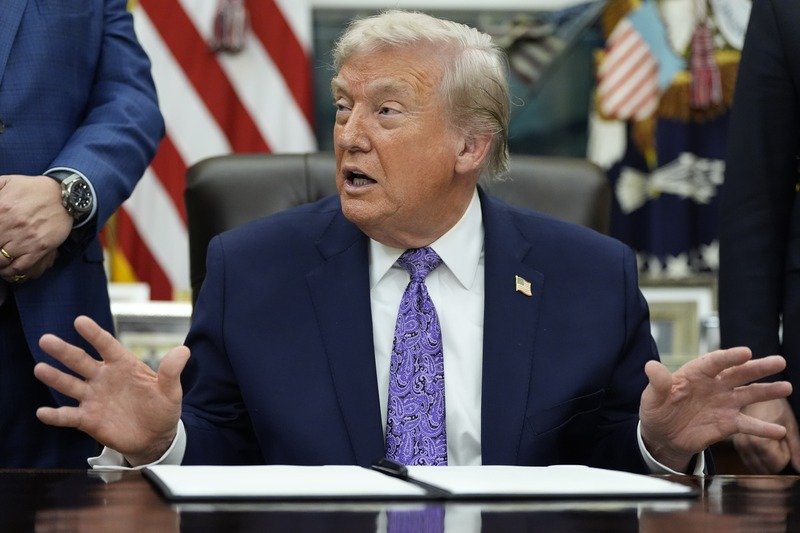
A high-stakes political battle is unfolding in Indiana, where Republican lawmakers who defied Donald Trump are facing a fierce electoral test that could reshape the balance of power within the party. As voters head to the polls, the contest has evolved into more than a routine primary election—it has become a referendum on loyalty, independence and the influence of Trump over the Republican Party’s future direction.
At the centre of the contest are seven Republican state senators who broke ranks with Trump by opposing a controversial mid-decade redistricting plan. The proposal, strongly backed by the former president, aimed to redraw congressional district boundaries in a way that critics argued would further consolidate Republican power in the state. When the effort failed, Trump responded forcefully, calling for the lawmakers to face primary challenges and urging supporters to back candidates aligned with his political agenda.
The result has been a wave of Trump-endorsed challengers entering races across the state, transforming local contests into nationally watched political battles. These challengers have received not only public backing from Trump but also significant financial support from allied political groups. According to campaign data, more than $7 million has been spent on television advertising alone, much of it targeting incumbent Republicans who voted against the redistricting proposal.

One of the most closely watched races is in District 38, where Greg Goode, a first-term Republican representative, faces a strong challenge from Brenda Wilson, a city council member endorsed by both Trump and Mike Braun. The race has become emblematic of the broader struggle within the party, pitting grassroots decision-making against top-down political pressure. Goode’s decision to oppose the redistricting plan followed a town hall meeting in which constituents overwhelmingly rejected the proposal, highlighting the tension between local representation and national партий expectations.
Another key figure is Jim Buck, a long-serving legislator from Kokomo who now finds himself under intense political pressure. After 18 years in office, Buck is facing a well-funded challenger backed by Trump-aligned groups. He has openly criticised the level of outside influence in the race, describing it as unprecedented interference from Washington in state-level elections. Campaign advertisements targeting Buck have taken a particularly aggressive tone, reflecting the increasingly combative nature of the contest.
Despite the intensity of these individual races, the broader political landscape in Indiana remains largely unchanged. Republicans currently hold seven of the state’s nine congressional districts, and analysts suggest that the overall balance of power is unlikely to shift dramatically as a result of the primary elections. The redistricting proposal itself focused on altering districts centred around urban areas such as Indianapolis and Gary, both of which have historically leaned Democratic.
Spending patterns further illustrate the dynamics at play. Democratic groups have invested relatively little in the primaries, accounting for less than one percent of the total $25.5 million in advertising expenditures. This suggests that the primary battle is less about inter-party competition and more about internal संघर्ष within the Republican Party itself.
The stakes are significant, with half of Indiana’s 50 state Senate seats and all 100 seats in the state House of Representatives up for election in 2026. The outcome will not only determine the composition of the state legislature but also send a broader signal about the direction of the Republican Party nationwide.

Indiana’s situation stands in contrast to other states, where Republican lawmakers have largely aligned with Trump’s redistricting efforts. In Texas, Missouri, North Carolina and Ohio, similar measures have been passed with relatively little resistance. Meanwhile, states such as California have seen Democratic-led redistricting efforts, reflecting the broader national struggle over electoral boundaries and political representation.
In the final days leading up to the vote, Trump intensified his efforts to mobilise supporters. Using his social media platform, he called on voters to back what he described as “true MAGA warriors” and provided direct links to polling locations through party campaign tools. His involvement has ensured that the Indiana primaries are being closely watched across the country as a test of his continued influence over Republican voters.
The outcome of these races could have lasting implications. A victory for the incumbents would suggest that local political considerations and voter preferences can outweigh national pressure, potentially encouraging other lawmakers to assert greater independence. Conversely, success for Trump-backed challengers would reinforce his grip on the party and signal that defiance carries significant political risk.
As ballots are cast and counted, Indiana finds itself at the centre of a defining moment in American politics. The results will not only shape the state’s political future but also offer insight into the evolving identity of the Republican Party in the post-presidential era of Donald Trump. Whether loyalty or independence prevails, the consequences are likely to resonate far beyond the state’s borders.
Related News:
 Trump Receives Machado’s Nobel Medal in White House Meeting
 Thousands Protest ICE Operations in Nationwide US Day of Action
 Epstein Files Reveal Trump Officials’ Emails with Financier
 Thousands Protest ICE in New York Against Trump Deportation Campaign
 Trump orders US troop pullout from Germany
 Tensions Emerge in Netanyahu-Trump Alliance
 Former ICC prosecutor condemns US sanctions
 Houthis Strike Saudi Arabia as Middle East Tensions Rise
 Putin Intensifies Territorial Demands Before US Talks
 Trump to Recheck Green Cards from 19 Nations After DC Attack
 Shock US Raid: Maduro Pleads Not Guilty in Manhattan Court
 Trump Escalates Minnesota Immigration Surge Amid Rising Tensions
 Greenland Faces Pivotal Summit Over Arctic Power Struggle
 Trump Threatens Strong Action If Iran Executes Protesters
 Machado Trump medal gesture reshapes Venezuela power struggle
 Iran unrest slows under brutal crackdown and global tensions
 US Considers Asylum for British Jews Amid Rising Antisemitism
 EU Says US Ties Have Suffered ‘Big Blow’ After Greenland Crisis
 Russia Strikes Kyiv and Kharkiv as Peace Talks Enter Day Two
 Trump Praises ‘Terrific’ Petro After White House Talks
 Clinton Testimony Erupts in Fiery Exchange
 Trump Faces Questions Over Iran Conflict Plan
 UK Prepares Aircraft Carrier for Middle East Crisis
 Pete Hegseth Iran War Remarks Spark Alarm
 Yvette Cooper: UK Must Follow Principles, Not US Pressure
 Trump’s Harsh Rhetoric on Iran Sparks Global Alarm
 Michigan Battleground: Middle East Crisis Stirs US Senate Race
 Trump Signals Hope for New Iran Talks as Ceasefire Fades
 Trump Faces Crisis as Iran Reopens Hormuz Tensions
 GOP Senator Criticizes Trump’s Feud With Pope Leo XIV
 Charles Faces Trump Test in High-Stakes US Visit
 UK Stands Firm on Falklands Amid US Rift
 Investigation Into Anti-Trump Motives After Gala Shooting
 US Calls Australia Media Law “Foreign Extortion”
 USS Gerald R Ford Ends Record Naval Deployment
 Oil Prices Surge Above $120 Amid Iran Blockade Fears
 US Court Ruling Reshapes Voting Rights Landscape
 US states redraw maps after voting rights ruling
 Judge halts deportation of Yemeni refugees in US
 Activists allege abuse after Gaza flotilla seizure
 Trump likens US Navy actions to ‘pirates’
 Global order shifts amid Trump-era turmoil
 Trump approval plunges amid Iran war fears
 Giuliani hospitalised in critical condition
 Ohio’s Battle for Trust: Democrats Vying to Flip the Buckeye State
 Trump Threatens UN Budget Cuts as US Pushes ‘Trade Over Aid’ Agenda
 Trump warns Iran as Middle East tensions surge again
 Australia pushes Pacific security pact amid China tension
 US ‘Narco Boat’ Strikes Draw Global Outcry
 US Court Restores Abortion Pill Access Temporarily
 Ohio Primaries Set Stage for Crucial Midterms
 Afghan Families Left in Limbo Face Risk of Deportation
 Middle East Crisis Escalates as Oil Routes Shake Markets
 US Awaits Iran Reply on New Ceasefire Proposal
 Putin Declares Russia Victory at Scaled Victory Day Parade
 Fear and Betrayal: The Chilling Case of Kouri Richins
 US judge dismisses Kilmar Abrego Garcia indictment
 Tulsi Gabbard exits after turbulent intelligence tenure
 Hormuz Talks Near Critical Stage
 Trump’s Revenge Drive Deepens GOP Divide
 Zelenskyy warns over Oreshnik threat as Kyiv hit
 Discontent grows around Putin amid war strain
 Gunman Killed After White House Security Shootout
 Trump Claims Iran Peace Deal Near Completion
 Trump Weighs Retreat from Controversial $1.8bn Slush Fund
 US Midterm Primaries: Democrats Target Key Republican Seats
 House Curbs Trump’s War Powers in Rare Rebellion
 Trump’s Iran Legacy Hangs on Tehran Deal
 Trump’s Mount Rushmore Speech: A Divisive Anniversary
 Mystery Grows Over Mitch McConnell’s Health
 Senate Halts Defense Bill Over Iran Clashes
 House Democrats Divided Over Israel Military Funding Bid
 Trump Jokes, Jabs and Press Tensions at WHCA Dinner
 Taliban global ties grow as rights fears mount
 Seoul proposes historic peace talks to replace Korean War armistice
 Is America Ready for an AOC Presidential Run?
 Trump dismisses concerns over 250-day carrier deployment
 Greenland Crisis Forces Europe to Draw a Line With Trump
 Trump Urged to Condemn UFC Fighter Over Obama Slurs
 US Military Pacific Boat Strike Kills Three People