Published: 14 May 2026. The English Chronicle Desk. The English Chronicle Online.
The halls of the United Nations in New York are filled with a sense of anticipation today. Diplomats from every corner of the globe are preparing for a vote that could change our future. This landmark event focuses on the intersection of international law and the urgent global climate crisis. Next week, the General Assembly will decide whether to endorse findings from the International Court of Justice. These findings represent a significant step toward defining what climate justice looks like in a legal sense. For decades, the world has debated the moral obligations of wealthy nations toward the environment. Now, the highest court in the world has provided a much-needed framework for these discussions.
The resolution asks member states to acknowledge their legal responsibility to reduce greenhouse gas emissions. This includes taking meaningful action against the continued use of fossil fuels across the world. Last year, the International Court of Justice published an advisory opinion on these very issues. That opinion was the result of extensive hearings held in the historic city of The Hague. An unprecedented coalition of over one hundred nations originally requested this legal guidance in 2023. At the time, the request was hailed as a historic victory for small island states. These vulnerable nations are often the first to feel the devastating impacts of rising seas.
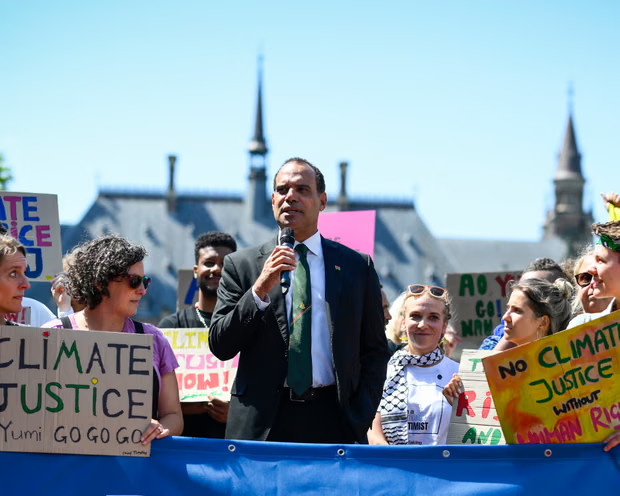
Vanuatu, a small but determined Pacific island nation, has been at the heart of this movement. Its leaders have worked tirelessly to draft a resolution that honors the spirit of the law. They want to ensure that legal theories translate into real protection for people on the ground. As the vote scheduled for May twentieth approaches, Vanuatu is seeking broad international support for it. Ralph Regenvanu, the Vanuatu climate minister, spoke eloquently at a recent United Nations briefing session. He described the resolution as a collective act of confidence in the power of multilateral law. According to Regenvanu, the court’s unanimous decision is a precious gift to the entire world.
The minister believes that this legal clarity provides a common reference point for all global nations. He hopes the upcoming vote will receive even more support than the original legal request. However, the path to this moment has been paved with difficult compromises and intense debates. The text of the resolution has undergone many changes since it was first drafted in February. Originally, the document called for a rapid and quantified phase-out of all fossil fuel production. This bold language was eventually replaced with a softer urge to transition away from them. Furthermore, plans to create an international register for climate damage were removed from the text.
Some of these significant changes occurred due to intense pressure from the United States government. Reports suggest that American diplomats lobbied hard to have the resolution dropped or significantly weakened. Despite these hurdles, Vanuatu’s climate justice envoy, Lee-Ann Sackett, remained focused on a positive outcome. She led the complex negotiations with a commitment to keeping the final text truly meaningful. Sackett noted that many different states raised valid concerns during the long drafting process. Her team worked hard to provide reassurance where it was needed while building necessary safeguards. This balance was essential to ensure the resolution could actually pass in the General Assembly.
The final version of the text acknowledges existing frameworks like the Paris Agreement and UNFCCC. It clarifies that these remain the primary forums for negotiating global responses to climate change. Minister Regenvanu has been careful to stress that the resolution does not adjudicate specific disputes. It does not seek to blame any single nation for the current state of the world. Instead, it calls on all states to comply with obligations established by the highest court. The goal is to help member states understand how to implement their legal duties effectively. This approach aims to unify the international community rather than creating further deep-seated divisions.
Even without a formal UN vote, the court’s opinion is already making a huge impact. Lawyers and activists around the world are using it to support various climate-related legal cases. Judges in different jurisdictions have started to reference the opinion in their own domestic rulings. This shows that the influence of international law extends far beyond the walls of the UN. However, using this legal opinion as a diplomatic lever has proven to be quite difficult. During the climate talks in Belem, some nations were very hesitant to include it. Saudi Arabia, for instance, reportedly described its inclusion as a firm red line in negotiations.
The impact of the court was more visible at a recent conference in Colombia. In Santa Marta, Regenvanu praised delegates for being frontrunners in the fight for our shared planet. He reminded them that international cooperation is indispensable for meeting legal and scientific climate goals. This perspective is gaining traction among nations that feel ignored by traditional power structures in diplomacy. The upcoming vote is increasingly seen as a test of the international legal system’s credibility. If the UN cannot stand behind its own court, many wonder what that means. The integrity of the entire multilateral system seems to be at stake in New York.
Lee-Ann Sackett observed that many nations that rarely speak on climate issues are now engaged. They recognize that this vote is about the authority and the reputation of the court. It is a question of how we translate complex legal concepts into actual global cooperation. Tania Romualdo, representing the Alliance of Small Island States, also shared her perspective on the matter. She emphasized that the importance of this resolution goes far beyond the words on paper. For her members, this is about protecting their territories, their sovereignty, and their basic rights. The process of reaching this point has required many sacrifices from the most vulnerable.
These compromises reflect the difficult reality of modern international negotiations in a very divided world. No nation will get everything it wants from this resolution, but that is often expected. The hope is that a unified voice will send a powerful message to the world. It would signal that the era of climate inaction is finally coming to an end. Leaders are now forced to consider the legal consequences of their environmental policies and choices. This shift in perspective could lead to more ambitious targets in the coming years ahead. As the world watches, the United Nations has a chance to make history next week.
The success of the vote will depend on the courage of leaders to choose unity. Many citizens across the globe are demanding more than just words from their elected officials. They want to see a commitment to justice that is backed by the rule of law. The resolution represents a bridge between scientific reality and the legal obligations of sovereign states. If passed, it will provide a roadmap for future generations to hold governments truly accountable. This is not just a technical legal exercise for diplomats in expensive suits. It is a matter of survival for millions of people living on the coastline.
As the sun sets over the East River in New York, the work continues. Negotiators are spending late nights ensuring that every word of the resolution is perfectly placed. The eyes of the Pacific, the Caribbean, and the entire world are on them now. They carry the weight of history and the hopes of a planet in crisis. Whether the UN can rise to this challenge remains to be seen very soon. The vote on May twentieth will be a defining moment for the twenty-first century. It is a chance to prove that the law can indeed help us survive. Genuine climate justice may finally be within our collective reach if we act together.
Related News:
 Tragic End to Outback Search as Floods Claim a Life
 Ukraine strikes Tuapse as oil disaster worsens
 ‘Extinct’ Antelope Returns to Sahara, Bringing Hope
 Dutch Nationwide Fireworks Ban Expected to Transform New Year Traditions
 US Citizens Warned to Venezuela Flee Amid Paramilitary Threats
 Gulf states warn Trump Iran strikes risk wider Middle East war
 Machado Trump medal gesture reshapes Venezuela power struggle
 Gulf states warn Trump Iran strikes risk wider Middle East war
 Iran unrest slows under brutal crackdown and global tensions
 Japan Prepares for Kashiwazaki Restart After Fukushima Legacy
 Half the World’s Largest Cities Face Rising Water Stress
 The Sound of Mayhem’: Terror and Loss at Mount Maunganui
 Reindeer Deaths Rise as Finnish Herders Blame Border Wolves
 Thousands Protest ICE Operations in Nationwide US Day of Action
 Epstein Files Reveal Trump Officials’ Emails with Financier
 Thousands Protest ICE in New York Against Trump Deportation Campaign
 Sydney Protest Pepper Spray Clash During Herzog Visit
 Cuba Kills Exiles in Speedboat Attack from US Waters
 Greenpeace $345m Ruling Sparks Appeal Battle
 Musk’s xAI Permit Sparks Fury Over Power Plant Expansion
 The Truth Behind Rising Energy Costs and Fossil Fuel Myths
 Yvette Cooper: UK Must Follow Principles, Not US Pressure
 Extreme Weather: Europe Shivers as Cyclone Narelle Hits
 Trump to Deploy “God Squad” Over Gulf Wildlife Protections
 Washington Enlists Musk to Battle Global Hostility Online
 Macron Urges Stability as Trump Jolts Nato and Iran
 Trump Address Sparks Global Backlash Over Iran War Tactics
 Ben Roberts-Smith Arrested Over Alleged War Crimes
 US Waste Crisis: Mexico Branded a Toxic Garbage Sink
 Trump and Tehran Find Common Ground in Landmark Ceasefire
 Cyclone Maila Intensifies to Category Five Strength
 Reeves Slams Trump Over Iran War Lack Of Exit Plan
 US and Iran Pursue Extension of Ceasefire via Pakistan
 Mexico, Spain and Brazil call for Cuba dialogue amid crisis
 Broken Promises: Murray-Darling River Crisis Deepens
 Ukraine Urges UK to Seize Russian Oil Tankers
 US Calls Australia Media Law “Foreign Extortion”
 Escobar’s Hippos May Be Moved to India Zoo
 Capitalism ‘Suicidal’, Warns Petro at Climate Summit
 Oil Prices Surge Above $120 Amid Iran Blockade Fears
 Tragic End to Search for Missing Girl in Alice Springs
 Questions Remain Over The Tragic Bondi Massacre
 The Lion Guard: How One Woman Heals the Zambezi Valley
 Trump orders US troop pullout from Germany
 Activists allege abuse after Gaza flotilla seizure
 Japan Protests Erupt Over Plans to Revise Constitution
 Australia pushes Pacific security pact amid China tension
 Middle East Crisis Escalates as Oil Routes Shake Markets
 FIFA Confirms Global Ban for Benfica Star Prestianni
 Stolen Hives: The Great Australian Bee Heist
 New South Wales Wetland Rescue Legislation Passes
 Tensions Emerge in Netanyahu-Trump Alliance
 US and Mexico Face Heatwave as Floods Batter South Africa
 The Long Way Home: Australia’s High-Stakes Virus Mission
 Trump Warns Iran Ceasefire Is Now on Life Support
 Putin Signals War End as Russian Momentum Stalls
 Fear and Betrayal: The Chilling Case of Kouri Richins
 Scepticism and tight security as Beijing braces for Trump
 US-Mexico Crisis: Cartel Allegations Push Ties to Brink
 Philippine Senator Flees After Days Under Senate Siege
 Solomon Islands Elects China Critic Matthew Wale as Leader
 Tragedy in the Maldives: Inside the Deep Sea Rescue
 US Ebola Case Sparks Urgent Global Screening Measures
 Xi Hosts Putin in Beijing Days After Landmark Trump Summit
 Fragile Truce Shattered as Violence Escapes Diplomatic Control
 The Hunt for Bato: Inside the Hunt for the Fugitive Senator
 Israeli Strikes in Lebanon Kill 10 Amid Ceasefire Strain
 Discontent grows around Putin amid war strain
 Man killed in shark attack on Great Barrier Reef
 Former ICC prosecutor condemns US sanctions
 Bondi Tragedy Survivors Face Online Abuse After Inquiries
 Outcry Over Kushner’s Albanian Resort
 Japan Suffers Plastic Shortage Due to Middle East Crisis
 Aukus Deal Facing Fierce Backing and Historic Criticism
 Thai Princess Bajrakitiyabha Passes Away at 47
 Sentenced to 30 Years: Former Leader’s Secret Drone Plot
 Kyiv Heritage Blazes After Night of Brutal Russian Strikes
 China Storms Claim Fifteen Lives in Tragic Surge
 Japan Bear Hunt: Serial Fridge Raider Sparks Panic
 Houthis Strike Saudi Arabia as Middle East Tensions Rise