Published: 20 May 2026. The English Chronicle Desk. The English Chronicle Online.
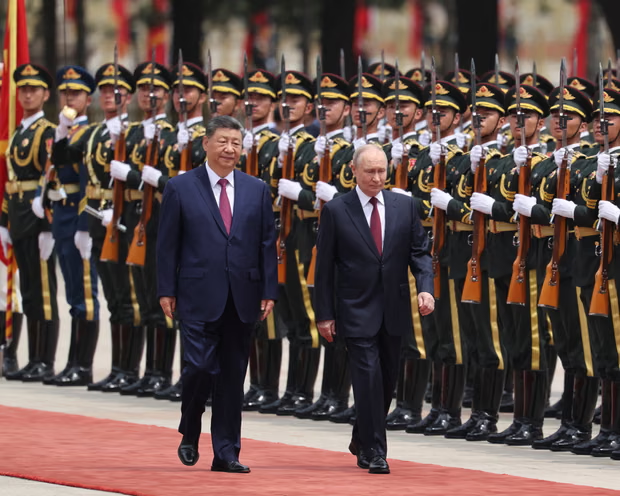
The grand backdrop of the Great Hall of the People in Beijing bore witness to another dramatic shift in global diplomacy on Wednesday morning. Chinese President Xi Jinping welcomed Russian President Vladimir Putin with an elaborate display of military pomp and national pageantry. The carefully orchestrated reception featured ranks of elite Chinese soldiers standing at strict attention against the morning breeze. A full military band played the national anthems of both countries, filling the vast public square with powerful music. Crowds of cheerful children waved small Russian and Chinese flags in a synchronised performance while shouting enthusiastic greetings. The two seasoned statesmen then turned away from the public eye to enter the historic government complex for crucial closed-door talks.
This highly visible display of friendship carried striking similarities to another massive diplomatic event held in central Beijing just last week. The Chinese leader had used the exact same prestigious venue to host a high-profile state visit for United States President Donald Trump. During those previous discussions, the leaders of the world’s two largest economic powers addressed a broad range of complex international issues. Their comprehensive agenda covered essential topics including bilateral trade structures, foreign direct investment, the dangerous conflict in Iran, and the status of Taiwan. The rapid succession of these two major summits highlights the critical position that China now occupies in modern global politics. International observers are closely monitoring the visual presentation and practical outcomes of this latest meeting because of its timing.
The high-stakes discussions between the Chinese and Russian delegations began with an exclusive session known as a narrow format meeting. This private gathering included only a small number of trusted senior officials from both nations to protect highly sensitive information. The format allowed the two leaders to speak directly and candidly about delicate security concerns and mutual strategic goals. Following the conclusion of those initial private talks, the leaders transitioned into a much larger wide format conference. This second phase of the summit brought together extensive delegations of economic experts, military advisers, and regional policy directors. China’s influential Foreign Minister Wang Yi had personally greeted the Russian president upon his arrival at the Beijing airport on Tuesday evening. The veteran diplomat is also scheduled to hold extensive parallel talks with his long-serving Russian counterpart Sergei Lavrov.
According to detailed statements released by Chinese state media, President Xi focused on mutual cooperation during his formal opening remarks. The Chinese leader asserted that both nations must actively support each other with domestic development projects and national revitalisation efforts. He also issued a stark warning about the current state of global politics, suggesting the world faces dangerous instability. The Chinese leader noted that international relations are in serious danger of reverting back to the harsh law of the jungle. This specific phrasing appears to reflect growing anxiety in Beijing regarding shifting alliances and erratic Western foreign policy. By emphasizing the need for order and mutual support, the Chinese leader framed the bilateral partnership as a stabilising force.
President Putin responded with equally strong rhetoric, hailing the current relationship between Moscow and Beijing as truly historic in scope. The Russian leader stated that bilateral cooperation has finally achieved an unprecedented level of trust and mutual strategic value. He specifically reassured his host that Moscow remains a completely reliable and consistent energy supplier for China’s massive manufacturing economy. This reassurance is particularly significant given the ongoing and highly volatile conflict currently disrupting energy markets across the Middle East. The Russian president concluded his opening address by extending an official invitation for President Xi to visit Russia next year. This gesture serves to maintain the established pattern of frequent and highly publicised mutual visits between the two leaders.
The discussion quickly turned toward broader regional crises, with the escalating situation in the Middle East taking center stage during talks. The Chinese president remarked that further military hostilities in that vital region were entirely inadvisable for all global powers involved. State media reports confirmed that the Chinese leader stressed a comprehensive ceasefire is now a matter of the utmost urgency. Beijing has consistently tried to position itself as a responsible and neutral diplomatic mediator in major international conflicts. The ongoing regional instability threatens critical maritime trade routes and the steady flow of imported crude oil into Chinese ports. Therefore, both leaders expressed a shared interest in preventing a wider escalation that could further destabilise international trade.
Reciprocal trade arrangements and new investment flows are undoubtedly at the very top of the political agenda for the Russian delegation. The heavily sanctioned Russian economy continues to face severe strain from the massive financial burdens of Moscow’s ongoing war in Ukraine. Western restrictions have cut off traditional European markets, forcing Russia to rely much more heavily on its powerful eastern neighbour. The Kremlin is eager to secure long-term commodity contracts and increase bilateral trade volumes to stabilize its domestic financial system. However, the economic relationship between the two nations remains visibly unequal, as China holds far greater financial leverage and wealth. Moscow desperately needs reassurance that it still occupies a privileged and irreplaceable position within Beijing’s long-term strategic calculations.
Even as the Chinese government prepared to welcome the Russian delegation, its Ministry of Commerce released a major economic announcement. The ministry officially confirmed that China will proceed with a massive commercial purchase of two hundred advanced Boeing passenger jets. Furthermore, Chinese officials announced they are actively seeking an extension of the trade agreement reached with Washington in Kuala Lumpur. This public statement marked the first official confirmation from Beijing regarding the airplane order that President Trump mentioned last week. The timing of this announcement sent a very clear message to both the United States and the visiting Russian delegation. It proved that China is determined to maintain its valuable economic ties with Western markets despite its alliance with Moscow.
The specific setting and meticulous manner of these high-level meetings are closely analyzed by experienced international diplomats and political experts. The precise visual presentation often signals the exact level of regard and respect the Chinese president holds for his guests. The specific outcomes of this summit will face intense international scrutiny because it occurred so soon after the American visit. Western analysts suggest that Beijing is deliberately demonstrating its ability to maintain independent strategic friendships with any global power it chooses. By hosting both leaders within a single week, China has effectively showcased its immense influence as an independent global superpower. This balancing act allows Beijing to leverage its relations with Washington and Moscow to maximize its own national interests.
In sharp contrast to the highly competitive and often adversarial relationship between Washington and Beijing, these two leaders share a bond. Putin and Xi have spent several years building a remarkably warm and resilient personal friendship through frequent meetings and calls. The two leaders regularly refer to one another in public as dear old friends, a phrase rarely used in modern diplomacy. When the Chinese leader last hosted his Russian counterpart in May two thousand and twenty-four, their relaxed dynamic was obvious. During that previous encounter, the two men famously removed their formal ties to enjoy a quiet conversation over hot tea. That informal meeting took place within a scenic imperial garden that now serves as offices for the Communist Party. While this week’s summit featured far more formal military ceremonies, the underlying personal connection remains a powerful asset.
Related News:
 EU Weakens as Trump Targets Venezuela and Greenland
 Venezuela Oil Deal Opens Tensions with US Control
 US Citizens Warned to Venezuela Flee Amid Paramilitary Threats
 Gulf states warn Trump Iran strikes risk wider Middle East war
 Machado Trump medal gesture reshapes Venezuela power struggle
 Greenland defence seen as shared Nato duty amid troop arrivals
 Gulf states warn Trump Iran strikes risk wider Middle East war
 Trump Receives Machado’s Nobel Medal in White House Meeting
 Iran unrest slows under brutal crackdown and global tensions
 Syria President Declares Victory as Ceasefire Reached with SDF
 US Considers Asylum for British Jews Amid Rising Antisemitism
 Thousands Protest ICE Operations in Nationwide US Day of Action
 Epstein Files Reveal Trump Officials’ Emails with Financier
 Thousands Protest ICE in New York Against Trump Deportation Campaign
 Sydney Protest Pepper Spray Clash During Herzog Visit
 Cuba Kills Exiles in Speedboat Attack from US Waters
 Yvette Cooper: UK Must Follow Principles, Not US Pressure
 Saudi Arabia Urging US to Keep Up Iran Attacks
 Washington Enlists Musk to Battle Global Hostility Online
 Macron Urges Stability as Trump Jolts Nato and Iran
 Trump Address Sparks Global Backlash Over Iran War Tactics
 Macron Rebukes Trump Following Mockery of His Marriage
 Trump Sets Tuesday Deadline for Iran to Reopen Vital Strait
 Tragic End to Outback Search as Floods Claim a Life
 Ben Roberts-Smith Arrested Over Alleged War Crimes
 Trump and Tehran Find Common Ground in Landmark Ceasefire
 Netanyahu Vows Continued Lebanon Strikes Amid Peace Talks
 Trump Predicts Rapid Return to Peace Talks in Pakistan
 Reeves Slams Trump Over Iran War Lack Of Exit Plan
 US and Iran Pursue Extension of Ceasefire via Pakistan
 Mexico, Spain and Brazil call for Cuba dialogue amid crisis
 Ukraine Urges UK to Seize Russian Oil Tankers
 US Calls Australia Media Law “Foreign Extortion”
 Oil Prices Surge Above $120 Amid Iran Blockade Fears
 Tragic End to Search for Missing Girl in Alice Springs
 Questions Remain Over The Tragic Bondi Massacre
 Trump orders US troop pullout from Germany
 Activists allege abuse after Gaza flotilla seizure
 Ukraine strikes Tuapse as oil disaster worsens
 Japan Protests Erupt Over Plans to Revise Constitution
 Australia pushes Pacific security pact amid China tension
 Indiana Republicans Defy Trump in Key Vote Test
 Middle East Crisis Escalates as Oil Routes Shake Markets
 FIFA Confirms Global Ban for Benfica Star Prestianni
 New South Wales Wetland Rescue Legislation Passes
 Tensions Emerge in Netanyahu-Trump Alliance
 US and Mexico Face Heatwave as Floods Batter South Africa
 The Long Way Home: Australia’s High-Stakes Virus Mission
 Trump Warns Iran Ceasefire Is Now on Life Support
 Putin Signals War End as Russian Momentum Stalls
 Fear and Betrayal: The Chilling Case of Kouri Richins
 Scepticism and tight security as Beijing braces for Trump
 UN Faces Crucial Vote on Landmark ICJ Climate Ruling
 US-Mexico Crisis: Cartel Allegations Push Ties to Brink
 Philippine Senator Flees After Days Under Senate Siege
 Solomon Islands Elects China Critic Matthew Wale as Leader
 Tragedy in the Maldives: Inside the Deep Sea Rescue
 US Ebola Case Sparks Urgent Global Screening Measures
 Fragile Truce Shattered as Violence Escapes Diplomatic Control
 The Hunt for Bato: Inside the Hunt for the Fugitive Senator
 Israeli Strikes in Lebanon Kill 10 Amid Ceasefire Strain
 Zelenskyy warns over Oreshnik threat as Kyiv hit
 Hunger increasingly weaponised in global conflicts
 Discontent grows around Putin amid war strain
 Former ICC prosecutor condemns US sanctions
 Bondi Tragedy Survivors Face Online Abuse After Inquiries
 Japan Suffers Plastic Shortage Due to Middle East Crisis
 Venezuela Opposition Steers Uncharted Path Forward
 Aukus Deal Facing Fierce Backing and Historic Criticism
 Thai Princess Bajrakitiyabha Passes Away at 47
 Sentenced to 30 Years: Former Leader’s Secret Drone Plot
 Kyiv Heritage Blazes After Night of Brutal Russian Strikes
 Trump’s Iran Legacy Hangs on Tehran Deal
 High Drama in Tehran Over Secret Nuclear Letters
 Houthis Strike Saudi Arabia as Middle East Tensions Rise
 Taliban global ties grow as rights fears mount
 Russian Missiles Intensify Pressure on Kyiv
 Trump Calls Strait of Hormuz ‘American Territory’
 Trump Faces Iran War Crisis Before Midterm Vote
 Former Diplomats Urge UK and France to Act on Palestine