Published: 14 July 2026. The English Chronicle Desk. The English Chronicle Online.
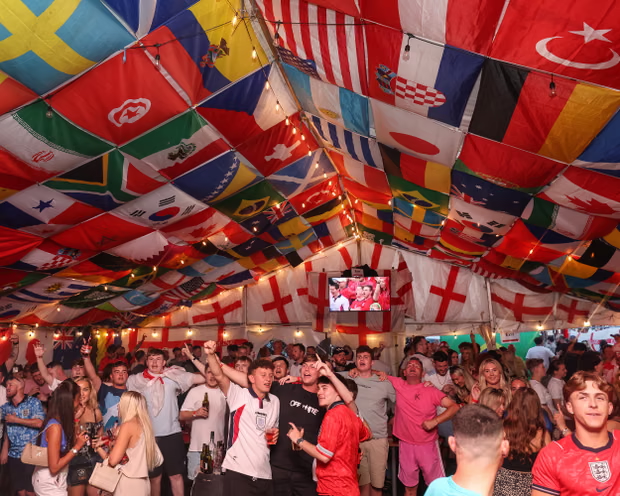
Relentless summer sunshine and the excitement of the World Cup have finally coaxed British consumers to open their wallets once more. Recent data indicates a noticeable rise in spending on beer and online shopping throughout the past month. Shoppers seem willing to ignore wider economic anxieties while England fans prepare for this coming Wednesday’s crucial semi-final. Most individuals remain understandably cautious about the broader state of the United Kingdom economy according to recent banking information. Barclays Bank has tracked this trend by monitoring millions of individual debit and credit card transactions across the nation. This period has seen consumers effectively put their financial worries aside to indulge in simple summer pleasures like refreshing pints. Many households have invested in essential cooling items such as sturdy paddling pools and various types of electric fans for their homes. Environmental analysts have expressed some concern as nearly half of these plastic items are eventually expected to end up in landfills.
Total consumer spending increased by nearly two percent year on year during the month of June alone. This figure remains slightly below the current rate of national inflation but shows a significant improvement compared to the stagnant May data. Local pubs have certainly experienced the most substantial boost in activity during this busy period of summer football matches. England fans have been taking full advantage of the extended opening hours permitted during this major international sporting tournament. The Barclays consumer spending report confirms that these venues have become the primary hubs for social activity during the matches. England’s group stage victory over Panama proved to be the single busiest day for UK hospitality venues so far this year. Financial transactions recorded in pubs during that specific match were five times higher than the standard daily average for 2026.
The specific outcome of matches has directly influenced how much money fans spend while supporting their national football team. England’s dramatic draw with Ghana resulted in the single biggest uplift in spending recorded throughout the entire group stage competition. Card users in pubs spent over two hundred percent more than they did on the same day during the previous year. Observers suggest that the relative lack of on-pitch action gave frustrated fans more time to visit the bar during the game. The subsequent round of sixteen victory over Mexico also registered an impressive two hundred percent increase in total hospitality spending across the country. These figures were carefully calculated across Sunday and Monday to accurately reflect the game kicking off during the early morning hours.
Although recent data does not formally capture the quarter-final victory over Norway, other reliable sources have provided very clear insights. Figures released by the payments company Dojo showed a twenty-three percent increase in total takings compared to the previous standard Saturday. The intense on-pitch action seemingly inspired the greatest thirst among residents living in the coastal city of Southampton. Full-day sales in that region almost doubled compared to the previous week as fans gathered to watch the historic match unfold. Pub sales in Newcastle upon Tyne were somewhat more modest but still remained eleven percent higher than a normal Saturday in summer. Economic estimates suggested that England’s progression to the quarter-final stage could be worth hundreds of millions of pounds to the national economy. When factoring in all four matches played during that round, the total economic benefit could potentially reach half a billion pounds.
With just forty-eight hours until the high-stakes semi-final against Argentina kicks off, the industry is bracing for record activity levels. The British Beer and Pub Association has predicted that the match will lead to an extra six million pints being poured across the nation. This expected increase is significantly larger than the surge typically seen during the busy New Year’s Eve celebrations in the UK. The Night Time Industries Association has forecast an increase of nearly eighty million pounds for the wider entertainment sector during this week. This broader industry group includes various types of venues such as bustling city bars and popular nightclubs operating late into the evening.
The sweltering weather, which highlights the ongoing effects of the climate crisis, has produced a similar economic impact to the football matches. Recent temperature records across Britain have prompted consumers to completely overhaul their seasonal wardrobes as they prepare for the extreme heat. Barclays confirmed that this necessity resulted in a two-point-four percent increase in total clothing sales across the country. Department stores have fared particularly well during this period, seeing an increase of nearly ten percent in total sales volume. Many of these large retailers benefit significantly from being fully air-conditioned, providing a welcome refuge from the blistering heat outside for many shoppers.
However, a separate industry report indicated that the extreme heat drove most consumers to buy goods online rather than braving the elements. High street footfall has suffered as people prefer the comfort of home while managing the daily challenges of the record-breaking summer heatwave. Non-food sales in traditional physical shops declined by over one percent compared to the same period during the previous year. This data, provided by the British Retail Consortium and KPMG, paints a stark picture for many traditional retailers struggling to maintain their physical presence.
Conversely, online non-food sales jumped by over five percent over the same period, far exceeding the typical twelve-month average growth rate for digital retail. The online penetration rate, representing the proportion of non-food items purchased through digital channels, has climbed significantly to nearly forty percent of all retail volume. While online retailers have certainly benefited from these changing habits, industry leaders have issued a stern warning regarding the mounting pressure on high street shops.
Helen Dickinson, the chief executive of the British Retail Consortium, highlighted the difficulties faced by physical retailers during this period of extreme weather. She noted that while fans and paddling pools performed well, the intense sunshine meant that other large consumer segments struggled to generate interest. A heatwave does not simply change how customers choose to shop; it makes complex retail operations much more challenging for staff. The daily struggle of keeping store shelves stocked while simultaneously trying to keep products and people cool is becoming a major operational hurdle. These pressures arrive on top of rising business rates, higher employment taxes, and a general sense of ongoing global uncertainty affecting markets. All these factors combined are clearly squeezing the ability of retailers to invest in their infrastructure, create new jobs, and keep prices affordable for everyone. As the nation turns its eyes toward the semi-final, the retail sector remains balanced between the excitement of the game and the economic realities of a changing climate.
Related News:
 Reeves Faces Setback as Labour May Miss Homes Target
 Virgin Trains Moves Closer to Challenging Eurostar Monopoly
 Trump’s UK Ambassador Urges North Sea Drilling to Strengthen US Ties
 Ryanair Chief UK Economy ‘Doomed’ Under Labour
 M&S Profits More Than Halve After Cyber-Attack
 Earl of Yarmouth Faces £1.3m Legal Bill Over Family Estate
 Millionaires group urge Reeves to introduce wealth tax to ‘lift kids out of poverty’
 From Lego to Pokémon: How Adults Are Driving UK Toy Market Growth
 New laws to bolster UK’s defences against cyber attacks on NHS, transport and energy
 Canada Passes Carney’s First Budget in Tight Parliamentary Vote
 Starmer Says Labour’s Economic Plan Needs Years to Deliver
 Virgin Media Fined £23.8m Over Telecare Safety Failures
 Starmer Faces Parliamentary Battles Over UK-EU ‘Reset’ Plan
 Reeves Pub Business Rates U-Turn Calms Labour Revolt
 ScottishPower Tops List of Worst UK Energy Suppliers
 Markets Slide As Gold Rally Signals Risk From Trump Greenland Tariff Plan
 UK Eyes Global Investment with Visa Fee Refunds
 City & Guilds pay surge sparks backlash amid £22m cuts
 UK Inflation Hits 3.4% in December, Ending Five-Month Decline
 Trump Fed bid heads to Supreme Court
 India-EU Free Trade Deal Marks Historic Economic Shift
 Telstra AI jobs cuts as automation drive expands
 BT Names New Openreach Chief Amid Major Fibre Expansion
 UK Banks Plot Payment Backup Amid Trump Fears
 UK Unemployment Rate Climbs to 5.2% Peak
 UK shelves £110m border project amid trade strain
 Rachel Reeves Faces Middle East Conflict Test
 Grocery Inflation Rises Amid War Fears
 BrewDog sold Highland estate for knockdown price after abandoning reforestation plans
 UK Energy Reform Could Cut Bills by £200
 Rising Costs Force Families to Rethink Days Out
 Oil Slides, Stocks Jump on Trump Peace Signals
 UK inflation held at 3% before global energy price hit
 Ticketmaster Fees Rise Despite Recent US Junk Fee Crackdown
 M&S Demands Urgent Action on Rising Violent Retail Crime
 New Era for Sick Pay as Millions Gain Critical Rights
 Oil Prices Surge as Trump Issues New Deadline to Iran
 US and Iran Agree to Two-Week Provisional Ceasefire
 Stefano Gabbana Resigns as Chair of Italian Luxury Giant
 Rolls-Royce SMR Secures £600m Boost for Nuclear Future
 Aegon Sells Historic UK Arm to Standard Life for £2bn
 Central Bank Chiefs Hold Crisis Simulation in Washington
 UK Staycations Rise as Travel Fears Grow
 Former Brexit Chief Calls for Rejoining the EU
 Albanese Rejects Gas Export Tax Push
 Oil Prices Surge Above $120 Amid Iran Blockade Fears
 Silent Tracks: Rail Line Without Passengers
 Trump approval plunges amid Iran war fears
 Tough Fiscal Realities Await Next Scottish Government
 DeepMind Staff Vote to Unionize Over US Military Contract
 Global Conflict Hits Home As Bullock Warns Of Economic Pain
 STV Election Coverage Disrupted Amid Bitter Pay Dispute
 Aramco Surges as East-West Pipeline Counters Gulf Tensions
 High Stakes in Beijing as Trump and Xi Meet Amid Global Turmoil
 Lotus Boss Pledges Future to Norfolk and Seeks State Support
 Trump and Xi Convene in Beijing for Historic High-Stakes Summit
 High Street Crisis: Fears Grow Over Post Office Closures
 UK Firms Freeze Spending as Iran Conflict Bites
 Rubles and Resilience: How Russia-China Border Towns Thrive
 UK Eases Russian Oil Sanctions as Fuel Costs Soar
 Reeves to Fast-Track Clean Energy Amid Iran Crisis
 Oil Markets Face ‘Red Zone’ Threat Amid Iran Crisis
 Belfast Approves Pilot Extension of Sunday Trading Hours
 Kevin Warsh sworn in as Fed chair amid economic backlash
 Mid-Year Surge to Push Average Annual Bills Beyond £1,900
 Tube Strike Brings Capital to a Standstill Over Shift Disputes
 Tube Strike Brings Capital to a Standstill Over Shift Disputes
 BP Stands Firm on Amanda Blanc Amid Boardroom Storm
 UK House Prices Drop For Third Month Due To War Fears
 No Brutal EV Price War For British Motorists
 Gas Prices Fall Below $4 Following US-Iran Peace Deal
 Is JD Vance the Ultimate Fall Guy for Trump’s Shaky Iran Deal?
 EU Slashes Steel Quotas But Grants UK Favourable Rates
 Sainsbury’s Boss Optimistic As Grocery Inflation Eases
 Trump Faces Backlash Over $2bn Earnings Since Return
 Starling Bank Trims Jobs for AI Future
 Accessible Travel Could Unlock £176bn for UK Economy
 Apollo Launches £5.7bn Bid for Aviation Giant easyJet
 BBC Faces Real Jeopardy as Licence Fee Income Declines
 Thames Water Future Remains Uncertain Amid Funding Crunch