Published: 26 August 2026. The English Chronicle Desk. The English Chronicle Online
France is temporarily relaxing some of the strict production rules governing several of its most celebrated traditional cheeses after severe drought and repeated heatwaves left grazing pastures severely depleted. The decision is intended to protect farmers and cheesemakers whose livelihoods depend on cattle and sheep being raised according to tightly controlled traditional methods.
The temporary changes will initially affect producers of Comté, Beaufort and Abondance, three cheeses closely associated with the mountainous regions of France. Authorities have acknowledged that the prolonged lack of rainfall has made it increasingly difficult for farmers to meet rules requiring animals to graze on local pasture and follow prescribed diets.
The measures highlight how climate change is beginning to challenge not only agricultural production but also some of Europe’s deeply rooted food traditions.
Drought puts traditional cheesemaking under pressure
Comté is among France’s most commercially successful traditional cheeses. Produced from raw cow’s milk in the Jura mountains, it is protected under the country’s strict geographical and production standards. More than 62,000 tonnes were produced last year, making it the country’s leading traditional cheese by sales.

The cheese carries the AOP, or protected designation of origin, label. The designation guarantees that a product has been produced in a specific geographical area using established methods and ingredients. For cheeses such as Comté, the rules include requirements concerning where animals graze and what they are fed.
But this year’s weather has made those requirements increasingly difficult to fulfil.
Much of mainland France experienced exceptionally dry conditions during July, with authorities reporting that about 95% of the country had been affected by drought. Pastures that would normally provide abundant green grass have instead become dry, yellow and severely depleted.
Under the temporary arrangements, affected producers will be permitted to supplement cattle diets with additional fodder and grain brought in from outside the traditional production areas.
The change is significant because the quality and character of AOP cheeses are closely linked to the animals’ diet and the local environment. Yet officials have concluded that extraordinary weather conditions require producers to have greater flexibility.
Other famous cheeses also affected
Beaufort and Abondance, both associated with cattle farming in the French Alps, have also received temporary exemptions from some production requirements.
The National Institute of Origin and Quality, known as INAO, is responsible for administering France’s protected food designations. The organisation has described the current drought as historic and indicated that similar temporary measures could be extended to other cheesemakers.
Potential beneficiaries include producers of Reblochon, Cantal, Bleu d’Auvergne and Fourme d’Ambert.
The proposed changes reflect the increasingly difficult conditions facing farmers who depend on natural pasture. When grass growth collapses, dairy cattle receive less nutritious food and produce less milk. That reduction can then move through the entire supply chain, affecting the quantity of cheese that can be produced.
For small farms and family-run dairies, the consequences can be particularly serious because there are limited opportunities to compensate for lost production.
Farmers describe scorched pastures
The scale of the problem has been illustrated by farmers in different parts of France.
Hubert Genty, a dairy farmer in Normandy who produces Neufchâtel cheese, said there was virtually no grass left for his cattle. He explained that the vegetation had been scorched and had lost much of its value as animal feed.
The impact has already been visible in his dairy. His cows are producing less milk, forcing his wife, Angélique, to reduce the number of cheeses she makes each day.
Normally, she produces between 600 and 700 heart-shaped Neufchâtel cheeses daily at this point in the season. This year, production has fallen to roughly 400 to 450.
The reduction has created concern about whether the farm will be able to meet customer demand.
Similar warnings have emerged from other traditional cheesemaking regions. Producers of Salers cheese, another AOP product, have faced particularly difficult circumstances, with reports suggesting that around 70% of producers had paused production during the summer because of drought.
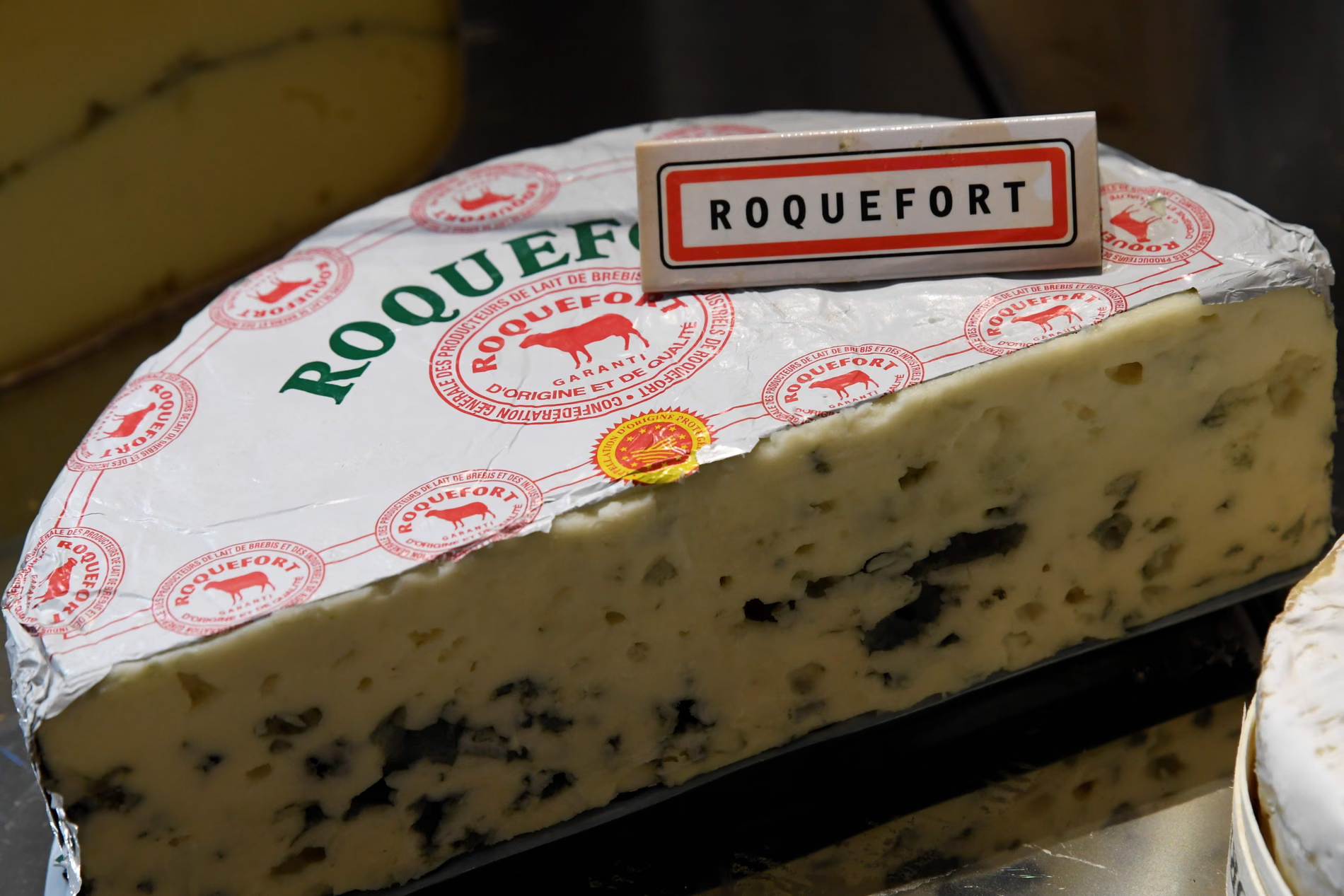
Roquefort producers have also called for temporary changes to traditional grazing requirements for sheep as pastures deteriorate.
A wider agricultural crisis
The problems facing French cheesemakers are part of a much broader agricultural crisis.
France’s agriculture ministry has reported that vegetation growth on permanent grasslands was approximately one-third below the average recorded between 1989 and 2018. The ministry has described fodder availability as highly degraded across almost all regions.
This creates pressure not only for dairy farms but also for meat producers and other agricultural businesses that rely on grassland.
Agriculture Minister Annie Genevard is expected to hold discussions with local authorities before announcing further emergency measures aimed at helping farmers cope with the crisis.
The vegetable sector has also suffered from the combination of heat and water shortages. Potato growers have warned of a substantial reduction in this year’s harvest following successive heatwaves and an exceptional lack of rainfall.
The French potato growers’ union has estimated that production could fall by about 23%. Farmers in Hauts-de-France, one of the country’s major potato-producing regions, have reported unusually small potatoes, raising concerns for factories that depend on them to make chips, crisps and processed foods.
Wine and fruit producers feel the pressure
The effects of the extreme weather extend beyond dairy farming.
French cider producers are concerned about the size of this year’s apple crop, while wine producers have begun harvesting grapes earlier than usual in several regions.
Earlier harvests do not necessarily mean that production will collapse, but the combination of heat, drought and altered growing cycles has created uncertainty over both the quantity and quality of the final product.
For France, where agricultural goods are closely connected with regional identity and tourism, the implications extend beyond individual farms.
Cheese, wine, fruit and other products form part of the country’s cultural reputation and provide significant economic activity in rural communities. A prolonged deterioration in growing conditions could therefore affect employment, tourism and local economies as well as food production.
Climate change challenges food traditions
The decision to temporarily relax cheese regulations illustrates a difficult question facing agricultural authorities across Europe: how can traditional production systems be preserved when the environmental conditions on which they depend are changing?
AOP rules were designed partly to protect authenticity. By requiring farmers to use specific methods and local resources, the system helps preserve distinctive regional characteristics and prevents producers elsewhere from copying protected products without following the established standards.
Climate change, however, is disrupting the natural systems that underpin many of those traditions.
The Alps and other mountainous areas of Europe are particularly exposed to rising temperatures and changing rainfall patterns. Grasslands can dry out more rapidly during heatwaves, while water availability becomes increasingly unpredictable.
For farmers, maintaining traditional methods may become increasingly expensive or simply impossible during extreme weather.
The temporary exemptions therefore represent a balancing act. Authorities are seeking to protect the farmers who maintain traditional food production while avoiding permanent changes that could undermine the characteristics that make AOP products distinctive.
A temporary solution to a growing problem
The government measures are designed as emergency relief rather than a fundamental rewriting of France’s cheese regulations.

Nevertheless, the frequency of extreme weather events means similar decisions could become more common. If droughts continue to intensify, producers may increasingly need access to external fodder or alternative methods of maintaining livestock.
That could eventually force regulators, farmers and consumers to reconsider what constitutes an authentic traditional product in a changing climate.
For now, French cheesemakers are being given additional flexibility to survive an exceptionally difficult season.
The immediate priority is keeping animals fed, maintaining milk production and preventing rural businesses from suffering irreversible losses. But the deeper challenge is longer term.
France’s traditional cheeses were developed over generations in close relationship with local landscapes. As those landscapes become hotter and drier, protecting the traditions surrounding them may require adaptation as well as preservation.
The temporary relaxation of rules for Comté, Beaufort and Abondance is therefore more than an agricultural measure. It is another indication that climate change is beginning to reshape some of the practices and products most closely associated with European cultural identity.
Related News:
 Olympus Awaits Unesco Heritage Recognition
 Australia Races to Find Tourists Missing in Nepal
 South Africa’s Garden Route Gem Faces Looming Water Crisis
 Glasgow Central Set for Full Reopening After Fire
 Moldova River Crisis Exposes War’s Hidden Cost
 Chornobyl Still at Risk 40 Years After Disaster
 Athens Mayor Moves to Tackle Overtourism Crisis
 Ukraine Urges UK to Seize Russian Oil Tankers
 Capitalism ‘Suicidal’, Warns Petro at Climate Summit
 Two Dead in Adelaide Airport Plane Crash Fire
 Norway Doubles Down on Oil and Gas for Europe Energy Security
 Pope Meets Families in Italy Toxic Waste Zone
 Essex valley emerges as rising English wine hub
 England and Norway Fans Turn Miami Into World Cup Carnival
 London Tube Heat Reaches Dangerous Levels
 Italy’s Beach Lunch Ban Sparks Holiday Backlash
 Burnham unveils £65m drought aid for farmers
 China Probes Alleged Formaldehyde Use on Cabbages
 France Faces Calls to Ban Alpine Marmot Hunting
 Modi’s London Visit Seals Historic UK-India Trade Pact Amid Global Tensions
 China’s crackdown on civil servant perks sparks economic concerns
 Shein UK Faces Allegations of Shifting Majority of Profits to Singapore to Reduce UK Tax
 British AI Startup Outshines Human Forecasters in Global Prediction Contest
 China warns UK over delayed London mega embassy decision
 Canada Passes Carney’s First Budget in Tight Parliamentary Vote
 India’s Labour Law Overhaul Sparks Fierce Debate
 ‘Black Tax’: Burden, Pride and Survival for African Workers
 ‘Repatriate the Gold’: Germany Debates Bringing Reserves Home
 Trump Tower Gold Coast to Redefine Skyline
 Qantas Revamps Loyalty Program Amid $1.46bn Profit Surge
 Middle East Airspace Crisis Strands Thousands
 Gulf shipping crisis as war risk cover pulled
 Global markets face turmoil as Hormuz crisis deepens
 The Truth Behind Rising Energy Costs and Fossil Fuel Myths
 RBA rate hike sparks fears amid global crisis
 UK Energy Reform Could Cut Bills by £200
 Rising Costs Force Families to Rethink Days Out
 Oil Slides, Stocks Jump on Trump Peace Signals
 Teen Admits Filming Westfield Chair Prank
 Australian Growth Slows as Global Inflation Spike Looms
 Trump to Deploy “God Squad” Over Gulf Wildlife Protections
 Trump Threatens Iran With Total Infrastructure Destruction
 Iran Drone Strike Hits Kuwaiti Oil Tanker in Dubai Port
 M&S Demands Urgent Action on Rising Violent Retail Crime
 US Senators Slam Ticketmaster Over Sneaky New Fee Hikes
 IMF Warns Iran War Could Spark Deep Global Recession
 Trump Slams UK Ties and Threatens To Rewrite Trade Deal
 Southeast Asia Turns to Russia Amid Energy Crisis
 Older Than Dinosaurs: Secrets of Mayfly Dance Revealed
 Oil Prices Surge Above $120 Amid Iran Blockade Fears
 $13bn World Cup Set to Break All Revenue Records
 Coalition pushes fossil fuel phaseout plan
 Trump approval plunges amid Iran war fears
 China Fireworks Factory Blast Kills 21 in Hunan
 Global Conflict Hits Home As Bullock Warns Of Economic Pain
 US Awaits Iran Reply on New Ceasefire Proposal
 Tractor Breakdown Tests Lincolnshire Farmers
 Australia Welcomes the Iconic Michelin Guide
 High Street Crisis: Fears Grow Over Post Office Closures
 Oil Markets Face ‘Red Zone’ Threat Amid Iran Crisis
 Belfast Approves Pilot Extension of Sunday Trading Hours
 Hormuz Talks Near Critical Stage
 Man killed in shark attack on Great Barrier Reef
 Farage and Reform UK Reshape British Politics
 Starmer Leadership Under Pressure After Setbacks
 Thailand Tightens Visa Rules to Curb Tourist Misbehavior
 UK Economy Suffers a Sharp Downturn as Iran Conflict Bites
 Germany Summons Chinese Envoy Over Russian Troop Training
 Jet2 Sees Summer Surge Despite Global Tensions
 Ukraine Creates Long-Range Strike Command
 Le Pen’s Popularity Holds Despite Conviction
 Bryne Backs Haaland Before England World Cup Clash
 UK Schools Struggle as Classrooms Top 40C
 Wildfires Force Mass Evacuations in France And Spain
 Powerful 7.7-Magnitude Earthquake Hits Eastern Indonesia
 Weight-Loss Drugs Offer Food Savings Mainly to High Earners
 Gen Z turns to BirdTok for a gentler digital escape
 Canada to Match Trump’s 50% Tariffs Dollar for Dollar
 Queue row erupts on Wales’ highest mountain
 Ghent Professors Questioned Cofnas Appointment