Published: 16 September 2026. The English Chronicle Desk. The English Chronicle Online
The European Union has opened discussions on a potentially new form of partnership with Canada, with European Commission President Ursula von der Leyen proposing that the country become the bloc’s first associate member.
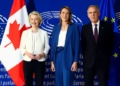
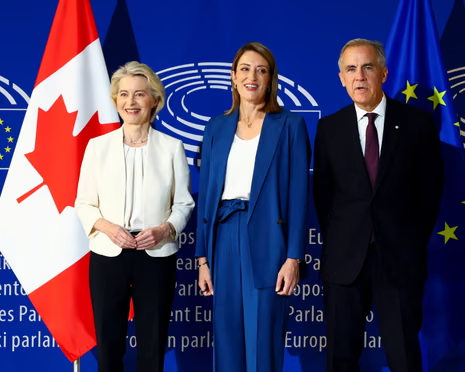
The proposal was made during von der Leyen’s annual State of the Union address in Strasbourg on Wednesday, with Canadian Prime Minister Mark Carney attending as a special guest. The initiative would represent a significant expansion of relations between Ottawa and Brussels, although the meaning and legal structure of “associate membership” have yet to be established. Reuters reported that such a status is not currently defined in the EU treaties.
Von der Leyen told Carney that she wanted to work with Canada on opening the door to associate membership, presenting the idea as part of a broader effort to deepen economic, technological and security cooperation.
The proposal comes as Canada seeks to diversify its international economic relationships and strengthen ties with European partners. Carney has described his government’s objective as creating a distinctive alliance with the EU based on shared values, economic interests and security priorities.

Speaking in Strasbourg, von der Leyen said the EU and Canada could build on their existing relationship to create what she described as an “alliance for the future”. She said the partnership would aim to establish a wider area of common economic prosperity and security.
The proposal is broader than a conventional trade arrangement. Von der Leyen identified advanced manufacturing, technology, defence production, the Arctic, energy, critical minerals, batteries, artificial intelligence, quantum computing, cybersecurity and economic security as areas where cooperation could be expanded.
Canada already has extensive institutional links with the EU. The two sides operate under the Comprehensive Economic and Trade Agreement, commonly known as CETA, while cooperation has expanded into defence, critical minerals, digital policy and economic security.
Canadian and European officials have been working to strengthen these links over the past year. In September, Canadian Foreign Minister Anita Anand and EU foreign-policy chief Kaja Kallas highlighted progress on the Canada-EU Security and Defence Partnership, defence-industrial cooperation and negotiations on a digital trade agreement. They also discussed critical minerals and economic security.
The two sides are preparing for a Canada-EU leaders’ summit scheduled to take place in Canada on 29 and 30 October 2026. That meeting is expected to provide an opportunity to develop the broader strategic relationship further.
The associate-membership proposal therefore comes at a time when cooperation between Canada and the EU is already expanding. However, it remains important to distinguish the political proposal from a formal change in Canada’s status.
Canada is not being offered full EU membership. The country would remain outside the European Union, while an eventual associate arrangement could potentially create deeper institutional, economic and security links without making Canada a member state.
The exact rights and obligations of such an arrangement have not yet been publicly established. Reuters reported that associate membership is not a status currently set out in the EU treaties, meaning that negotiations would need to determine how such a relationship could operate within the EU’s existing legal and institutional framework.
The European Commission had previously indicated that Canada was a strategically important partner but had not publicly detailed an associate-membership framework. At a Commission briefing on 14 September, officials confirmed that Canada was an important partner and noted the growing ambition in bilateral relations, while declining to provide details about the negotiations ahead of von der Leyen’s speech.
The changing international economic environment has provided additional momentum for closer ties.
Canada remains deeply integrated with the United States economically, but relations with Washington have become more complicated amid tariff disputes and repeated statements by US President Donald Trump concerning Canada. Carney has responded by emphasising the importance of strengthening Canada’s relationships with other major economies.
Speaking before his European visit, Carney said Canada wanted to explore a unique alliance with the EU because the two sides shared values and priorities and had complementary economic strengths.
The Canadian government has also identified trade diversification and economic resilience as important priorities. Its September investment summit in Toronto focused on attracting long-term capital, strengthening supply chains and expanding Canada’s international economic connections.
For Europe, Canada offers access to significant natural resources, including critical minerals, as well as an established industrial base and close security relationships. The Arctic is another area of increasing importance as climate change, shipping routes, natural resources and geopolitical competition raise the strategic significance of the region.
Critical minerals and energy are particularly relevant to European economic security. European governments have sought to reduce vulnerabilities in supply chains for materials needed for batteries, renewable technologies, electronics and defence industries.
Canada has resources and industrial capabilities that could complement those efforts. Existing cooperation between Ottawa and Brussels already includes critical minerals, while the two sides have also been expanding collaboration in defence and economic security.
Technology is another major area of potential cooperation. Von der Leyen specifically mentioned artificial intelligence, quantum computing and cybersecurity in outlining the possible future relationship.
The EU has been developing its own approach to regulating and governing emerging technologies while also seeking to strengthen its technological competitiveness. Canada, meanwhile, has been attempting to attract investment and expand its position in the global technology economy.
Closer cooperation could therefore involve research, investment, digital trade, cybersecurity and technology standards, although the precise arrangements would need to be negotiated.
Defence cooperation is also becoming increasingly important. Canada has already joined European initiatives aimed at strengthening defence-industrial cooperation. Canadian officials said in September that progress had been made on cooperation under the EU’s Security Action for Europe financial instrument, known as SAFE.
The relationship could consequently extend well beyond conventional trade.
Von der Leyen presented the proposed partnership as being based on democratic principles and cooperation between countries that share political and institutional values. She argued that the partnership was intended to strengthen both sides rather than to be directed against another country.
That distinction is significant because the proposal arrives during a period of uncertainty in transatlantic relations. Canada and European countries remain closely connected to the United States through trade, defence and long-standing diplomatic relationships, but governments on both sides of the Atlantic have increasingly discussed the need for greater strategic resilience.
The proposed Canada-EU relationship does not, however, represent a replacement for Canada’s existing international partnerships. Rather, the discussions concern adding another layer of cooperation to Canada’s network of economic and security relationships.
For the EU, an associate arrangement with Canada would also be an unusual institutional development. The bloc has established different forms of partnership with countries outside the EU, but a formal “associate member” category of the type suggested by von der Leyen would require further clarification.
The question of legal structure will therefore be central to future negotiations. Any arrangement would need to define which EU programmes Canada could participate in, what obligations it would accept, how decisions affecting the partnership would be made and what level of access Canadian businesses and citizens might receive.
Those questions are not yet settled.
The upcoming EU-Canada summit in October could become an important forum for developing the proposal. Canadian and European officials have already described the bilateral relationship as increasingly strategic, and several areas of cooperation are currently under development.

Carney is also due to address the European Parliament on Thursday, giving him an opportunity to outline Canada’s position directly to European lawmakers.
For Canada, the proposal offers the possibility of deeper integration with a major economic and political bloc while retaining its status as an independent country. For the EU, it presents an opportunity to strengthen ties with a major democratic partner outside Europe and expand cooperation in areas ranging from defence and energy to technology and critical minerals.
Whether the concept develops into a formal arrangement will depend on negotiations between Canada and the EU and on the legal and political questions that those talks raise.
For now, the proposal marks a new stage in a relationship that has already been expanding through trade, defence, technology and economic-security cooperation. The October summit is likely to provide a clearer indication of what an eventual associate partnership could involve.
The immediate development is therefore not Canadian membership of the European Union, but an invitation to explore a new form of structured cooperation. Its final shape remains to be determined through discussions between Ottawa and Brussels.
Related News:
 ABC Staff Strike Over Pay and AI Concerns
 UK Pushes for New EU Goods Trade Deal
 Reeves Fights to Keep Treasury Role Amid Labour Turmoil
 China mine blast death toll rises to 90
 Trump orders US to rename Lake Ontario ‘Lake America’
 Trump Hardens Canada Trade Stance as Talks Stall
 Swedish Mining Push Puts Sami Land Rights Under Pressure
 UK plans tougher Israel stance with settlement trade ban
 Fugitive Developer Rants at NSW Corruption Inquiry
 Trump Administration Dismisses 17 Immigration Judges, Sparking Debate Over Judicial Independence
 Modi’s London Visit Seals Historic UK-India Trade Pact Amid Global Tensions
 British AI Startup Outshines Human Forecasters in Global Prediction Contest
 UK Fighter Jet Purchase Could Breach Nuclear Treaty, Warns CND
 Jailed Georgian Opposition Leaders Warn UK of Iranian Links to Ruling Party
 Russia repeatedly targets UK military satellites, warns Space Command chief
 Lucy Powell urged ministers to reconsider costly legal case for Labour donor’s firm
 Experts Warn Russia’s Burevestnik Missile Could Destabilise Arms Control
 Johnson Approved China’s London ‘Super-Embassy’ in 2018
 China-critical UK academics face ‘extremely heavy’ pressure from Beijing
 Britain deploys RAF specialists to assist Belgium with drone threats
 Trump Urges Herzog to Grant Netanyahu Full Pardon
 US Justice Department Files Lawsuit Against California Over Partisan Voting Maps
 Trump Deploys DHS to Charlotte in Major Arrest Operation
 Canada Passes Carney’s First Budget in Tight Parliamentary Vote
 India’s Labour Law Overhaul Sparks Fierce Debate
 Chinese & Japanese Boats Clash Near Disputed Islands
 Guterres Warns Global Cooperation Under Threat at UN’s 80th Year
 South Korea Jails Ex-President in Martial Law Ruling
 ‘Repatriate the Gold’: Germany Debates Bringing Reserves Home
 UK and EU Signal Fresh Push for Defence Cooperation Talks
 Thousands Protest ICE Operations in Nationwide US Day of Action
 UK Doubles Steel Tariffs to 50% to Protect Domestic Plants
 Trump to Deploy “God Squad” Over Gulf Wildlife Protections
 Report Says Pezzullo Acted ‘Recklessly’ in Dealings
 Apple at 50: Three Products That Changed How We Live
 Hungary election: Orbán faces biggest test amid scandal
 Suspected Plot Targets Pipeline Before Hungary Vote
 Trump Slams UK Ties and Threatens To Rewrite Trade Deal
 Trump Faces Crisis as Iran Reopens Hormuz Tensions
 Iran Reimposes Strait of Hormuz Restrictions Amid Tension
 Southeast Asia Turns to Russia Amid Energy Crisis
 Ukraine Urges UK to Seize Russian Oil Tankers
 US Calls Australia Media Law “Foreign Extortion”
 Capitalism ‘Suicidal’, Warns Petro at Climate Summit
 Oil Prices Surge Above $120 Amid Iran Blockade Fears
 Cartel crackdown raises fears of fresh violence
 Judge halts deportation of Yemeni refugees in US
 Trump approval plunges amid Iran war fears
 Ohio’s Battle for Trust: Democrats Vying to Flip the Buckeye State
 Trump Threatens UN Budget Cuts as US Pushes ‘Trade Over Aid’ Agenda
 Trump warns Iran as Middle East tensions surge again
 US Awaits Iran Reply on New Ceasefire Proposal
 Kevin Warsh sworn in as Fed chair amid economic backlash
 US green card applicants must apply from abroad, DHS says
 Hormuz Talks Near Critical Stage
 Albanese Defends Tax Reforms Amid Emotional Speech
 Discontent grows around Putin amid war strain
 Former ICC prosecutor condemns US sanctions
 Trump Faces Backlash Over $2bn Earnings Since Return
 Ukraine Creates Long-Range Strike Command
 Le Pen’s Popularity Holds Despite Conviction
 Trump Refuses to Sign Housing Bill, But Law Takes Effect
 Canada to Match Trump’s 50% Tariffs Dollar for Dollar
 Unions Warn Labour Over Zero-Hours Contract Reforms
 Ghent Professors Questioned Cofnas Appointment
 Europe Faces Winter Gas Supply Anxiety
 Liberals Sweep Three Seats in Boost for Carney
 Trump Calls Iran War ‘Small Potatoes’ Despite US Deaths
 Oil nears $100 as Saudi attacks shake markets
 New Mexico Takes Facebook to Trial Over Data Scandal
 Saudi Arabia Shuts Oil Pipeline After Drone Attack
 Israel Accused of Undermining Palestinian Life
 Farage Threatens Union Funding Ban Over Reform Donations
 North Sea Firms Urge Early End to Windfall Tax
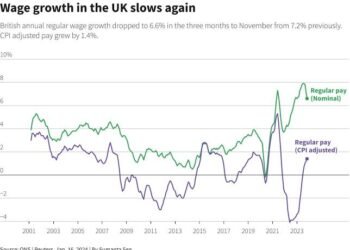 UK Pay Growth Slows to 3.9% as Rate Decision Nears
 Bank Urged to Slow Bond Sales as UK Costs Rise
 JLR Eyes NATO Market With New Defender Military Vehicle
 Mayors Could Gain Greater Powers Over Water Firms
 Horse Hill Oil Site Sold as New Drilling Bid Emerges
 Amnesty Finds Coordinated Abuses in Iran Protest Crackdown