Published: 19 September 2026. The English Chronicle Desk. The English Chronicle Online.
Pakistan is facing growing pressure over its security commitments to Saudi Arabia as renewed fighting involving Yemen’s Houthi movement raises questions about whether Islamabad could eventually be drawn into another Middle Eastern conflict.
The issue has become increasingly urgent following the signing of the Makkah Joint Defence Agreement by Saudi Arabia, Pakistan and Türkiye in August. Under the agreement, an armed attack against any one of the three countries is to be regarded as an attack against all three, while the pact also calls for deeper cooperation in defence and collective security.
The agreement was presented by the three governments as a framework for strengthening regional security and deterrence. However, the renewed confrontation between Saudi Arabia and the Iran-backed Houthi movement has created an early and complicated test for the arrangement.
The current situation is particularly sensitive for Pakistan because Islamabad has traditionally attempted to maintain relations with both Saudi Arabia and Iran. Any direct military involvement alongside Saudi Arabia against the Houthis could have consequences far beyond the battlefield, potentially affecting Pakistan’s relations with Tehran, its internal security environment and its already fragile economy.

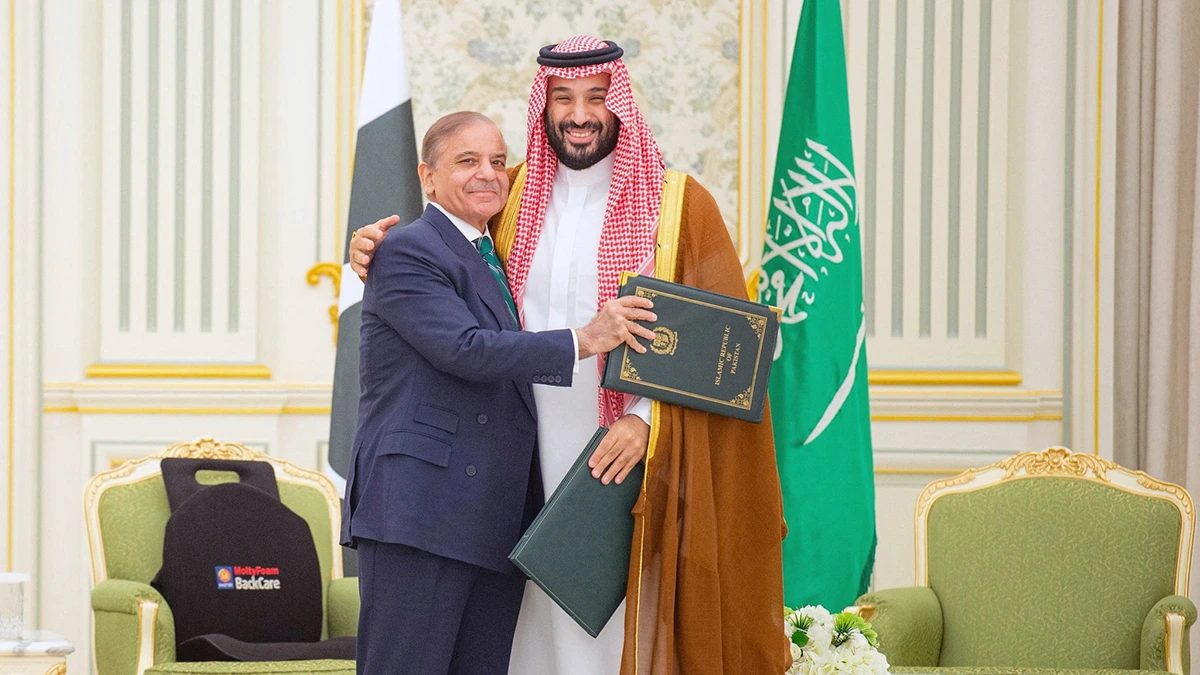
The defence agreement was signed in Makkah on 7 August by Saudi Crown Prince Mohammed bin Salman, Turkish President Recep Tayyip Erdogan and Pakistani Prime Minister Shehbaz Sharif. The agreement expanded existing defence cooperation between Saudi Arabia and Pakistan into a trilateral framework involving Türkiye.
At the time, the agreement was described as a collective deterrence mechanism rather than an arrangement directed against a particular country. The three governments said it was intended to strengthen security cooperation and promote peace and stability.
Events in Yemen, however, have quickly given the pact a much more immediate significance.
The Houthi movement has intensified attacks against Saudi targets, using missiles and drones as fighting has escalated in Yemen. Saudi Arabia has faced repeated security threats while attempting to contain the renewed conflict. Reports in recent days have also described Saudi efforts to obtain additional military assistance as its air-defence requirements have increased.
Pakistan has consequently faced questions about whether the Makkah agreement could be activated.
On 9 September, Pakistan’s Defence Minister Khawaja Asif said attacks against Saudi Arabia could potentially activate the agreement if the situation continued to deteriorate. Days later, however, Pakistan said no military response under the pact had been formally discussed in relation to Houthi attacks.
Pakistan’s government and military have nevertheless repeatedly stressed the country’s commitment to Saudi security. Pakistan’s military spokesman said on 17 September that the country’s commitment to Saudi Arabia was unconditional, while subsequent statements indicated that Islamabad was prepared to fulfil its obligations under the agreement.
The difference between political assurances and actual military deployment remains significant.
Pakistan’s Foreign Ministry said on 10 September that the Makkah agreement was an umbrella defence arrangement and that mechanisms and institutional structures would need to be established before its full operationalisation. The ministry also noted that Pakistani forces were already present in Saudi Arabia under separate bilateral defence cooperation arrangements, primarily for training and logistical purposes.
That distinction could become important if Riyadh requests direct Pakistani military assistance.
A major concern for Islamabad is that involvement against the Houthis could be interpreted by Iran as Pakistan taking sides in a wider regional confrontation. The Houthis are backed by Iran, although the precise nature and extent of Tehran’s influence over the movement remains a matter of regional debate.
Pakistan shares a long border with Iran and has historically sought to avoid becoming directly involved in conflicts between Tehran and Gulf Arab states. Islamabad also has security concerns along its western border, where instability in Afghanistan and militant violence have placed additional pressure on its armed forces.
A military commitment in Yemen could therefore create competing security demands for Pakistan.
There is also a domestic dimension. Pakistan has a large Shia Muslim population, and any perception that Islamabad had joined a Saudi-led military campaign against an Iran-aligned movement could generate political and sectarian tensions. Analysts cited in recent reporting have warned that the consequences could extend beyond foreign policy and affect Pakistan’s internal stability.
Pakistan’s economic dependence on Saudi Arabia adds another layer to the situation.
Saudi Arabia has provided important financial assistance and investment to Pakistan over the years, while bilateral defence relations have also developed over several decades. Islamabad therefore has strong strategic and economic incentives to maintain close relations with Riyadh.
At the same time, sending Pakistani forces into Yemen would involve considerable military and political risks.
Pakistan has previously experienced the difficulties associated with the Yemen conflict. In 2015, Islamabad declined to participate directly in the Saudi-led military intervention in Yemen after its parliament called for neutrality and urged the government to play a diplomatic role instead.
The circumstances surrounding the current Makkah agreement are different, but the earlier experience remains relevant because Pakistan continues to balance its relationship with Saudi Arabia against its geographical proximity to Iran.
Türkiye’s position could also influence how the agreement develops. Ankara has participated in the new collective defence framework but has simultaneously emphasised diplomatic efforts and regional de-escalation. Following the first meeting of the Strategic Political and Defence Committee in Istanbul in August, the three countries said they would continue supporting restraint and peaceful resolution of crises.
This leaves considerable uncertainty over what circumstances would actually trigger a collective military response.
The agreement states that an armed attack against one member should be treated as an attack against all, but that wording does not necessarily provide a detailed public blueprint for how each government must respond in every scenario. Questions remain over the circumstances under which military forces would be deployed, the role of national decision-making processes and the extent of assistance that could be expected.
Those questions have become increasingly important as Saudi Arabia confronts continuing attacks.
Recent reports indicate that Riyadh has also sought support from several international and regional partners while facing pressure on its air-defence capabilities. At the same time, no clear public commitment has emerged from Pakistan or Türkiye to launch a direct military operation against the Houthis.
For Islamabad, the immediate objective appears to be maintaining its commitment to Saudi security without allowing the situation to develop into an open-ended ground intervention in Yemen.
Whether that balance can be maintained will depend heavily on the trajectory of the Saudi-Houthi conflict.
If Saudi Arabia contains the attacks through air defence, diplomacy and limited military operations, Pakistan may be able to keep its role focused on training, logistical assistance and political support. If Riyadh concludes that a much larger military response is necessary and formally requests assistance under the Makkah agreement, however, Islamabad would face a far more difficult strategic decision.

Such a development would put Pakistan at the intersection of several competing interests: its defence relationship with Saudi Arabia, its geographic and diplomatic relationship with Iran, its security challenges along the Afghan border, domestic sectarian sensitivities and its need for continued economic assistance from Gulf partners.
For now, Pakistan has not announced that it is deploying combat forces to Yemen. The country has instead reiterated its commitment to Saudi Arabia while leaving the precise scope and timing of any military response uncertain. Pakistan’s own Foreign Ministry has also indicated that the new trilateral agreement still requires further institutional mechanisms before it can be fully operationalised.
The Makkah agreement has therefore moved quickly from being a symbol of closer Saudi-Pakistani-Turkish strategic cooperation to a practical test of what collective defence means in a rapidly changing Middle East.
For Pakistan, the central challenge is no longer simply maintaining an alliance with Saudi Arabia. It is determining how far that commitment can extend without opening another front in a region where military tensions are already affecting its diplomacy, economy and security calculations.
Related News:
 Former ICC prosecutor condemns US sanctions
 Houthis Strike Saudi Arabia as Middle East Tensions Rise
 Taliban global ties grow as rights fears mount
 Israeli Strike in Southern Lebanon Kills Seven
 UN expert urges UK to rethink Israel policy
 Miliband Rejects Chief Rabbi’s West Bank Warning
 Israel Accused of Undermining Palestinian Life
 UK Prepares Aircraft Carrier for Middle East Crisis
 Anti-Regime Iranians Turn Anger Toward Trump
 Death, displacement and military duties: children plunged into crisis
 Aid Crisis Grows as Hormuz War Disrupts Supply
 Judge halts deportation of Yemeni refugees in US
 Activists allege abuse after Gaza flotilla seizure
 Middle East Crisis Escalates as Oil Routes Shake Markets
 Trump Announces 3-Day Russia–Ukraine Ceasefire Deal
 Israeli Strikes in Lebanon Kill 10 Amid Ceasefire Strain
 China mine blast death toll rises to 90
 Hunger increasingly weaponised in global conflicts
 Millions Gather for Khamenei’s Six-Day State Funeral
 Five Years of Taliban Rule Leave Afghanistan in Crisis
 Trump Calls Strait of Hormuz ‘American Territory’
 Trump Faces Iran War Crisis Before Midterm Vote
 North Korea Expands Uranium Facility at Yongbyon
 Saudi Arabia Shuts Oil Pipeline After Drone Attack
 Nearly 50,000 Flee as Houthis Advance in Yemen
 South Korea Rules Out Military Role in Iran War
 China-critical UK academics face ‘extremely heavy’ pressure from Beijing
 US Justice Department Files Lawsuit Against California Over Partisan Voting Maps
 Trump Deploys DHS to Charlotte in Major Arrest Operation
 Congress Approves Release of Epstein Files, Trump Expected to Sign
 Texas Governor Faces Lawsuit From CAIR
 Chinese & Japanese Boats Clash Near Disputed Islands
 Putin Meets US Envoy Amid Key Ukraine Peace Talks
 Iran Leader Blames Protesters, Says They Serve Trump
 UK and EU Signal Fresh Push for Defence Cooperation Talks
 Thousands Protest ICE Operations in Nationwide US Day of Action
 Thousands Protest ICE in New York Against Trump Deportation Campaign
 Sydney Protest Clash Triggers Police Probe
 Middle East Flights Halted After Iran Strikes
 Thousands Protest Iran Strikes Outside US Embassy London
 US Bombers Arrive at RAF Base Amid Rising Iran Tensions
 Mojtaba Khamenei Chosen as Iran’s New Supreme Leader
 Tehran Oil Depot Strikes Darken City With Toxic Smoke
 Mojtaba Khamenei Supporters Rally as Iranians Fear Repression
 Iran Defiance Grows Amid US-Israel War Pressure
 Hormuz Crisis Sparks Global Oil Market Fears
 Injured Mojtaba Khamenei Elevated as Iran Leader
 Trump Iran War Stance Hardens as Conflict Widens
 Report Says Pezzullo Acted ‘Recklessly’ in Dealings
 Hungary election: Orbán faces biggest test amid scandal
 Suspected Plot Targets Pipeline Before Hungary Vote
 Iran Crisis Tests Trump’s Global Leadership
 Southeast Asia Turns to Russia Amid Energy Crisis
 Ukraine Urges UK to Seize Russian Oil Tankers
 US Court Ruling Reshapes Voting Rights Landscape
 Cartel crackdown raises fears of fresh violence
 US states redraw maps after voting rights ruling
 Trump warns Iran as Middle East tensions surge again
 Australia pushes Pacific security pact amid China tension
 Afghan Families Left in Limbo Face Risk of Deportation
 Tensions Emerge in Netanyahu-Trump Alliance
 US Awaits Iran Reply on New Ceasefire Proposal
 Immigration Judges Fear Pressure in Trump Era
 US green card applicants must apply from abroad, DHS says
 Hormuz Talks Near Critical Stage
 Discontent grows around Putin amid war strain
 Gunman Killed After White House Security Shootout
 Trump Claims Iran Peace Deal Near Completion
 New Footage Revives Peter Falconio Mystery
 Ukraine Creates Long-Range Strike Command
 Le Pen’s Popularity Holds Despite Conviction
 Dreyfus Statue Finally Gets Permanent Paris Home
 Venezuela Quake Death Toll Surpasses 4,000
 Russian Missiles Intensify Pressure on Kyiv
 Former Diplomats Urge UK and France to Act on Palestine
 Exeter Approves Saudi Military Training Partnership
 Ukraine Villagers Demand Answers After Deadly Arms Depot Strike
 Trump Calls Iran War ‘Small Potatoes’ Despite US Deaths
 UK plans tougher Israel stance with settlement trade ban
 Sweden Election Hangs on Far-Right Breakthrough