Published: 23 September 2026. The English Chronicle Desk. The English Chronicle Online.
A Sri Lankan court has convicted 15 men for their involvement in the deadly Easter Sunday bombings of 2019, bringing a major terrorism trial to a close more than seven years after coordinated attacks on churches and hotels left hundreds dead and shook the country.
The Permanent High Court Trial-at-Bar in Colombo delivered its long-awaited verdict on Tuesday after proceedings that stretched over several years. The court found the 15 defendants guilty of offences connected with conspiracy, aiding and supporting the attacks and imposed prison sentences ranging from 200 to 260 years. The judges also ordered the confiscation of the convicted men’s movable and immovable property.
The verdict represents the conclusion of one of Sri Lanka’s most closely watched terrorism cases. Of the 24 defendants who stood trial, 15 were convicted while nine were acquitted and released after the court determined that the charges against them had not been proved beyond reasonable doubt. One other accused died before the case reached its conclusion.
The sentences were not identical. Five of the convicted men received 200 years of rigorous imprisonment each, five were sentenced to 220 years, four received 240 years each and one was given 260 years. The court considered the defendants’ roles in a series of explosions and the large number of charges brought in connection with the attacks.

The Easter Sunday attacks took place on 21 April 2019, when suicide bombers targeted churches and luxury hotels during Easter celebrations. The coordinated explosions struck three churches and three hotels, with another planned attack involving a motel and an aborted attempt against another hotel also considered during the legal proceedings.
The attacks were linked to Islamic State-inspired Islamist militant groups operating in Sri Lanka. Nine suicide bombers were believed to have directly carried out the attacks, and none of those who participated in the bombings survived. The explosions killed more than 260 people and injured hundreds more, including Sri Lankan citizens and foreign visitors. The attacks became one of the darkest episodes in the country’s recent history.
The bombings deliberately struck places where large numbers of people had gathered for religious celebrations or were staying as tourists. Churches were filled with worshippers attending Easter services, while the targeted hotels were serving visitors during a major holiday period. The choice of targets caused widespread fear and intensified concerns about religious extremism and the ability of security agencies to prevent large-scale attacks.
Investigators had alleged that the defendants played different roles in preparing, supporting or facilitating the attacks. Authorities eventually brought thousands of charges against suspects accused of involvement. In 2021, prosecutors filed 23,270 charges against 25 suspects in connection with the planning and preparation of the attacks, including allegations involving murder, terrorism-related conspiracy and offences involving firearms and explosives.
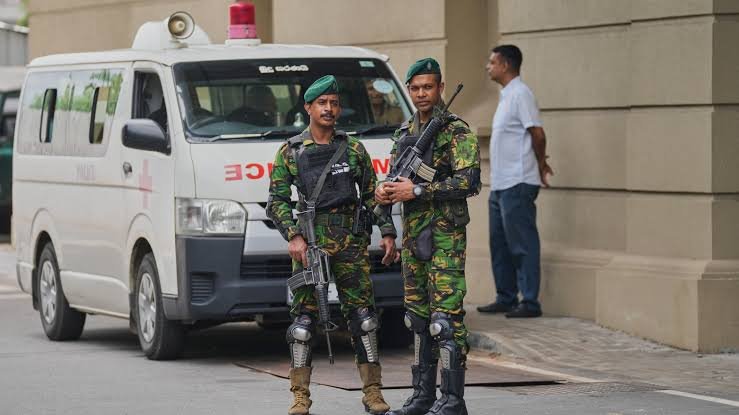
The trial itself became notable for its enormous scale and lengthy proceedings. The prosecution presented a large body of evidence and called thousands of witnesses as the court examined the alleged network surrounding the bombings. The final verdict was delivered by a three-judge panel amid heightened security, with a significant police presence around the courthouse.
For families who lost relatives and survivors who continue to live with the consequences of the attacks, the conclusion of the trial has been seen as an important legal milestone. The passage of years, however, has also meant that the verdict arrives after a prolonged period of uncertainty for many victims.
The Catholic Church in Sri Lanka has previously argued that those convicted in the main case may not represent the full network responsible for the attacks. Church officials have repeatedly called for further investigation into whether other individuals or groups were involved in planning or enabling the bombings. Such claims remain part of a wider and contested debate surrounding the attacks and the failures that preceded them.
Questions about how the attacks were allowed to happen have remained particularly significant because Sri Lankan authorities had received intelligence warnings before Easter Sunday in 2019. A parliamentary investigation concluded that police and intelligence officials failed to respond adequately to repeated warnings about the possibility of attacks.
That failure has led to separate legal and political scrutiny of senior security officials. In July, a former police chief and a former senior defence ministry official were sentenced to death over their failure to act promptly on foreign intelligence warnings concerning possible attacks. Sri Lanka has not carried out an execution since 1976, meaning death sentences have generally not resulted in executions in practice.
The wider questions surrounding the Easter bombings have also gained renewed attention since the change of government in Sri Lanka in late 2024. Investigations have examined allegations that individuals connected to the state may have had prior knowledge of the attacks or relationships with people associated with the extremist network.
One former intelligence chief, Suresh Salley, was arrested earlier this year and accused of having prior knowledge of the attacks and of links with Islamist extremists before the bombings. He has denied the allegations and remains in custody, according to reports.
The allegations involving state officials and political actors remain disputed. Sri Lanka’s defence authorities and members of the Rajapaksa family have denied involvement in the attacks. No conclusion that they were responsible for organising the bombings should therefore be drawn from the allegations alone.
The attacks had profound political and social consequences for Sri Lanka. They came a decade after the end of the country’s long civil war and exposed vulnerabilities in its security and intelligence systems. The violence also affected relations between religious communities and contributed to heightened fears surrounding Islamist militancy.

For the families of those killed, however, the legal proceedings have remained primarily about accountability rather than politics. The conviction of 15 defendants provides a formal judicial finding concerning their roles in the attacks, while the acquittal of nine others demonstrates that the court did not convict every person who faced charges.
The court’s decision to confiscate the convicted defendants’ property adds another significant element to the judgment. The order applies to their movable and immovable assets and forms part of the penalties imposed following the convictions.
The Easter bombings remain one of Sri Lanka’s most devastating acts of terrorism. The convictions mark an important stage in the country’s effort to bring those involved in planning and supporting the attacks to justice, but they do not resolve every question surrounding the tragedy.
As the criminal case reaches its conclusion, attention is likely to remain focused on the unresolved issues surrounding intelligence failures, alleged wider networks and claims that the people convicted may not have represented the entire chain of responsibility. For survivors and families of victims, the verdict closes one lengthy chapter of the legal process while leaving broader questions about how the attacks were prepared, enabled and allowed to happen still under scrutiny.
Related News:
 China Fireworks Factory Blast Kills 21 in Hunan
 China mine blast death toll rises to 90
 Israeli Strike in Southern Lebanon Kills Seven
 Nepal-Tibet Flood Death Toll Rises as 2,478 Remain Missing
 Nepal Rescuers Race to Save Hundreds Trapped Underground
 Nepal Flood Survivors Face Unimaginable Loss
 Nepal Tunnel Rescue Offers Hope Amid Flood Devastation
 Nepal seeks $20m climate compensation after deadly floods
 Japan PM Backs International Criminal Court
 Trump Speaks on Prince Andrew’s Royal Scandal Fallout
 UK University Faces Counter-Terror Probe Over China Pressure
 Just Stop Oil Protesters Convicted Amid Climate Defence Row
 British Grandmother to Return Home After Death Sentence in Bali
 BBC’s Tim Davie to Address Staff Amid Trump $1bn Threat
 Ukraine-Russia war latest: Putin’s troops exploit bad weather to force Kyiv withdrawal from multiple towns
 Oklahoma Governor Grants Last-Minute Clemency to Death Row Inmate
 US Pushes Global Effort to Stop Arms Flow to Sudan RSF Forces
 Israel Confirms Returned Hostage as Meny Godard
 Greene Pushes Epstein Files Amid Trump Fallout
 Deadly Russian Strikes Hit Western Ukraine, 20 Killed in Ternopil
 WhatsApp Messages Expose Nathan Gill’s Bribery
 Venezuela Threatens Nobel Winner Machado with Fugitive Status
 Trump Envoy to Discuss Ukraine Peace at Kremlin
 Twenty-Four Nigerian Schoolgirls Freed After Abduction
 Two National Guard Soldiers Critically Injured Near White House
 Southern Lebanon reels as Israeli strikes shatter communities
 Video shows Israeli troops kill Palestinians after surrender
 Rare shark attack kills woman, injures man at remote NSW beach
 American Mother Extradited From UK to U.S. on Murder Charges
 Melbourne Rabbi’s Car Firebombed Amid Hanukah Celebrations
 SA Police Intensify Search in Gus Lamont Case
 Taylor Swift concert attack plot shocks Austria
 NSW kidnapping mistake sparks urgent appeal
 El Mencho Killed as Mexico Faces Violence
 Kelly Wilkinson Inquest Reveals Bail Failure
 Islamic State-inspired attack shocks New York protest scene
 Michigan Synagogue Attack Leaves Suspect Dead in Tragic Incident
 North Korea Fires Missiles Amid US-South Korea Drills
 Bondi terror attack linked to global rise in IS plots
 Ben Roberts-Smith Denies War Crime Allegations in First Statement
 Learner Driver Charged After Expo Tragedy
 OpenAI CEO Apologizes After Canada Shooting Case
 Southeast Asia Turns to Russia Amid Energy Crisis
 Escobar’s Hippos May Be Moved to India Zoo
 Two Dead in Adelaide Airport Plane Crash Fire
 Cartel crackdown raises fears of fresh violence
 Australia pushes Pacific security pact amid China tension
 US ‘Narco Boat’ Strikes Draw Global Outcry
 US Awaits Iran Reply on New Ceasefire Proposal
 Hormuz Talks Near Critical Stage
 Maldives Cave Diving Tragedy Raises Safety Alarm
 Discontent grows around Putin amid war strain
 Gunman Killed After White House Security Shootout
 Teenage Victim Identified as Community Mourns Stabbing Death
 Millions Gather for Khamenei’s Six-Day State Funeral
 New Footage Revives Peter Falconio Mystery
 Ukraine Creates Long-Range Strike Command
 Venezuela Quake Death Toll Surpasses 4,000
 Houthis Strike Saudi Arabia as Middle East Tensions Rise
 UK’s Largest Muslim Convention Scales Up Security Amid Rising Bigotry
 Powerful 7.7-Magnitude Earthquake Hits Eastern Indonesia
 Deadly TikTok Driving Trend Alarms Ireland
 Nepal-Tibet Flood Leaves 270 Dead and 1,400 Missing
 Ukraine Villagers Demand Answers After Deadly Arms Depot Strike
 Masked Protesters Bring Dover Port Traffic to Standstill
 UN expert urges UK to rethink Israel policy
 Renoir Museum hit by €9m art theft on French Riviera
 Saudi Arabia Shuts Oil Pipeline After Drone Attack
 Nearly 50,000 Flee as Houthis Advance in Yemen
 Royal Crown Branded Enslaved Africans in Britain’s Slave Trade
 Israel Accused of Undermining Palestinian Life

 Yemen War Displaces 125,000 as Fighting Intensifies
 Indonesia Receives First Aircraft Carrier
 Saudi Pact Raises Risk of Pakistan Entering War
 Middle powers seek new alliances amid Trump era
 British Columbia Sues OpenAI Over School Shooting
 Briton Faces Cyprus Court Over Son’s Fatal Fall
 King Refers Jamaica Slavery Petition to Privy Council
 AI Takes Centre Stage in Trump-Xi Talks