Published: 19 November 2026. The English Chronicle Desk. The English Chronicle Online
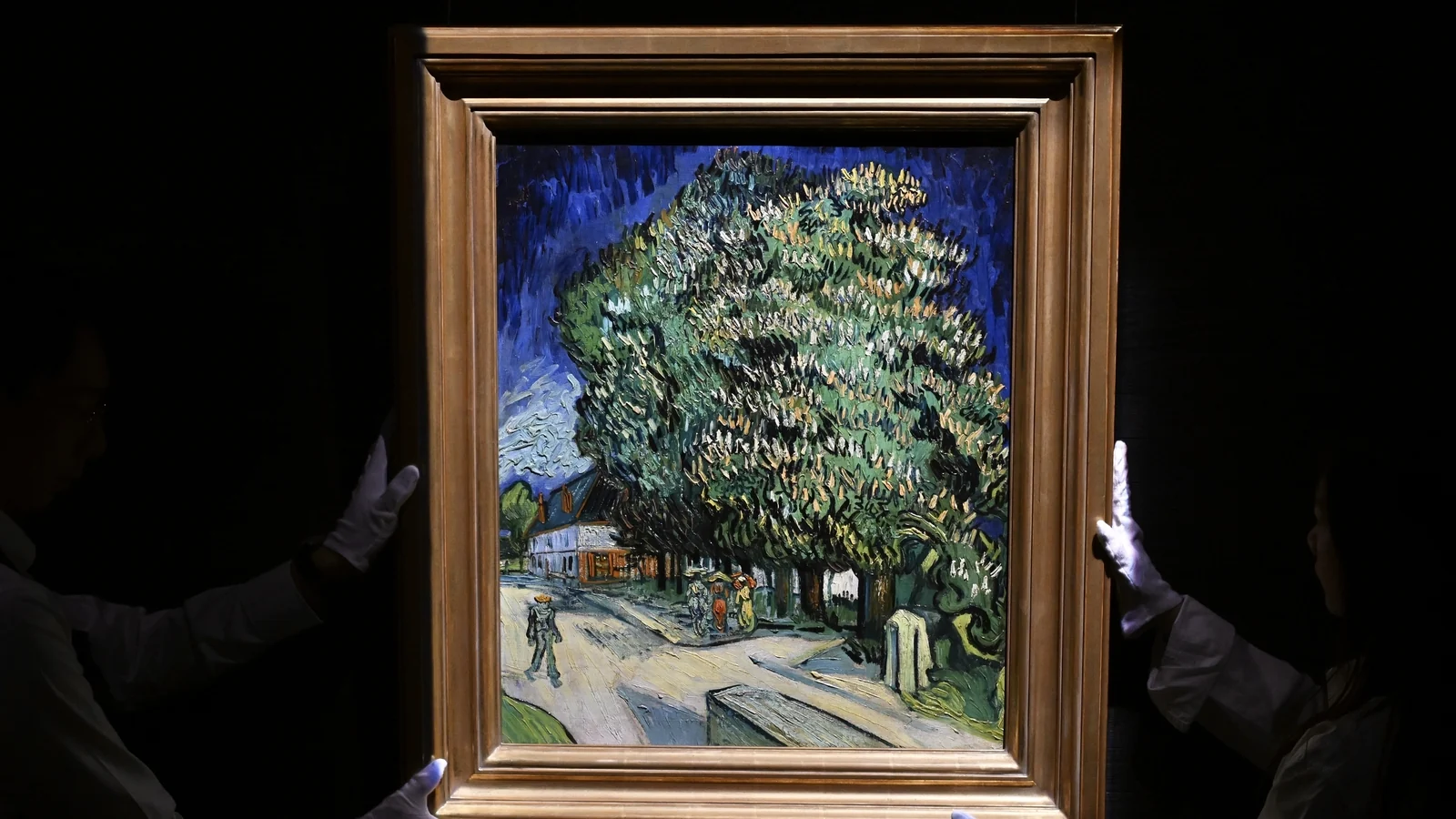
A masterpiece by legendary Dutch painter Vincent van Gogh has sold for a record-breaking $190.4 million at a Sotheby’s auction in New York, setting a new auction record for the artist and becoming the most expensive artwork sold during the current auction season. The sale of Chataigniers en fleurs (Chestnut Trees in Blossom), painted in 1890, has attracted international attention not only because of its extraordinary price but also because of a historical dispute involving the descendants of a Jewish family who owned the painting during the Nazi era.
The auction took place on Wednesday, marking a significant moment in the international art market. Sotheby’s confirmed that the painting achieved a price of $190.4 million, equivalent to approximately £144.9 million. The sale established a new public auction record for Van Gogh, whose works remain among the most sought-after pieces in the global art world.

The painting, created during the final months of Van Gogh’s life, depicts chestnut trees in blossom in Auvers-sur-Oise, a village in northern France where the artist spent the final period of his career. Its vibrant colours, expressive brushwork and distinctive post-impressionist style reflect the artistic intensity that characterised his later paintings.
Van Gogh produced the work in 1890, shortly before his death at the age of 37. Although he struggled with mental health difficulties and financial hardship throughout much of his life, his paintings eventually became some of the most valuable and influential works in modern art history.
The latest auction result demonstrates the continuing international demand for his masterpieces. It also highlights how historical ownership, cultural heritage and questions of justice can become central issues in the sale of valuable artworks.
The painting’s previous ownership became controversial because of its connection to Samuel Fischer, an influential German publisher who acquired the artwork in Paris in 1909. Fischer was a prominent figure in Germany’s publishing industry, and his family retained ownership of the painting until 1936, during the period when the Nazi regime was tightening its control over Jewish communities and businesses.
The descendants of Fischer had previously challenged the circumstances surrounding the family’s sale of the painting. They argued that the artwork was sold because of the financial pressures and persecution their family experienced under Nazi rule. Their position raised questions about whether the transaction represented a voluntary sale at a fair market price or whether it was influenced by the discriminatory policies and economic restrictions imposed on Jewish families.
The issue became particularly important as the painting prepared to enter the international auction market. The Fischer heirs wanted Sotheby’s to establish that the artwork had been sold at its proper market value in 1936 and that the family would have agreed to the transaction regardless of the political circumstances.
Gunnar Schnabel, a Berlin-based lawyer representing the Fischer descendants, had called on the auction house to provide evidence addressing these concerns. The dispute reflected a wider international debate about artworks sold, confiscated or transferred under pressure during the Nazi era.
Between 1933 and 1945, Jewish families across Europe experienced widespread persecution, economic exclusion, forced displacement and confiscation of property under Nazi rule. Many families were compelled to sell valuable possessions, including paintings, jewellery and other cultural objects, to survive or escape persecution. In numerous cases, ownership histories remain contested decades after the end of the Second World War.
The issue of Nazi-era art transactions has therefore become an important concern for museums, auction houses, collectors and descendants of families affected by persecution. Efforts to establish the circumstances surrounding historical sales are often complicated by incomplete documentation, changing ownership records and the passage of time.
The Van Gogh painting remained in the hands of the Blaquier-Arrieta family after they acquired it in 1975. According to Sotheby’s, the family had owned the artwork for more than half a century before deciding to place it on the auction market.
The disagreement between the current owners and the Fischer descendants created uncertainty surrounding the sale. However, a breakthrough emerged shortly before the auction.
On Tuesday, Sotheby’s announced that an agreement had been reached between the Blaquier-Arrieta family and all legal descendants of Hedwig and Samuel Fischer concerning the sale of the painting. The agreement effectively resolved the dispute and allowed the auction to proceed.
Although the financial details of the settlement were not publicly disclosed in the supplied announcement, the agreement was significant because it recognised the historical suffering experienced by the Fischer family while providing a negotiated resolution before the artwork changed hands.
Following the auction, Schnabel told The New York Times that the family hoped the considerable public attention surrounding the case, together with what he described as its rapid, fair and just resolution, would encourage other families who had experienced persecution during the Nazi era to continue seeking justice.
He also indicated that the atmosphere surrounding the auction was not entirely celebratory, despite the extraordinary price achieved by the painting. His description suggested that the historical circumstances surrounding the artwork remained an important part of the occasion.
The Fischer heirs also expressed appreciation for the negotiations and cooperation involving Sotheby’s and the Blaquier-Arrieta family. They said the agreement had made it possible to acknowledge the suffering of their family during the Nazi era and honour the history of Gisela Berman Fischer, who had pursued justice for her relatives.
The successful sale was also closely watched because of its significance for the Van Gogh auction market. Before Wednesday’s auction, the highest publicly recorded auction price for a Van Gogh painting was $117.2 million. That record was achieved in November 2022 when Orchard with Cypresses, an 1888 painting, was sold at Christie’s in New York.
The latest transaction has substantially exceeded that figure, establishing a new benchmark for the artist’s publicly auctioned works.
However, another Van Gogh painting may complicate the discussion about the artist’s overall market record. According to a report by The New York Times, Le Zouave, another work dating from 1888, was sold through a private transaction involving Christie’s for approximately $190 million less than a year earlier.
Private transactions and public auctions are not always directly comparable because private sales do not necessarily disclose complete financial details. Nevertheless, the reported transaction demonstrates the extraordinary prices that major Van Gogh paintings can command among wealthy international collectors.
The buyer of Chataigniers en fleurs was identified by The New York Times as William Acquavella, a prominent art dealer and head of Acquavella Galleries. His purchase further highlights the continued interest of major art-market figures in acquiring historically important European masterpieces.
Van Gogh’s international reputation has grown enormously since his death in 1890. During his lifetime, he struggled to achieve commercial success, and his financial circumstances remained difficult despite his remarkable artistic productivity. Today, his paintings are recognised as defining works of post-impressionist art and are displayed in major museums and private collections around the world.
His distinctive approach to colour, movement and emotional expression influenced generations of artists. Works such as The Starry Night, Sunflowers and Irises have become internationally recognised symbols of modern art. The continued demand for his paintings reflects both their artistic importance and their rarity in the international market.
The record-breaking sale also comes at a time when major auction houses are competing for exceptional works capable of attracting wealthy collectors from across the world. Rare masterpieces with documented historical significance often generate considerable interest because they offer collectors an opportunity to acquire objects that are unlikely to return to the market for many years.
Yet the story of Chataigniers en fleurs extends beyond its financial value. Its journey from Fischer’s ownership in the early twentieth century to the latest auction reflects the complicated relationship between art, history, wealth and the consequences of political persecution.

The agreement involving the Fischer descendants demonstrates how historical ownership disputes can be addressed through negotiations between families, legal representatives and auction institutions. It also highlights the importance of examining the provenance of valuable artworks before they are transferred to new owners.
As the painting enters a new chapter under its latest ownership, its record-breaking price will remain an important milestone in the art market. However, the resolution of the historical dispute may prove equally significant, serving as a reminder that behind some of the world’s most valuable cultural treasures are personal histories that deserve recognition, transparency and justice.
Related News:
 US Senators Slam Ticketmaster Over Sneaky New Fee Hikes
 Harry and Meghan’s Australia Visit Sparks Debate
 Athens Mayor Moves to Tackle Overtourism Crisis
 Ukraine Urges UK to Seize Russian Oil Tankers
 Whistler’s Mother and why its fame frustrated artist
 Dreyfus Statue Finally Gets Permanent Paris Home
 Green Leader Targets Starmer’s Former Seat
 Susan Sarandon Says Palestine Stand Costs Roles
 Greece Pushes for Parthenon Marbles Reunification
 Pelicot Trial Play Comes to London for One Night
 Burnham Opens Door to Possible UK Return to EU
 Spain Sets Snap Election as Housing Crisis Deepens
 Sydney Festival 2027 Unveils Major International Dance Line-up
 UK Pharmacy Body Drops Teva After Ethical Concerns
 Turkey Rules Out Troops in Saudi Arabia’s Houthi Conflict
 Trader Wins Unfair Dismissal Case After Overseas Work
 France Faces Debt Crisis as Protests and Markets Clash
 Premier League Faces a Crisis of Trust After City Verdict
 Hanson Attacks Taylor as Australian Conservatives Clash
 Breaking Bad Actor RJ Mitte Dies at 34
 Millions Face Tougher Medicaid Rules From January
 Brazil Cuts Working Week to 40 Hours in Lula Election Boost
 Aardman Cuts Losses but Fails to Return to Profit
 Australian Mortgages Now Cheaper Than Rent in Some Suburbs
 Cormann Warns Australia Against Populist Migration Caps
 Alberta Referendum Exposes Deep Divisions Over Independence
 Milan Luxury Stores Shut as Italy Plans Troop Deployment
 Alberta Voters Reject Push for Canadian Independence
 UK Aid Set to Fall Short of Reduced 2027 Target
 Goldsmiths Students Seek Compensation Amid Strike
 Brexit Deal Not Good Enough for Britain, Burnham Says
 Hello Kitty Maker Ends Japanese Drama Partnership
 Denmark Seeks EU-Wide Ban on Fast-Growing Turbo Chickens
 Australia Reviews UK Visa Rules Amid Worker Influx
 UK Parliament Faces Risk of Notre Dame-Style Fire
 New Zealand’s Opportunity Party Challenges Populist Politics
 Pope Leo Rebukes Milei Over Argentina’s Austerity Policies
 Victorian Labor Faces Election Crisis as Poll Slumps to 18%
 Burnham’s Christmas Homelessness Pledge Faces Uncertainty
 Tasmania Tells Tourists to Stay Away in Bold Campaign
 European Pesticides Linked to 1,605 Brazil Poisoning Reports
 Mary Peltola’s Alaska Win Gives Democrats 56 Senate Seats
 Russian Strikes Leave Kyiv in Darkness, Pressure Mounts on Mayor
 From Lego to Pokémon: How Adults Are Driving UK Toy Market Growth
 Canada Passes Carney’s First Budget in Tight Parliamentary Vote
 Rising Costs Force Families to Rethink Days Out
 Ticketmaster Fees Rise Despite Recent US Junk Fee Crackdown
 M&S Demands Urgent Action on Rising Violent Retail Crime
 Cannes filmmakers split over AI’s role in cinema
 Farage and Reform UK Reshape British Politics
 England and Norway Fans Turn Miami Into World Cup Carnival
 Olympus Awaits Unesco Heritage Recognition
 Burnham unveils £65m drought aid for farmers
 British Museum Faces Questions Over Peter Thiel’s Private Bayeux Viewing
 Bayeux Tapestry Revives Franco-British Ties
 UK Retailers Accused of Breaking Refund Laws
 UK Rent Gap Puts Low-Income Families Under Pressure
 Trump gives Xi red-carpet welcome as trade truce extends
 Frome Community Loses Bid for Major Regeneration Site
 Madrid Tent Camp Grows as Spain Housing Crisis Deepens
 UK University Strikes Spread as Financial Pressure Grows
 Healey urged to act as UK energy bills rise 4%
 Badenoch Raises Prospect of 2027 UK Election
 Salinas Struggles to Keep the American Dream Alive
 South Korea Probes Fuel Shipments to Russia
 UK Water Firms Earn Millions From Industrial Wastewater
 Trump’s Russian Diesel Deal Sparks Ukraine Fury
 Australian Advocates Seek Subsidised Drugs for PMOS
 Trump Names Katie Zachariah as Next White House Press Secretary
 Hall and Woodford Win Nobel Economics Prize
 UK Visa Refusal Threatens Baby’s Family Christmas
 Greens Face Leadership Test as Jordon Steele-John Misconduct Claims Leave Party in Limbo
 Lula Supporters Make Final Push Ahead of Brazil Runoff
 UK Land Registry Plan Faces Opposition From Landowners
 UK Chancellor Moves to Scrap Gas Standing Charges
 Alan Jones Trial Paused for Melbourne Cup Viewing
 James Talarico Makes History with Texas Senate Victory
 Labor Minister Defends Chalmers Amid Budget Tensions
 US Treasury Chief Moves to Military Base Over Iran Threat
 King Charles Praises Elton John During Special Broadcast