Published: 6 July 2026 | The English Chronicle Desk | The English Chronicle Online
Ukraine has warned of a growing shortage of interceptor missiles as it faces sustained aerial attacks, following a deadly wave of strikes that killed at least 15 people in the Kyiv region and damaged critical infrastructure, according to officials.
The warning comes amid intensified Russian missile and drone attacks targeting Ukrainian cities and surrounding areas, placing renewed pressure on the country’s air defence systems and raising concerns among military planners about the sustainability of current defensive capabilities.
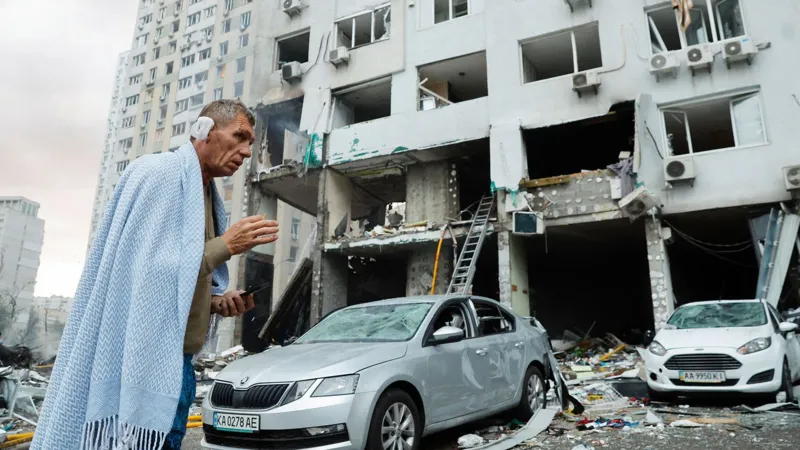
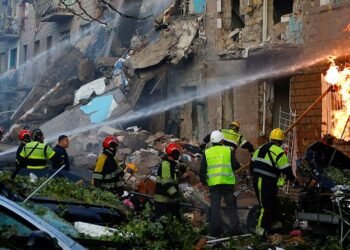
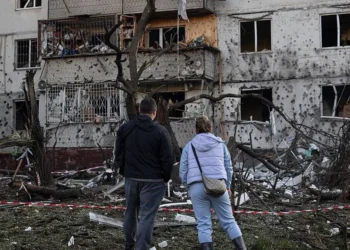
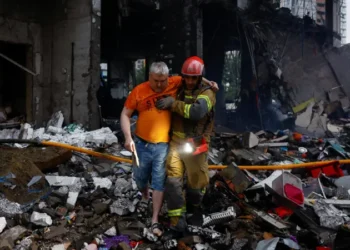
Ukrainian authorities said emergency services were deployed across multiple sites in the Kyiv region after overnight strikes caused widespread destruction to residential areas, transport links and energy infrastructure. Rescue operations continued into the following day as teams searched for survivors in partially collapsed buildings.
The State Emergency Service confirmed that the death toll had reached at least 15, with dozens more injured. Officials cautioned that the number could rise as recovery efforts continued.
The latest attack is part of a broader escalation in long-range strikes that have increasingly targeted both military and civilian infrastructure across Ukraine. Kyiv and surrounding regions have repeatedly come under pressure in recent weeks, forcing authorities to rely heavily on air defence systems to intercept incoming missiles and drones.

However, Ukrainian defence officials have now acknowledged that stocks of interceptor missiles are becoming strained due to the intensity and frequency of attacks.
A senior military spokesperson said that while Ukraine continues to receive air defence support from international partners, the rate of incoming attacks is challenging the capacity of existing systems.
The spokesperson warned that maintaining adequate interceptor supplies is critical to sustaining Ukraine’s ability to defend its airspace, particularly during periods of intensified bombardment.
Ukraine’s air defence network is built on a combination of domestically operated systems and Western-supplied platforms designed to intercept incoming ballistic missiles, cruise missiles and drones. These systems have played a crucial role in protecting major cities, including Kyiv, Kharkiv and Odesa, from repeated aerial assaults.
However, military analysts note that interceptor missiles are costly and produced in limited quantities, making replenishment a persistent logistical challenge during prolonged conflicts.
The latest strikes underscore the ongoing asymmetry in the conflict, with Russia reportedly continuing to deploy large volumes of drones and missiles in coordinated waves designed to overwhelm defensive systems.
In recent months, Ukrainian officials have repeatedly appealed to international allies for additional air defence systems and ammunition, emphasising that sustained defensive capability depends on consistent resupply.
Western governments have responded with multiple aid packages, including advanced air defence platforms and interceptor missiles. However, delivery timelines, production constraints and competing global defence demands have complicated efforts to fully meet Ukraine’s requirements.
The situation has prompted renewed debate among defence experts about industrial capacity across NATO countries and the ability to scale up missile production quickly enough to match battlefield consumption rates.
Military analysts suggest that Ukraine’s air defence strategy is increasingly dependent on prioritising targets, with commanders forced to make difficult decisions about which incoming threats to intercept based on available resources and assessed risk levels.
This approach, while necessary, introduces additional vulnerabilities, particularly during large-scale coordinated attacks.
The latest assault on the Kyiv region also highlights the continued strategic importance of Ukraine’s capital and surrounding areas. Kyiv remains a central hub for government operations, military coordination and civilian administration, making it a persistent target in Russia’s long-range strike campaign.
Infrastructure damage reported in the latest strikes included disruptions to power distribution networks and transport systems, although restoration efforts were quickly initiated by emergency crews.
Ukrainian officials said contingency systems had been activated to maintain essential services, but warned that repeated attacks on energy infrastructure could create longer-term challenges, particularly during peak seasonal demand.
President Volodymyr Zelenskyy condemned the attacks, describing them as part of a sustained effort to pressure civilian populations and destabilise critical national infrastructure. He reiterated calls for stronger international support, particularly in strengthening air defence capabilities.
European allies have expressed continued solidarity with Ukraine following the latest strikes, with several leaders condemning the attacks and reaffirming commitments to military and humanitarian assistance.
However, divisions remain within some political circles over the scale and duration of long-term military support, particularly as defence budgets come under pressure across Europe.
The humanitarian impact of the latest strikes has been significant.
Emergency services reported extensive damage to residential buildings in the Kyiv region, with families displaced and local shelters operating at capacity. Medical teams have been treating a steady flow of casualties, many with injuries caused by structural collapse and shrapnel.
Local authorities have urged residents to remain alert and follow air raid warnings, which have become a routine but critical part of daily life in many parts of Ukraine.
International humanitarian organisations have also responded to the latest escalation, warning of growing civilian hardship as infrastructure damage accumulates over time. They have called for continued access for aid deliveries and protection of civilian populations under international law.
The broader military situation remains highly fluid, with both sides continuing to engage in long-range strikes and defensive operations. While front-line positions have seen limited movement in recent months, the aerial dimension of the conflict has intensified significantly.
Experts note that the increasing reliance on drones and missiles reflects a shift in modern warfare, where long-range precision strikes and air defence systems play a central role alongside traditional ground operations.

For Ukraine, maintaining an effective interceptor missile stockpile is therefore not only a tactical necessity but also a strategic priority.
As the conflict continues, the sustainability of air defence systems is expected to remain a key issue in military planning and international diplomacy.
The latest warning from Ukrainian officials underscores the ongoing challenges faced by a country defending its airspace under continuous pressure. While international support remains vital, the ability to maintain sufficient interceptor capacity may ultimately shape the effectiveness of Ukraine’s defensive strategy in the months ahead.
Related News:
 High-speed Spain train crash leaves nation in mourning
 EU weighs response amid Greenland tariff crisis with Trump
 EU Says US Ties Have Suffered ‘Big Blow’ After Greenland Crisis
 Thousands Left Without Heating in Ukraine Amid Russia Strikes
 Russia sanctions hit economy hard, says EU envoy
 Canada Dispatches Senior Officials to Open Greenland Consulate
 Portugal Election Delivers Socialist Win as Far Right Surges
 Macron Rebuked in Franco-German Defence Row
 Facing a Demographic Catastrophe, Ukraine Is Paying for Troops to Freeze Their Sperm
 Five Young People Die in Spain Apartment Block Fire
 The Russian Village That Lost Its Men to War
 Zelensky Says Putin Has Started WW3, Must Be Stopped
 New Russia Sanctions on Hold as Hungary Blocks EU Package Ahead of Fourth Ukraine War Anniversary
 Rob Jetten becomes Netherlands’ youngest ever prime minister
 Ukraine remembers its dead as war enters a fifth year
 Louvre Museum Director Resigns Months After High‑Profile Heist
 Orbán Accuses Ukraine of Disrupting Oil Supplies to Hungary
 Spain Declassifies Files on 1981 Attempted Coup in Effort to Dispel Conspiracy Theories
 Hungary Faces Political Tension Over the Ukraine Crisis
 Why Meloni Quietly Flooded Italy With Migrants
 Russia Blames Ukrainian Naval Drones as Tanker Sinks
 Macron Finds ‘Freedom Fries’ Redemption in Iran Crisis
 Ukraine Accuses Hungary of Taking Seven Bank Workers Hostage in Budapest
 Finland Plans to Lift Decades‑Old Ban on Hosting Nuclear Weapons
 Putin Orders Evacuation at Iran Nuclear Plant Amid ‘Catastrophe’ Fears
 Cyprus Drone Strike Sparks Europe’s Strong Response
 Istanbul Mayor Faces Corruption Trial Amid Political Storm
 Ukraine War Becomes Flashpoint in Hungarian Election
 Italian Town Buys Mussolini Villa to Keep Away Fascist Fans
 Who Is Viktor Orbán, Hungary’s Long-Serving PM?
 The Spiky Standoff: German Mayors Call for Night-Time ‘Robot Ban’ to Save Hedgehogs
 ‘The Soul of Spain’: Politicians Clash Over Renewed Push to Move Picasso’s Guernica
 The ‘Svuota Londra’ Effect: Why the Super-Rich are Swapping Dubai for Milan
 ‘The Fortress of Values’: JD Vance Touches Down in Budapest to Back Viktor Orbán
 ‘Free at Last’: French Teachers Released as Iran Exchanges ‘State Hostages’ for Legal Concessions
 Hungary election: Orbán faces biggest test amid scandal
 Ukraine strikes Tuapse as oil disaster worsens
 Global order shifts amid Trump-era turmoil
 “Speechless and Determined”: Two Dead, 22 Injured in Leipzig “Vehicular Rampage”
 Ceasefire Standoff Deepens in Ukraine War
 The Quarantine Crossing”: Hantavirus-Hit MV Hondius Bound for Canary Islands After Deadly Outbreak
 “The Ghost Galleon”: Hantavirus-Hit Cruise Ship Bound for Tenerife After High-Stakes Evacuations
 France Faces Record Presidential Crowded Race Amid Far-Right Surge
 Norway Doubles Down on Oil and Gas for Europe Energy Security
 Bad Weather Threatens Hantavirus Cruise Ship Evacuation
 Putin Declares Russia Victory at Scaled Victory Day Parade
 Ex-Chief of Staff Named in Major Ukraine Corruption Probe
 Pope Meets Families in Italy Toxic Waste Zone
 Zelenskyy warns over Oreshnik threat as Kyiv hit
 Former ICC prosecutor condemns US sanctions
 Irish Gangland Figure Fails in Dublin Election Bid
 Europe Swept by Historic May Heatwave
 Deadly Russian Air Raids Strike Across Ukraine
 Zelensky Invites Putin to Direct Peace Talks
 Republicans Defy Trump on Ukraine Aid Bill
 Papal Visit Offers Political Lifeline to Spanish Premier
 EU Summit to Reaffirm Balkan Membership Goals
 European Allies Set Peace Terms for Ukraine
 Huge Crowds Gather for Pope’s Open-Air Mass
 Spain Tourism Surges as Travellers Avoid Middle East
 Drone Attacks Overshadow Russia Economic Forum
 Armenia Votes Under Pressure From Russia
 Spain Sees Tourism Boom as Travellers Shift Away From Middle East

 Armenia’s Pro-Europe Victory Signals Deeper Break From Russian Influence
 Hundreds of Migrants Reportedly Kidnapped by Smuggling Gangs During Journey Toward UK
 Collapse of Franco-German Fighter Jet Project Raises Questions Over Europe’s Defence Future
 Pope Leo Visits Canary Islands to Draw Attention to Migrant Crisis
 Russian Artist and Kremlin Critic Shot Dead in Poland
 Russian Strikes on Kyiv Kill at Least 11
 Le Pen Appeal Verdict Could Reshape France’s Political Future
 Australian Families Leave Syrian Camp for Home
 Austrian Man Charged Over Foiled Taylor Swift Concert Attack Plot
 ‘I Would Scream in My Sleep’: Alawite Women from Syria Tell of Kidnap and Rape
 Epstein Eyed Record Label Investment to Access Women, Files Suggest
 How Do You Modernise Mango Farming? India’s Growers Urged to Innovate as Climate Change Hits
 Justice and Deceit: High Court Convicts Woman in Hong Kong Blackmail Plot
 “Three-Wheeled Triumph”: Mayor of Erewash Completes 2,000-Mile European Charity Run
 Tragedy in the Red Centre: Outback Search Ends in Discovery of Missing Girl’s Body
 “An Endurance Test for the Mind”: British Couple Sentenced to 10 Years in Tehran