Published: 17 July 2026| The English Chronicle Desk | The English Chronicle Online
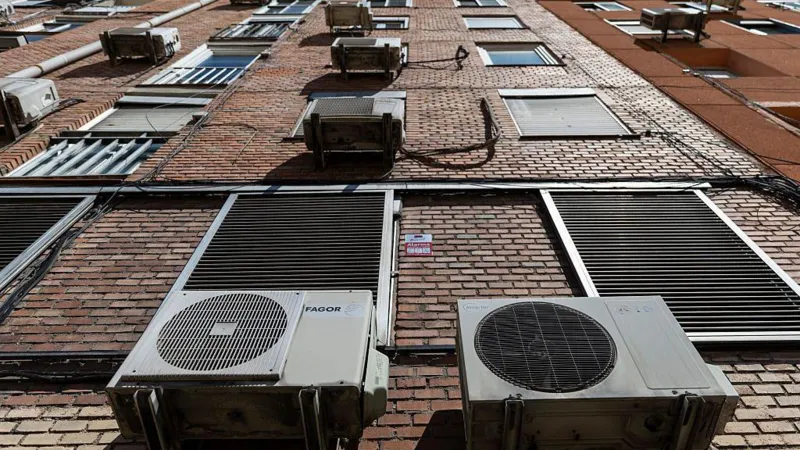
As record-breaking heatwaves sweep across Europe, millions of people are searching for ways to cope with rising temperatures, and many are turning to a surprising source for relief: Chinese-made air conditioners.
Demand for cooling equipment has surged across the continent as countries experience increasingly intense periods of extreme heat. Chinese manufacturers, which dominate much of the global air-conditioning market, are seeing growing interest from European consumers looking for affordable and efficient solutions.
The trend highlights a changing reality for Europe as climate change increases the need for cooling systems in regions that historically relied less on air conditioning.
For decades, air conditioning was considered less essential in many European countries compared with places such as the United States, the Middle East and parts of Asia.

However, repeated heatwaves have changed attitudes.
Cities across southern and central Europe have experienced unusually high temperatures, putting pressure on homes, workplaces, hospitals and public services.
Climate experts have warned that Europe is warming faster than many other parts of the world, making heatwaves more frequent, longer and more intense.
As temperatures rise, many households are reconsidering whether air conditioning is a luxury or a necessity.
The increase in extreme heat has led to a sharp rise in demand for portable air conditioners, heat pumps and home cooling systems.
Many European households that previously relied on fans, shutters or natural ventilation are now investing in stronger cooling solutions.
Retailers have reported increased sales during periods of extreme heat, with customers looking for quick and affordable ways to lower indoor temperatures.
Chinese manufacturers have benefited from this demand because they produce a large share of the world’s air-conditioning units.
China has become the global centre of air-conditioning manufacturing, producing equipment for both domestic and international markets.
Chinese companies have developed a reputation for offering affordable products with increasingly advanced technology.
Many consumers are attracted by lower prices compared with some traditional European brands.
Modern Chinese air conditioners often include features such as energy-saving modes, smart controls, air purification systems and remote operation through mobile apps.
For European consumers facing rising living costs, affordability has become an important factor in purchasing decisions.
The growing demand for air conditioning represents both a challenge and an opportunity.
On one hand, increased use of cooling systems can raise electricity demand, especially during heatwaves when power networks are already under pressure.
Governments and energy experts are concerned about ensuring that increased cooling does not create new problems for energy supply and emissions.
On the other hand, the growing market creates opportunities for companies developing more efficient and environmentally friendly cooling technologies.
Air conditioning provides immediate relief during extreme heat, but it also raises questions about energy consumption.
Traditional cooling systems can require significant amounts of electricity, particularly when used continuously during long heatwaves.
European governments are increasingly encouraging energy-efficient technologies and improved building design to reduce the need for constant cooling.
Solutions include better insulation, shaded buildings, improved ventilation and the use of renewable energy.
The popularity of Chinese air conditioners reflects China’s broader role in global clean technology markets.
Chinese companies have become major suppliers of technologies including solar panels, batteries, electric vehicles and energy systems.
While European governments are seeking to reduce dependence on foreign suppliers in some strategic industries, consumers continue to choose products based on cost, availability and performance.
This creates a complicated relationship between economic security concerns and market realities.
The rise in air conditioner demand reflects a broader change in European lifestyles.
Many older buildings were designed for cooler climates and were not built with modern heat conditions in mind.
During previous generations, extreme heat events were less common, and many homes did not require mechanical cooling.
Now, residents in countries across Europe are adapting to a warmer climate.
From installing air conditioners to changing work schedules and improving urban design, societies are looking for ways to manage rising temperatures.
The increase in cooling demand is also linked to concerns about public health.
Extreme heat can be dangerous, particularly for elderly people, young children and those with existing health conditions.
Heatwaves have been associated with increased hospital admissions and higher mortality rates.
Public health officials often advise people to stay hydrated, avoid excessive outdoor activity and keep indoor spaces cool during periods of extreme temperatures.
For vulnerable groups, access to reliable cooling can become a matter of safety.
Although Chinese air conditioners are becoming increasingly popular, the trend has also raised questions about Europe’s dependence on foreign manufacturing.
Some policymakers argue that Europe should develop stronger domestic production capabilities for essential technologies.
Others say global trade allows consumers to access affordable products and encourages competition.
The debate reflects wider discussions about supply chains, industrial policy and economic independence.
As climate change continues, demand for cooling systems is expected to increase.
Experts say Europe will need a balanced approach that combines immediate protection from heat with long-term climate solutions.

This includes developing more efficient cooling technologies, improving buildings and expanding renewable energy.
The challenge will be ensuring that people can stay safe during extreme heat without creating additional environmental pressures.
Europe’s growing appetite for Chinese air conditioners is a sign of a changing climate reality.
Heatwaves that were once considered unusual are becoming more common, forcing governments, businesses and households to adapt.
Chinese manufacturers are currently meeting much of the demand for affordable cooling equipment, but the wider debate over energy, sustainability and supply chains is far from over.
As temperatures continue to rise, cooling is likely to become one of the defining challenges of Europe’s response to climate change.
Related News:
 How Do You Modernise Mango Farming? India’s Growers Urged to Innovate as Climate Change Hits
 Study Says Only Two Nations May Survive Nuclear War
 Moldova River Crisis Exposes War’s Hidden Cost
 Chornobyl Still at Risk 40 Years After Disaster
 Doomsday Clock Nears Midnight Amid Global Crises
 “The Body Under Siege”: Understanding the Physiological Impact of Extreme Heat
 UN Issues Urgent Warning: Imminent Return of El Niño
 Global Stock Markets Slide Amid Tech Sell-Off and Middle East Tensions
 British AI Startup Outshines Human Forecasters in Global Prediction Contest
 UK Fighter Jet Purchase Could Breach Nuclear Treaty, Warns CND
 Google at 27: The Untold Story of Ruth Kedar, the Woman Behind the Iconic Logo
 Cooper Unveils £4m Cyber Plan Against Russian Hackers
 Experts Warn Russia’s Burevestnik Missile Could Destabilise Arms Control
 Britain deploys RAF specialists to assist Belgium with drone threats
 Hitler’s DNA Confirms He Truly Had Only One Testicle
 Pokémon to open world’s first theme park in Japan next year
 US Clears Nvidia AI Chip Sales to China in Policy Shift
 UK New Car Discounts Near £6,000 as Prices Are Slashed
 Indian University Kicked Out of AI Summit for Claiming Chinese Robot Dog as Its Own Invention
 China Shows Off Nunchuck‑Wielding Humanoid Robots for Lunar New Year
 The Chinese AI App Sending Hollywood Into a Panic
 Bill Gates Pulls Out of India’s AI Summit Over Epstein Files Controversy
 Musk Cuts Starlink Access for Russian Forces – Giving Ukraine an Edge at the Front
 UK’s First Geothermal Plant Powers 10,000 Homes
 Social Media Trial: Woman Says Addiction Began at Six
 Instagram Investigating AI Profiles ‘Fetishising’ Disabled People
 Anthropic Boss Rejects Pentagon Demand to Drop AI Safeguards
 Why Russia Controls Its People With a Flick of a Switch
 The US Now Has the Medicine for Cheap Swarming Drone Attacks
 Boy George Says He’s Using ChatGPT to Help Write New Songs
 Protesters Rally in San Francisco Against OpenAI Deal With Pentagon
 We Have More Privacy Controls Yet Less Privacy Than Ever — The Paradox of Digital Life
 Trump Threatens Iran With ‘Twenty Times Harder’ Oil Strike
 Gulf Oil Shock Sends Global Economic Ripples
 Iran Rejects Ceasefire, Warns Trump With Chilling Message
 Oil Price Jumps Despite Deal to Release Record Amount of Reserves
 Philippines energy emergency sparks coal power surge
 One Ant for $220: The New Frontier of Wildlife Trafficking
 Trump Considers Military Operation to Seize Iran’s Uranium
 ‘At the Doorstep of the Future’: Florida’s Space Coast Braces for Historic Artemis II Launch
 ‘We Go for All Humanity’ — Artemis II Returns Humans to the Lunar Vicinity
 A Name for the Nameless: DNA Finally Links 1974 Utah Murder to Ted Bundy
 7.4-Magnitude Earthquake Jolts Eastern Indonesia; Tsunami Warning Lifted
 Breaking the Horizon: Blind Runner to Tackle Brighton Marathon with Smart Glasses
 Lunar Bound: Artemis II Leaves Earth’s Orbit for Historic Deep-Space Journey
 Apple at 50: Three Products That Changed How We Live
 Hungary Claims Plot to Target Gas Pipeline Pre-Vote
 Voices of the Vanguard: ‘Audio Time Capsule’ of Disability Rights Pioneers Discovered
 Electric Shock: Australians Buy Record Number of New EVs as Fuel Crisis Bites
 War, Windfalls, and the Carbon Trap: The Iran Conflict’s Brutal Energy Math
 The Great Chokehold: Why the Strait of Hormuz is the Epicenter of the 2026 Crisis
 Heavier SUVs Accelerate Britain’s Pothole Crisis
 The Frozen Frontier: Why Frostbite is the Least of Concerns for Canada’s Arctic Forces
 Canadian astronaut French words ease language row
 ‘The End of the Quiet Era’: Japan Relaxes Arms Export Rules in Historic Pivot From Pacifism
 Beyond the Swoosh: Anta Sports Overtakes Rivals to Become Global Top Three
 Older Than Dinosaurs: Secrets of Mayfly Dance Revealed
 Capitalism ‘Suicidal’, Warns Petro at Climate Summit
 “The Art of the Withdrawal”: Trump Targets Germany Troops as Iran Row Boils Over
 “Grounded”: Beijing Implements Total Ban on Drone Sales Citing Capital Security
 Record May Heat to Cold Front in Eastern Australia
 “The Floating Fever”: WHO Confirms Second Hantavirus Case as Cruise Outbreak Death Toll Reaches Three
 “The Hormuz Ceasefire”: Oil Slips and Markets Surge as Trump Pauses Naval Mission
 “The Digital Frontier”: Scotland’s Papers Grapple with AI Harassment and ‘Mortgage Bottlenecks’
 “The Trial’s Strange Turn”: Musk v. Altman Case Veers into Personal Testimony and ‘Sperm Offers’
 “The Mush-Brain Mandate”: How to ‘Think Outside the Bots’ and Bypass the AI Resilience Deficit
 “The Swap Shop”: Dr Chris van Tulleken Backs Southampton Teens’ Fight Against ‘The Matrix’ of Ultra-Processed Food
 “The Bio-Marker Breakthrough”: At-Home Blood Test Could Spot Alzheimer’s Risk Years Before ‘Clinical’ Symptoms
 “The Trading Bonanza”: Shell Profits Soar to $6.9 Billion Amid Iran War ‘Volatility’
 “The Peace Dividend”: Oil Prices Plunge and Global Stocks Surge on Reports of Iran Ceasefire Deal
 The Pathogen Protocol”: Third British National Monitored for ‘Nasty’ Suspected Hantavirus
 “Eyes in the Sky, Spikes on the Ground”: Advanced Satellite Imagery and AI Algorithms Deployed Across Britain to Save the Vanishing Hedgehog
 “The Critical Intervention”: Essential Steps for Identifying and Treating Heat-Related Emergencies
 “The Climate Multiplier”: Assessing the Dual Threat of Disease-Bearing Mosquitoes and Heat-Related Mortality
 “The Pragmatic Pivot”: UK Eases Sanctions on Russian Energy Amid Escalating Global Fuel Crisis
 Pope Meets Families in Italy Toxic Waste Zone
 Trump Approves $700m Coal Industry Investment
 Airline Leaders Warn 2050 Net Zero Target May No Longer Be Achievable
 Venezuela Quake Death Toll Surpasses 4,000
 UK Heatwaves May Have Claimed Thousands of Lives