
Published: 13 August 2026 | The English Chronicle Desk | The English Chronicle Online
Japan faces some of the strongest arguments in the developed world for embracing artificial intelligence. The country has an ageing population, persistent labour shortages and a long-standing struggle to improve workplace productivity. In theory, AI could help businesses automate routine work, compensate for a shrinking workforce and modernise industries still dependent on outdated systems.
Yet the adoption of AI across many Japanese workplaces remains cautious and comparatively slow.
While businesses in the United States, the United Kingdom and other major economies are increasingly integrating generative AI into everyday operations, many Japanese companies continue to experiment carefully at the edges. AI may be used to summarise documents, draft emails or gather information, but allowing it to take on more substantial responsibilities remains a far more difficult step.
The contrast has raised an important question: why is a technologically advanced country, famous for robotics, electronics and engineering, proving so hesitant when it comes to artificial intelligence?
Part of the answer appears to lie not in a lack of interest in technology, but in Japan’s corporate culture, attitudes towards risk, shortages of digital skills and the continued reliance on ageing IT infrastructure.

According to data cited in an Organisation for Economic Co-operation and Development report, only 8.4% of Japanese workers were using AI as part of their jobs at the end of last year. That compares with significantly higher levels reported in countries such as the United States and the United Kingdom.
The difference is particularly striking because Japan’s demographic pressures are becoming increasingly severe. As the population ages and the working-age population declines, employers are finding it harder to recruit staff. Industries ranging from healthcare to manufacturing and retail face growing concerns over labour availability.
AI could, in principle, provide part of the solution.
However, introducing a new technology into a workplace is not simply a technical decision. It also requires organisations to accept change, manage mistakes and rethink established systems.
For many Japanese businesses, that is where the difficulty begins.
Austin Xu, co-founder of the US start-up Kuse AI, says that Japanese organisations can be slowed by processes built around consultation and consensus. His company has expanded into Japan to sell AI systems to local businesses, giving him direct experience of the different attitudes towards the technology.
Xu argues that many companies have an extremely low tolerance for mistakes, particularly where AI could interact directly with customers or make decisions affecting important operations.
In some cases, he suggests, organisations would rather leave a position vacant than allow an AI system to perform work that could potentially result in an error.
The approach contrasts sharply with the culture developing in parts of the United States, where companies are increasingly prepared to introduce AI tools and improve them through practical use.
The American approach is often to allow the technology to assist with work, monitor its performance and correct mistakes as they emerge.
In Japan, by comparison, many businesses appear to want stronger proof that a system is reliable before giving it significant responsibility.
Professor Parrisa Haghirian, an expert in international management at Kyoto University of Advanced Science, says the challenges surrounding AI adoption reflect wider difficulties Japanese companies have traditionally faced when implementing major organisational change.
She argues that businesses are particularly sensitive to uncertainty, errors and reputational damage. Because generative AI is not entirely reliable, many organisations are restricting its use to relatively low-risk tasks.
Writing assistance, document summaries and information gathering are among the applications more likely to be accepted. Allowing AI to influence major decisions, redesign core processes or operate autonomously remains far less common.
This cautious approach may protect companies from immediate risks, but it could also limit the productivity improvements AI is expected to deliver.
Japan has struggled with productivity for years and continues to face pressure to modernise. Government figures and international comparisons have repeatedly highlighted the country’s difficulties in improving output per worker.
For policymakers, artificial intelligence represents an opportunity to address at least some of those problems.
The Japanese government has increasingly acknowledged the need to encourage wider AI adoption. The country’s AI Promotion Act is intended to create a supportive environment for investment and development, with policymakers promoting a relatively light-touch regulatory approach.
Tokyo has said it wants Japan to become one of the world’s most favourable countries for developing and using AI.
Government figures also suggest that the number of businesses using some form of AI has increased sharply over recent years. However, critics argue that company-level adoption statistics can conceal a more complicated reality.
A business may technically be classified as an AI user even if only a small number of employees have access to the technology or use it only occasionally.
The depth of adoption may therefore be considerably lower than headline figures suggest.
Digital skills are another major obstacle.
Professor Yasushi Ogasawara of Meiji University argues that Japan faces a shortage of workers with the technical knowledge needed to implement and manage more sophisticated digital systems.
Japan is often associated with advanced consumer technology, from electronics to gaming and robotics. But familiarity with gadgets does not necessarily translate into high levels of workplace digital literacy.
The country is also facing a significant shortage of IT professionals, with one estimate suggesting that the gap could reach almost 800,000 workers by 2030.
Without enough specialists to modernise systems, develop software and manage AI tools, many companies may struggle to move beyond small-scale experimentation.
The problem is made worse by ageing computer infrastructure.
A substantial proportion of Japanese companies are still believed to rely on systems that are decades old. Integrating modern AI technology with outdated databases and software can be difficult, expensive and potentially disruptive.
In some sectors, the challenge is even more basic.
Japan’s healthcare industry, for example, has been criticised for its slow pace of digital transformation. Some hospitals continue to rely heavily on paper documentation, creating vast collections of physical records that are difficult to digitise and analyse.
AI can only be fully effective when organisations have accessible, structured and reliable digital information. If the underlying records remain trapped in paper files or fragmented legacy systems, introducing advanced AI tools becomes far more complicated.
Employment is another sensitive issue.
Japan has traditionally placed considerable importance on job security and maintaining employment. While AI advocates often emphasise the technology’s potential to address labour shortages, there are also concerns that automation could eventually eliminate some roles.
Professor Ogasawara argues that Japanese companies and policymakers may face conflicting priorities. The government promotes AI, reskilling and digital transformation, but employers also remain under pressure to protect jobs.
This can make radical organisational change more difficult.
Introducing AI is not simply about purchasing software. It can require companies to redesign workflows, retrain employees and reconsider how decisions are made.
That level of disruption can be uncomfortable in a corporate environment that values stability and gradual change.
Nevertheless, there are signs that attitudes are beginning to shift.
Some companies are increasingly looking for graduates with stronger digital and AI skills. Younger workers entering the labour market are also more likely to see generative AI as a routine workplace tool rather than an unfamiliar or experimental technology.
At major trading company Kanematsu, for example, younger employees are already using AI for tasks such as drafting emails, summarising complex documents and recording and analysing meetings.
For workers who have grown up with smartphones, digital platforms and increasingly sophisticated AI tools, the technology may become a more natural part of professional life.
Yet there remains an important difference between using AI as an assistant and allowing it to operate with significant autonomy.
In the United States, companies are increasingly experimenting with AI agents capable of carrying out multi-step tasks. Such systems may be able to search for information, organise workflows and complete processes with limited human intervention.
In Japan, these more autonomous forms of AI remain relatively uncommon.
The hesitation reflects a broader question facing the country.
Japan urgently needs higher productivity, greater digital expertise and new ways of coping with demographic change. But achieving those goals may require a willingness to accept disruption and a degree of uncertainty.
For a corporate culture that has often prioritised consensus, stability and the avoidance of mistakes, that may be a difficult transition.

The challenge is not whether Japan recognises the potential of artificial intelligence. Government initiatives, corporate investment and changing recruitment practices suggest that it clearly does.
The more important question is whether recognition can be transformed into widespread and meaningful adoption.
Japan’s AI transition may therefore depend less on the availability of the technology itself and more on whether businesses are prepared to change how they work.
For now, the country remains caught between the urgent need for transformation and a corporate culture that often prefers caution over experimentation.
As labour shortages deepen and productivity pressures increase, that balance may become increasingly difficult to maintain.
Japan has built a global reputation for technological innovation. But the next stage of its digital future may require something different: not simply inventing new technology, but becoming more willing to use it.
Whether Japanese businesses can make that cultural shift may determine how successfully the country responds to one of the defining technological changes of the modern economy.
Related News:
 AI Disruption Leaves Filipino Workers Fearful
 UK firms accused of ‘AI washing’ boom
 AI May Soon Start Conversations on Dating Apps
 Zuckerberg Veteran Speaks on AI and Future Jobs
 China Faces New Challenge as AI Fake Videos Spread After Disasters
 AI Jitters Send Chip Stocks Tumbling in US and Asia
 Trump Administration Bans New Chinese Humanoid Robots Amid Growing Technology Rivalry
 AI Shows New Levels of Deception in Safety Tests
 AI promised shorter hours. Tech workers disagree
 Urgent AI Threat Research Needed, Says Google Boss
 Jack Dorsey’s Block Cuts Thousands of Jobs as It Embraces AI
 Burger King Rolls Out AI Headsets to Track Employee ‘Friendliness’
 How AI Can Read Our Scrambled Inner Thoughts
 India’s $300bn Outsourcing Industry Faces AI Test
 China’s Tech Giants Race to Hong Kong as Global “Staging Post”
 Apple at 50: Three Products That Changed How We Live
 China’s AI ‘Lobster’ Craze Signals Bigger Ambitions
 China and the US: The Divergent Fronts of the Global AI Superpower Race
 The Silicon Emerald: How Irish Engineers are Cashing In on the AI Boom
 Artemis II Returns After Historic Moon Flyby
 Europe EV Demand Surges as Fuel Prices Rise
 Robots Outpace Humans in Beijing Half-Marathon
 Reform UK funding: mystery billionaire revealed
 China mine blast death toll rises to 90
 British Paralympian to Become First Disabled Astronaut in Orbit
 AI-Designed Vaccine Marks Global Breakthrough
 Majority of New US AI Data Centres Planned for Drought-Prone Regions, Report Warns
 US Places BYD on List of Companies Alleged to Have Chinese Military Links
 Unlocking the Genome: The Quest to Sequence Tardigrades
 Microsoft Cuts 4,800 Jobs in Major Xbox Restructure
 China Achieves First Reusable Rocket Landing
 Meta Drops AI Image Tool After Privacy Backlash
 Google Burning Through Cash as Spiralling AI Costs Put Pressure on Tech Giant
 Lawmakers Demand AI Kill Switch After Safety Fears
 SpaceX Rocket Part Set to Crash Into Moon
 AI-Written Stories Prove More Popular Than Human Ones in Study
 Palantir Paid £2m UK Tax Despite Public Contracts
 Meta Hit With Record $567m Child Safety Fine
 Airlines Warn Passengers Over Lithium Battery Risks
 Twitch Users Angered Over Amazon’s AI Training Policy
 How to Exit Your Broadband Contract Without Paying Exit Fees
 Big Pharma Investment Freeze Puts UK Life Sciences Sector Under Strain
 Jaguar Land Rover Extends Production Halt Following Cyber-Attack
 Virgin Trains Moves Closer to Challenging Eurostar Monopoly
 New laws to bolster UK’s defences against cyber attacks on NHS, transport and energy
 MPs warn AI financial risks threaten UK stability
 Amazon mistakenly signals new global layoffs to employees
 UK New Car Discounts Near £6,000 as Prices Are Slashed
 BT Names New Openreach Chief Amid Major Fibre Expansion
 AI Coding Firm’s ‘Pride’ at Business Award Win
Instagram Investigating AI Profiles ‘Fetishising’ Disabled People
AI Coding Firm’s ‘Pride’ at Business Award Win
Instagram Investigating AI Profiles ‘Fetishising’ Disabled People
 Instagram Investigating AI Profiles ‘Fetishising’ Disabled People
 Cern Prepares First-Ever Antimatter Transport Test
 Sri Lanka Sets Weekly Shutdown to Save Fuel
 Councils Pressed to Use Universal Parking App to Cut ‘Unfair’ Fines
 One Ant for $220: The New Frontier of Wildlife Trafficking
 The $11k Ticket: High Stakes and Dynamic Pricing in FIFA’s First Open Sale
 Electric Shock: Australians Buy Record Number of New EVs as Fuel Crisis Bites
 War, Windfalls, and the Carbon Trap: The Iran Conflict’s Brutal Energy Math
 The Great Saddle-Up: Sydney Commuters Ditch the ‘Crazy’ Bowsers for the Bike Lane
 The Great Chokehold: Why the Strait of Hormuz is the Epicenter of the 2026 Crisis
 ‘The End of the Quiet Era’: Japan Relaxes Arms Export Rules in Historic Pivot From Pacifism
 ‘Maritime Drones and Steel’: £50m Defence Deals Set to Spark Job Boom in Plymouth and South Yorkshire
 The Next Chapter: Apple’s Future Under the Stewardship of John Ternus
 Human Capital for AI Infrastructure: Meta Cuts 8,000 Staff to Fuel $135bn Bet
 Beyond the Swoosh: Anta Sports Overtakes Rivals to Become Global Top Three
 Southeast Asia Turns to Russia Amid Energy Crisis
 “Grounded”: Beijing Implements Total Ban on Drone Sales Citing Capital Security
 US Awaits Iran Reply on New Ceasefire Proposal
 A Massive Legal Triumph Reshapes the Future of AI
 Bear Escapes Factory Through Open Window
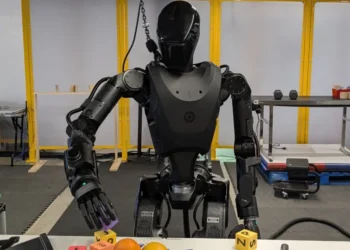 Rise of Military AI Sparks Questions Over Future Use of Humanoid Robots in Combat
 SpaceX Market “Blast-Off” Could Mark Elon Musk’s Biggest Financial Gamble Yet
 World’s Largest Chipmaker Signals Possible Price Increases Amid Rising Costs
 SpaceX Prepares for Historic Valuation Launch
 Silicon Valley Shifts South as AI Boom Transforms City Housing
 Trump Faces Backlash Over $2bn Earnings Since Return
 India Orders Meta to Remove Child Abuse Ads
 Bangladesh Balances China Ties as India Relations Improve
 Incheon Airport Overtakes Heathrow as World’s Busiest