Published: 05 June 2026. The English Chronicle Desk. The English Chronicle Online.
The government of the United States has introduced severe economic penalties targeting the Cuban president along with several of his closest relatives. This significant policy shift also hits key members of the prominent Castro family in a fresh effort to pressure the nation. Washington has continued to escalate its diplomatic and economic campaign against the communist administration located just off the coast of Florida. Observers note that these restrictions represent one of the most direct challenges to the Cuban political elite in decades. The measures are designed to completely cut off the financial resources available to the core leadership in Havana. American officials hope this strategy will force deep concessions or encourage a transition toward an open market system.
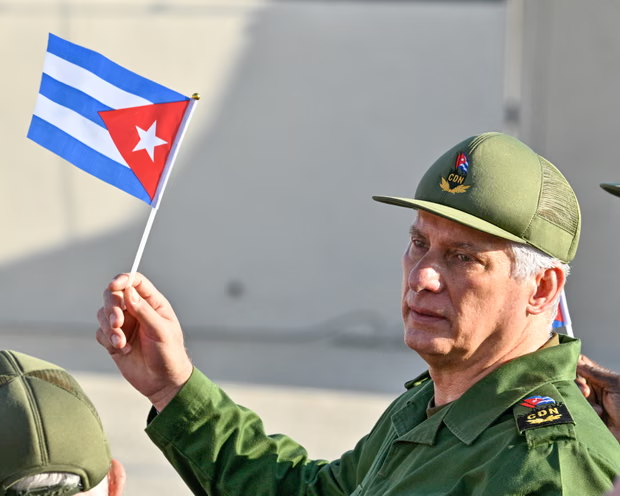
Among the individuals targeted by the Treasury Department are the son and grandson of former leader Raúl Castro. Although the elder Castro no longer occupies an official state position, he remains a highly influential political force. His enduring power makes his immediate family a natural target for American administrators seeking to disrupt internal succession plans. The sanctions also specifically name President Miguel Díaz-Canel, his wife Lis Cuesta Peraza, and his stepson Miguel Anido Cuesta. By punishing family members, the American government is attempting to isolate the leadership circle from global commerce completely. This family-centered strategy signals a highly aggressive stance that deliberately goes beyond standard institutional diplomatic penalties.
The extensive restrictions also apply directly to the Ministry of the Revolutionary Armed Forces and multiple state institutions. Organizations like the Cuban Institute of Friendship with the Peoples and the local travel agency Amistur are affected. The powerful Committees for the Defense of the Revolution, which maintain a presence in every neighborhood, are listed too. Additionally, a prominent state-linked mining enterprise known as Minera La Victoria has been placed on the list. This sweeping corporate embargo effectively freezes any financial assets these groups hold under American legal jurisdiction. It prevents any United States citizens or international companies using American financial systems from doing business with them. Any global financial institution that violates these conditions faces severe retaliatory penalties from Washington banking regulators.
While the United States has maintained a strict commercial trade embargo on the island since the early sixties, pressure has intensified. The current administration has dramatically increased economic hostilities over the past several months to trigger systemic political change. The current American president has openly spoken about potentially executing a hostile takeover of the nearby island nation. This fiery rhetoric has been paired with a devastating de facto maritime fuel blockade initiated earlier this year. The intense naval restrictions have successfully choked off vital oil and diesel shipments moving toward Cuban ports. Consequently, the island is experiencing its most severe infrastructure collapse since the fall of the Soviet Union.
The extreme lack of incoming fuel has plunged the local economy into a desperate state of emergency. Daily power outages now regularly last up to twenty-two hours in many cities and rural towns. The widespread electrical grid failures have also crippled public water treatment plants, causing acute water shortages nationwide. Because transport networks are virtually at a complete standstill, moving agricultural goods across the country is impossible. Food supplies have dwindled rapidly, forcing local citizens to queue for hours for basic nutritional staples. Essential medical supplies are missing from hospitals, causing doctors to rely heavily on international humanitarian shipments. Representatives from the United Nations have warned that this scarcity creates a highly volatile social environment.
The United States Secretary of State, Marco Rubio, defended the aggressive measures during a detailed public statement. Writing on social media, Rubio asserted that the administration is systematically dismantling the entire network funding subversion. He emphasized that the United States will no longer tolerate radical Marxist regimes exporting their political model. The senior diplomat stated that foreign banks must immediately freeze all accounts linked to the blacklisted entities. He clarified that any entity providing services to these individuals risks being completely severed from Western markets. This uncompromising stance aims to build a comprehensive financial firewall around the island to prevent any evasion.
The latest actions build upon a series of strict visa restrictions implemented by Washington late last year. Those initial measures blocked top-tier Cuban officials from entering American territory for leisure or diplomatic functions. Analysts suggest that the White House is deploying a strategy very similar to its regional playbook elsewhere. The administration recently celebrated the winter overthrow of the socialist government led by Nicolás Maduro in Venezuela. Washington has signaled that Havana could be the next capital to collapse under the weight of sanctions. The American executive branch believes that total economic isolation will eventually break the political will of leadership.
President Donald Trump spoke to reporters at the White House shortly after the Treasury announcement was made. He denied that the sudden flurry of penalties was intended to accelerate a total humanitarian catastrophe. Instead, he claimed that America simply desires a nicely run country that can easily feed its people. He remarked that the island currently has no energy, no oil, and absolutely no financial reserves. The American leader noted that the territory possesses beautiful land but suffers under an inefficient governing system. He suggested that economic engagement could return if the current authorities choose to open up the markets. However, critics argue that the mounting restrictions will only worsen the daily suffering of ordinary civilians.
The reaction from the political leadership in Havana was swift, defiant, and filled with deep ideological anger. President Miguel Díaz-Canel used his social platform to accuse Washington of displaying total historical and political blindness. He argued that the new penalties are designed to deliberately manufacture a violent conflict between both nations. The Cuban president declared that his citizens would bravely resist the perversity of the imperialist government. He insisted that external economic warfare would never succeed in forcing the island to abandon its sovereign choices. The state media broadcasted his comments repeatedly alongside patriotic musical anthems to foster solidarity among the public.
The Cuban Foreign Minister, Bruno Rodríguez, echoed these sentiments, labeling the American Treasury decisions as entirely vile. He stated that the interventionist plan falsely portrays his small island nation as a threat to American security. Rodríguez claimed that the pressure would only inspire greater domestic unity and determination among the working population. Despite the brave rhetoric from government officials, independent local journalists report rising anxiety among ordinary citizens. Many families fear that the tightening economic noose will make daily survival nearly impossible in the summer. They worry that the combined impact of hyperinflation and scarcity will destroy their remaining quality of life.
Diplomatic experts warn that the relentless escalation could eventually leave Washington with very few peaceful policy options. By targeting the personal finances of leaders and their children, the United States has eliminated traditional negotiation channels. Some political scientists believe that complete isolation might backfire by pushing Havana closer to alternative global powers. The island has already begun receiving emergency food shipments and technical assistance from both Mexico and China. These alternative supply lines could potentially soften the blow of the American blockade over the coming months. However, the sheer scale of the Western financial restrictions remains an incredibly difficult hurdle to overcome.
The unfolding situation presents a massive challenge for European and British businesses operating legally within the Caribbean region. Many United Kingdom companies hold investments in the Cuban tourism, mining, and renewable energy sectors. They must now carefully navigate the complex network of American sanctions to avoid massive financial fines. Legal experts are advising corporations to review their local partnerships to ensure no links exist to the blacklisted families. As tensions continue to rise, the prospects for a peaceful diplomatic resolution appear increasingly remote. The international community watches closely as the decades-long standoff enters an unpredictable and highly dangerous new phase.
Related News:
 Saudi Officials Report Zubaidi Flee Before Yemen Peace Talks
 UK Targets in New York Bomb Threat Hoax: Man Jailed
 Gambia Supreme Court Hears Case to Overturn FGM Ban
 Trump targets Iran trade with 25% tariff warning
 US Senate rejects resolution limiting Trump military powers
 Gulf states warn Trump Iran strikes risk wider Middle East war
 Machado Trump medal gesture reshapes Venezuela power struggle
 Geopolitical football: Iran, Trump and the World Cup clash
 Canada-China trade gains momentum in new strategic partnership
 Syria President Declares Victory as Ceasefire Reached with SDF
 Shinzo Abe’s killer receives life sentence in Japan
 China General Under Investigation Amid Leadership Purge
 Philippines ferry disaster leaves 15 dead, dozens missing
 Cambridge Faces Scrutiny Over Arms Investment Transparency
 Concerns rise for Canberra boy amid Iran detention fears
 Ukraine Sends Drone Experts to Defend US Bases in Jordan
 Abramovich Chelsea Sale Cash Faces Jersey Probe
 Yvette Cooper: UK Must Follow Principles, Not US Pressure
 Jury Rules Meta and YouTube Liable for Addictive Design
 The Woman Guarding Earth From the Threat of Asteroids
 Exiled Tycoon Warns of New Russian Attacks on UK Soil
 LA 2028: Millions of Affordable Olympic Tickets Announced
 Trump Slams Europe as Transatlantic Tensions Boil Over
 Inside the Deceptive Machine: A Former Producer Speaks Out
 Spain Faces Backlash Over Xenophobic Chants in Egypt Draw
 A Global Voice For Justice: Stephen Lewis Dies At Age 88
 Hope and Fear as Iranians Flee Across the Turkish Border
 Reform UK Pledges To Halt Visas Over Reparations Demands
 US and Iran Agree to Two-Week Provisional Ceasefire
 Starmer visits Gulf as US and Iran agree ceasefire
 Pakistan Brokers Historic Peace Deal Amid Rising Tensions
 Trump Signals Hope for New Iran Talks as Ceasefire Fades
 US and Iran Pursue Extension of Ceasefire via Pakistan
 Trump’s Islamabad Gamble: The High Stakes of a New Iran Deal
 The General’s Gambit: Pakistan’s New Role in Global Peace
 Mexico, Spain and Brazil call for Cuba dialogue amid crisis
 Pakistan’s Ambitious Bid for Middle East Peace
 Israeli Soldiers Jailed Over Vandalism of Lebanese Statue
 Trump Weighs Sending Afghan Allies to the Congo
 Pentagon Shakes Up Navy Leadership Amid Hormuz Blockade
 Trump Threatens UK With Big Tariff Over Tech Tax
 Prominent Voices Challenge Palestine Action Ban
 Security Scrutiny After Washington Shooting Incident
 Merz Criticises US Approach in Iran Conflict
 UK Envoy Sparks Controversy Over Special Relationship Claims
 Ukraine Urges UK to Seize Russian Oil Tankers
 US Calls Australia Media Law “Foreign Extortion”
 The Billionaire’s Secretary and the £1m Fraud
 Ukraine strikes Tuapse as oil disaster worsens
 Brewing Tension: Taiwan Baristas Rebrand for World Stage
 Tensions Emerge in Netanyahu-Trump Alliance
 Mission to the World’s Edge: A Heroic Rescue in Tristan
 US and Mexico Face Heatwave as Floods Batter South Africa
 Mexico’s Missing: State Complicity in a Growing Crisis
 French Patient Told Hantavirus Was Just Anxiety
 The Long Way Home: Australia’s High-Stakes Virus Mission
 Putin Signals War End as Russian Momentum Stalls
 Romania’s Judicial Crisis: A System Under Siege
 Lee Lai Makes History with Landmark Stella Prize Victory
 Philippine Senator Flees After Days Under Senate Siege
 Alberta Separatist Bid Blocked by Canadian Court
 Canadian Court Blocks Alberta Independence Referendum Bid
 Big Tobacco Under Fire Over Controversial New Ad Campaign
 Bolsonaro Son Tape Scandal Sparks Massive Brazil Backlash
 Court Upholds Landmark Win for Transgender Rights
 Tragedy in the Maldives: Inside the Deep Sea Rescue
 Liberal Senator Criticises Immigration Rhetoric
 Senate Moves to Restrict Trump’s War Powers on Iran
 ICC Arrest Warrant Threat Sparks West Bank Retaliation
 Uefa Transforms Men’s Major Tournament Qualification
 Taliban Codifies Strict New Marriage and Divorce Legislation
 Tony Abbott Returns as New Liberal Party President
 Tulsi Gabbard exits after turbulent intelligence tenure
 Discontent grows around Putin amid war strain
 Trump Diplomacy Faces Hurdles from Tehran to Tbilisi
 Trump Faces Legal Blow Over Global Tariffs
 Washington Brokerage Sparking Hope Amid Regional Firestorms
 New York Consumer Watchdog Tackles Corporate Lawbreaking
 Global Tech Giants Face Off Against Australia Over Media Levies
 ANU Reputation Crumbles Under Leadership Woes and Huge Losses