Published: 12 June 2026. The English Chronicle Desk. The English Chronicle Online.
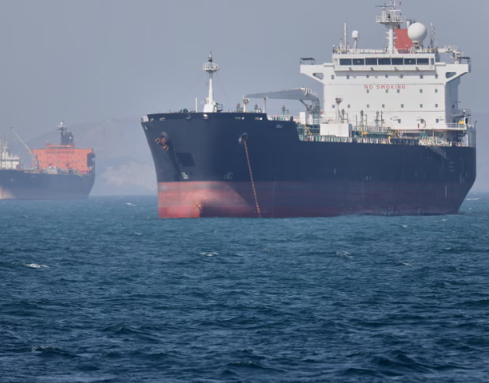
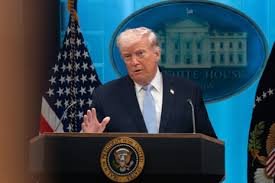
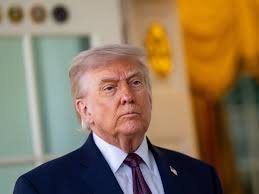
A major international maritime mystery has emerged following unexpected television comments made by Donald Trump. Speaking directly from the Oval Office on Wednesday, the president announced a highly classified operation. He claimed that American forces have been running a secret mission within the strategic Strait of Hormuz. According to his statement, the military has helped allied Gulf nations sneak their oil out. This maneuver is designed to bypass the strict blockade enforced by nearby Iranian forces. The ongoing bottleneck has caused severe disruptions across international energy markets for several months.
During his brief television appearance, the president explained that Iran remained completely unaware of this. Dozens of commercial tankers have allegedly been escorted through the restricted channel under darkness. These large vessels have reportedly sailed with their automatic tracking transmitters turned off entirely. The president later expanded on these claims through a detailed social media statement online. Writing on his Truth Social platform, he alleged that two hundred vessels escaped this way. He asserted that these hidden voyages successfully delivered over one hundred million barrels of oil.
The dramatic announcement has sparked intense debate regarding what is truly happening at sea. Many observers are wondering if this secret mission is fully real or exaggerated. The president’s own energy secretary, Chris Wright, provided conflicting signals during a hearing. Speaking to a congressional committee, he initially claimed no knowledge of millions of barrels. However, earlier in that same testimony, he acknowledged some American military escort assistance. This admission confirmed that the global superpower has actively intervened to move trapped oil.
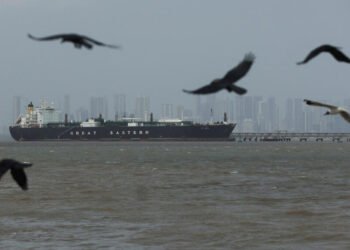
It appears highly unlikely that these tactical movements were a genuine secret to Iran. Multiple international news agencies have recently reported on a rising number of nocturnal transits. These accounts describe large cargo ships slipping through the narrow channel during the night. The crews intentionally deactivate their Automatic Identification System transmitters to evade nearby coastal radars. Maritime intelligence experts suggest that complete secrecy is virtually impossible in such a narrow waterway. Still, the coordinated tactics have clearly helped a steady stream of energy exports escape.
According to detailed intelligence from Lloyd’s List, the American military role is very specific. Rather than a massive covert invasion, the navy is conducting critical overwatch operations. This strategy relies heavily on autonomous maritime vehicles, specialized aircraft, and high-tech aerial drones. These assets guide the dark tankers safely through the southern portion of the strait. This route hugs the rugged coastline of Oman, keeping ships far from Iranian positions. By staying close to neutral waters, the vulnerable vessels avoid direct lines of fire.
Once these ships clear the immediate danger zone, they execute another complex tactical maneuver. The tankers immediately meet up with larger transport vessels waiting in the Gulf of Oman. The crews then conduct ship-to-ship cargo transfers well away from the contested area. This process allows the initial vessels to pass their oil over completely undetected. After emptying their hulls, the tankers slip back through the strait to reload fuel. This circular ferry system allows Gulf producers to maintain a quiet trickle of exports.
Richard Meade, the veteran editor-in-chief of Lloyd’s List, recently confirmed these specific maritime patterns. He explained that empty tankers regularly run back through the channel with transmitters off. Once inside, they quickly pick up fresh loads of crude from regional ports. These supply points include terminals in Saudi Arabia, the United Arab Emirates, and Iraq. Additional energy supplies are also being pulled from smaller states like Bahrain and Qatar. According to his analysis, this entire complex operation is happening in the dark.
Despite these successful night voyages, total shipping traffic remains far below historical peacetime levels. The volume of moving oil and gas is a fraction of normal capacity. Data from the Joint Maritime Information Center shows the true scale of this drop. Before the current regional crisis began, roughly one hundred and thirty-eight ships crossed daily. Once active fighting erupted, that same number of vessels crossed during the entire month. This massive decline illustrates the devastating impact the blockade has had on global trade.
Recent industry data indicates that some positive momentum has returned to the shipping lanes. Approximately one quarter of the tankers stranded since the crisis began have left. This group includes numerous ships carrying vital liquefied natural gas to various international buyers. However, analysts warn that the actual volume of exported fuel could be significantly higher. Because the vessels operate with disabled transponders, tracking their exact coordinates is incredibly difficult. Many are simply acting as short-distance shuttles to the outer Gulf of Oman.
Advanced satellite photography has provided clear visual confirmation of these elusive dark tanker journeys. Images capture the blacked-out vessels loading fossil fuels at various well-known Gulf ports. They are then seen undertaking their shadow transits toward the open ocean beyond. Analysts working for Lloyd’s List successfully documented thirty-six distinct transits early this month. Out of those specific trips, seventeen were entirely dark while nineteen were traceable. This balance shows that nearly half of the regional trade is now hidden.
However, maritime experts urge caution when analyzing these specific weekly ship tracking figures. They often discover a successful transit only after a delay of several days. This happens when a vessel finally reactivates its main transmitter in another location. These temporary tracking appearances often occur very far away from the dangerous Middle Eastern chokepoint. Consequently, calculating the precise number of dark transits remains an ongoing challenge for experts. The fluid situation means that official public estimates usually lag behind the reality. Because counting these hidden ships is so difficult, the president’s statistics remain unverified. His claim of one hundred million barrels cannot be perfectly checked by independent auditors. However, market analysts at the data firm Kpler offer some interesting perspective here. They note the figure is broadly consistent with observed crude flows from producers. Even if the claim is mathematically accurate, the volume represents only a minor victory. In normal times, that amount of oil flows through the channel in days.
Nevertheless, energy market observers agree that clandestine flows have clearly accelerated in recent weeks. The use of dark transits and dedicated shuttle tankers has become much more organized. Kpler estimates that ship-to-ship transfers have moved nearly two million barrels a day lately. This steady volume has been sustained since the beginning of April this year. The persistent effort shows the determination of global buyers to keep oil moving along. It also reveals a high tolerance for operational risk among international shipping firms.
Financial data from major investment banks highlights the rising volume of these secret flows. Estimates from experts at JP Morgan suggest daily peaks reached two million barrels. Meanwhile, researchers at Piper Sandler believe the true number approached three million barrels daily. This higher figure matches the visible increase in nocturnal activity reported by naval spotters. Yet, even the highest estimates represent only a small portion of historical flows. Before the war, over fifteen million barrels moved through the artery every day.
This hidden supply has already started influencing international energy prices in a noticeable way. The cost of Brent crude has tumbled over the course of recent weeks. Prices fell from one hundred and ten dollars a barrel to ninety-three. This downward trend occurred even though global oil inventories have continued to drop steadily. Analysts believe the successful blockade-busting tactics are directly responsible for easing some market panic. The unexpected arrivals of unrecorded crude have provided a temporary cushion for worried Western economies.
Several other important economic factors are also helping to keep energy prices down currently. Saudi Arabia and the United Arab Emirates are actively using alternative land pipelines. These extensive networks safely redirect four and a half million barrels a day overland. This strategy allows producers to avoid the dangerous maritime chokepoint entirely via Western ports. Additionally, major buyers like China have intentionally slowed down their monthly crude imports. They are choosing instead to draw from their historically high domestic storage facilities.
Despite the current price relief, long-term economic forecasts remain heavily dependent on peace. Industry experts warn that energy prices will inevitably surge again without normal transit. Jan Stuart, a global energy economist at Piper Sandler, expects a difficult summer. He predicts Brent crude will average one hundred and thirty dollars very soon. This spike will likely hit consumers hard during the upcoming peak driving season. Until the regional blockade is permanently dismantled, global energy security remains balanced on a knife-edge.
Related News:
 Saudi Officials Report Zubaidi Flee Before Yemen Peace Talks
 UK Targets in New York Bomb Threat Hoax: Man Jailed
 Gambia Supreme Court Hears Case to Overturn FGM Ban
 Trump targets Iran trade with 25% tariff warning
 US Senate rejects resolution limiting Trump military powers
 Gulf states warn Trump Iran strikes risk wider Middle East war
 Machado Trump medal gesture reshapes Venezuela power struggle
 Geopolitical football: Iran, Trump and the World Cup clash
 Canada-China trade gains momentum in new strategic partnership
 Syria President Declares Victory as Ceasefire Reached with SDF
 Shinzo Abe’s killer receives life sentence in Japan
 China General Under Investigation Amid Leadership Purge
 Philippines ferry disaster leaves 15 dead, dozens missing
 Cambridge Faces Scrutiny Over Arms Investment Transparency
 Concerns rise for Canberra boy amid Iran detention fears
 Ukraine Sends Drone Experts to Defend US Bases in Jordan
 Abramovich Chelsea Sale Cash Faces Jersey Probe
 Yvette Cooper: UK Must Follow Principles, Not US Pressure
 Jury Rules Meta and YouTube Liable for Addictive Design
 The Woman Guarding Earth From the Threat of Asteroids
 Exiled Tycoon Warns of New Russian Attacks on UK Soil
 LA 2028: Millions of Affordable Olympic Tickets Announced
 Trump Slams Europe as Transatlantic Tensions Boil Over
 Inside the Deceptive Machine: A Former Producer Speaks Out
 Spain Faces Backlash Over Xenophobic Chants in Egypt Draw
 A Global Voice For Justice: Stephen Lewis Dies At Age 88
 Hope and Fear as Iranians Flee Across the Turkish Border
 Reform UK Pledges To Halt Visas Over Reparations Demands
 US and Iran Agree to Two-Week Provisional Ceasefire
 Starmer visits Gulf as US and Iran agree ceasefire
 Pakistan Brokers Historic Peace Deal Amid Rising Tensions
 Trump Signals Hope for New Iran Talks as Ceasefire Fades
 US and Iran Pursue Extension of Ceasefire via Pakistan
 Trump’s Islamabad Gamble: The High Stakes of a New Iran Deal
 The General’s Gambit: Pakistan’s New Role in Global Peace
 Mexico, Spain and Brazil call for Cuba dialogue amid crisis
 Pakistan’s Ambitious Bid for Middle East Peace
 Israeli Soldiers Jailed Over Vandalism of Lebanese Statue
 Trump Weighs Sending Afghan Allies to the Congo
 Pentagon Shakes Up Navy Leadership Amid Hormuz Blockade
 Trump Threatens UK With Big Tariff Over Tech Tax
 Prominent Voices Challenge Palestine Action Ban
 Security Scrutiny After Washington Shooting Incident
 Merz Criticises US Approach in Iran Conflict
 UK Envoy Sparks Controversy Over Special Relationship Claims
 Ukraine Urges UK to Seize Russian Oil Tankers
 US Calls Australia Media Law “Foreign Extortion”
 The Billionaire’s Secretary and the £1m Fraud
 Ukraine strikes Tuapse as oil disaster worsens
 Brewing Tension: Taiwan Baristas Rebrand for World Stage
 Tensions Emerge in Netanyahu-Trump Alliance
 Mission to the World’s Edge: A Heroic Rescue in Tristan
 US and Mexico Face Heatwave as Floods Batter South Africa
 Mexico’s Missing: State Complicity in a Growing Crisis
 French Patient Told Hantavirus Was Just Anxiety
 The Long Way Home: Australia’s High-Stakes Virus Mission
 Putin Signals War End as Russian Momentum Stalls
 Romania’s Judicial Crisis: A System Under Siege
 Lee Lai Makes History with Landmark Stella Prize Victory
 Philippine Senator Flees After Days Under Senate Siege
 Alberta Separatist Bid Blocked by Canadian Court
 Canadian Court Blocks Alberta Independence Referendum Bid
 Big Tobacco Under Fire Over Controversial New Ad Campaign
 Bolsonaro Son Tape Scandal Sparks Massive Brazil Backlash
 Court Upholds Landmark Win for Transgender Rights
 Liberal Senator Criticises Immigration Rhetoric
 Senate Moves to Restrict Trump’s War Powers on Iran
 ICC Arrest Warrant Threat Sparks West Bank Retaliation
 Taliban Codifies Strict New Marriage and Divorce Legislation
 Tony Abbott Returns as New Liberal Party President
 Tulsi Gabbard exits after turbulent intelligence tenure
 Discontent grows around Putin amid war strain
 Trump Diplomacy Faces Hurdles from Tehran to Tbilisi
 Trump Faces Legal Blow Over Global Tariffs
 Washington Brokerage Sparking Hope Amid Regional Firestorms
 New York Consumer Watchdog Tackles Corporate Lawbreaking
 Global Tech Giants Face Off Against Australia Over Media Levies
 ANU Reputation Crumbles Under Leadership Woes and Huge Losses
 Ukraine Turning the Tide: Zelenskyy Reclaims the Initiative Against Isolated Russia
 Millions in British Charity Funds Linked to Illegal Settlements