Published: 24 July 2026 | The English Chronicle Desk | The English Chronicle Online
What began as a wave of frustration over repeated examination paper leaks has rapidly evolved into one of the most significant youth-led protest movements India has witnessed in years, presenting Prime Minister Narendra Modi’s government with an unexpected political challenge driven by a generation demanding accountability, transparency and equal opportunity.
The movement, organised under the banner of the Cockroach Janta Party (CJP), has grown from an online campaign into nationwide demonstrations that have drawn tens of thousands of students and young professionals onto the streets. Initially sparked by concerns over irregularities in competitive public examinations, the protests have broadened into a wider expression of dissatisfaction over unemployment, governance and what many participants describe as the erosion of trust in institutions responsible for shaping young Indians’ futures.
The origins of the movement can be traced to a controversial remark by a senior Supreme Court judge, who reportedly compared unemployed young people to “cockroaches” while discussing employment challenges. The comment triggered widespread outrage across social media platforms, where students and graduates transformed the insult into a symbol of resistance. Rather than rejecting the label, campaigners adopted the name “Cockroach Janta Party,” using humour, satire and internet culture to build a movement that quickly attracted millions of online supporters.

Behind the movement is Abhijeet Dipke, a 30-year-old political communications strategist from Maharashtra. Having recently returned from studying public relations in Boston, Dipke emerged as the public face of the protests after helping organise online campaigns highlighting repeated examination scandals and youth unemployment. His background as a Dalit and his admiration for constitutional architect B.R. Ambedkar have shaped his emphasis on equal opportunity and institutional accountability.
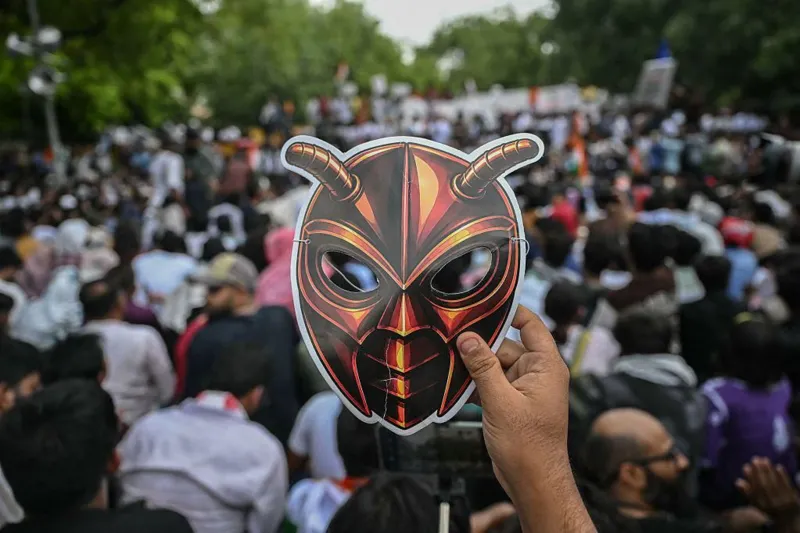
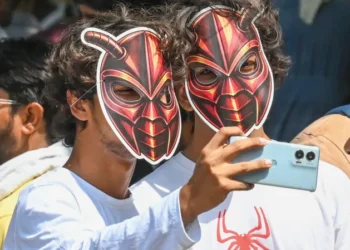
What distinguishes the CJP movement from previous student protests is its distinctly Generation Z identity. Demonstrators have relied heavily on memes, satirical videos, livestreams and creative visual symbolism rather than traditional political slogans. Protesters wearing cockroach masks have become a defining image of the campaign, while social media has enabled organisers to coordinate demonstrations across multiple cities without relying on conventional political structures.
Although the protests began with demands for action over examination paper leaks, participants argue the issue reflects much deeper structural problems. India conducts some of the world’s largest competitive examinations for university admissions and government jobs, with millions of candidates often competing for limited opportunities. Allegations of repeated paper leaks have fuelled concerns that years of preparation can be undermined by corruption, leaving deserving candidates disadvantaged.
Many protesters also point to India’s persistent youth unemployment problem, arguing that opportunities have become increasingly scarce even for highly educated graduates. For many participants, examination integrity and employment prospects are inseparable issues that directly affect their future economic security and confidence in public institutions.
The demonstrations intensified dramatically earlier this week when tens of thousands of protesters attempted to march towards India’s Parliament in New Delhi. Police responded by deploying tear gas, water cannons and baton charges to disperse crowds after demonstrators breached security barricades. Images of injured students quickly spread across social media, generating widespread public debate and significantly increasing sympathy for the movement.
The police response has become a turning point in the protests.
Rather than discouraging participation, the crackdown appears to have strengthened public support among many young Indians who viewed the demonstrations as peaceful calls for accountability. Protest organisers accused authorities of using excessive force, while government officials defended police actions as necessary to maintain public order around Parliament. The controversy has further intensified political pressure on the Modi administration.
The movement’s principal demand remains the resignation of Union Education Minister Dharmendra Pradhan, whom protesters hold politically responsible for repeated examination irregularities. Organisers also seek comprehensive reforms to India’s examination system, stronger safeguards against paper leaks, quicker criminal prosecutions for those involved in examination fraud and greater transparency throughout recruitment processes.
Prime Minister Narendra Modi has attempted to respond by announcing fast-track courts that would prioritise cases involving examination fraud. The government has also pledged tougher legal action against officials and criminal networks responsible for leaking examination papers.
Speaking about the issue, Modi promised that those responsible for undermining students’ futures would face swift justice. However, protest leaders argue that judicial reforms alone do not address broader concerns surrounding political accountability and institutional failures. They insist meaningful change requires ministerial responsibility alongside systemic reforms.
The protests have also drawn support from opposition political parties, which have criticised the government’s handling of both examination scandals and the police response. Several opposition lawmakers joined demonstrators or expressed solidarity following reports of injuries sustained during the Parliament march.
For the opposition, the movement presents a rare opportunity to challenge the governing Bharatiya Janata Party on issues that resonate strongly with younger voters rather than traditional identity politics. At the same time, CJP leaders have repeatedly emphasised that the movement is not formally aligned with any political party and remains focused on student concerns rather than electoral politics.
Political analysts believe this independence has become one of the movement’s greatest strengths.
Unlike previous nationwide protests that often revolved around established political organisations or charismatic veteran leaders, the CJP campaign has emerged organically through digital platforms and student networks. Its decentralised structure has made it more difficult for authorities to predict or contain demonstrations while allowing local organisers considerable flexibility.
Observers also note that the protests represent a significant shift in India’s political landscape.
Prime Minister Modi has traditionally enjoyed substantial support among younger voters, many of whom were attracted by promises of economic development, technological innovation and expanded employment opportunities. The emergence of a youth-led movement openly criticising the government therefore represents an unusual political development.
The Financial Times described the protests as notable because many young demonstrators are directing criticism not only at the education ministry but also personally at the prime minister, reflecting broader frustration among sections of India’s Generation Z.
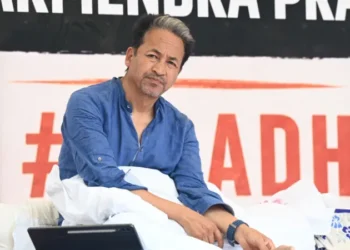
The movement has gained additional momentum through the involvement of well-known activist Sonam Wangchuk, whose 26-day hunger strike drew national attention before ending after discussions with federal ministers. Although Wangchuk concluded his fast to reduce tensions and avoid further violence, protest organisers vowed to continue demonstrations until their core demands are addressed.
Meanwhile, legal scrutiny of recent events continues.
India’s Delhi High Court has sought responses from the central government, Delhi Police and the National Human Rights Commission regarding allegations surrounding police conduct during recent demonstrations. The court proceedings are expected to examine claims of excessive force and the broader handling of public protests.
Beyond immediate political consequences, analysts believe the protests highlight deeper concerns about India’s education system and labour market. Every year, millions of young people invest years preparing for highly competitive entrance examinations that determine access to universities, government employment and professional careers. When allegations of paper leaks emerge, confidence in merit-based selection is weakened, creating widespread anxiety among students and families.
For many participants, therefore, the protests extend beyond individual examination scandals. They represent demands for fairness, institutional credibility and confidence that educational achievement will continue to provide meaningful opportunities in one of the world’s youngest populations.

Whether the government ultimately agrees to protesters’ principal demands remains uncertain. Officials maintain that new legal measures and judicial reforms demonstrate their commitment to tackling examination fraud, while organisers argue that accountability must reach the highest political levels.
As demonstrations continue across New Delhi and other major cities, the Cockroach Janta Party has transformed from an online satirical campaign into a nationwide youth movement that is reshaping India’s political conversation. Its long-term impact may depend not only on government responses but also on whether the energy generated by India’s youngest generation can be sustained beyond the immediate controversy over examination integrity.
For now, the movement has succeeded in placing student concerns at the centre of national debate, confronting one of the world’s most influential political leaders with a challenge that emerged not from traditional opposition parties but from a digitally connected generation determined to demand change.
Related News:
 UK Universities Warn Students Ahead of 7 October Pro-Palestine Protests
 UK University Suspends Human Rights Research Following Pressure from China
 UK University Faces Counter-Terror Probe Over China Pressure
China-critical UK academics face ‘extremely heavy’ pressure from Beijing
UK University Faces Counter-Terror Probe Over China Pressure
China-critical UK academics face ‘extremely heavy’ pressure from Beijing
 After the Landslide: Can India Reset Ties with BNP Bangladesh?
 China Strikes at Japan’s Core — Will PM Takaichi Back Down?
 Japan Braces as Takaichi Begins New Term with Huge Mandate for Low‑Tax, Ultra‑Conservative Agenda
 South Korea’s Ex-President Faces Death Penalty in Insurrection Trial
 Kim Jong Un Reappointed as Ruling Party Chief
 The Taekwondo Teacher Tasked With Healing India’s Troubled State
 Japan to Deploy Missiles on Island Near Taiwan by 2031
 Nine Killed in Karachi Consulate Protest
 Could Kim’s Teen Daughter Become North Korea’s Next Leader?
 Rap Star May Beat Ex‑PM — What This Says About Nepal’s Gen Z
 Nepal Leaders Call on Voters to Ensure Success of ‘Historic’ Election
 Nepal Holds First General Election Since Gen Z Protests Toppled Government
 Nepal Election 2026: When Will We Get the Results?
 Iran Drones Hit Azerbaijan Airport as War Widens
 Sri Lanka Takes Control of Second Iranian Vessel a Day After US Sub Attack
 Nepal election 2026: Rapper Balendra Shah on track to be next PM as his party heads for landslide
 China Moves to Enshrine ‘Ethnic Unity’ Law
 Gulf Oil Shock Sends Global Economic Ripples
 Nepal Election 2026: Balendra Shah’s Party Nears Historic Supermajority
 China’s Biggest Political Meeting Ends — Key Takeaways
 Point-Blank Gunshot Misses Indian Politician
 Anti-Regime Iranians Turn Anger Toward Trump
 Pakistan Denies Air Strike on Afghanistan Hospital That ‘Killed 400 People’
 Nepal Gen Z Protests Succeed, Bangladesh Struggles
 A Bridge to Peace? Taiwan’s Opposition Leader Lands in China
 The ‘Pakistan Protocol’: How Islamabad Pulled the World Back from the Brink
 Victory or Compromise? Tehran’s Streets Erupt in Mixed Emotion Following Ceasefire
 Canadian astronaut French words ease language row
 Southeast Asia Turns to Russia Amid Energy Crisis
 Australia pushes Pacific security pact amid China tension
 BJP Sweeps West Bengal in Historic Breakthrough
 US Awaits Iran Reply on New Ceasefire Proposal
 One Nation Stuns Australia With Historic Farrer Win
 Hormuz Talks Near Critical Stage
 Discontent grows around Putin amid war strain
 Trump-Netanyahu Call Fuels Iran Talk Crisis
 Israeli Strikes Kill 11 in Gaza City
 Xi Jinping to Make Rare North Korea Visit
 Xi Arrives in North Korea for Rare Summit
 Why Xi’s North Korea Visit Matters Now
 Millions Gather for Khamenei’s Six-Day State Funeral
 China Missile Test Raises Pacific Security Concerns
 Bangladesh Balances China Ties as India Relations Improve
 Punjab’s Anti-Sacrilege Law Triggers Political Debate
 Venezuela Quake Death Toll Surpasses 4,000
 US-Iran Exchange Fire as Hormuz Tensions Escalate
 China Detains US Scientist Linked to North Korea Nuclear Research
 Indian Police Crack Down on ‘Cockroach’ Protesters as Young Activists Respond With Memes
 ‘I Am Still Alive’: Indian Activist on 26-Day Hunger Strike Loses 11kg
 UK Must Act with Courage and Clarity on Israel-Palestine Conflict, Says Foreign Affairs Committee Report
 Russia’s Latest Push to Win US Favors Shows Deep Desperation
 BBC to Apologise Over Edited Trump Speech Amid Backlash
 Greene Pushes Epstein Files Amid Trump Fallout
 Shadow Fleet at Sea: Europe’s Battle Against Illicit Oil Shipping
 Australian Families Leave Syrian Camp for Home
 American Citizen Killed in Cuba Boat Shooting, U.S. Officials Say
 Iran’s Regime Still Intact — Coming Days Will Test Its Survival
 Finland Plans to Lift Decades‑Old Ban on Hosting Nuclear Weapons
 Trump Pressures Congress Over Save America Act
 Iran War Puts Trump at Political Risk Amid Rising Prices
 Queensland Protest Laws Spark Free Speech Backlash
 Trump Nato threats expose Iran strategy vacuum
 Sri Lanka Sets Weekly Shutdown to Save Fuel
 Trump Facing Backlash from Epstein Survivors Over Files
 UK Forces Ready to Seize Russian Shadow Fleet Vessels
 Trump Considers Military Operation to Seize Iran’s Uranium
 Report Says Pezzullo Acted ‘Recklessly’ in Dealings
 Oil and Diplomacy: Russian Refineries Burn as Zelenskyy Secures Middle East Shield
 The Great Chokehold: Why the Strait of Hormuz is the Epicenter of the 2026 Crisis
 Moldova River Crisis Exposes War’s Hidden Cost
 The Fog of War and the Ticker Tape: Suspicious Trades Rile Washington
 “An Endurance Test for the Mind”: British Couple Sentenced to 10 Years in Tehran
 Israel, Lebanon Agree on Fragile Ceasefire Deal
 UK Faces Most Dangerous Era, Military Chief Warns
 Israel Strikes Iran After Missile Attack
 Prince George Set to Begin Studies at Eton This September