Published: 03 August 2026 | The English Chronicle Desk | The English Chronicle Online
Ukraine has reportedly carried out another long-range strike against a major logistics warehouse inside Russia, targeting what local media have described as the country’s equivalent of an “Amazon” distribution centre. The attack, which occurred hundreds of kilometres from the active front lines, is the latest indication that Kyiv continues to expand its ability to disrupt critical infrastructure supporting Russia’s economy and military logistics.
The incident comes as both Russia and Ukraine increasingly rely on long-range drones and precision strikes to weaken each other’s supply chains, transportation networks and industrial capacity. While neither side has abandoned conventional battlefield operations, the conflict has evolved into a broader campaign that extends well beyond the trenches and contested territories in eastern and southern Ukraine.
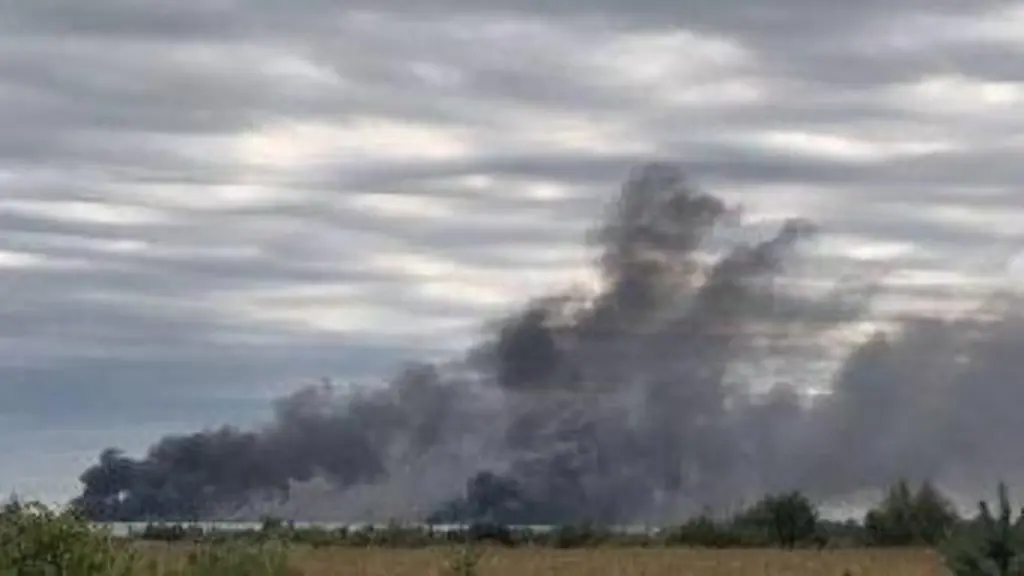
According to officials and local reports, emergency services were dispatched after explosions and fire broke out at the warehouse complex. Images circulating on social media showed thick smoke rising above the facility, although the extent of the damage has not been independently verified.

Authorities have not released a comprehensive assessment of the incident, and conflicting accounts remain regarding the exact target and the operational impact of the strike.
The latest attack reflects a broader shift in the war, where both countries increasingly seek to strike strategic assets located deep behind enemy lines.
Rather than focusing solely on troop positions and frontline fortifications, military planners have placed greater emphasis on disrupting logistics, communications and industrial production.
Large warehouses and distribution centres have become strategically important because they handle significant volumes of goods moving across the country. Even when such facilities primarily serve commercial purposes, military analysts note that extensive logistics networks can indirectly support national resilience during wartime.
Ukraine has argued that degrading Russia’s logistical capacity reduces its ability to sustain military operations.
Russia, meanwhile, has accused Ukraine of targeting civilian infrastructure and has condemned such attacks as violations of international norms.
Modern warfare depends heavily on efficient logistics.
Military forces require continuous deliveries of fuel, food, medical supplies, spare parts and equipment. Civilian distribution networks can also become valuable during prolonged conflicts by supporting industrial production and maintaining domestic supply chains.
Experts say attacks on major warehouses may not immediately affect battlefield operations, but they can increase transportation costs, disrupt deliveries and place additional pressure on national infrastructure.
The larger the facility, the greater the potential economic consequences if operations are interrupted for an extended period.
Whether the targeted warehouse played a direct role in supporting military logistics has not been independently confirmed.
Since the beginning of the conflict, Ukraine has steadily expanded its long-range strike capabilities.
Advances in domestically produced drones and improved precision systems have enabled Ukrainian forces to reach targets far beyond the immediate combat zone.
These operations are intended to complicate Russian military planning by forcing authorities to strengthen air defences across a much wider geographical area.
Analysts say this creates additional logistical and financial burdens, as military resources must be spread across numerous regions rather than concentrated near the front.
Russia has also significantly increased its own long-range strike operations, regularly launching drones and missiles against Ukrainian cities, energy facilities and transport infrastructure.
The conflict has increasingly become an economic contest as much as a military one.
Ukraine’s strategy has included attempts to disrupt industrial facilities, fuel depots, ammunition storage sites and transportation networks inside Russia.
Russia has similarly targeted Ukrainian infrastructure, particularly power stations, rail links and industrial facilities.
Military experts argue that both sides are attempting to reduce their opponent’s ability to sustain prolonged military operations.
Economic resilience has become an essential element of national security as the conflict enters another prolonged phase.
Emergency crews responded quickly to the reported warehouse fire, working to contain the blaze and assess structural damage.
Authorities have not confirmed whether there were casualties, and official investigations are expected to determine the exact cause and extent of the destruction.
Firefighters often face significant challenges at large logistics facilities because warehouses can contain combustible packaging materials, electronics and other goods that increase fire intensity.
Investigators will also seek to establish whether the damage affected surrounding infrastructure or transportation links.
As with many incidents during the conflict, competing narratives emerged almost immediately.
Russian officials described the strike as an attack on civilian infrastructure, while Ukrainian sources portrayed it as part of a broader effort to disrupt assets supporting Russia’s war effort.
Independent verification remains difficult because access to affected areas is limited.
Open-source analysts continue examining satellite imagery, photographs and videos to assess the scale of the damage.
Experts caution that information released during active conflicts should be treated carefully until independently verified.
Large distribution centres play an essential role in modern retail and e-commerce.
If operations are significantly disrupted, businesses could experience delivery delays, higher transportation costs and interruptions to supply chains.
However, the long-term commercial impact depends on the extent of the damage and the availability of alternative logistics facilities.
Russia possesses an extensive transportation network, allowing some distribution to be rerouted if necessary.
Nevertheless, repeated attacks on strategic infrastructure can gradually increase economic pressure over time.
The reported strike illustrates how the war increasingly affects regions located far from direct combat.
Communities previously considered distant from the conflict have experienced drone alerts, explosions and heightened security measures.
Both governments have invested heavily in strengthening air-defence systems and improving protection for critical infrastructure.
Security analysts believe long-range attacks are likely to remain a feature of the conflict as technology continues to evolve.
Governments supporting either side continue to monitor developments closely.
Western allies have repeatedly emphasised Ukraine’s right to defend itself while also urging compliance with international humanitarian law.
International organisations continue calling for measures that minimise civilian harm and protect non-military infrastructure wherever possible.
Diplomatic efforts to end the conflict have produced limited progress, leaving military operations as the dominant feature of the crisis.
Despite periodic discussions about negotiations, fighting continues across multiple fronts.
Both Russia and Ukraine have invested in expanding domestic defence production while seeking to maintain strategic advantages.

Military experts believe infrastructure attacks will likely remain part of both sides’ operational planning because they can impose economic and logistical costs without requiring major ground offensives.
At the same time, such strikes risk further escalation and continued hardship for civilian populations affected by the broader conflict.
The reported Ukrainian strike on a major logistics warehouse deep inside Russia underscores how the conflict has evolved beyond conventional frontline battles into a wider contest over infrastructure, supply chains and economic resilience.
While the full extent of the damage remains unclear, the incident highlights the growing importance of long-range capabilities in modern warfare and the increasingly strategic role of logistics networks.
As both countries continue targeting infrastructure they consider strategically significant, the conflict shows little sign of becoming geographically confined, reinforcing concerns that its economic and humanitarian consequences will continue to extend far beyond the battlefield.
Related News:
 Macron Rebuked in Franco-German Defence Row
 Facing a Demographic Catastrophe, Ukraine Is Paying for Troops to Freeze Their Sperm
 Ukraine strikes Tuapse as oil disaster worsens
 Putin Declares Russia Victory at Scaled Victory Day Parade
 Zelenskyy warns over Oreshnik threat as Kyiv hit
 Collapse of Franco-German Fighter Jet Project Raises Questions Over Europe’s Defence Future
 UK Fighter Jets Intercept Russian Aircraft Over Norwegian Sea
 Zelensky Dismisses Ukraine’s Top Army Commander After Days of Nationwide Protests
 EU weighs response amid Greenland tariff crisis with Trump
 EU Says US Ties Have Suffered ‘Big Blow’ After Greenland Crisis
 Thousands Left Without Heating in Ukraine Amid Russia Strikes
 Canada Dispatches Senior Officials to Open Greenland Consulate
 Portugal Election Delivers Socialist Win as Far Right Surges
 Meloni’s Army Appears Strong – Until You Look Closer
 Starmer Weighs Fast-Tracking Defence Boost
 Musk Cuts Starlink Access for Russian Forces – Giving Ukraine an Edge at the Front
 New Russia Sanctions on Hold as Hungary Blocks EU Package Ahead of Fourth Ukraine War Anniversary
 Rob Jetten becomes Netherlands’ youngest ever prime minister
 Ukraine remembers its dead as war enters a fifth year
 Louvre Museum Director Resigns Months After High‑Profile Heist
 Orbán Accuses Ukraine of Disrupting Oil Supplies to Hungary
 Spain Declassifies Files on 1981 Attempted Coup in Effort to Dispel Conspiracy Theories
 Hungary Faces Political Tension Over the Ukraine Crisis
 RAF Responding to Suspected Drone Strike at UK Cyprus Base
 UK Will Allow US to Use Bases to Strike Iranian Missile Sites, PM Says
 Cooper: Joining US Strikes on Iran ‘Not in Britain’s Interest’
 The US Now Has the Medicine for Cheap Swarming Drone Attacks
 Russia Blames Ukrainian Naval Drones as Tanker Sinks
 Macron Finds ‘Freedom Fries’ Redemption in Iran Crisis
 Finland Plans to Lift Decades‑Old Ban on Hosting Nuclear Weapons
 Minister Meets Crews Who Will ‘Take Out’ Iranian Drones
 UK Prepares Aircraft Carrier for Middle East Crisis
 UK–US Tensions Ease as Starmer and Trump Hold First Call Since Iran Row
 Istanbul Mayor Faces Corruption Trial Amid Political Storm
 Ukraine War Becomes Flashpoint in Hungarian Election
 ‘Blue Helmets’ in the Crossfire: Initial Probe Points to Roadside Bomb in Killing of UN Peacekeepers
 ‘The Soul of Spain’: Politicians Clash Over Renewed Push to Move Picasso’s Guernica
 The ‘Svuota Londra’ Effect: Why the Super-Rich are Swapping Dubai for Milan
 Trump likens US Navy actions to ‘pirates’
 “Speechless and Determined”: Two Dead, 22 Injured in Leipzig “Vehicular Rampage”
 “The Pivot to Pakistan”: Trump Pauses ‘Project Freedom’ in Hormuz Amid Iran Deal Hopes
 “The Strait Scramble”: Inside Trump’s ‘Project Freedom’ and the Hormuz Naval Escort
 “The New Silk Road”: India and Vietnam Forge Strategic Maritime Alliance to Counter Regional Volatility
 “The Anchors Up”: Hull’s Affiliated Frigate HMS Iron Duke ‘Quietly Withdrawn’ From Service
 “The Pacifist Wall”: 50,000 Protesters Rock Tokyo as PM Takaichi Pushes ‘Milestone’ Defense Overhaul
 France Faces Record Presidential Crowded Race Amid Far-Right Surge
 Norway Doubles Down on Oil and Gas for Europe Energy Security
 Bad Weather Threatens Hantavirus Cruise Ship Evacuation
 “The Great Enlistment”: Why Canada is Seeing its Biggest Military Surge in 30 Years
 Ex-Chief of Staff Named in Major Ukraine Corruption Probe
 Pope Meets Families in Italy Toxic Waste Zone
 Discontent grows around Putin amid war strain
 Former ICC prosecutor condemns US sanctions
 Zelensky Invites Putin to Direct Peace Talks
 Republicans Defy Trump on Ukraine Aid Bill
 UK Faces Most Dangerous Era, Military Chief Warns
 Royal Navy Mourns Devastating Helicopter Loss
 European Allies Set Peace Terms for Ukraine
 Spain Tourism Surges as Travellers Avoid Middle East
 Drone Attacks Overshadow Russia Economic Forum
 Armenia Votes Under Pressure From Russia
 Spain Sees Tourism Boom as Travellers Shift Away From Middle East

 Israel-Iran Escalation May Strengthen Tehran’s Position in Future Negotiations
 US Launches Strikes on Iran After Military Helicopter Downed Near Strait of Hormuz
 Russian Artist and Kremlin Critic Shot Dead in Poland
 China Missile Test Raises Pacific Security Concerns
 Le Pen Appeal Verdict Could Reshape France’s Political Future
 Le Pen to Run for President Despite Embezzlement Conviction
 NATO Unveils £37bn Joint Missile Defence Initiative
 US Military to Introduce Testosterone Deficiency Screening Under New Health Initiative
 US Launches New Strikes as Iran Says Civilian Infrastructure Hit
 New EU Border System Could Triple Passport Control Waiting Times, Airport Chief Warns
 French Police Launch Formal Investigation Into Woman Following Fatal Stabbing of British National
 Thousands Evacuated in France as Wildfires Spread Across Regions
 Berlin Pride Attack Suspect Killed in Police Raid
 French Firefighters Battle ‘David vs Goliath’ Wildfire
 Wildfires Intensify in South-West France as Region Braces for 40C Heatwave
 Trump Hosts Zelensky and Netanyahu as Ukraine and Iran Conflicts Shape Global Agenda
 Two Killed as Firefighting Helicopters Collide During Greece Wildfire Mission