Published: 5 August 2026
The English Chronicle Desk. The English Chronicle Online
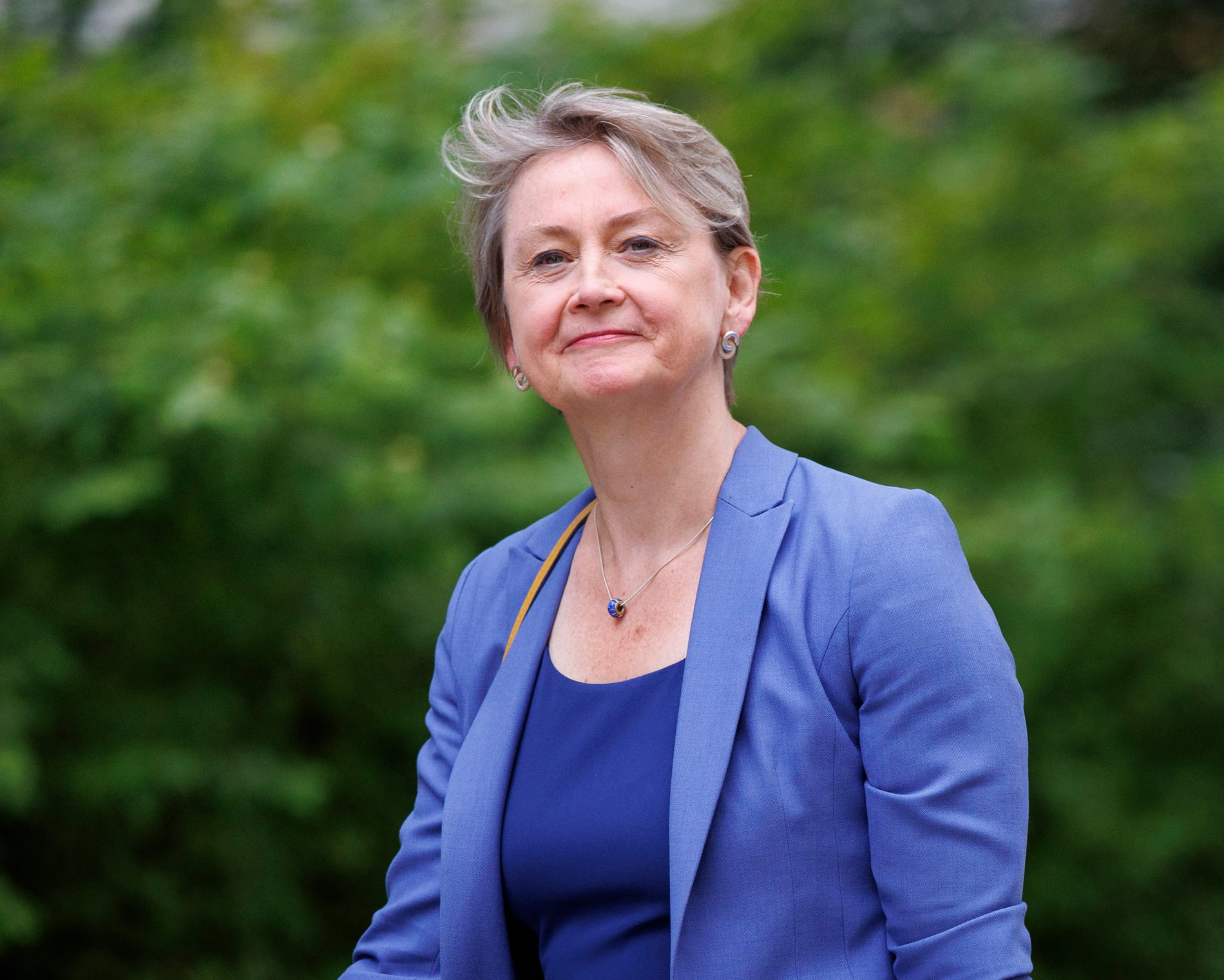
Women must never feel pressured to achieve a so-called “ideal birth”, new Health Secretary Yvette Cooper has said, as she promised a major overhaul of maternity services following a series of serious scandals and investigations into failures across England’s healthcare system.
Cooper, who has returned to the Department of Health and Social Care nearly three decades after serving as a public health minister under Tony Blair’s government, said improving maternity and child health would be one of her central priorities.
Her appointment comes at a time when NHS maternity services remain under intense scrutiny after several independent reviews exposed failures involving patient safety, staffing shortages, poor communication and a culture where some mothers felt their concerns were ignored.
Speaking in an interview with The Guardian, Cooper said maternity care must focus on individual needs rather than forcing women towards a particular experience of childbirth.
“I would worry about any mum feeling pressurised that there is somehow a kind of an ideal birth experience to live up to,” she said.
She added that every pregnancy and birth situation is different and that women should receive care based on evidence, informed choice and their own circumstances.

The comments come after families affected by maternity scandals repeatedly raised concerns that some healthcare providers placed too much emphasis on natural births and delayed necessary medical interventions.
Campaigners have argued that a focus on achieving certain birth targets or reducing intervention rates sometimes created an environment where the safety of mothers and babies was compromised.
Cooper said she wanted to restore women and families to the centre of maternity care and rebuild trust between patients and healthcare professionals.
One of her first priorities as health secretary will be the introduction of new national maternity standards, which she said would help create a consistent level of care across England.
Previous national standards were weakened during NHS reforms under Conservative governments, leading to greater differences between individual hospital trusts.
The new standards will be developed by a maternity taskforce and are expected to focus on improving safety, reducing inequalities and ensuring that patient experiences are properly measured.
A key aim will be ending what campaigners describe as a “postcode lottery” in maternity services, where the quality of care can vary significantly depending on where a woman lives.
The reforms will also address racial inequalities in maternity outcomes, particularly the higher risks faced by black and Asian women compared with white women.
Health experts have repeatedly highlighted disparities in maternal healthcare, with minority ethnic women more likely to experience complications and poorer outcomes.
Cooper said maternity services must identify problems earlier and prevent situations from escalating into major failures.
She said future monitoring systems should provide warnings when hospitals are underperforming rather than waiting until tragedies occur.
The health secretary said reading reports into maternity failures had been “traumatic” and that the scale of the problems demonstrated the need for fundamental change.
“We’ve always said the NHS is about the cradle to the grave. I want to make it a personal crusade to put the cradle back at the heart of the NHS,” she said.
Cooper highlighted that discussions about improving maternity care had existed for decades but suggested that some of the focus on listening to women and families had been lost over time.
She said it was shocking that serious concerns remained in the 2020s despite previous efforts to place mothers at the centre of care.
Major independent investigations into maternity failures at Shrewsbury and Telford NHS Trust, Nottingham University Hospitals and across England have revealed repeated problems involving poor communication, inadequate staffing and institutional defensiveness.
The Ockenden review into Shrewsbury and Telford found numerous cases where mistakes and failures in care contributed to avoidable harm.
A separate investigation into Nottingham’s maternity services also highlighted serious concerns about patient safety and failures to respond appropriately to families’ warnings.
The national review led by Valerie Amos examined wider issues across England’s maternity system and called for significant reforms.
However, some recommendations have faced criticism from families affected by maternity tragedies, particularly over concerns about whether proposed oversight systems would have enough independence.
Cooper said she remained committed to establishing a maternity commissioner role, arguing that mothers, babies and families must have a stronger voice within the NHS.
“The most important people in the maternity services are the mothers, babies, the families,” she said.
She said the commissioner would ensure that the experiences and concerns of families remained central to NHS decision-making.
Another issue Cooper highlighted was the relationship between doctors and midwives and how disagreements over intervention levels could affect patient care.
She said some women felt they were not being listened to because of cultural problems within certain maternity units.
“The thing that struck me most was the sense of women feeling they weren’t being listened to,” she said.
The proposed reforms will come alongside wider changes planned for social care, with Cooper also expected to help implement the government’s plans for a national care service.
She acknowledged that the health role would be challenging but said she was determined to address long-standing problems within the NHS.
Cooper, a longtime political ally of former prime minister Keir Starmer, previously served as foreign secretary before moving into the health role.
She said the government had faced difficult political moments but believed it now had renewed energy and focus.
The health secretary said improving public services, including healthcare and social care, remained among the biggest concerns for people across the country.
For maternity campaigners, the promised reforms represent a significant opportunity to rebuild confidence among families who have lost trust in parts of the healthcare system.

Many survivors of maternity failures have spent years campaigning for greater accountability and changes to prevent other families experiencing similar tragedies.
They argue that safer maternity care requires not only improved medical standards but also a cultural shift where women are listened to, respected and involved in decisions about their own treatment.
Cooper’s announcement signals a renewed political focus on maternity services, but campaigners say the success of the reforms will depend on whether promises translate into meaningful change on hospital wards.
As the government prepares to introduce new standards and oversight measures, families affected by previous failures will be watching closely to see whether the NHS can deliver a safer and more responsive maternity system.
Related News:
 Burnham Considers Inquiry Into Epstein UK Connections
 Last‑ditch Call to Save Police Front Counters in London
 Schools in England to Get Budget for Children with Special Needs as Part of SEND Overhaul
 Inside Kyiv’s resolve as conflict nears five‑year mark
 Calls Grow to Remove Billboard Following Lyra McKee Graffiti
 Why Aren’t Our Dirtiest Roads Getting Cleaned?
 Sisters Who Could Not Swim Drowned While Paddling in Snowdonia, Inquest Hears
 Manchester Students Mourn Ayatollah Amid Protest
 Woman, 29, ‘Chucked’ Into Care Home 100 Miles Away
 Benefits Cut for Mother and Baby Home Survivors
 Undercover officer deceived women with ‘grotesque and cruel’ lies, spycops inquiry told
 Labour Faces Backlash Over Conscription Warning
 SNP Health Secretary Criticised Over NHS Failures Locally
 Scotland Combines Alcohol and Drug Strategy to Cut Addiction Deaths
 Jobless Man on £15k Benefits Accused of Hurling Abuse at Anti-Migrant Demo
 Edinburgh Mother Learns Husband Was Secret Sperm Donor
 Mandelson’s Phone Messages Requested in Files Release
 Church Attendance Report Pulled After Fraudulent Responses
 ‘Teenage Me Could Not Have Imagined This’ Says First Female Archbishop
 Holyrood Campaign ‘In Meltdown’ as Fifth Reform UK Candidate Quits
 US Lawmaker Demands Testimony Over Sarah Ferguson’s ‘Close Epstein Ties’
 The Last of the Lords: Two Hereditary Peers to Retain Ceremonial Roles Amid Historic Ousting
 ‘My Daughter is Under the Rubble’: The Human Cost of the Tehran Strikes
 ‘No Surprise’: Ramaphosa Downplays South Africa’s Exclusion from Emergency G7 Summit
 ‘Eye in the Sky’ Blinded: Photos Reveal Destroyed US Radar Jet at Saudi Base
 ‘Full and Immediate Access’: Netanyahu Reverses Palm Sunday Ban on Latin Patriarch
 The ‘Squeezed Middle’: India’s Educated Class Faces a 2026 Financial Triage
 How the King Became the Jewish Community’s Greatest Ally
 No, the RNLI is Not a ‘Taxi Service’ for Migrants – I Would Know
 ‘Locked Away’: Calls Grow for Automatic Release of Child Trust Funds at 21
 ‘Seismic Change’: How Nationalist Wins in Celtic Nations Could Reshape the UK
 The Sofa Sanctuary: Llantwit Major Family Living in ‘Disgusting’ Rat Infestation
 Starmer would have blocked Mandelson role, says Lammy
 Kezia Dugdale Warns of Possible Reversal of Equal Rights Gains
 Richard Tice Faces £100k Tax Controversy
 MoD Has Lost Track of Veteran Recall List, Says Adviser
 ‘Much May Have Troubled Her Deeply’: King Charles Honours Late Queen on Her Centenary
 “Jobs Will Go”: Rishi Sunak Warns AI is Already Eroding Entry-Level Opportunities
 NHS Safety Fears as Nurses Cover Doctor Gaps
 Walsall Rapist Jailed After Hate-Filled Online Trail
 Two Children Die in Wolverhampton House Fire Tragedy
 Reform UK funding: mystery billionaire revealed
 A Nation in Flux: UK Healthy Life Expectancy Plummets to Record Lows
 “We Are Shielding Them”: UK Families Face £11 Billion Hit as Iran War Bills Surge
 “Don’t Ignore Us”: Bereaved Families Demand Urgent Summit as PM Meets Tech Giants
 Breaking the “Glass Turnstile”: Bradford City Leads Charge for Greater Gender Diversity
 “A Pint-Sized Crisis”: Publicans Warn of Industry ‘Carnage’ as Energy and Tax Hikes Loom
 The “Charles Charm” Offensive: Did the Royals Find Their Mojo in D.C.?
 John Terry Faces Backlash Over Political Posts
 Reality Check on Reform: Minister Says Outright Abolition of Leasehold “Impossible”
 A “Breaking Point” for Britain: Terror Adviser Warns Antisemitism is Now a National Security Emergency
 The “Dry” Life: Teens Trialing Social Media Bans Call Initial Disconnection “Boring” and “Dry”
 “Invisible Agony”: 98-Year-Old Woman Left in “Severe Pain” for Days Amidst Care Backlog
 The “Time Tax” of Memory: Why Dementia Care is the Ultimate Test of UK Resilience
 The “Dementia Deficit”: Why 2026 is the Breaking Point for UK Social Care
 “Not a Game Show”: Sir John Major Slams the “Projected Career” Culture of Modern No. 10
 UK may ban protests amid rising antisemitism fears
 Immigration Judges Fear Pressure in Trump Era
 Labour Members Turn Against Starmer Leadership
 Farage and Reform UK Reshape British Politics
 Starmer Leadership Under Pressure After Setbacks
 Royal Navy Mourns Devastating Helicopter Loss
 Man Arrested 22 Years After Leeds Teen Murder
 Teen Among Arrests at Nowak Protest as Three Charged
 Prince George Set to Begin Studies at Eton This September
 Watchdog Says MI5 Knew Agent’s Violent Misogynistic Views
 Buckingham Palace Confirms Harry Will Not Stay There
 Murder Probe Continues After Arrest Release
 Police Rule Out Political Motive in Widdecombe Killing
 Three-Quarters of England’s Riverbanks Still Off Limits
 Jewish Students Describe Rising Antisemitism on UK Campuses
 Technical Subjects to Be Expanded for Pupils Aged 14
 Reform UK Reports Polanski to Police Over T-Shirt Post
 Suzy Lamplugh Mystery Still Haunts Detectives
 Burnham Reaffirms Support for Ukraine During Zelensky Visit
 Hong Kong Activist Allowed to Stay in UK After Threat
 Man Admits Taking Ambulance With Patient Inside
 PC Harper Family Angered by Early Release Policy
 Indian Women Protesters Face Online Abuse
 Badenoch Defends Tory Candidate Over Antisemitism Case