Published: 11 August 2026. The English Chronicle Desk. The English Chronicle Online
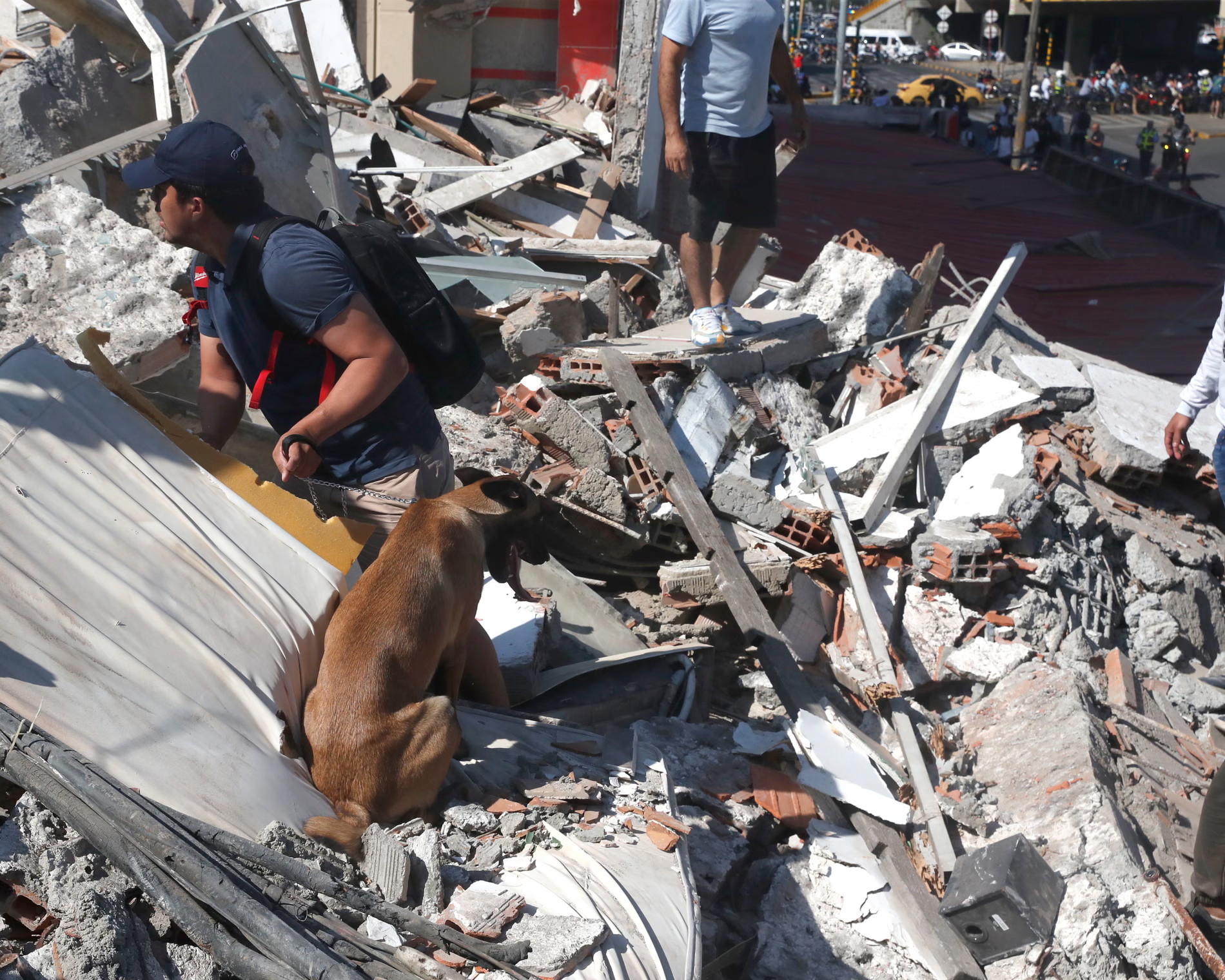
A powerful 7.4-magnitude earthquake has devastated western Colombia, killing at least 132 people and injuring more than 570 others as rescuers search collapsed buildings and authorities struggle to assess the full scale of the destruction.
The earthquake struck at about 7.34am local time on Monday, with its epicentre in the western department of Chocó. The powerful tremor was felt across large areas of Colombia and in neighbouring countries, while some of the worst destruction was reported in and around Pereira, Cali and Manizales.
The death toll has risen sharply since the first reports emerged. Colombian authorities initially reported 111 deaths and 87 injuries, but later updates put the number of fatalities at 132, with more than 570 people injured. The figures remain provisional as emergency crews continue searching damaged buildings and authorities assess remote and heavily affected communities.
The scale of the disaster prompted the Colombian government to declare a national state of emergency and mobilise its resources for rescue, medical treatment and relief operations.

President Abelardo de la Espriella said the government’s immediate priority was saving people trapped beneath rubble and delivering assistance to communities affected by the earthquake.
The disaster struck across a densely populated part of western Colombia, where many towns and cities contain older buildings that can be particularly vulnerable to prolonged and powerful shaking.
Pereira, the capital of Risaralda department, emerged as one of the hardest-hit locations. Earlier reports placed the city’s death toll at 40, while subsequent national figures indicated that the overall number of victims had continued to rise.
Local officials reported widespread structural collapses and said people were believed to be trapped inside several buildings.
Hospitals in Pereira were also overwhelmed by injured residents. Earlier reports indicated that five hospitals had received large numbers of casualties as emergency workers attempted to treat people injured by collapsing walls, roofs and other debris.
In Cali, Colombia’s third-largest city, authorities reported numerous collapsed buildings and residents trapped inside damaged structures.
Mayor Alejandro Eder said emergency teams were working first to establish where people were trapped and then to organise rescue operations.
He urged residents to inspect their homes and other buildings for structural damage before deciding whether it was safe to return.
“If you do not feel safe, if you see very large cracks, please leave the building,” he warned.
The warning was particularly important because strong earthquakes can be followed by aftershocks, which may bring down buildings already weakened by the initial tremor.
In Manizales, the capital of Caldas department, officials reported significant damage to homes and other buildings. Mayor Jorge Eduardo Rojas Giraldo urged residents to remain outside damaged structures and prepare for further shaking.
The earthquake produced scenes of panic across the affected cities.
Raúl Andrés Buitrago, who works in Pereira, described feeling the shaking intensify rapidly while he was preparing to leave for work.
He said the earthquake initially felt relatively weak but became stronger with each passing moment. As people fled buildings, roofs and other structures began falling, creating dangerous conditions on the streets.
For residents accustomed to occasional minor tremors, the intensity and duration of Monday’s earthquake came as a profound shock.
Videos circulating online showed people searching through rubble for survivors. Other footage appeared to show buildings collapsing as the ground shook, while residents ran for safety.
The Colombian government has urged people to rely on official information and avoid entering damaged structures while emergency assessments are taking place.
Chocó, where the earthquake was centred, also suffered serious damage. The department’s governor, Nubia Carolina Córdoba, said people had been injured and buildings had been severely damaged in Quibdó, the regional capital.
The earthquake’s epicentre was located more than 1,000 kilometres from Colombia’s capital, Bogotá, but the tremor was felt over a much wider area.
The event also revived memories of devastating seismic activity in neighbouring Venezuela.
Venezuela was struck by two major earthquakes in June, with the disaster causing thousands of deaths and severe destruction along the country’s northern coast.
The latest Colombian earthquake therefore came at a particularly difficult time for the wider region, where emergency services and governments are already dealing with the consequences of recent seismic disasters.
Infrastructure has also been heavily affected.
Authorities reported damage at airports in Pereira, Manizales, Quibdó, Cartago, Armenia and Buenaventura. Disruption to aviation could complicate the delivery of emergency supplies and the movement of rescue teams, particularly to communities that are difficult to reach by road.
Roads and other infrastructure can also be affected by landslides, falling debris and structural damage after a major earthquake, potentially isolating communities that require urgent assistance.
The government has therefore been attempting to coordinate rescue, medical and security operations across multiple departments simultaneously.
Security has emerged as another concern.
Authorities in Cali, Armenia and Manizales introduced curfews after officials reported concerns about potential looting in areas affected by the earthquake.
Cali deployed police and military personnel to protect neighbourhoods and maintain order while emergency operations continued.
President de la Espriella also promised additional security personnel for Cali as authorities attempted to reassure residents and protect affected areas.
For people who have lost homes or can no longer safely return to them, the coming days will bring another major challenge: finding temporary accommodation and accessing basic necessities.
The Colombian government has begun preparing assistance for affected families, including rent subsidies for people whose homes were destroyed.
The scale of the damage means the recovery process is likely to extend well beyond the immediate rescue operation.
Earthquake survivors may require medical treatment, temporary shelter, food, water and psychological support. Damaged schools, hospitals, homes and businesses will also need to be inspected before they can safely reopen.
The economic consequences could be significant for communities in western Colombia, particularly where buildings and commercial properties have suffered extensive damage.
The earthquake also presents a major logistical challenge because the most severely affected areas are spread across several departments with different levels of access to emergency infrastructure.
International assistance has begun to emerge.
US Secretary of State Marco Rubio said the United States would provide $15.5m in emergency assistance to support Colombia’s response.
The US government has also recently strengthened its relationship with Colombia’s new administration, making the emergency assistance an important element of wider cooperation between the two countries.
For Colombia, however, the immediate priority remains the search for survivors.

Rescue workers are continuing to examine collapsed buildings and damaged structures, while authorities warn that the situation remains fluid and casualty figures could change as more information becomes available.
The latest death toll of at least 132 places the earthquake among Colombia’s most serious natural disasters in recent years. More than 570 people are now reported to have been injured, and the number of damaged buildings and homes continues to be assessed.
The earthquake has also highlighted the vulnerability of urban areas to powerful seismic events. Even buildings that survive the initial shaking can become dangerous if their structural integrity has been compromised.
Officials are therefore urging residents to resist the temptation to return home simply because the main tremor has ended.
As rescue operations continue, the country faces a race against time to locate anyone still trapped beneath rubble, treat those injured and provide shelter to families who have lost their homes.
The disaster has left western Colombia facing a long and difficult recovery, but the government’s emergency response, international assistance and the continuing efforts of rescue teams are now focused on one immediate objective: saving as many lives as possible.
Related News:
 Major 7.1 Earthquake Strikes Off Malaysian Tourist Coast
 7.4-Magnitude Earthquake Jolts Eastern Indonesia; Tsunami Warning Lifted
 At Least 19 Killed After Powerful Earthquake Hits Southern Philippines
 Venezuela Earthquake Survivors Share Stories of Survival as Rescue Hopes Begin to Fade
 Mum Rescued from Venezuela Earthquake Rubble Says Newborn Baby Gave Her Strength to Survive
 Headline: Three-Year-Old Rescued Alive Six Days After Devastating Venezuela Earthquake
 Girl Survives 32 Hours Under Rubble After Venezuela Quake
 Venezuela Quake Death Toll Surpasses 4,000
 Thousands Evacuated in France as Wildfires Spread Across Regions
 Venezuelans Still Seek Answers One Month After Quakes
 Wildfires Force Mass Evacuations in France And Spain
 Japan Earthquake Death Toll Rises to 30 as Aftershocks and Extreme Heat Slow Rescue Operations
 Two Killed as Firefighting Helicopters Collide During Greece Wildfire Mission
 Canada wildfire surges as residents brace for worst
 UK Must Act with Courage and Clarity on Israel-Palestine Conflict, Says Foreign Affairs Committee Report
 Chaos at Ibrox as Martin’s Rangers Era Comes to an End
 Russia’s Latest Push to Win US Favors Shows Deep Desperation
 BBC to Apologise Over Edited Trump Speech Amid Backlash
 Greene Pushes Epstein Files Amid Trump Fallout
 Zelenskyy Signs Fighter Jet Deal Amid Russian Drone Attacks
 Shadow Fleet at Sea: Europe’s Battle Against Illicit Oil Shipping
 US Suspends Afghan Immigration After White House Shooting
 ‘Extinct’ Antelope Returns to Sahara, Bringing Hope
 Sydney Shark Attack Surge Shocks Australia Beaches
 Portugal Election Delivers Socialist Win as Far Right Surges
 Australian Families Leave Syrian Camp for Home
 ‘I Would Scream in My Sleep’: Alawite Women from Syria Tell of Kidnap and Rape
 Epstein Eyed Record Label Investment to Access Women, Files Suggest
 How Do You Modernise Mango Farming? India’s Growers Urged to Innovate as Climate Change Hits
 Hilary Knight speaks out on Trump’s recent hockey remarks
 American Citizen Killed in Cuba Boat Shooting, U.S. Officials Say
 Iran’s Regime Still Intact — Coming Days Will Test Its Survival
 In Maps: Strikes Across Iran and the Middle East
 Brit ‘in Good Spirits’ Amid Dubai Missile Attacks, Stranded but Safe
 Civilian Deaths in Iran Pass 700 Amid Fear of Bombs and Regime Clampdown
 ‘Every Day Feels Like a Month’: Iranians Describe Life Under ‘Constant’ US‑Israeli Strikes
 Penny Wong silent on Australian crew in sub strike
 Finland Plans to Lift Decades‑Old Ban on Hosting Nuclear Weapons
 Trump Pressures Congress Over Save America Act
 Iran War Puts Trump at Political Risk Amid Rising Prices
 Goma Drone Attack Kills Three as Conflict Escalates
 Queensland Protest Laws Spark Free Speech Backlash
 Trump Nato threats expose Iran strategy vacuum
 Trump Facing Backlash from Epstein Survivors Over Files
 UK Forces Ready to Seize Russian Shadow Fleet Vessels
 Trump Considers Military Operation to Seize Iran’s Uranium
 “It Ends With Trial”: Judge Tosses Blake Lively’s Sexual Harassment Claims Against Justin Baldoni
 The Banbridge Rescue: 300 Sheep Saved from Massive Hay Shed Inferno
 Report Says Pezzullo Acted ‘Recklessly’ in Dealings
 Oil and Diplomacy: Russian Refineries Burn as Zelenskyy Secures Middle East Shield
 Electric Shock: Australians Buy Record Number of New EVs as Fuel Crisis Bites
 The Suffocating Silhouette: Why Metal’s Mask Trend is Turning Deadly
 The Great Chokehold: Why the Strait of Hormuz is the Epicenter of the 2026 Crisis
 Moldova River Crisis Exposes War’s Hidden Cost
 Tragedy Strikes Outside Melbourne Comic Con
 The Fog of War and the Ticker Tape: Suspicious Trades Rile Washington
 ‘A Fragile Calm’: Oil Prices Dip as Trump Extends Iran Ceasefire, But Blockade Holds Firm
 Justice and Deceit: High Court Convicts Woman in Hong Kong Blackmail Plot
 “Three-Wheeled Triumph”: Mayor of Erewash Completes 2,000-Mile European Charity Run
 Tragedy in the Red Centre: Outback Search Ends in Discovery of Missing Girl’s Body
 “An Endurance Test for the Mind”: British Couple Sentenced to 10 Years in Tehran
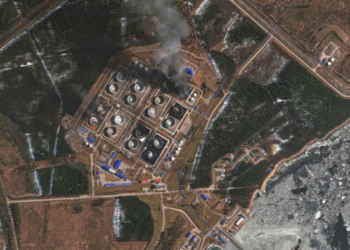 Putin Signals War End as Russian Momentum Stalls
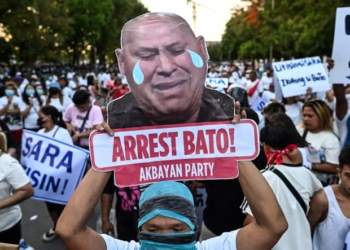 Philippine Senator Flees After Days Under Senate Siege
 High Street Crisis: Fears Grow Over Post Office Closures
 “Eyes in the Sky, Spikes on the Ground”: Advanced Satellite Imagery and AI Algorithms Deployed Across Britain to Save the Vanishing Hedgehog
 “A Historic Tumble”: Lost 1930s Film Reel Reveals the Untamed Origins of Gloucestershire’s Legendary Cheese-Rolling
 Pope Meets Families in Italy Toxic Waste Zone
 UN Issues Urgent Warning: Imminent Return of El Niño
 Israel, Lebanon Agree on Fragile Ceasefire Deal
 UK Faces Most Dangerous Era, Military Chief Warns
 Fans Bring Flags and Fire to World Cup Scenes
 Israel Strikes Iran After Missile Attack
 US Launches Strikes on Iran After Military Helicopter Downed Near Strait of Hormuz
 Air India Crash Pilot’s Father Pledges to Protect Son’s Reputation Amid Investigation
 UK Economy Suffers a Sharp Downturn as Iran Conflict Bites
 Lamine Yamal’s Birthday: Football, Fame, and France
 Berlin Pride Attack Suspect Killed in Police Raid
 AI Jitters Send Chip Stocks Tumbling in US and Asia
 Avalanche Claims Nepal’s Greatest Mountain Guides
 Trump Renews Push to End Birthright Citizenship