Published: 19 September 2026. The English Chronicle Desk. The English Chronicle Online.
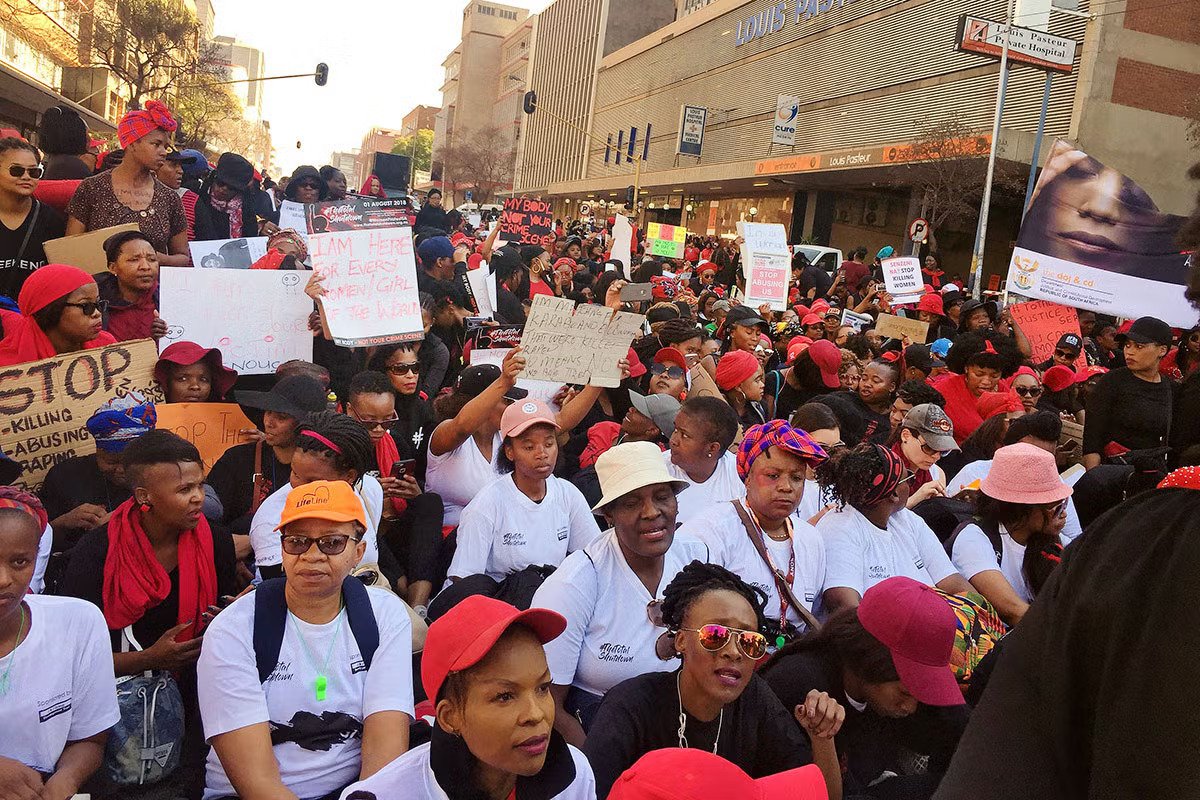
South Africa is facing renewed concern over gender-based violence after the deaths of nine women in the Ekurhuleni district east of Johannesburg since July. The cases have intensified public debate over femicide, women’s safety and whether authorities are doing enough to address violence against women.
Police are investigating the deaths after the bodies of nine women were discovered in different locations across the district. Some of the victims were reportedly found naked or partially clothed, while several had visible injuries. The circumstances have generated widespread concern and renewed demands for stronger investigations, better protection for women and more effective prevention measures.
The deaths have also exposed a familiar dilemma in South Africa’s response to violence against women. Authorities have advised women in areas affected by the killings to remain vigilant, avoid isolated locations and refrain from walking or running alone. Such advice can provide immediate guidance in situations where a specific threat exists, but women’s rights advocates and campaigners have questioned whether placing the responsibility primarily on women can address the underlying causes of gender-based violence.
Women across South Africa already take extensive precautions in their daily lives. Many share travel information with friends and relatives, monitor vehicle registration numbers, communicate their locations while travelling and avoid certain areas after dark. Others alter their routines, stay connected by telephone or use other personal safety measures.

Despite those precautions, women continue to face violence in public spaces as well as in places that are traditionally considered safe.
The case of Elizabeth “Tsontso” Moselakgomo has become one of the latest examples. The 38-year-old woman disappeared after leaving her home in Kempton Park for an afternoon run on 9 September. Her body was discovered three days later. Her death has raised further concerns among residents who fear that ordinary activities such as exercise can become dangerous when public safety systems fail.
The wider issue, however, extends far beyond one district or one group of cases. South Africa has one of the world’s highest recorded rates of femicide, and violence against women has remained a persistent national concern for years.
United Nations data indicate that South African women were killed at a rate of about 12.2 per 100,000 women in 2022, a level substantially above the global rate. The figure has contributed to continuing calls for stronger state action and more effective prevention of gender-based violence.
The problem is also not restricted to isolated streets or unfamiliar locations. Women can face serious risks inside homes, workplaces, educational institutions and other environments where they might reasonably expect to be protected.
The murder of University of Cape Town student Uyinene Mrwetyana in 2019 became a particularly powerful example of this reality. The 19-year-old student was raped and murdered after visiting a post office in Cape Town to collect a parcel. Her death generated widespread outrage and became a symbol of the vulnerability of women even in ordinary public institutions.
Such cases challenge the idea that women can protect themselves simply by avoiding particular streets, travelling in groups or staying indoors. Women can experience violence from strangers, acquaintances, partners, former partners and family members. Consequently, safety advice directed solely at potential victims cannot provide a complete response to the problem.
The debate has increasingly shifted towards the responsibilities of perpetrators, institutions and wider society. Questions are being raised about how men can help prevent violence, how harmful attitudes towards women are confronted and how communities can intervene before controlling or abusive behaviour develops into physical violence.
Prevention efforts are increasingly being linked to education. Discussions around consent, bodily autonomy, respectful relationships, emotional regulation and positive approaches to masculinity are being presented as important elements of long-term intervention.
Such education does not remove individual responsibility for criminal acts. Rather, advocates argue that young people need to learn from an early age that relationships are based on mutual respect and consent, and that rejection, separation or disagreement does not give anyone the right to threaten or harm another person.
The role of men in preventing gender-based violence has consequently become an increasingly important part of public discussion. Campaigners have called for men to challenge misogynistic comments, controlling behaviour and other forms of harassment within their own social circles instead of treating them as harmless jokes or private matters.
The responsibility also extends beyond individuals. Schools, universities, religious institutions, workplaces, sports organisations, transport services and community groups all have roles to play in creating environments where abusive behaviour is identified and addressed.
At the government level, the questions are more concrete. When a woman is reported missing, how quickly does the investigation begin? Are police stations adequately equipped to respond? Do officers receive appropriate training when dealing with survivors and families? Are investigations properly resourced? Are protection orders enforced? Are shelters and support services sufficiently funded? And are cases moving through the criminal justice system quickly enough?
The Commission for Gender Equality has called for an urgent safety audit in areas affected by the recent killings. Such an assessment could examine street lighting, surveillance, public transport routes, neglected public spaces, police visibility and access to emergency assistance.
Measures of this kind may help reduce opportunities for crime in particular locations. However, the scale of South Africa’s gender-based violence problem means that local safety improvements alone cannot address the wider issue.
The government has previously acknowledged the seriousness of the crisis. Following major protests in Johannesburg in 2025, President Cyril Ramaphosa described gender-based violence and femicide as a national crisis. The continuing deaths of women have nevertheless kept questions of accountability and implementation at the centre of public debate.
Declaring a crisis is only one part of a response. The effectiveness of any national strategy ultimately depends on whether commitments translate into functioning institutions, adequate resources, effective policing, accessible support services and successful prosecutions.
Another challenge is avoiding the treatment of each killing as an entirely separate incident. Femicide is connected to broader patterns of gender-based violence, including domestic abuse, coercive control, sexual violence, harassment and threats. Addressing those patterns requires intervention before violence reaches its most serious stage.
For South Africa’s women, the issue is not simply whether they should take reasonable precautions. Personal safety measures can be useful, particularly when authorities identify a specific local threat. But expecting women to continually restrict where they travel, when they exercise or how they conduct ordinary activities places a significant burden on those who are already vulnerable.

A sustainable response requires responsibility to be shared across society. Authorities must investigate killings thoroughly, protect victims and survivors, strengthen prevention systems and ensure that perpetrators face due legal process. Communities must challenge harmful behaviour rather than ignoring it. Men must play a direct role in confronting violence and misogyny among peers.
The recent deaths in Ekurhuleni have once again brought the issue into public view. For many South African women, however, the fear is not new. It has shaped everyday decisions for years, influencing how they travel, work, exercise and communicate with friends and family.
The continuing challenge is therefore to move beyond advice telling women to be more careful and towards a broader system capable of preventing violence, responding quickly when women are at risk and holding perpetrators accountable.
Women should be able to walk, run, travel, work, study, collect a parcel or leave a relationship without having to calculate the possibility of becoming the next victim. The deaths of nine women since July have once again highlighted the urgency of that goal and the need for sustained action against gender-based violence across South Africa.
Related News:
 Ebola outbreak in DRC overwhelms health system as cases surge
 Dreyfus Statue Finally Gets Permanent Paris Home
 Gaza Strike Kills Child and Paramedic
 Two Dead in Adelaide Airport Plane Crash Fire
 Police Suspect Help in Missing Alice Springs Girl Case
 China Fireworks Factory Blast Kills 21 in Hunan
 China mine blast death toll rises to 90
 Victim says non-custodial rape sentence ‘rock in my face’
 New Footage Revives Peter Falconio Mystery
 Ukraine Creates Long-Range Strike Command
 Teen Charged After Layla Jeffery Found Dead
 Israeli Strike in Southern Lebanon Kills Seven
 Five Years of Taliban Rule Leave Afghanistan in Crisis
 Ukraine Villagers Demand Answers After Deadly Arms Depot Strike
 Daughter Finds Bones in Parents’ Burned-Out Car
 Argentina Orders Return of Nazi-Looted Painting
 Masked Protesters Bring Dover Port Traffic to Standstill
 UN expert urges UK to rethink Israel policy
 Family of British man found dead in Grenada urges UK-Grenada police cooperation
 Miliband Rejects Chief Rabbi’s West Bank Warning
 Royal Crown Branded Enslaved Africans in Britain’s Slave Trade
 Israel Accused of Undermining Palestinian Life

 Texas Transfers Raise Fears for Migrant Children
 UK University Faces Counter-Terror Probe Over China Pressure
 Just Stop Oil Protesters Convicted Amid Climate Defence Row
 BBC’s Tim Davie to Address Staff Amid Trump $1bn Threat
 Ukraine-Russia war latest: Putin’s troops exploit bad weather to force Kyiv withdrawal from multiple towns
 Oklahoma Governor Grants Last-Minute Clemency to Death Row Inmate
 US Pushes Global Effort to Stop Arms Flow to Sudan RSF Forces
 Israel Confirms Returned Hostage as Meny Godard
 Greene Pushes Epstein Files Amid Trump Fallout
 Deadly Russian Strikes Hit Western Ukraine, 20 Killed in Ternopil
 Venezuela Threatens Nobel Winner Machado with Fugitive Status
 Trump Envoy to Discuss Ukraine Peace at Kremlin
 Two National Guard Soldiers Critically Injured Near White House
 Southern Lebanon reels as Israeli strikes shatter communities
 Video shows Israeli troops kill Palestinians after surrender
 American Mother Extradited From UK to U.S. on Murder Charges
 Melbourne Rabbi’s Car Firebombed Amid Hanukah Celebrations
 Iran Leader Blames Protesters, Says They Serve Trump
 Thousands Protest ICE in New York Against Trump Deportation Campaign
 SA Police Intensify Search in Gus Lamont Case
 El Mencho Killed as Mexico Faces Violence
 Australian Women in Syrian Camp Offer Separation Deal
 Kelly Wilkinson Inquest Reveals Bail Failure
 Teen Admits Filming Westfield Chair Prank
 Bondi terror attack linked to global rise in IS plots
 M&S Demands Urgent Action on Rising Violent Retail Crime
 Melania Trump Epstein remarks spark survivor backlash
 Ben Roberts-Smith Denies War Crime Allegations in First Statement
 Learner Driver Charged After Expo Tragedy
 OpenAI CEO Apologizes After Canada Shooting Case
 Ukraine Urges UK to Seize Russian Oil Tankers
 Judge halts deportation of Yemeni refugees in US
 Activists allege abuse after Gaza flotilla seizure
 US ‘Narco Boat’ Strikes Draw Global Outcry
 Afghan Families Left in Limbo Face Risk of Deportation
 Trump Announces 3-Day Russia–Ukraine Ceasefire Deal
 Barrister Criticises Trial After Suicide Case Verdict
 Immigration Judges Fear Pressure in Trump Era
 Pope Meets Families in Italy Toxic Waste Zone
 Farage and Reform UK Reshape British Politics
 Starmer Leadership Under Pressure After Setbacks
 Preserving the Fragile Memories of Tiananmen Square
 Le Pen’s Popularity Holds Despite Conviction
 Bryne Backs Haaland Before England World Cup Clash
 England and Norway Fans Turn Miami Into World Cup Carnival
 Olympus Awaits Unesco Heritage Recognition
 UK’s Largest Muslim Convention Scales Up Security Amid Rising Bigotry
 Westminster Council Threatens Charing Cross Soup Kitchen
 BBC Warned About Missing Clothes of Murder Victim
 Survivor Sues Musk’s xAI Over AI Abuse Images
 Typhoon Saudel Triggers Mass Evacuations in China
 Councils spend £125m on illegal children’s care
 Abusive ex used Tesla to control and harass former partner
 Sweden Election Hangs on Far-Right Breakthrough
 Man Arrested in Mississippi Woman’s Death
 Yemen War Displaces 125,000 as Fighting Intensifies
 Mahmood Warns Far Right Over Asylum Protests