Published: 07 October 2026. The English Chronicle Desk. The English Chronicle Online.
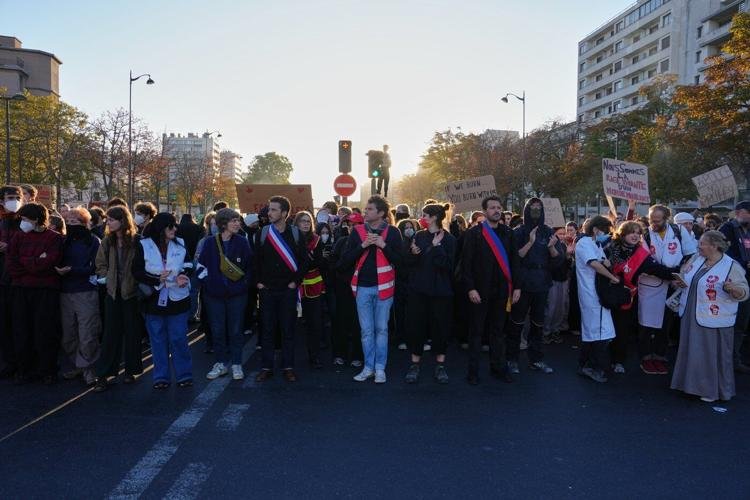
More than 250,000 pupils, teachers and parents took to the streets across France on Tuesday in the largest nationwide demonstration yet over deteriorating conditions in secondary schools, as clashes between protesters and riot police intensified in several cities.
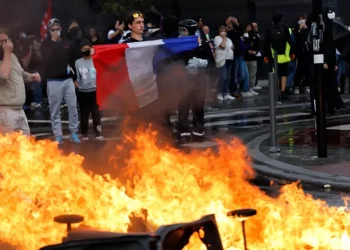
The demonstrations, held in Paris, Marseille, Lyon, Nantes, Bordeaux and other locations, were largely peaceful, but a number of marches ended in confrontations between protesters and security forces. Police used tear gas and baton charges to disperse groups in parts of Paris and elsewhere after barricades were set alight and projectiles were thrown.
France’s interior ministry estimated that about 200,000 people participated in demonstrations outside Paris, with another 56,000 taking part in the capital. Organisers gave a considerably higher national estimate of around 450,000 participants, highlighting the scale of the movement that has rapidly expanded since protests began more than two weeks ago.

The unrest has placed growing pressure on President Emmanuel Macron’s government, which is already facing economic and political difficulties ahead of presidential elections scheduled for next year. Macron called key ministers to the Élysée Palace on Tuesday evening as the government sought to address both the protesters’ demands and the increasingly contentious response from police.
Prime Minister Sébastien Lecornu said at least 215 teenagers and 85 school employees had been injured since the beginning of the demonstrations. He described the situation as one of the most serious episodes experienced by France’s school system in decades. His office also said that 715 police officers had suffered injuries during the clashes.
The protests have centred on concerns about overcrowded classrooms, teacher shortages, ageing school buildings and demanding school schedules. Students and teachers have also complained about the repeated absence of teachers and inadequate replacement arrangements.
In Paris, demonstrators gathered at Place de la Nation carrying placards and smoke flares. One slogan, “under our textbooks, anger”, deliberately echoed the famous phrase associated with the student uprising of May 1968. Other signs highlighted concerns about education spending and warned that schools without adequate funding could undermine the country’s future.
Anna, a student who joined the demonstration in the capital, said young people were asking for basic improvements rather than radical changes. She said students wanted better learning conditions, sufficient numbers of teachers and safe, properly maintained school buildings.
The frustration has been particularly strong among students who say they have experienced repeated disruption to their education. In Marseille, 18-year-old Océanne said she had seen teachers remain absent for long periods, with some classes covered by substitutes whom she considered ineffective while other lessons were left without replacement teachers.
The movement has also attracted significant support from teachers. In Rennes, teacher Romain Dubourg said he and colleagues had discussed reports of police violence and decided to attend demonstrations in support of their students. Trade unions have likewise joined the protests, increasing the pressure on the government to respond to concerns that extend beyond individual schools.
The CGT union has called on its members to protect students during demonstrations. Green party leader Marine Tondelier also urged parents and local officials to participate peacefully and help safeguard young people taking part in the protests.
At the same time, the authorities have highlighted the increasingly violent incidents surrounding some demonstrations. According to government figures, almost 500 people were arrested on Tuesday, while 43 police officers were injured. More than 6,100 people have been arrested since the protests began in September, with the overwhelming majority reportedly minors. More than 1,800 people are facing prosecution, including nearly 1,500 under the age of 18.
The education ministry said more than 900 of France’s roughly 3,700 secondary schools had been blockaded or closed on Tuesday. Student organisations claimed the number was substantially higher, estimating that around 1,800 schools were affected. In some areas, education authorities moved classes online to reduce disruption and protect students and staff.
The unrest has also caused serious damage. Authorities say 24 schools have been burned or ransacked since the movement began. Protesters have set rubbish bins and other objects on fire, damaged bus shelters and erected barricades. Police have responded with tear gas, batons and other crowd-control measures.
Human rights organisations have expressed concern about the methods used by security forces. Amnesty International has called on French authorities to end what it described as disproportionate repression, while Amnesty France president Anne Savinel-Barras said images and witness accounts circulating in recent days raised serious questions about the use of tear gas, batons and other policing techniques.
Several incidents involving teenagers have intensified the controversy. A 15-year-old suffered severe injuries to his hand during a confrontation with police in northern France on Monday. A 16-year-old in Tours suffered a serious head injury during a school blockade and subsequently lost the use of his right eye. Prosecutors said the injury was consistent with the impact of a defensive projectile.
Another incident involved a 14-year-old who lost most of his teeth after an officer appeared to fire a grenade at him at close range during a protest north-west of Paris. The teenager’s mother said her son was unable to speak normally and had to eat through a straw while recovering from his injuries.
Interior Minister Laurent Nuñez has defended the police response, arguing that officers acted proportionately in almost all situations. He said some demonstrations had crossed into riots, making intervention necessary. The interior ministry has nevertheless launched 10 internal investigations into allegations of police brutality since the protests began.
The government has also condemned violence committed by protesters. Lecornu told MPs that extreme violence had reached the doors of secondary schools and must be rejected. He argued that burning schools could not solve problems with deteriorating buildings and that attacking teachers could not address shortages of educational staff.
The prime minister has instructed ministers to examine the main demands raised by students. These include ensuring that absent teachers are replaced, reviewing the length of the school day, which in some cases runs from early morning until the evening, and repairing ageing school infrastructure.
The political consequences of the protests are potentially significant. The movement comes only seven months before France is expected to hold crucial presidential elections to choose Macron’s successor. The government is already attempting to reduce a large budget deficit while dealing with concerns about France’s high public debt and weak economic growth.
Political divisions have consequently become increasingly visible. The government has accused the radical-left La France Insoumise party of encouraging the protests and helping organise school blockades after several of its MPs appeared at demonstrations. The party’s veteran leader and presidential candidate Jean-Luc Mélenchon has strongly backed the students while calling for the movement to remain non-violent.

For many young demonstrators, however, the political debate remains secondary to the immediate conditions inside their schools. Their demands centre on classrooms, teachers, buildings and the quality of education they receive.
The size of Tuesday’s demonstrations suggests that the issue has moved beyond isolated school grievances and developed into a nationwide challenge for the government. With further political pressure expected in the coming weeks, authorities face the difficult task of restoring order while addressing concerns from students, parents and teachers who say the education system has been neglected for too long.
The growing injuries on both sides, meanwhile, have added urgency to calls for restraint. The government must now balance the protection of public order with the right to peaceful protest, while demonstrating that its promised education reforms can deliver tangible improvements for the young people at the centre of the movement.
Related News:
 French Student Protests Escalate Into Violent Clashes
 French School Protests Escalate as 400 Schools Close
 UK University Suspends Human Rights Research Following Pressure from China
 UK University Faces Counter-Terror Probe Over China Pressure
China-critical UK academics face ‘extremely heavy’ pressure from Beijing
UK University Faces Counter-Terror Probe Over China Pressure
China-critical UK academics face ‘extremely heavy’ pressure from Beijing
 EU weighs response amid Greenland tariff crisis with Trump
 EU Says US Ties Have Suffered ‘Big Blow’ After Greenland Crisis
 Italian Town Buys Mussolini Villa to Keep Away Fascist Fans
 Hungary election: Orbán faces biggest test amid scandal
 Canadian astronaut French words ease language row
 Global order shifts amid Trump-era turmoil
 Ceasefire Standoff Deepens in Ukraine War
 France Faces Record Presidential Crowded Race Amid Far-Right Surge
 Norway Doubles Down on Oil and Gas for Europe Energy Security
 Putin Declares Russia Victory at Scaled Victory Day Parade
 Zelenskyy warns over Oreshnik threat as Kyiv hit
 Former ICC prosecutor condemns US sanctions
 Irish Gangland Figure Fails in Dublin Election Bid
 Deadly Russian Air Raids Strike Across Ukraine
 Le Pen to Run for President Despite Embezzlement Conviction
 Russian Missiles Intensify Pressure on Kyiv
 Exeter Approves Saudi Military Training Partnership
 Ukraine Villagers Demand Answers After Deadly Arms Depot Strike
 Bayeux Tapestry Revives Franco-British Ties
 AfD election surge leaves Magdeburg residents deeply uneasy
 Europe’s democracies face a growing far-right threat
 Sweden Election Hangs on Far-Right Breakthrough
 Germany’s Far Right Surge Puts Merz Under Pressure
 Macron and Carney deepen France-Canada ties
 Elif Eralp Emerges as Berlin’s Next Political Force
 Russia Targets Ukraine’s Digital Economy With Strikes
 National Rally makes historic gains in French Senate
 Madrid Tent Camp Grows as Spain Housing Crisis Deepens
 Ukraine’s New FP-7 Missile Makes Combat Debut
 Bosnia’s Young People Look Beyond Election Hope
 Germany Pledges €1bn Military Aid to Ukraine
 Spain Sets Snap Election as Housing Crisis Deepens
 Ukraine claims strikes have crippled Russia’s oil refining
 Lithuania Offers to Fund Permanent US Military Base
 Former German Intelligence Chief Arrested Over Espionage
 France Braces for Major Student Protest Mobilisation
 BBC to Apologise Over Edited Trump Speech Amid Backlash
 Britain deploys RAF specialists to assist Belgium with drone threats
 Greene Pushes Epstein Files Amid Trump Fallout
 December Run-Off in Chile as Election Produces No Winner
 Canada Passes Carney’s First Budget in Tight Parliamentary Vote
 Shadow Fleet at Sea: Europe’s Battle Against Illicit Oil Shipping
 Georgians Defy Government Crackdown After Year of Protests
 Trump Policies Boost China’s Global Rise, Survey Finds
 Pentagon Signals Reduced Role in Deterring North Korea
 UK and US Drop in Global Corruption Index Rankings
 Canberra Poster Seizure Sparks Free Speech Row
 Evo Morales Returns After Mysterious Absence
 The Dangerous Rise of Remigration Across Modern Europe
 Jacinda Ardern Moves To Australia Following Her US Fellowships
 Jacinda Ardern Move Sparks Kiwi Reflection
 Nick Greiner Warns Over Election Review Fallout
 Adelaide University Faces Backlash Over Event Cancellation
 Injured Mojtaba Khamenei Elevated as Iran Leader
 Gordon Brown urges court for crimes against children
 Oil Prices Jump After Trump Claims Iran Oil Hub Destroyed
 Pakistan Targets Militant Hideouts in Afghanistan
 Air Canada CEO Faces Outcry Over Recent Language Misstep
 Relationship with Trump may be beyond repair, Starmer warned
 Trump Brokers Landmark Lebanon Ceasefire Amid Regional Hopes
 UK Stands Firm on Falklands Amid US Rift
 Oil Prices Surge Above $120 Amid Iran Blockade Fears
 Trump orders US troop pullout from Germany
 Trump Announces 3-Day Russia–Ukraine Ceasefire Deal
 Pope Meets Families in Italy Toxic Waste Zone
 Farage and Reform UK Reshape British Politics
 Meta Under Fire: The Battle Over Addictive Social Media Design
 England and Norway Fans Turn Miami Into World Cup Carnival
 Houthis Strike Saudi Arabia as Middle East Tensions Rise
 Former Diplomats Urge UK and France to Act on Palestine
 Ghent Professors Questioned Cofnas Appointment
 Trump Calls Iran War ‘Small Potatoes’ Despite US Deaths
 US Networks Suspend Trump White House Pool Coverage
 Republican Senator Questions Trump Ad Spending
 Lula Warns of Bolsonaro Family Return as Brazil Votes