Published: 07 October 2026. The English Chronicle Desk. The English Chronicle Online.
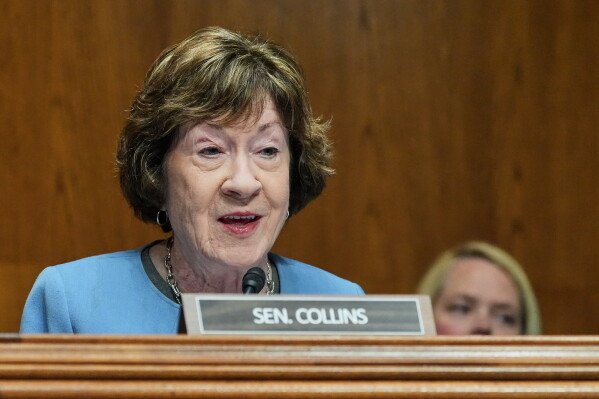
Republican Senator Susan Collins sought to draw a clear political distance from Donald Trump during a televised Senate debate in Maine on Tuesday, portraying herself as an independent voice within the Republican Party as she faces a closely contested challenge from Democrat Troy Jackson.
The debate offered voters one of the clearest opportunities so far to compare the two candidates in a race that could have significant consequences for control of the US Senate. With polling showing Collins and Jackson running closely together, the Republican incumbent appeared determined to emphasise her differences with Trump rather than embrace the president as a central part of her campaign.
Collins, 73, has represented Maine in the Senate since 1996 and has built a political identity around being a moderate Republican willing to break with her party. That reputation has helped her maintain support in a state where Democratic presidential candidates have won every election since 1992 and where Trump has failed to carry the state in all three of his presidential campaigns.

During the debate, Collins acknowledged that she is not particularly close to Trump politically, describing herself as not the president’s “favorite senator”. The remark was an unusually direct acknowledgement of the complicated relationship between the two Republicans and appeared intended to reinforce her argument that Maine voters can support her without necessarily supporting Trump.
Collins also highlighted her voting record during the presidency of Joe Biden, pointing out that she had voted with the Democratic president more than 90% of the time. She further argued that she had voted against members of her own party more frequently than any other senator.
The emphasis on independence came under sustained pressure from Jackson, a 58-year-old former state legislator who is seeking to use the race to challenge Collins from the Democratic side. Jackson repeatedly attempted to link the incumbent to Trump and to the broader direction of the Republican Party.
He argued that Collins had voted with Trump approximately 96% of the time, seeking to undermine her portrayal of herself as an independent Republican. The Democratic challenger also concentrated heavily on Collins’ 2018 decision to vote for Brett Kavanaugh’s confirmation to the US Supreme Court.
That vote has become a major issue in the campaign because Kavanaugh was later part of the Supreme Court majority that overturned Roe v Wade, the landmark ruling that had recognised a constitutional right to abortion for nearly five decades.
Jackson used the issue to question whether Maine voters should trust Collins to participate in future Supreme Court appointments. In his opening remarks, he recalled the efforts of Maine women who had travelled to Washington to urge Collins to oppose Kavanaugh’s confirmation.
The Democratic candidate argued that the senator’s decision had consequences that extended far beyond the confirmation itself, particularly following the Supreme Court’s subsequent reversal of Roe v Wade.
Collins has continued to defend her record while maintaining that she had expected Kavanaugh to respect established legal precedent. Her position on abortion and reproductive rights remains one of the areas where Democrats have sought to portray her as out of step with many voters who are concerned about the consequences of the Supreme Court’s decision.
The debate therefore placed Collins in a familiar political position. She needs to retain Republican support while also persuading moderate and independent voters that she is sufficiently different from Trump and the national Republican Party.
That balancing act is particularly important in Maine, where the political environment differs substantially from many other states that are dominated by Republican voters. Trump’s inability to win the state at presidential level has made the relationship between Collins and the president an especially sensitive issue.
Collins sought to reinforce her independence by discussing several issues where she said she had disagreed with the Trump administration, including the US war with Iran.
She said she had voted nine times in favour of ending the conflict and described the military campaign as “not well thought out”. Her comments placed her at odds with the president on a major foreign-policy issue at a time when the war is becoming increasingly relevant to the approaching midterm elections.
The senator also appeared uncomfortable when the moderator, Gregg Lagerquist, raised the possibility that Trump could visit Maine to campaign during the election.
Asked about the prospect of a presidential appearance in the state, Collins said she did not believe Trump was planning to come to Maine. She added that she had received no indication from the president’s office that such a visit was being organised and again referred to herself as not being among Trump’s favourite senators.
The exchange illustrated the political calculations surrounding the race. A Trump appearance could potentially energise Republican voters and provide Collins with valuable support from the party’s national organisation. At the same time, an association with the president could create difficulties for a senator attempting to appeal to Maine voters who have repeatedly rejected Trump at presidential elections.
Collins also highlighted disagreements with Trump over policies directly affecting Maine’s economy, particularly tariffs imposed on Canadian goods.
Maine shares a border with Canada and has extensive economic, social and commercial connections with its northern neighbour. Collins has argued that tariffs on Canadian products could hurt businesses and consumers in the state, making the issue particularly important for voters in border communities and industries dependent on cross-border trade.
During the debate, she described herself as the most outspoken opponent of the tariffs on Canada and stressed the distinction between Canada and China, which has been at the centre of many of Trump’s trade disputes.
“Canada is not China,” Collins said, arguing that the country should be treated as a close neighbour and ally rather than as an economic adversary.
The issue gives Collins another opportunity to demonstrate independence from the administration while focusing on a policy with direct consequences for Maine residents. Canadian trade is important to sectors across the state, and uncertainty surrounding tariffs has the potential to affect prices, supply chains and businesses operating on both sides of the border.
Healthcare was another area in which Collins sought to emphasise differences with the Trump administration. Rural healthcare is particularly important in Maine, where many communities are geographically isolated and healthcare providers can face significant financial and staffing pressures.
For Jackson, however, the senator’s claims of independence were not enough. His campaign has sought to make the election a broader referendum on Collins’ long Senate record and her willingness to support Republican policies even when she later criticises aspects of the administration.
Jackson entered the contest after the Democratic Party was forced to change candidates earlier in the year. Graham Platner, a former harbour master who had gained attention with a populist progressive campaign, withdrew from the race in July after facing sexual assault allegations that he denied.
The change left Democrats with limited time to establish a new candidate and build a campaign around Jackson. Tuesday’s debate consequently represented an important moment for Jackson, giving him a chance to introduce himself to a much wider audience and sharpen his argument against the long-serving incumbent.
Jackson’s strategy appeared to focus on connecting Collins’ individual decisions to broader Republican policies. His emphasis on Kavanaugh and Roe v Wade was particularly designed to remind voters that even a senator who describes herself as moderate can have a significant influence on the direction of the Supreme Court and national policy.
For Collins, the challenge is more complicated. Her political survival depends on maintaining enough Republican support while also attracting independents and moderate Democrats who may be uncomfortable with Trump.
Her record has allowed her to win re-election in a state that has become increasingly Democratic at the presidential level. But the political environment surrounding the 2026 midterm elections is different, with national debates over the Iran war, tariffs, healthcare and the Supreme Court potentially shaping voter behaviour.
The closely matched polling makes the stakes even higher. Neither candidate appears to have established a commanding advantage, leaving the race potentially vulnerable to changes in national sentiment, campaign developments and voter turnout.
The debate ultimately highlighted the unusual political position Collins occupies. She remains a Republican senator seeking another term while simultaneously working to convince Maine voters that she is not simply an extension of the Trump administration.

Jackson, meanwhile, is attempting to persuade voters that the distinction is less meaningful than Collins suggests and that her voting record matters more than her public disagreements with the president.
As the campaign progresses, the contest is likely to remain closely watched because its outcome could contribute to determining the balance of power in Washington. For Collins, the central question is whether her long-established reputation for independence can withstand an increasingly polarised political environment. For Jackson, the task is to convince Maine voters that the time has come for a change.
The televised debate provided no definitive answer, but it made one point clear: the relationship between Susan Collins and Donald Trump will remain a central issue in a Senate race where even a narrow shift in voter preference could have national consequences.
Related News:
 US National Guard Member Killed in DC Shooting
 Trump to pause migration from ‘third-world countries’
 Franklin Turtle, Sabrina Carpenter Slam US Social Media Use
 Trump officials continue false claims after Alex Pretti shooting
 Partial US Government Shutdown Hits Homeland Security Funding
 Thousands Protest ICE Operations in Nationwide US Day of Action
 Swalwell Faces Pressure to Quit Governor Race
 Harmeet Dhillon Faces Scrutiny in DOJ Role Debate
 Trump at Press Dinner Sparks Tension
 Judge Blocks Trump Bid for Arizona Voter Data
 US Court Weighs Fate of TPS for Migrants
 Florida Redistricting Map Sparks Major US Political Battle
 US Voting Rights Ruling Sparks Celebration and Outcry
 US Court Ruling Reshapes Voting Rights Landscape
 US states redraw maps after voting rights ruling
 Judge halts deportation of Yemeni refugees in US
 White House Security Case Sparks Political Firestorm
 Trump warns Iran as Middle East tensions surge again
 US Supreme Court fast-tracks Voting Rights ruling
 US Court Restores Abortion Pill Access Temporarily
 Immigration Judges Fear Pressure in Trump Era
 FDA Chaos Deepens as Trump Eyes Makary Exit
 US judge dismisses Kilmar Abrego Garcia indictment
 US green card applicants must apply from abroad, DHS says
 Tulsi Gabbard exits after turbulent intelligence tenure
 Trump’s Revenge Drive Deepens GOP Divide
 Former ICC prosecutor condemns US sanctions
 Gunman Killed After White House Security Shootout
 Prosecutor Proposes Law to Combat Election Deceit
 Trump Weighs Retreat from Controversial $1.8bn Slush Fund
 Mystery Grows Over Mitch McConnell’s Health
 Trump Refuses to Sign Housing Bill, But Law Takes Effect
 Trump Orders Signs Criticising Smithsonian Museum
 Judge Allows Pentagon Firings at Stars and Stripes
 Armed Suspect Attacks Ohio Governor Candidate
 Trump gives $45,000 holiday gifts to White House aides
 New Mexico Takes Facebook to Trial Over Data Scandal
 UK Urged to Probe US Diplomat Case
 Texas Transfers Raise Fears for Migrant Children
 Memphis Questions National Guard Crime Surge
 Trump Media Ban Triggers First Amendment Clash
 ICE Shooting in Austin Sparks Calls for Transparency
 US Deportation Deals Send Migrants to Unfamiliar Countries
 US Networks Suspend Trump White House Pool Coverage
 Trump and Mamdani Hold Cordial Gracie Mansion Meeting
 Democrat Says ICE Restricted Detention Camp Oversight
 CNN, MS NOW Barred From Xi State Dinner Coverage
 Republican Senator Questions Trump Ad Spending
 Trump Ads Trigger Fight Over Taxpayer Money
 Kristi Noem Files for Divorce After 34 Years
 Trump Immigration Policy Faces New Legal Tests
 Judge Blocks Border Wall Work in Big Bend
 DOJ Declines to Reopen Powell Renovation Probe
 Musk’s DOGE Sparks Turmoil Inside US Government
 Latin America women fear rollback of rights
 Lithuania Offers to Fund Permanent US Military Base
 McIver Faces Key Deadline in ICE Confrontation Case
 French Taxi Driver Cleared in David Lammy Theft Case After Fare Dispute
 Major Rent Reform Ends No-Fault Evictions in England
 ICC to Rule on Duterte’s Provisional Release
 Australia grants Asio powers to designate hate groups under new laws
 Trump press secretary attacks reporter over ICE question
 Trump Fed bid heads to Supreme Court
 Sinema payment row deepens after $9,000 transfer claim
 Nurses’ families fear breakup under UK immigration crackdown
 Adelaide University Faces Backlash Over Event Cancellation
 Proposed Law Leaves Gap for Children of Convicted Paedophiles
 Trump Signals Hope for New Iran Talks as Ceasefire Fades
 UK Stands Firm on Falklands Amid US Rift
 Investigation Into Anti-Trump Motives After Gala Shooting
 Trump orders US troop pullout from Germany
 Kevin Warsh sworn in as Fed chair amid economic backlash
 AOC Backs El-Sayed in Tight Michigan Senate Primary
 Trump’s Mount Rushmore Speech: A Divisive Anniversary
 Unions Warn Labour Over Zero-Hours Contract Reforms
 US Sends Third Carrier to Middle East
 Badenoch Raises Prospect of 2027 UK Election
 Lula Warns of Bolsonaro Family Return as Brazil Votes
 Gosport Protesters Clash With Police Over Migrant Rescue
 Palace Rejects Funding Andrew’s Police Legal Challenge