Published: 09 October 2026. The English Chronicle Desk. The English Chronicle Online
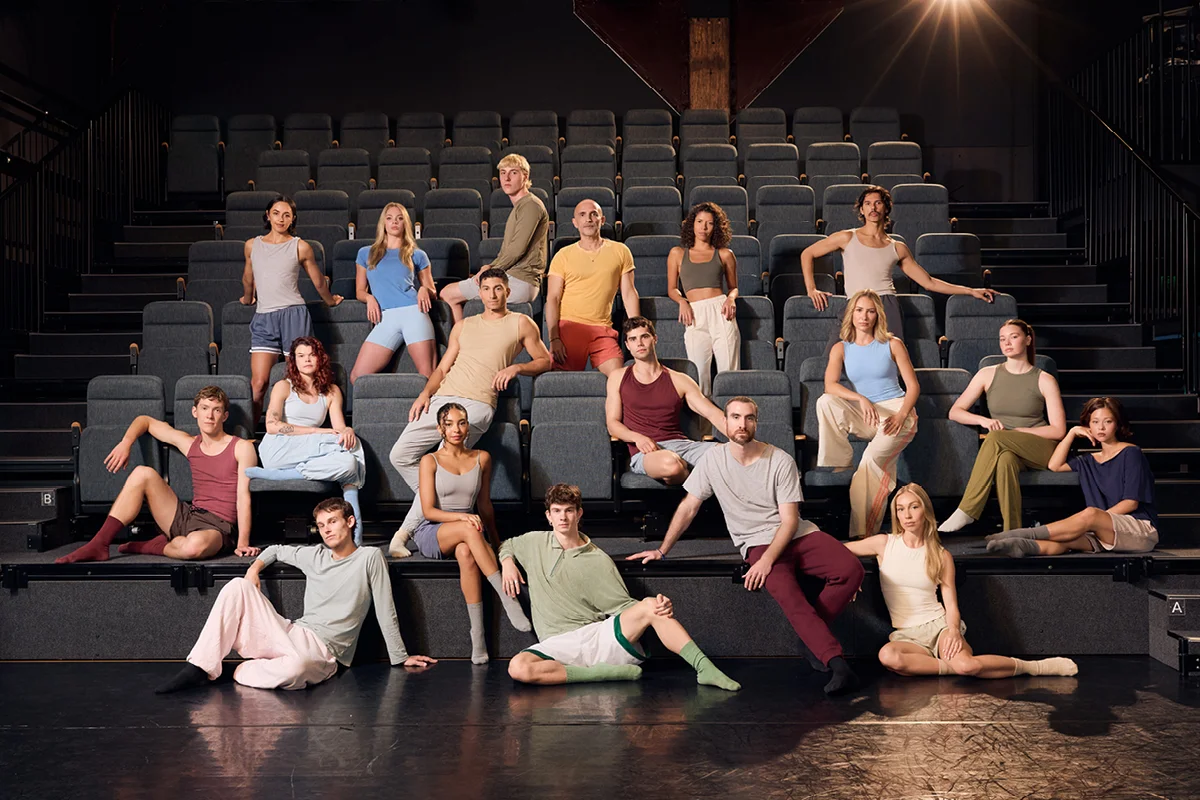
Sydney is preparing for an ambitious celebration of contemporary dance in January 2027, with 11 international productions set to headline a major programme featuring acclaimed choreographers, elite athletes and performers whose work spans classical ballet, acrobatics, street dance and queer club culture. The initiative promises to bring an extraordinary range of international performance to Australia, offering audiences opportunities to experience productions making their Australian premieres alongside a new work from an Indigenous and intercultural Australian dance company.
The programme will be presented through Sydney Festival in partnership with Dance Reflections, an international dance initiative supported by French luxury jewellery house Van Cleef & Arpels. Previously staged in cities including London, New York, Hong Kong and Seoul, Dance Reflections will make its first appearance in the southern hemisphere in Sydney. The collaboration is expected to significantly expand the festival’s dance offering, bringing 174 performers and crew members to the city.
One of the programme’s most anticipated productions is *Outsider*, created by French choreographer Rachid Ouramdane. First presented in 2024, the work combines contemporary dance with high-wire performance, bringing together 21 dancers from the Ballet du Grand Théâtre de Genève and four elite athletes. The performers navigate an intricate network of high wires and slack lines, creating a visual composition that explores balance, physical precision and collective movement.

The production will be accompanied by minimalist music from avant-garde composer Julius Eastman, adding another dimension to a performance built around the relationship between bodies, space and movement. Rather than relying solely on conventional choreography, *Outsider* pushes performers into a physically demanding environment in which coordination and concentration become central to the theatrical experience.
The production will be staged in a purpose-built, 720-seat theatre inside the recently renovated Cutaway at Barangaroo. The venue, located in one of Sydney’s prominent waterfront precincts, will be used for theatrical performance for the first time. Its transformation into a dedicated performance space represents an important development for the festival, providing a setting suited to ambitious productions that require specialised staging and technical infrastructure.
The Cutaway will also host several other major works. These include *My Fierce Ignorant Step* by Greek choreographer Christos Papadopoulos and a double bill featuring Chinese choreographer Tao Ye and his company, TAO Dance Theatre. The programme will also feature a new work from the French collective (La)Horde, known for challenging conventional boundaries between contemporary dance, popular music and club culture.
(La)Horde has developed an international reputation through collaborations with major music artists, including Madonna, Sam Smith and Rosalía. Its approach combines movement drawn from street dance, online dance cultures and contemporary performance, creating works that often reflect the changing relationship between popular entertainment and artistic expression. The collective’s Sydney appearance is expected to introduce audiences to a style of choreography that moves beyond traditional theatre conventions.
The programme will also feature Leïla Ka, a rising choreographer whose work has attracted attention through its energetic physical language and connections to contemporary popular culture. Ka has choreographed for Beyoncé, illustrating the increasingly fluid relationship between commercial performance, music and the international dance scene. Her Australian debut will give local audiences an opportunity to experience her work in a dedicated theatrical setting.
Another significant name returning to Australia is Belgian choreographer Anne Teresa De Keersmaeker, who will appear with her company Rosas. Widely recognised for her distinctive approach to movement, rhythm and musical structure, De Keersmaeker has influenced generations of contemporary dance artists. Her participation adds an established European perspective to a programme that also highlights younger choreographers and experimental performance practices.
The programme’s international scope will be balanced by a major Australian contribution from Marrugeku, an Indigenous and intercultural dance company known for bringing different cultural perspectives into contemporary performance. The company will premiere a new work created under the artistic direction of Dalisa Pigram and Rachael Swain.
Marrugeku’s involvement provides an important opportunity to place Indigenous and intercultural storytelling alongside international dance productions. Its work draws on cultural knowledge, contemporary choreography and collaborations across artistic traditions, helping expand the range of perspectives represented on Australian stages. The new production is expected to contribute a distinct voice to a festival programme otherwise featuring companies and choreographers from several international centres of dance.
The scale of the 2027 initiative marks a notable change for Sydney’s dance scene, which has lacked a major dedicated dance festival for more than a decade. The Sydney Opera House launched Spring Dance in 2009, presenting internationally recognised artists such as Akram Khan and Sidi Larbi Cherkaoui. The festival ran for four years before being discontinued in 2013 for financial reasons.
At the time, Sydney Opera House chief executive Louise Herron described the city’s dance audience as relatively small but passionate. The challenge facing organisers today is whether a wider and more digitally connected public can sustain large-scale dance programming and develop a lasting appetite for contemporary performance.
Sydney Festival director Kris Nelson believes there is reason for optimism. Having witnessed the impact of the inaugural Dance Reflections festival in London, where he was working at the time, Nelson described the initiative as transformative for the creation and circulation of dance on an ambitious scale. He has characterised the Sydney programme as a rare opportunity for audiences to experience a broad selection of international work in one place.
Nelson is also encouraged by the popularity of dance content on social media platforms, particularly TikTok, where short performances and choreography challenges regularly reach large audiences. The visibility of dance online, together with the influence of artists such as (La)Horde and Ka, could help connect younger viewers with live performance.
For organisers, one of the programme’s key strengths is its diversity. The productions range from classical influences and intricate choreographic structures to acrobatics, street dance, club-inspired movement and performances built around striking stage personalities. Some works emphasise technical control and geometric patterns, while others draw their energy from popular music and contemporary social cultures.
The festival is also seeking to make dance more accessible to audiences who may be unfamiliar with the art form or uncertain about the cost of attending major performances. Organisers plan to offer 10,000 A-Reserve tickets across the programme for A$49, creating a lower-cost option for people who want to experience international productions without paying premium ticket prices.
Two works will be free to attend. Trisha Brown’s influential *Roof Piece* will be presented in the gallery spaces of the Art Gallery of New South Wales, while Belgian choreographer Cassiel Gaube’s *Soirée d’études*, a tribute to house music, will take place in the public space at Carriageworks.
The free performances will provide opportunities for audiences to encounter dance in settings beyond conventional theatres. By placing works in galleries and public spaces, the festival can introduce people to contemporary movement without requiring them to make an initial financial commitment or have prior knowledge of dance.
The full Sydney Festival programme is scheduled to be announced on 19 October 2026, with tickets for the announced productions going on sale on 22 October. The January 2027 season will therefore form part of a wider cultural programme whose complete range of events is still to be revealed.
The success of the Dance Reflections collaboration could have implications beyond the festival itself. A strong audience response may encourage further investment in international dance, create opportunities for Australian performers and producers, and strengthen Sydney’s position as a destination for ambitious contemporary performance.

For audiences, the programme offers an unusual chance to experience a broad spectrum of movement and artistic ideas within a single festival. From high-wire athleticism and tightly structured contemporary choreography to Indigenous storytelling and club-inspired dance, the productions challenge the notion that dance belongs to one particular style or audience.
As Sydney prepares to welcome performers from across the world, the central question will be whether this ambitious programme can turn renewed attention into sustained enthusiasm for live dance. With accessible ticket options, free performances and an internationally diverse line-up, organisers are positioning the 2027 festival as both a major cultural event and an invitation for new audiences to discover the possibilities of contemporary performance.
Related News:
 Whistler’s Mother and why its fame frustrated artist
 Taylor Swift and Madonna Lead 2026 MTV VMAs
 Pelicot Trial Play Comes to London for One Night
 Sam Wood Denied Bail Over Alleged Domestic Assault
 Exhibition Revisits Life of 18th-Century Black Court Figure
 Harry and Meghan’s Australia Visit Sparks Debate
 Disneyland Adds Facial Recognition at Entrances
 Sycamore Gap Artwork Chosen After Public Vote
 Cannes filmmakers split over AI’s role in cinema
 The Obamalisk: Inside the Controversial $850m Presidential Center
 Taylor Swift and Travis Kelce Marry at Madison Square Garden
 Dreyfus Statue Finally Gets Permanent Paris Home
 Can Anyone Replace Graham Norton? Chat Show Challenge
 Yayoi Kusama, Iconic Polka Dot Artist, Dies at 97
 British Museum Faces Questions Over Peter Thiel’s Private Bayeux Viewing
 Susan Sarandon Says Palestine Stand Costs Roles
 Australia gives users control over social media algorithms
 Bad Apples Review: Ronan Leads School Horror Satire
 Roman Finds Reveal Bath’s Suburban Past
 Greece Pushes for Parthenon Marbles Reunification
 Oasis Recordings Pulled From Auction After Legal Action
 Car Crashes Into Newcastle Crowd, Ten Injured
 Gillian Anderson Defends Front-Row Theatre Warning
 Morecroft Remembered for His Love of Wildlife
 NSW Police Bid Delays Inquiry Into Sydney Protest
 Kate Winslet to Narrate Film Highlighting King’s Environmental Mission
 From Lego to Pokémon: How Adults Are Driving UK Toy Market Growth
 Director Michael Caton-Jones Reflects on Career and Beginnings
 Rusty Bond-Era Aston Martin Restored to £1m Glory
 Liberal Turmoil Threatens Victorian Election Hopes
 PM pushes urgent hate speech and gun laws after Bondi terror attack
 Bondi memorial flowers preserved in lasting tribute artwork
 Silence and Unity Mark Bondi Terror Attack Memorial
 John Lithgow criticises Rowling stance in trans debate
 Draco Malfoy Emerges as Lunar New Year Icon in China
 Top 10 Must-See Films Arriving This February
 ‘It’s a horrible feeling’: Loma Bropho’s Struggle to Secure Housing
 Anthony Albanese Must Uphold Rights for All Australians
 Family of Alleged Bondi Gunman Seeks Name Suppression
 Rising Costs Force Families to Rethink Days Out
 Ticketmaster Fees Rise Despite Recent US Junk Fee Crackdown
 Scott Mills Sacked by BBC Over Personal Conduct Claims
 Sam Konstas Dropped as Australia Unveils New Contract List
 M&S Demands Urgent Action on Rising Violent Retail Crime
 Labor Reforms NDIS Amidst Mounting Budget Concerns
 Greens Face Internal Row Over Antisemitism Claims
 The Burning Lens: An Iranian Artist’s Visual Resistance
 Barrister Criticises Trial After Suicide Case Verdict
 Tony Abbott Returns as New Liberal Party President
 Pope Meets Families in Italy Toxic Waste Zone
 Farage and Reform UK Reshape British Politics
 Saving the Scalloped Hammerhead: The Pacific Battle
 Trump’s Mount Rushmore Speech: A Divisive Anniversary
 British Teens in EU Face Soaring UK University Fees
 Rotterdam Museum Honours Artist With Peanut Butter Floor
 England and Norway Fans Turn Miami Into World Cup Carnival
 UK Schools Struggle as Classrooms Top 40C
 Sydney Arts Venue Faces Eviction After Religious Protests
 Olympus Awaits Unesco Heritage Recognition
 Westminster Council Threatens Charing Cross Soup Kitchen
 Burnham unveils £65m drought aid for farmers
 Queue row erupts on Wales’ highest mountain
 Bayeux Tapestry Revives Franco-British Ties
 Abusive ex used Tesla to control and harass former partner
 Man Arrested in Mississippi Woman’s Death
 UK Retailers Accused of Breaking Refund Laws
 Mahmood Warns Far Right Over Asylum Protests
 UK Rent Gap Puts Low-Income Families Under Pressure
 Democrat Says ICE Restricted Detention Camp Oversight
 Tropics May Wait Longest for Net-Zero Climate Benefits
 Frome Community Loses Bid for Major Regeneration Site
 Madrid Tent Camp Grows as Spain Housing Crisis Deepens
 London Facial Recognition Trial Ends With False Alert
 UK University Strikes Spread as Financial Pressure Grows
 Healey urged to act as UK energy bills rise 4%
 Badenoch Raises Prospect of 2027 UK Election
 French School Protests Escalate as 400 Schools Close
 Salinas Struggles to Keep the American Dream Alive
 Gosport Protesters Clash With Police Over Migrant Rescue
 Ministers Push ATO to Reconsider Credit Card Ban