Published: 26 October 2026. The English Chronicle Desk. The English Chronicle Online
Students on a fine art course at Goldsmiths, University of London, are calling for compensation after a prolonged staff strike disrupted teaching, feedback and course activities, leaving some students questioning whether they are receiving the education they expected after paying substantial tuition fees.
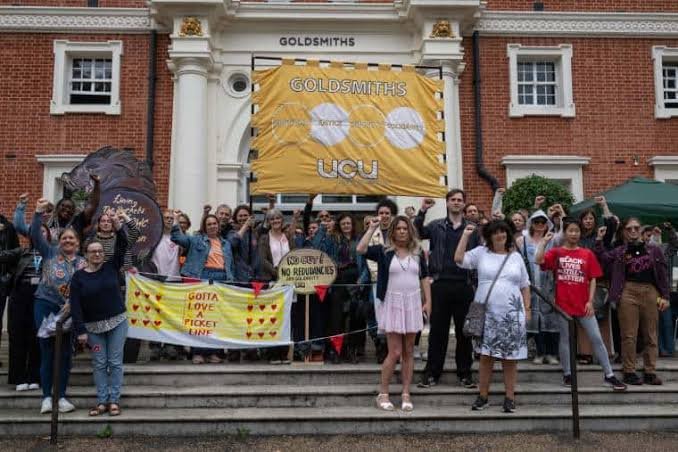
The dispute at the south-east London university has now entered its 21st week, making it one of the longest-running periods of industrial action in British higher education. Students on the Master of Fine Art programme have been among those most severely affected, with 10 of the course’s 12 usual tutors taking part in the strike.
For some students, the disruption has extended far beyond missed classes. They say the industrial action has affected induction activities, academic feedback, assessments, tutorials and the relationships between students and tutors that are particularly important in studio-based art education.

An international student who began the course this autumn described arriving at Goldsmiths with high expectations but being surprised by the extent to which the strike dominated the start of the academic year. Instead of focusing primarily on introductions to the course and its teaching environment, the student said many induction sessions became discussions about industrial action.
The experience has prompted a group of students to seek financial compensation from the university. They argue that the disruption has reduced the educational value of a course for which students are paying significant amounts of money and, in some cases, have travelled from other countries to attend.
Florence Sweeney, a part-time student, said there had been virtually no teaching for many fine art students during the term. She said the situation had created financial and emotional pressure, particularly for students who had relocated internationally to study at Goldsmiths.
The concerns are particularly significant for an institution with a strong reputation in contemporary art. Goldsmiths has educated a number of internationally recognised artists, including Steve McQueen, Sarah Lucas and Damien Hirst, and its fine art programmes have historically attracted students seeking close interaction with established practitioners and specialist tutors.
Students say that relationship between tutors and artists in training is central to the value of the programme. Unlike courses where much teaching can be delivered through lectures or online materials, fine art education often depends heavily on studio discussions, individual tutorials, critiques and continuing feedback on creative work.
The disruption has therefore created concerns that cannot easily be addressed simply by providing replacement classes. Students say temporary tutors may not have the same familiarity with their work, development or previous discussions, making it difficult to recreate the continuity of teaching provided by the regular staff.
John Carver, a part-time second-year student, said he had suspended his studies after attending what he described as a deeply disappointing departmental meeting at the beginning of the term. As a mature student, he said his time was particularly important and he did not want to continue in an environment where prolonged industrial action had created uncertainty about the future of teaching.
Carver nevertheless praised the university’s tutors, describing their interaction with students as exceptional when regular tutorials were available. He said the arrival of replacement tutors had not provided the same experience because those teachers did not necessarily know the students or their work.
International students have faced additional difficulties. James Evans, a student from the United States, said visa and funding restrictions had made it difficult for him to suspend his studies or pursue an alternative arrangement despite the disruption.
Evans said problems had begun during the previous academic year, when students failed to receive marks and feedback on some work and an end-of-term exhibition was not graded as expected. He said the marks themselves were not the most important part of the experience, but the academic dialogue surrounding creative work was essential.
He said the situation had become worse during the current academic year, with students experiencing limited communication and little structure while continuing to pay substantial fees.
The financial stakes are considerable. The two-year Master of Fine Art course costs nearly £15,000 a year for full-time UK students and approximately £33,000 a year for international students. For overseas students, the cost is accompanied by travel, accommodation, visa and living expenses, making prolonged disruption particularly difficult to absorb.
The dispute has its roots in a wider financial crisis at Goldsmiths. The university has faced falling applications in some of its core humanities subjects and pressure caused by the erosion of domestic tuition-fee income. Management has undertaken repeated rounds of restructuring and job cuts in an effort to address financial pressures.
University and College Union members began the current indefinite strike after a dispute that initially involved a marking boycott in April over proposed job cuts. The university responded by deducting all pay from staff participating in the marking boycott. The union subsequently argued that the decision amounted to a lockout, leading to a formal ballot and the escalation of industrial action from early June.
Joe Newman, a co-president of the Goldsmiths UCU branch, said staff had resisted previous restructuring and redundancy programmes but believed the scale and speed of the latest cuts required an unusually sustained response.
The union has argued that students have largely understood the reasons behind the industrial action, particularly because many students have themselves experienced the consequences of previous financial reductions at the university.
Newman said students often felt closer to staff working on insecure contracts than to senior university managers. He argued that students who had attended Goldsmiths for longer had already witnessed the consequences of earlier cuts and were concerned that another major restructuring programme would further weaken the university.
The university disputes the suggestion that the strike has affected most students. Management said only around 8.5% of staff were taking part in industrial action, meaning the majority of students had not been directly affected.
Goldsmiths also said it had offered significant compromises during negotiations, including a pause on compulsory redundancies. However, management has refused to reverse the full pay deductions imposed during the earlier marking boycott, arguing that it has already spent significant resources attempting to minimise the impact of industrial action on students.
The university acknowledged the serious financial difficulties facing the institution and said action was necessary to ensure its long-term sustainability. Management also warned that continued disruption could have lasting consequences for students and for Goldsmiths’ reputation as a leading academic institution.
A university spokesperson said management recognised the right of staff to take industrial action and was continuing to monitor the impact on students. The university said it was providing updates, meetings with academic departments and other forms of support for students whose courses had been affected.
For students seeking compensation, however, the issue is not simply whether alternative support is available. They argue that the disruption has affected an important part of the educational experience for which they paid, particularly in a programme where close relationships with specialist tutors are central to learning.
The dispute also reflects wider pressures across British higher education. Universities are facing financial challenges linked to stagnant or declining domestic tuition-fee income, changing patterns of international recruitment, rising costs and increased competition for students.
At institutions with specialist arts and humanities programmes, those pressures can be particularly difficult to manage. Courses that rely on small groups, specialist teaching and intensive staff-student interaction can be expensive to deliver, while reductions in staffing can have an immediate impact on students.
The Goldsmiths dispute therefore illustrates a wider tension between financial sustainability and educational quality. University management must reduce expenditure to protect institutions from deeper financial difficulties, while staff argue that repeated cuts can undermine teaching and working conditions.
Students can become caught between those competing priorities. They pay fees and make major personal commitments expecting a stable academic environment, while the staff responsible for delivering their education may feel compelled to take industrial action to oppose job losses and restructuring.
For international students, the consequences can be even more serious because their decision to study in Britain involves substantial financial commitments and immigration requirements. Some may have limited flexibility to change institutions or pause their studies without affecting their wider circumstances.

The Goldsmiths students’ demand for compensation is therefore likely to add another layer to an already complex dispute. Whether the university agrees to financial remedies could depend on the extent of disruption, the terms of individual courses and the outcome of negotiations with staff.
For now, the strike continues with no clear end in sight. Students remain concerned about missed teaching, delayed feedback and uncertainty over the remainder of their courses, while staff and management remain divided over how the university should respond to its financial difficulties.
The dispute has also raised a broader question about what students should reasonably expect when industrial action substantially alters the education they have paid to receive. As universities across Britain confront financial pressures and staff disputes, the experience of Goldsmiths’ fine art students could become part of a much wider debate over tuition fees, compensation, academic quality and the future of higher education.
Related News:
 Public Confidence in University Degrees Plummets in the UK
 UK retailers plan 100,000 placements for young people
 Councils spend £125m on illegal children’s care
 Labour Apprenticeship Scheme Faces Slow Start
 UK University Strikes Spread as Financial Pressure Grows
 Milburn Proposes Pre-Apprenticeship Route for Young People
 Older Worker Training Plan Faces Business Backlash
 City & Guilds pay surge sparks backlash amid £22m cuts
 Rising Costs Force Families to Rethink Days Out
 Exhibition Revisits Life of 18th-Century Black Court Figure
 Student Loan Interest May Rise Despite 6% Cap
 City & Guilds Sale Sparks Fees and Pay Uproar
 NHS Safety Fears as Nurses Cover Doctor Gaps
 Reform UK funding: mystery billionaire revealed
 City & Guilds Faces Governance Crisis Over Sale
 Tractor Breakdown Tests Lincolnshire Farmers
 Sycamore Gap Artwork Chosen After Public Vote
 British Teens in EU Face Soaring UK University Fees
 UK Schools Struggle as Classrooms Top 40C
 Cambridge Professor Jason Arday Found Dead at Home
 Burnham unveils £65m drought aid for farmers
 UK Households Could Save £173 on Fixed Energy Deals
 British Museum Faces Questions Over Peter Thiel’s Private Bayeux Viewing
 Internal Exclusions Surge in England’s Schools
 Green Leader Targets Starmer’s Former Seat
 UK Subsidence Claims Surge After Record-Breaking Summer
 UK House Prices Fall as Mortgage Rates Rise
 Thames Water Revises Oxfordshire Mega-Reservoir Plan
 UK Retailers Accused of Breaking Refund Laws
 UK Youth Jobs Gap Reveals Deep Regional Divide
 UK Youth Jobs Gap Exposes Sharp Regional Divide
 UK Rent Gap Puts Low-Income Families Under Pressure
 Headteachers Warn New Ofsted System Is Harming Wellbeing
 Thinktank Calls for Abolition of UK State Pension
 Roman Finds Reveal Bath’s Suburban Past
 Greece Pushes for Parthenon Marbles Reunification
 Frome Community Loses Bid for Major Regeneration Site
 New UK Homes in Flood Zones Face Insurance Risk
 Dale Vince Plans New London-Wide News Operation
 Pelicot Trial Play Comes to London for One Night
 Burnham Opens Door to Possible UK Return to EU
 Poundland Rescue Bid Could Protect 11,000 Jobs
 Healey urged to act as UK energy bills rise 4%
 Senators warn US childcare policies could raise costs
 Feeld Founders Receive Record Dividend as Sales Rise
 Badenoch Raises Prospect of 2027 UK Election
 Polanski Says Leadership Not Tied to By-election Result
 BT Broadband Pauses Raise Digital Switchover Concerns
 UK Water Firms Earn Millions From Industrial Wastewater
 Labour MP Urges Billions for Affordable Homes
 UK Savers Face Uncertainty as Rates Rise Above 5%
 Labour Fears Budget Will Fail to Lift Living Standards
 UK Water Firms Face £107m Bill Reduction Penalties
 Aardman Cuts Losses but Fails to Return to Profit
 UK Plans Higher Training Costs for Older Apprentices
 UK Family Linked to Offshore Gambling Licence Controversy
 Up to 20 English Maternity Units Face Possible Closure
 Bradford Rail Hub Promises Faster Northern Connections
 Support for NHS Founding Principles Declines Across UK
 Middleton Revitalisation Blueprint for UK Towns
 Post Office Closures Raise Fears of UK Postal Deserts
 UK Aid Set to Fall Short of Reduced 2027 Target
 Reeves Faces Setback as Labour May Miss Homes Target
 Trump’s UK Ambassador Urges North Sea Drilling to Strengthen US Ties
 Millionaires group urge Reeves to introduce wealth tax to ‘lift kids out of poverty’
 Starmer Says Labour’s Economic Plan Needs Years to Deliver
 ScottishPower Tops List of Worst UK Energy Suppliers
 Send spending gap leaves deprived areas behind
 UK Unemployment Rate Climbs to 5.2% Peak
 Silent Tracks: Rail Line Without Passengers
 Tube Strike Brings Capital to a Standstill Over Shift Disputes
 EU Slashes Steel Quotas But Grants UK Favourable Rates
 Unions Warn Labour Over Zero-Hours Contract Reforms
 Bayeux Tapestry Revives Franco-British Ties
 Entain Plans 400 Job Cuts After Profit Update
 Tom Watson Takes Senior Role at Palantir
 The Tests Awaiting Andy Burnham After Labour Conference
 London Facial Recognition Trial Ends With False Alert
 Royal Mail Plans Up to 2,500 Job Cuts
 UK Visa Refusal Threatens Baby’s Family Christmas