Published: 10 June 2026. The English Chronicle Desk. The English Chronicle Online.
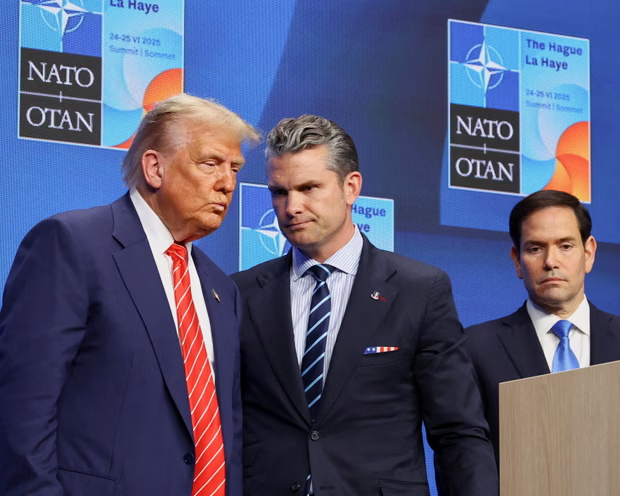
The geopolitical landscape of Europe is undergoing a massive and historic transformation right now. Recent data indicates that transatlantic relations have reached an incredibly profound turning point today. A comprehensive new survey reveals that European trust in the United States has plummeted. Only a tiny fraction of the continental population now views Washington as a true ally. This dramatic shift in public opinion comes at a highly critical geopolitical moment. Major global summits are scheduled to take place across France and Turkey quite soon. Leaders will meet under a heavy shadow of unprecedented public scepticism and doubt. The traditional security guarantees that defined the post-war era are now being questioned. Millions of European citizens are actively reconsidering their long-term reliance on American military power. This remarkable trend reflects years of political friction and unpredictable foreign policy decisions. The foundational pillars of western solidarity are feeling more fragile than ever before. European leaders must now confront a public that demands much greater strategic independence. The consensus that once bound these powerful continents together seems to be dissolving rapidly.
The extensive study was conducted by the respected European Council on Foreign Relations thinktank. Researchers gathered detailed public opinions from fifteen diverse nations across the European continent. The findings paint a vivid picture of deep and pervasive distrust toward Washington. Only eleven per cent of respondents view the United States as an authentic ally. This figure represents a sharp decline from previous polling cycles over recent years. Just six months ago, sixteen per cent of Europeans held a positive view. Back in November twenty twenty-four, the alliance enjoyed twenty-two per cent public support. The downward trajectory suggests a steady erosion of confidence that shows no signs of stopping. Most citizens now categorise the United States merely as a necessary global partner. A significant minority actually views the former superpower as a rival or direct adversary. These numbers illustrate a stark departure from the traditional narrative of western unity. The psychological distance between the two sides of the Atlantic is growing wider daily. European populations are clearly reacting to years of diplomatic volatility and shifting political rhetoric. The romantic notion of an unbreakable transatlantic brotherhood has effectively been replaced by pragmatism.
This widespread cynicism is driven by a series of contentious American foreign policy actions. The current administration has caused considerable alarm through aggressive manoeuvres in the Middle East. Bizarre diplomatic episodes, including unexpected threats against Greenland, have further damaged Washington’s global credibility. Furthermore, persistent vows to withdraw American troops from European bases have created deep anxiety. Ongoing scepticism from the White House regarding the future of Nato has broken trust. European observers have watched these developments with a mixture of concern and growing frustration. The unpredictable nature of modern American politics has forced a major continental rethink. Citizens no longer feel comfortable outsourcing their national security to an unreliable foreign partner. The rhetorical attacks on international institutions have finally triggered a very tangible public reaction. Europe is realising that it can no longer take American protection for granted anymore. This realisation is reshaping how voters think about defence, budgets, and sovereign responsibility. The era of unquestioning reliance on the American nuclear umbrella is officially drawing to a close.
Experts suggest this crisis of confidence has created a unique opportunity for European leaders. The public demand for self-reliance gives politicians a mandate to pursue deeper defence integration. Security strategies can now be advanced much faster than was previously deemed politically possible. There is a palpable desire across the continent to reduce strategic dependence on Washington. This sentiment is shared by nations with vast political differences and distinct historical backgrounds. Increased defence spending is becoming a much more palatable concept for modern European voters. Crucially, citizens are expressing a striking amount of faith in their immediate geographic neighbours. If a crisis occurs, people believe nearby nations will come to their rescue. This horizontal trust within Europe is replacing the vertical trust once placed in America. The collective consciousness is shifting toward a model of mutual continental assistance and solidarity. Leaders are being urged to seize this moment to build robust internal structures. The momentum for a more autonomous European defence identity has never been this strong.
The polling data reveals fascinating consensus regarding the acquisition of vital military equipment. An overwhelming majority of citizens believe their nations should buy European military hardware. This desire to cut technological dependence on the United States is exceptionally widespread today. Support for domestic procurement is highest in Denmark, reaching an impressive seventy-five per cent. The Netherlands and Sweden follow closely behind with remarkably high levels of public backing. Portugal, France, and Switzerland also show strong preferences for continental manufacturing capabilities. Even within the United Kingdom and Spain, nearly two-thirds support this procurement strategy. This represents a major economic threat to traditional American defence contractors in Europe. The preference for local production reflects a desire for true industrial and military sovereignty. Europeans want to ensure they possess the independent means to defend their own borders. Relying on foreign supply chains for critical weaponry is increasingly viewed as dangerous. This commercial shift could fundamentally alter global arms markets for decades to come.
However, the path toward total military independence is fraught with complex financial challenges. While Europeans support the abstract idea of defence, they dislike the associated domestic costs. Clear majorities oppose cutting public services to fund higher national military budgets instead. This financial resistance is particularly pronounced in Italy, where opposition reaches sixty-three per cent. Austria, Germany, and Spain also show strong public reluctance to alter spending priorities. Even in highly supportive Denmark, over half of the population rejects public cuts. This creates a difficult paradox for governments trying to upgrade their military capabilities. Politicians must find innovative ways to fund defence without upsetting domestic welfare systems. One popular solution gaining traction is the concept of collective European Union defence borrowing. Nearly half of all respondents support using shared bonds to finance military expansion. Support for this collective financial mechanism is especially robust in Portugal and Denmark. The Netherlands and Spain also show healthy majority support for shared European debt.
Despite these structural shifts, Europeans are not ready to completely abandon traditional frameworks. There is very little appetite for replacing Nato with an entirely new body. Only twenty-nine per cent of respondents favour creating a separate European defence institution. Instead, the prevailing view is that relations with Washington will eventually improve later. Most citizens expect a positive turnaround once the current American president leaves office. This optimistic perspective is shared by over sixty per cent of people in France. Similar levels of hope are found in Spain, Denmark, the Netherlands, and Sweden. Europeans seem to view the current discord as a temporary, leadership-driven aberration. They remain committed to international institutions while simultaneously hedging against current American unreliability. This nuanced approach shows that Europe desires stability rather than a radical geopolitical divorce. The goal is balanced autonomy within an enduring framework of international cooperation and law.
Meanwhile, energy security and regional expansion continue to test the continent’s collective resolve. Despite enduring high energy costs, most Europeans reject resuming Russian oil and gas imports. Forty-four per cent believe returning to Russian energy would be a bad idea. This demonstrates a willingness to endure economic discomfort to maintain a principled foreign policy. However, questions regarding the expansion of the European Union provoke much deeper internal divisions. The ambition of Ukraine to join the bloc faces significant public resistance today. Respondents in Hungary, Bulgaria, Austria, and Germany largely oppose admitting Kyiv right now. Surprisingly, even Estonia shows notable public hesitation regarding immediate Ukrainian membership into the union. The current context of conflict makes rapid integration a highly controversial topic for voters. European public opinion is clearly balancing solidarity with a strong desire for stability. As summits approach, leaders must navigate these intricate public sentiments with immense care. The continent is stepping forward into a bold, self-reliant, yet deeply cautious future.
Related News:
 Saudi Officials Report Zubaidi Flee Before Yemen Peace Talks
 UK Targets in New York Bomb Threat Hoax: Man Jailed
 Gambia Supreme Court Hears Case to Overturn FGM Ban
 Trump targets Iran trade with 25% tariff warning
 US Senate rejects resolution limiting Trump military powers
 Gulf states warn Trump Iran strikes risk wider Middle East war
 Machado Trump medal gesture reshapes Venezuela power struggle
 Geopolitical football: Iran, Trump and the World Cup clash
 Canada-China trade gains momentum in new strategic partnership
 Syria President Declares Victory as Ceasefire Reached with SDF
 Shinzo Abe’s killer receives life sentence in Japan
 China General Under Investigation Amid Leadership Purge
 Philippines ferry disaster leaves 15 dead, dozens missing
 Cambridge Faces Scrutiny Over Arms Investment Transparency
 Concerns rise for Canberra boy amid Iran detention fears
 Ukraine Sends Drone Experts to Defend US Bases in Jordan
 Abramovich Chelsea Sale Cash Faces Jersey Probe
 Yvette Cooper: UK Must Follow Principles, Not US Pressure
 Jury Rules Meta and YouTube Liable for Addictive Design
 The Woman Guarding Earth From the Threat of Asteroids
 Exiled Tycoon Warns of New Russian Attacks on UK Soil
 LA 2028: Millions of Affordable Olympic Tickets Announced
 Trump Slams Europe as Transatlantic Tensions Boil Over
 Inside the Deceptive Machine: A Former Producer Speaks Out
 Spain Faces Backlash Over Xenophobic Chants in Egypt Draw
 A Global Voice For Justice: Stephen Lewis Dies At Age 88
 Hope and Fear as Iranians Flee Across the Turkish Border
 Reform UK Pledges To Halt Visas Over Reparations Demands
 US and Iran Agree to Two-Week Provisional Ceasefire
 Starmer visits Gulf as US and Iran agree ceasefire
 Pakistan Brokers Historic Peace Deal Amid Rising Tensions
 UK Holds Firm on Strait of Hormuz Amid Trump Pressure
 Trump Signals Hope for New Iran Talks as Ceasefire Fades
 Reeves Slams Trump Over Iran War Lack Of Exit Plan
 US and Iran Pursue Extension of Ceasefire via Pakistan
 Trump’s Islamabad Gamble: The High Stakes of a New Iran Deal
 Ian Katz to Step Down as Channel 4 Content Chief
 The General’s Gambit: Pakistan’s New Role in Global Peace
 Mexico, Spain and Brazil call for Cuba dialogue amid crisis
 Pakistan’s Ambitious Bid for Middle East Peace
 Israeli Soldiers Jailed Over Vandalism of Lebanese Statue
 Trump Weighs Sending Afghan Allies to the Congo
 Trump Threatens UK With Big Tariff Over Tech Tax
 Prominent Voices Challenge Palestine Action Ban
 Security Scrutiny After Washington Shooting Incident
 Merz Criticises US Approach in Iran Conflict
 UK Envoy Sparks Controversy Over Special Relationship Claims
 Ukraine Urges UK to Seize Russian Oil Tankers
 US Calls Australia Media Law “Foreign Extortion”
 The Billionaire’s Secretary and the £1m Fraud
 Ukraine strikes Tuapse as oil disaster worsens
 Brewing Tension: Taiwan Baristas Rebrand for World Stage
 Tensions Emerge in Netanyahu-Trump Alliance
 Mission to the World’s Edge: A Heroic Rescue in Tristan
 US and Mexico Face Heatwave as Floods Batter South Africa
 Mexico’s Missing: State Complicity in a Growing Crisis
 French Patient Told Hantavirus Was Just Anxiety
 The Long Way Home: Australia’s High-Stakes Virus Mission
 Putin Signals War End as Russian Momentum Stalls
 Romania’s Judicial Crisis: A System Under Siege
 Lee Lai Makes History with Landmark Stella Prize Victory
 Philippine Senator Flees After Days Under Senate Siege
 Alberta Separatist Bid Blocked by Canadian Court
 Big Tobacco Under Fire Over Controversial New Ad Campaign
 Bolsonaro Son Tape Scandal Sparks Massive Brazil Backlash
 Court Upholds Landmark Win for Transgender Rights
 Liberal Senator Criticises Immigration Rhetoric
 Senate Moves to Restrict Trump’s War Powers on Iran
 ICC Arrest Warrant Threat Sparks West Bank Retaliation
 Taliban Codifies Strict New Marriage and Divorce Legislation
 Tony Abbott Returns as New Liberal Party President
 Tulsi Gabbard exits after turbulent intelligence tenure
 Discontent grows around Putin amid war strain
 Trump Diplomacy Faces Hurdles from Tehran to Tbilisi
 Trump Faces Legal Blow Over Global Tariffs
 Washington Brokerage Sparking Hope Amid Regional Firestorms
 New York Consumer Watchdog Tackles Corporate Lawbreaking
 Global Tech Giants Face Off Against Australia Over Media Levies
 ANU Reputation Crumbles Under Leadership Woes and Huge Losses
 Ukraine Turning the Tide: Zelenskyy Reclaims the Initiative Against Isolated Russia