Published: 24 June 2026. The English Chronicle Desk. The English Chronicle Online.
European politics is undergoing a profound and highly visible transformation right now. Nearly one in every four voters across the continent now chooses far-right parties. This remarkable shift represents a massive fivefold increase since the middle of the nineties. Support for these political factions has climbed particularly steeply over the past three years. Comprehensive new research reveals the true scale of this electoral phenomenon across Europe. Political analysts are closely observing these patterns with growing interest and deep concern.
A collaborative study by more than one hundred and fifty political scientists confirms this. These dedicated experts analyzed recent national election results across thirty-one distinct European countries. They discovered that overall support for far-right parties has now surpassed twenty-three percent. This figure stood at just ten percent only one single decade ago. Furthermore, the support was a mere five percent back in nineteen ninety-five. The data shows an unmistakable trend that continues to reshape the entire continent.
Dr. Matthijs Rooduijn from the University of Amsterdam led this extensive research project. The investigation was conducted for the well-known PopuList survey of European political parties. This specific survey tracks far-left, far-right, and various populist movements across the region. The latest findings also show that almost thirty percent now back anti-establishment parties. This additional statistic marks another historic record for unconventional political movements in Europe. Voters are clearly looking away from traditional options in favor of alternative voices.
When the PopuList project started in twenty eighteen, the landscape looked very different. At that time, one in four Europeans voted for various general populist parties. Those voters were divided somewhat equally between the far-left and the far-right factions. Today, that same proportion of the electorate is voting specifically for far-right parties. Most of these highly successful contemporary far-right organizations also embrace strong populist rhetoric. This represents a monumental shift in the underlying ideological preferences of European citizens. The surge in far-right support was exceptionally visible between twenty twenty-three and twenty twenty-five. During this crucial period, these parties achieved historic gains in several major national elections. Massive breakthroughs occurred within large and influential nations like France and the United Kingdom. These significant electoral shifts took place during the highly contested elections of twenty twenty-four. Similar dramatic political transformations shook the foundations of German democracy the following year. The momentum has created a powerful wave that traditional parties are struggling to contain.
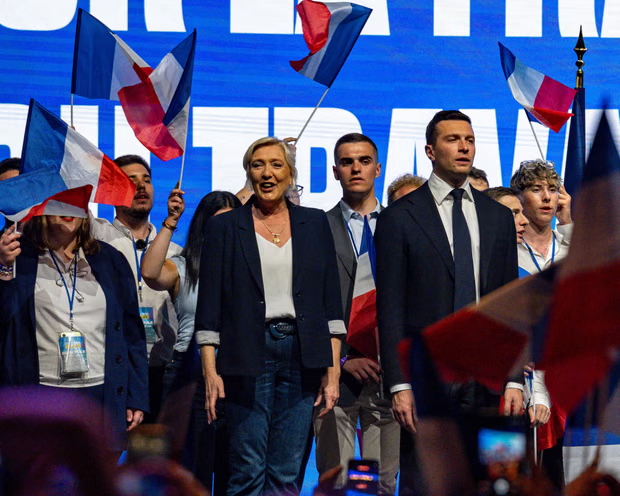
In Austria, the far-right Freedom Party made an incredible leap in twenty twenty-four. Their share of the national vote advanced dramatically from sixteen percent to twenty-nine percent. Meanwhile, France witnessed a spectacular surge by the prominent National Rally political party. Their support rose from nineteen percent to an impressive thirty-seven percent that year. This historic rise made them the largest single party within the French national parliament. Portugal experienced a similar trend as the Chega party rose to eighteen percent.
The United Kingdom has also felt the powerful impact of this growing political movement. Reform UK managed to boost its national vote share significantly during the general election. The party previously secured just two percent of the vote back in twenty nineteen. However, they captured an impressive fourteen percent of the total vote in twenty twenty-four. Reform UK has previously insisted that it should not be categorized as far-right. The organization did not respond to recent requests for comment on this scientific study.
Germany witnessed a similarly historic shift during its national elections in twenty twenty-five. The Alternative for Germany party essentially doubled its previous score during this major vote. Their support climbed from ten percent to a very substantial twenty-one percent overall. This impressive performance allowed them to finish as the second-largest party in Germany. It was the very first time they achieved such a high ranking nationally. Their rapid ascent has deeply altered the traditional dynamics of German coalition politics.
Far-right populist parties are now actively participating in several European ruling coalition governments. These organizations hold significant power within Croatia, Czechia, Italy, and the nation of Finland. Furthermore, they are propping up a right-wing minority government over in Sweden currently. Recent polling data shows these parties leading the fields in several other major nations. They currently enjoy substantial leads in Austria, Belgium, France, Germany, and the United Kingdom. Their influence over continental policymaking is reaching unprecedented and highly influential new heights.
Despite these widespread successes, these radical movements have also suffered some recent electoral defeats. In the Netherlands, Geert Wilders and his Freedom Party experienced a major setback. The party lost nearly one third of its parliamentary seats during the last election. This unexpected decline caused them to finish in second place during that specific contest. Hungary provided another example of a significant setback for established right-wing populist forces. Viktor Orban and his Fidesz party were comprehensively beaten by a centre-right rival.
This surprising Hungarian electoral defeat took place during the highly competitive votes of April. Yet, despite these localized setbacks, the overall share of far-right voters continues upward. The broader European trend remains firmly on an upward trajectory across the entire continent. Dr. Rooduijn emphasized that this phenomenon is certainly not a sudden or temporary occurrence. The complex process has actually been under way for several decades across many nations. It has simply accelerated at a much faster pace during the most recent years.
A diverse range of complex factors lies behind this enduring and powerful political trend. Experts working on the PopuList project have identified several key drivers of growth. The project officially defines far-right parties through two core ideologies: nativism and authoritarianism. Nativism demands that a country should be inhabited solely by its native population group. Authoritarians believe that societies must be tightly ordered and all transgressions punished severely. These foundational beliefs create a distinct worldview that sets them apart from others.
Political scientists frequently divide these organizations into extreme right and radical right factions. Extreme right groups generally aim to overthrow the democratic system entirely through violent means. Conversely, radical right parties tend to operate primarily within established constitutional frameworks. However, the distinction can often become blurred due to inconsistent messaging from party members. Therefore, researchers prefer to use the overarching term far-right to encompass both groups. Several prominent organizations have actively attempted to legally contest this specific scientific label.
Germany’s intelligence agency designated the AfD as a suspected right-wing extremist organization. Meanwhile, France’s highest court rejected an official objection raised by the National Rally party. The court ruled that their core ideology fully justified the far-right label. The latest PopuList survey now identifies one hundred and thirty-three far-right parties across Europe. Most of these organizations are also classified as populist movements by the research team. When far-right populist forces gain substantial power, democracy itself faces intense systemic pressure.
Related News:
 Saudi Officials Report Zubaidi Flee Before Yemen Peace Talks
 UK Targets in New York Bomb Threat Hoax: Man Jailed
 Gambia Supreme Court Hears Case to Overturn FGM Ban
 Trump targets Iran trade with 25% tariff warning
 US Senate rejects resolution limiting Trump military powers
 Gulf states warn Trump Iran strikes risk wider Middle East war
 Machado Trump medal gesture reshapes Venezuela power struggle
 Geopolitical football: Iran, Trump and the World Cup clash
 Shinzo Abe’s killer receives life sentence in Japan
 China General Under Investigation Amid Leadership Purge
 Philippines ferry disaster leaves 15 dead, dozens missing
 Cambridge Faces Scrutiny Over Arms Investment Transparency
 Concerns rise for Canberra boy amid Iran detention fears
 Ukraine Sends Drone Experts to Defend US Bases in Jordan
 Abramovich Chelsea Sale Cash Faces Jersey Probe
 Yvette Cooper: UK Must Follow Principles, Not US Pressure
 Jury Rules Meta and YouTube Liable for Addictive Design
 The Woman Guarding Earth From the Threat of Asteroids
 Exiled Tycoon Warns of New Russian Attacks on UK Soil
 LA 2028: Millions of Affordable Olympic Tickets Announced
 Trump Slams Europe as Transatlantic Tensions Boil Over
 Inside the Deceptive Machine: A Former Producer Speaks Out
 Spain Faces Backlash Over Xenophobic Chants in Egypt Draw
 A Global Voice For Justice: Stephen Lewis Dies At Age 88
 Hope and Fear as Iranians Flee Across the Turkish Border
 Reform UK Pledges To Halt Visas Over Reparations Demands
 US and Iran Agree to Two-Week Provisional Ceasefire
 Starmer visits Gulf as US and Iran agree ceasefire
 Pakistan Brokers Historic Peace Deal Amid Rising Tensions
 Trump Signals Hope for New Iran Talks as Ceasefire Fades
 US and Iran Pursue Extension of Ceasefire via Pakistan
 Trump’s Islamabad Gamble: The High Stakes of a New Iran Deal
 The General’s Gambit: Pakistan’s New Role in Global Peace
 Mexico, Spain and Brazil call for Cuba dialogue amid crisis
 Pakistan’s Ambitious Bid for Middle East Peace
 Israeli Soldiers Jailed Over Vandalism of Lebanese Statue
 Trump Weighs Sending Afghan Allies to the Congo
 Trump Threatens UK With Big Tariff Over Tech Tax
 Prominent Voices Challenge Palestine Action Ban
 Security Scrutiny After Washington Shooting Incident
 Merz Criticises US Approach in Iran Conflict
 UK Envoy Sparks Controversy Over Special Relationship Claims
 Ukraine Urges UK to Seize Russian Oil Tankers
 US Calls Australia Media Law “Foreign Extortion”
 The Billionaire’s Secretary and the £1m Fraud
 Ukraine strikes Tuapse as oil disaster worsens
 Brewing Tension: Taiwan Baristas Rebrand for World Stage
 Mission to the World’s Edge: A Heroic Rescue in Tristan
 US and Mexico Face Heatwave as Floods Batter South Africa
 Mexico’s Missing: State Complicity in a Growing Crisis
 French Patient Told Hantavirus Was Just Anxiety
 Putin Signals War End as Russian Momentum Stalls
 Romania’s Judicial Crisis: A System Under Siege
 Lee Lai Makes History with Landmark Stella Prize Victory
 Philippine Senator Flees After Days Under Senate Siege
 Alberta Separatist Bid Blocked by Canadian Court
 Big Tobacco Under Fire Over Controversial New Ad Campaign
 Court Upholds Landmark Win for Transgender Rights
 Liberal Senator Criticises Immigration Rhetoric
 Senate Moves to Restrict Trump’s War Powers on Iran
 ICC Arrest Warrant Threat Sparks West Bank Retaliation
 Taliban Codifies Strict New Marriage and Divorce Legislation
 Tony Abbott Returns as New Liberal Party President
 Discontent grows around Putin amid war strain
 Trump Diplomacy Faces Hurdles from Tehran to Tbilisi
 Trump Faces Legal Blow Over Global Tariffs
 Washington Brokerage Sparking Hope Amid Regional Firestorms
 New York Consumer Watchdog Tackles Corporate Lawbreaking
 Global Tech Giants Face Off Against Australia Over Media Levies
 Ukraine Turning the Tide: Zelenskyy Reclaims the Initiative Against Isolated Russia
 Millions in British Charity Funds Linked to Illegal Settlements
 Firearm Fine for Missing Boy’s Grandmother
 Historic Peace Deal Reached Between United States and Iran
 A New Era of Diplomacy Sparks Confusion on the World Stage
 AI to Help Botanists Win the Critical Race Against Extinction
 Battle for Washington: Mayoral Race Braces for Trump
 Tuchel’s England Mission Goes Beyond Football Success
 Historic Victory for Canada as They Defeat Nine-Man Qatar
 Trump’s Iran Legacy Hangs on Tehran Deal
 What Burnham in Number 10 Means for the Future of Britain