Published: 13 July 2026 | The English Chronicle Desk | The English Chronicle Online
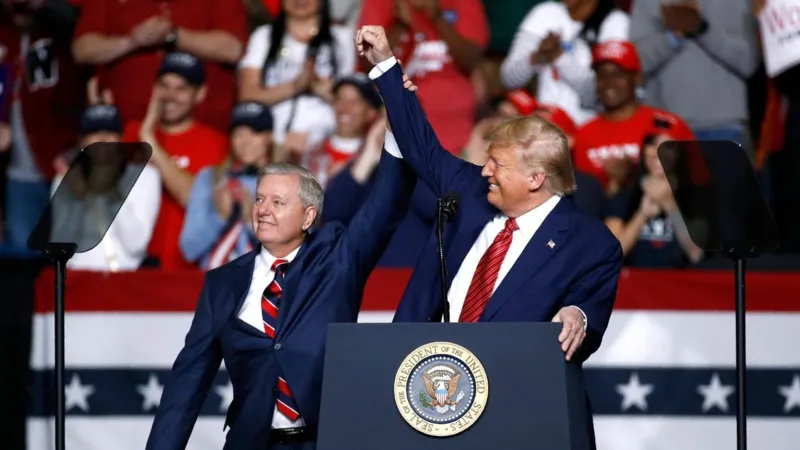
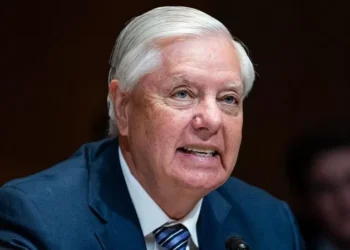
The death of US Senator Lindsey Graham has prompted a renewed examination of one of the most remarkable political transformations in modern American politics. Over the course of a decade, Graham evolved from one of Donald Trump’s most outspoken Republican critics into one of his closest allies, becoming a central figure in the Republican Party’s adaptation to the Make America Great Again (MAGA) movement.
For supporters, Graham’s evolution reflected political pragmatism and an understanding of the changing priorities of Republican voters. For critics, it symbolised the willingness of established conservatives to embrace a movement they had once questioned. Whatever the interpretation, Graham’s career demonstrated an extraordinary ability to survive—and often thrive—during one of the most turbulent periods in American political history.
When Donald Trump entered the Republican presidential race in 2015, Lindsey Graham was among the party’s fiercest opponents of the New York businessman.
A longtime senator from South Carolina and a respected voice on national security, Graham openly questioned Trump’s temperament, policy proposals and suitability for the presidency. During the heated Republican primary campaign, he described Trump in unusually blunt terms and warned fellow Republicans that nominating him could damage both the party and the country.

At the time, Graham represented the traditional wing of the Republican Party. He supported free trade, a robust American role in global affairs and close cooperation with long-standing allies. His political outlook had been shaped by decades in Congress and by his close friendship with the late Senator John McCain, another leading Republican critic of Trump during the early years of the MAGA movement.
Trump responded in his characteristic fashion, mocking Graham at campaign rallies and on social media. Their public exchanges became one of the defining rivalries of the 2016 Republican primary season.
Few observers expected that the two men would eventually become close political partners.
Yet politics often rewards adaptability.
Following Trump’s victory in the 2016 presidential election, Graham gradually shifted his approach. While he continued to disagree with the new president on certain issues, he increasingly chose cooperation over confrontation.
The turning point came as Graham recognised the profound transformation taking place within the Republican Party. Trump’s popularity among Republican voters remained exceptionally strong, and many lawmakers concluded that working with the president offered greater political influence than remaining in opposition.
Graham became one of those figures.
Over the following years, he emerged as one of Trump’s most reliable defenders in the Senate. He frequently appeared on television supporting the administration’s policies and became a regular presence at the White House.
The relationship proved mutually beneficial.
Trump gained the backing of an experienced legislator with deep knowledge of Congress, while Graham strengthened his influence within a Republican Party increasingly shaped by Trump’s political agenda.
Perhaps nowhere was Graham’s importance more evident than during the confirmation battles over federal judges and Supreme Court nominees.
As chairman of the Senate Judiciary Committee, he played a pivotal role in advancing Trump’s judicial appointments, helping secure one of the administration’s most lasting political legacies.
His management of high-profile confirmation hearings earned praise from conservatives, who viewed the appointments as transformative for the American legal system.
At the same time, Democrats frequently accused Graham of abandoning earlier positions on judicial procedures and Senate traditions.
The criticism reflected a broader perception that Graham had become one of Trump’s most loyal political allies.
Even so, the senator was never entirely predictable.
Unlike some other MAGA supporters, Graham occasionally broke with Trump on matters of foreign policy.
He consistently advocated strong American support for NATO, continued military assistance to Ukraine and an active US role in global security.
Those positions sometimes placed him at odds with parts of the Republican base that favoured a more restrained international posture.
Nevertheless, Graham generally managed to maintain credibility with both traditional conservatives and many Trump supporters.
His willingness to disagree on selected issues without fundamentally challenging Trump’s leadership became one of the defining characteristics of his political survival.
Analysts often described Graham as a politician with an exceptional instinct for understanding political realities.
Rather than resisting the transformation of the Republican Party, he adapted to it.
Supporters argued that this flexibility allowed him to remain influential during a period of extraordinary political change.
Critics countered that adaptation came at the expense of consistency.
They pointed to his sharply contrasting statements about Trump before and after 2016 as evidence of political expediency.
Graham consistently rejected suggestions that he had abandoned his principles.
Instead, he argued that effective governance required cooperation with the president chosen by American voters.
He frequently emphasised shared conservative goals on judicial appointments, taxation, immigration and national defence as reasons for working closely with Trump.
Outside Washington, Republican voters increasingly embraced Graham’s role.
His electoral victories in South Carolina demonstrated that many constituents valued his seniority, influence and ability to secure federal support for the state while maintaining close ties to the Republican leadership.
His longevity in office also reflected broader changes within American conservatism.
The Republican Party that Graham entered in the 1990s differed significantly from the party that existed during the MAGA era.
Questions surrounding trade, immigration, foreign intervention and relations with political institutions all evolved as Trump’s movement reshaped Republican priorities.
Graham became one of the few senior establishment figures who successfully navigated that transition without losing his political standing.
His friendship with John McCain remained another defining element of his public image.
After McCain’s death in 2018, Graham often spoke emotionally about his longtime colleague while simultaneously maintaining his alliance with Trump, despite the president’s repeated criticism of the late Arizona senator.
The contrast illustrated the complex balancing act that characterised much of Graham’s later career.
Following news of Graham’s death, tributes reflected the breadth of his political influence.
Republicans praised his dedication to conservative principles, military veterans highlighted his longstanding support for the armed forces and foreign allies recognised his advocacy for American leadership abroad.
Even many political opponents acknowledged his mastery of Senate procedure and his willingness to engage across party lines despite fierce ideological disagreements.
Historians are likely to remember Lindsey Graham as one of the defining Republican figures of the early twenty-first century.

His career encompassed the post-Cold War era, the global war on terrorism, multiple presidential administrations and the dramatic rise of populist politics.
Yet perhaps his most enduring political legacy will be his ability to survive—and remain influential—through the Republican Party’s most profound transformation in generations.
From outspoken Trump critic to trusted presidential ally, Graham’s journey reflected not only his own political instincts but also the changing identity of modern American conservatism.
Whether viewed as a pragmatic strategist or a symbol of political compromise, Lindsey Graham left behind a career that captured the complexities, contradictions and shifting alliances of the MAGA era.
Related News:
 Trump to Recheck Green Cards from 19 Nations After DC Attack
 Russia losses Ukraine war peace talks intensify amid rising deaths
 Trump Escalates Minnesota Immigration Surge Amid Rising Tensions
 Trump: US Stands Ready to Help Iran Find Freedom Amid Widespread Unrest
 Trump Administration Probe of Fed’s Powell Draws Pushback
 Trump Threatens Strong Action If Iran Executes Protesters
 Trump Receives Machado’s Nobel Medal in White House Meeting
 Greenland Crisis Forces Europe to Draw a Line With Trump
 Iran Cannot Be Bombed Into Democracy, Only Helped There
 Historic Abu Dhabi Talks Bring US, Ukraine and Russia Together
 Trump Pulls Canada from His Controversial ‘Board of Peace’ Plan
 EU Says US Ties Have Suffered ‘Big Blow’ After Greenland Crisis
 Thousands Protest ICE Operations in Nationwide US Day of Action
 Trump Praises ‘Terrific’ Petro After White House Talks
 Fears of New Arms Race as US-Russia Nuclear Weapons Treaty Expires
 New Nuclear Talks Between US and Iran Begin in Geneva
 ‘He Did It for Us’: US Soldier Recalls Jesse Jackson’s Efforts to Free Him and Two Other POWs
 Stephen Colbert Says CBS Spiked Interview With Democrat Over FCC Fears
 US Urges Iran to Make Deal as Military Presence Rises
 Billionaire Les Wexner Tells US Lawmakers He Was ‘Naive’ and ‘Conned’ by Epstein
 Inside Kyiv’s resolve as conflict nears five‑year mark
 What to Watch for During Trump’s State of the Union Address
 Clinton Testimony Erupts in Fiery Exchange
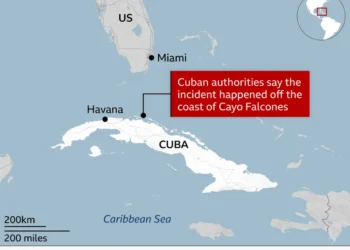 American Citizen Killed in Cuba Boat Shooting, U.S. Officials Say
 Hillary Clinton Tells House Panel She ‘Had No Idea’ of Epstein’s Crimes
 Hopes and Fears as US Iranians Take to Streets After Toppling of Supreme Leader
 Iran, the US, and a World Cup That Starts in Three Months
 Britain’s Position and Trump Vows to Press On in Iran Conflict
 Trump Faces Questions Over Iran Conflict Plan
 Trump’s Iran Endgame Unclear After Mixed Messaging on War Aims
 Rubio Responds to Reported Strike on Iranian School
 US Senate Backs Trump War Powers Amid Iran Missile Barrage
 US Senate Vote Fails to Rein in Trump War Powers on Iran
 Trump Removes Kristi Noem From Homeland Security Role
 UK Prepares Aircraft Carrier for Middle East Crisis
 Pete Hegseth Iran War Remarks Spark Alarm
 Iran War Puts Trump at Political Risk Amid Rising Prices
 Iran Rejects Ceasefire, Warns Trump With Chilling Message
 Trump’s Confidence Undimmed — But Every Iran Option Carries Risk
 Fox News Cut In Over Trump King Charles Claim
 Trump Seeks to Delay Meeting With Xi
 Trump Faces New Warning Signs as Iran War Hits Home
 Trump’s Harsh Rhetoric on Iran Sparks Global Alarm
 The Academic Chill: Beijing Condemns ‘Hostile’ US Questioning After Researcher’s Death
 Midnight Fire: Israel and Hezbollah Exchange Strikes as Trump Lashes Out at Tehran
 Charles Faces Trump Test in High-Stakes US Visit
 US Court Ruling Reshapes Voting Rights Landscape
 US states redraw maps after voting rights ruling
 Trump orders US troop pullout from Germany
 Trump likens US Navy actions to ‘pirates’
 Trump approval plunges amid Iran war fears
 Giuliani hospitalised in critical condition
 Trump Threatens UN Budget Cuts as US Pushes ‘Trade Over Aid’ Agenda
 Trump warns Iran as Middle East tensions surge again
 US ‘Narco Boat’ Strikes Draw Global Outcry
 US Court Restores Abortion Pill Access Temporarily
 Ohio Primaries Set Stage for Crucial Midterms
 Tensions Emerge in Netanyahu-Trump Alliance
 US Awaits Iran Reply on New Ceasefire Proposal
 Hormuz Talks Near Critical Stage
 Former ICC prosecutor condemns US sanctions
 Gunman Killed After White House Security Shootout
 Trump Claims Iran Peace Deal Near Completion
 US Midterm Primaries: Democrats Target Key Republican Seats
 House Curbs Trump’s War Powers in Rare Rebellion
 Trump-Netanyahu Call Fuels Iran Talk Crisis
 Can World Cup Hosts Overcome Deep Divisions?
 Zelensky Invites Putin to Direct Peace Talks
 Republicans Defy Trump on Ukraine Aid Bill
 Israel Strikes Iran After Missile Attack
 Trump Presidency Reignites America’s Founding Debate: How Much Presidential Power Is Too Much?
 Trump Helps Clear Balogun for Belgium World Cup Clash
 Why Some African Nations Are Rejecting Trump Aid
 Trump’s Major Recruitment Drive Targets Border Patrol Growth
 Trump’s New Vision for 250 Years of US Expansion
 Israel Angered by Trump Backing Turkey Fighter Deal
 Mystery Grows Over Mitch McConnell’s Health
 Trump Ally Lindsey Graham Dies at 71 After Sudden Illness
 Mitch McConnell Explains Senate Absence After Fall
 US-Iran Exchange Fire as Hormuz Tensions Escalate