Published: 24 July 2026 | The English Chronicle Desk | The English Chronicle Online
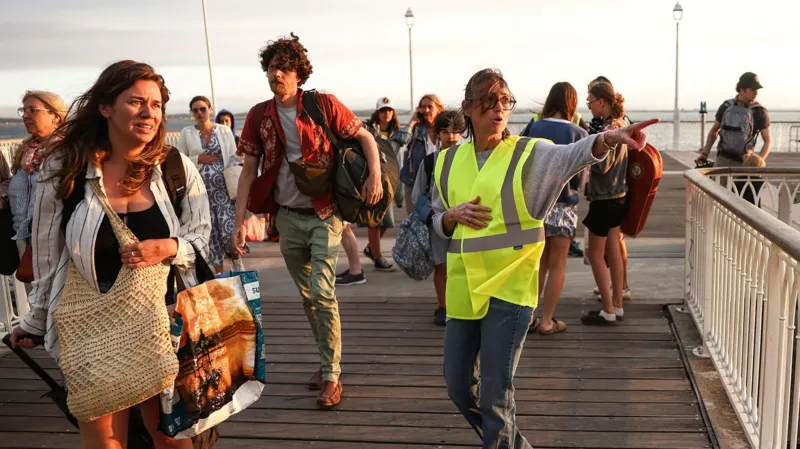
Hundreds of tourists and residents have been forced to flee a popular coastal destination in France after fast-moving wildfires threatened communities, with emergency authorities organising evacuations by boat as flames spread across dry landscapes.
The dramatic evacuation highlighted the growing threat posed by extreme summer wildfires across southern Europe, where rising temperatures, prolonged dry conditions and strong winds have increased the risk of large-scale fires.
Visitors were moved away from danger zones as firefighters battled to contain the blaze, while emergency services worked to protect lives and prevent further destruction. Many holidaymakers were forced to leave behind belongings and abandon planned trips as thick smoke covered parts of the region.
The evacuation by sea was carried out as roads became difficult to access or unsafe because of the advancing flames. Boats were used as an alternative route to move people away from threatened areas, providing a rapid escape option for those trapped near the coastline.

Authorities said the priority was protecting people rather than property as the fire continued to challenge firefighting teams.
The incident occurred during a period of heightened wildfire activity in parts of France and the wider Mediterranean region. Climate experts have warned that hotter temperatures and longer dry seasons are creating conditions where fires can spread faster and become more difficult to control.
Southern France has experienced repeated wildfire emergencies in recent years, with firefighters increasingly facing larger and more unpredictable blazes. The combination of dry vegetation, strong winds and extreme heat can allow fires to move rapidly across large areas within hours.
For tourists visiting France’s famous coastal regions during the summer season, the wildfire served as a reminder that natural disasters can quickly disrupt even the most popular holiday destinations.
Many visitors described scenes of confusion as evacuation orders were announced. Some tourists gathered at beaches and collection points while waiting for instructions from emergency officials. Others watched smoke rising over hills and forests surrounding the area, unsure whether they would be able to return to accommodation or collect personal items.
Local authorities urged people to follow safety instructions and avoid returning to affected areas until firefighters confirmed that conditions were safe.
Emergency services deployed large numbers of firefighters, supported by aircraft and specialist equipment, to fight the flames. Water-dropping planes and helicopters were used where possible, particularly in areas that were difficult for ground teams to reach.
Firefighters faced challenging conditions because of high temperatures and changing winds, which can quickly alter the direction of a wildfire.
The evacuation also placed pressure on local services, including transport networks, accommodation facilities and emergency shelters. Authorities worked to provide temporary assistance for displaced residents and visitors while assessing the extent of the damage.
Although protecting lives remained the main priority, officials also expressed concern about environmental destruction and damage to local businesses that depend heavily on tourism.
Coastal communities in southern France rely on summer visitors for much of their annual income. Hotels, restaurants, shops and tourism operators can be severely affected when wildfire warnings force closures or evacuations.
The wildfire has renewed concerns about the vulnerability of Mediterranean tourism destinations as climate conditions become increasingly challenging.
France is not alone in facing this growing threat. Countries across southern Europe, including Spain, Italy, Greece and Portugal, have experienced severe wildfire seasons in recent years. Scientists have linked the increase in extreme fire events to climate change, which has contributed to higher temperatures and more frequent periods of drought.
Wildfires have historically occurred in Mediterranean regions, but experts say recent fires are becoming more intense and harder to predict.
The warmer climate has dried vegetation that can act as fuel, allowing flames to spread quickly. Strong winds can then carry embers over long distances, creating new fire outbreaks away from the original blaze.
Authorities across Europe have increased investment in wildfire prevention, including forest management, early warning systems and emergency response planning. However, experts say adaptation measures must continue to improve as climate risks increase.
For local communities affected by the latest fire, the immediate focus remains recovery.
Residents who were evacuated are waiting for permission to return home and assess whether their properties have been damaged. Some families have described the experience as frightening, particularly as they watched flames approach areas where they live or work.
Tourists who were forced to leave have also faced uncertainty, with many needing to change travel plans or find alternative accommodation.
Travel experts say visitors to wildfire-prone regions should remain aware of local warnings during summer months. They recommend following official guidance, avoiding restricted areas and preparing for possible changes to travel arrangements.
Despite the disruption, authorities have praised the cooperation of many tourists and residents who followed evacuation instructions.
Emergency officials said early action helped reduce risks and prevented the situation from becoming more dangerous. They emphasised that quick evacuations are essential during wildfire emergencies because conditions can change rapidly.
The fire has also renewed discussions about the balance between tourism development and environmental protection.
Many Mediterranean destinations attract millions of visitors each year, but increased human activity can create additional wildfire risks. Accidental fires caused by vehicles, outdoor activities or poorly managed land can contribute to outbreaks, especially during periods of extreme heat.
Environmental groups have called for stronger prevention measures, including better land management, public awareness campaigns and restrictions during high-risk conditions.
The latest evacuation comes as European countries prepare for increasingly difficult wildfire seasons. Governments are investing in new technology, including satellite monitoring and artificial intelligence systems designed to detect fires earlier.
However, experts say technology alone cannot solve the problem. They argue that reducing climate risks and improving long-term environmental management are equally important.
For the tourists who escaped by boat and the residents forced from their homes, the wildfire was a sudden reminder of nature’s power.

A region known for its beaches, landscapes and summer celebrations was temporarily transformed into an emergency zone, with smoke replacing holiday scenery and evacuation replacing relaxation.
As firefighters continue efforts to contain the blaze, attention will turn to the recovery process and the lessons that can be learned from the crisis.
The evacuation demonstrates the challenges facing communities across southern Europe as climate-related disasters become more frequent. Protecting people, preserving natural landscapes and maintaining tourism economies will require continued preparation and cooperation.
For now, the priority remains clear: bringing the wildfire under control and ensuring that those displaced can safely return home.
Related News:
 Evacuations Ordered as California Wildfires Spread Fast
 Storm Dave Disrupts Travel but Conditions Set to Ease
 Queensland Braces for Potential Second Severe Cyclone Hit
 Cyclone Vaianu Forces Mass Evacuations in New Zealand
 Border Chaos: UK Travellers Face Massive EU Delays
 Norway Doubles Down on Oil and Gas for Europe Energy Security
 Bad Weather Threatens Hantavirus Cruise Ship Evacuation
 Pope Meets Families in Italy Toxic Waste Zone
 Essex valley emerges as rising English wine hub
 Airlines Demand Freeze on EU Border System as Chaos Peak Looms
 Sydney Records Hottest June Since 1859 as Expert Warns New High a ‘Signature’ of Global Warming
 Deadly Spain Wildfire Leaves 11 Dead, 19 Missing
 England and Norway Fans Turn Miami Into World Cup Carnival
 London Tube Heat Reaches Dangerous Levels
 EU weighs response amid Greenland tariff crisis with Trump
 EU Says US Ties Have Suffered ‘Big Blow’ After Greenland Crisis
 Thousands Left Without Heating in Ukraine Amid Russia Strikes
 South Africa’s Garden Route Gem Faces Looming Water Crisis
 Dozens of Flood Warnings in England After Days of Non-Stop Rain
 Portugal Election Delivers Socialist Win as Far Right Surges
 BRRRITAIN: Met Office Issues Yellow Weather Warning for More Snow
 Bumper Ski Season but Avalanches Threaten Scotland’s Snowy Hills
 Powerful Winter Storm Slams US Northeast; NYC Travel Ban
 Storm Hernando: Edinburgh Airport Flights Cancelled in US Travel Chaos
 Qantas Revamps Loyalty Program Amid $1.46bn Profit Surge
 Rolling Hills and Heritage: A Car-Free Break in Leicestershire
 Champions League Thrills as Atalanta and Galatasaray Advance
 Hungary Faces Political Tension Over the Ukraine Crisis
 Spain Shuts Airspace to US Military Over Iran Conflict
 LA 2028: Millions of Affordable Olympic Tickets Announced
 Italy Faces Third Successive World Cup Absence After Loss
 Spain Faces Backlash Over Xenophobic Chants in Egypt Draw
 EU Biometric Border Checks Delayed for UK Travellers
 Own an Entire Australian Town for the Price of a UK Flat
 Battle of Britain Tower to House Tourists and Bats
 Heavier SUVs Accelerate Britain’s Pothole Crisis
 Rat Poison Found in Baby Food Sparks Major Recall Row
 Crackdown Backfires on UK Climate Protesters
 Older Than Dinosaurs: Secrets of Mayfly Dance Revealed
 Capitalism ‘Suicidal’, Warns Petro at Climate Summit
 Two Dead in Adelaide Airport Plane Crash Fire
 Coalition pushes fossil fuel phaseout plan
 Record May Heat to Cold Front in Eastern Australia
 Ukraine strikes Tuapse as oil disaster worsens
 Alex Zanardi dies at 59, a symbol of resilience
 Asylum deal sparks fears over Syria deportations
 Arteta urges Arsenal to step up in Atlético semi-final
 France Faces Record Presidential Crowded Race Amid Far-Right Surge
 Tractor Breakdown Tests Lincolnshire Farmers
 Greece Probes Mystery Explosive Drone in Ionian Waters
 Ex-Chief of Staff Named in Major Ukraine Corruption Probe
 Romania’s Judicial Crisis: A System Under Siege
 Australia Welcomes the Iconic Michelin Guide
 Chaos at Valdebebas: Florentino Pérez Calls for Elections
 UEFA Resists FIFA’s New Red Card Rules for Next Season
 Belfast Approves Pilot Extension of Sunday Trading Hours
 Man killed in shark attack on Great Barrier Reef
 Hope for mountain bongos returns to Kenya
 Former ICC prosecutor condemns US sanctions
 Thailand Tightens Visa Rules to Curb Tourist Misbehavior
 UN Issues Urgent Warning: Imminent Return of El Niño
 EU Leadership Gathers in Tivat to Renew Balkan Ties
 Spain Tourism Surges as Travellers Avoid Middle East
 Spain Sees Tourism Boom as Travellers Shift Away From Middle East
 Airline Leaders Warn 2050 Net Zero Target May No Longer Be Achievable
 EU and UK Set July Date for Critical Post-Brexit Summit
 Temperatures Set to Fall This Week, But Forecasters Warn Heat Could Return Soon
 Why Extreme Heat Can Cause Trees to Collapse and What Experts Say Can Be Done
 Severn Trent CEO Reward Package Doubled Despite Public Anger
 Le Pen to Run for President Despite Embezzlement Conviction
 Jet2 Sees Summer Surge Despite Global Tensions
 Europe Scorched as Record Heatwaves Grip the Continent
 Italy’s Beach Lunch Ban Sparks Holiday Backlash
 Venezuela Quake Death Toll Surpasses 4,000
 UK Heatwaves May Have Claimed Thousands of Lives
 UK Heatwave Nears Two-Week Milestone as High Temperatures Continue Across the Country
 New EU Border System Could Triple Passport Control Waiting Times, Airport Chief Warns
 Thousands Evacuated in France as Wildfires Spread Across Regions
 Italy’s Ulysses Riviera Where Myth Meets the Sea