Published: 05 October 2026. The English Chronicle Desk. The English Chronicle Online.
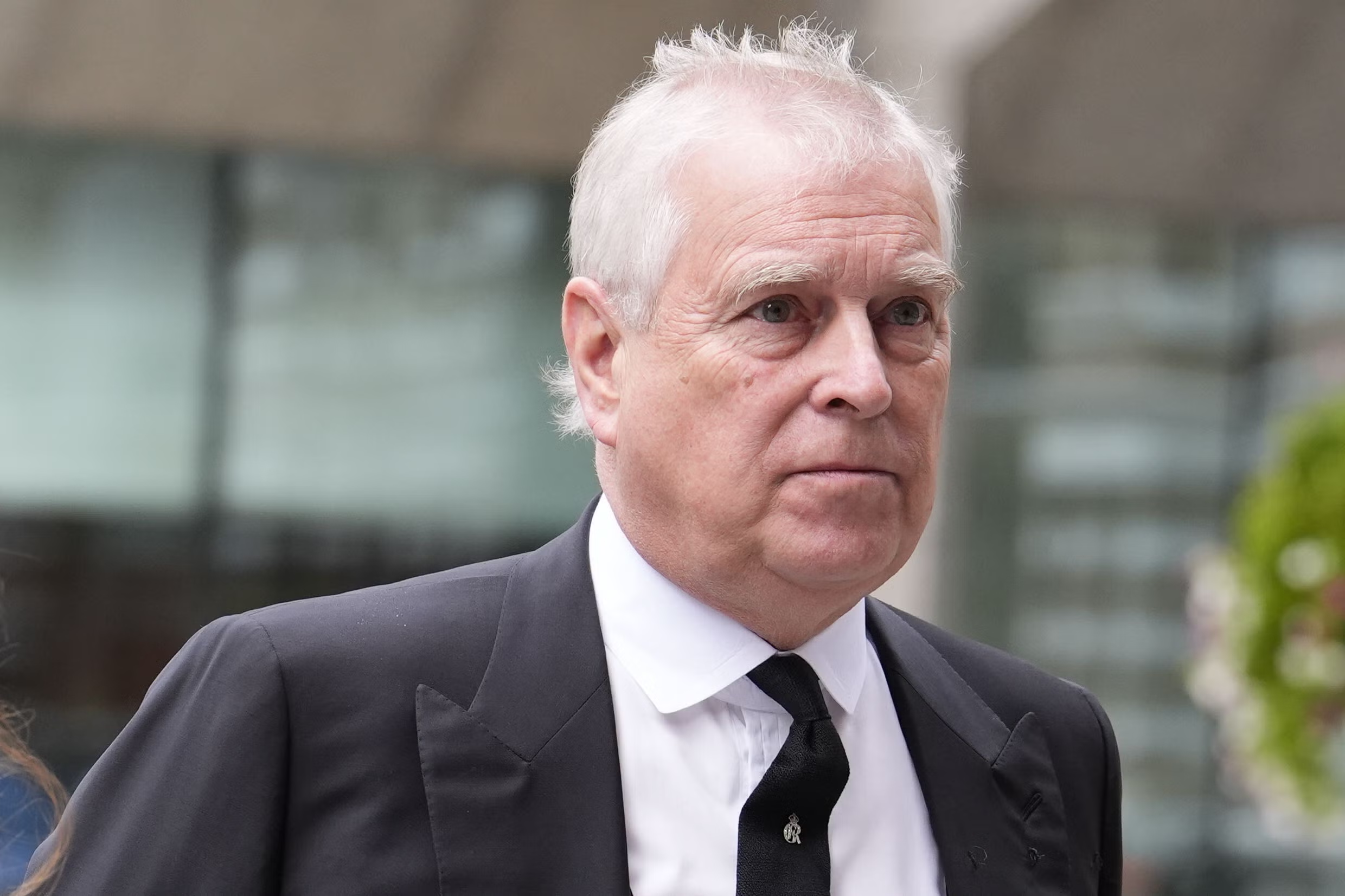
Andrew Mountbatten-Windsor has launched a legal challenge against Thames Valley police over search warrants used in a criminal investigation that led to his arrest earlier this year, opening a significant new chapter in the continuing legal controversy surrounding his links to Jeffrey Epstein.
The former Duke of York is seeking a judicial review to determine whether the police acted lawfully when officers obtained warrants allowing them to search properties connected with him. The legal proceedings are expected to examine the circumstances in which the warrants were issued and whether the police properly exercised their powers during the investigation.
A private hearing at the High Court is scheduled to take place on Thursday before Mr Justice Hilliard. The hearing is expected to consider whether documents associated with Mountbatten-Windsor’s judicial review application should be made public. Thames Valley police are opposing the release of those documents, according to information surrounding the proceedings.

The dispute follows searches carried out in February at a residence on the Sandringham estate and at Royal Lodge, the former Windsor home associated with Mountbatten-Windsor. The searches were authorised by a judge at the Old Bailey, formally known as the Central Criminal Court, as part of an investigation into alleged misconduct in public office.
Mountbatten-Windsor was subsequently arrested on suspicion of misconduct in public office on 19 February, coinciding with his 66th birthday. He was questioned under caution before being released while remaining under investigation.
The investigation emerged amid renewed scrutiny of information contained in documents relating to Epstein, the convicted American sex offender and financier whose connections with prominent figures around the world have continued to generate legal and political repercussions.
Mountbatten-Windsor has faced questions over allegations that, during his time as the United Kingdom’s trade envoy, he shared sensitive information with Epstein. The allegations have formed part of the wider scrutiny of his relationship with Epstein and the handling of information during his public service.
His decision to challenge the legality of the police searches does not itself determine whether any criminal wrongdoing took place. Instead, the judicial review focuses on whether the authorities followed the correct legal procedures when obtaining and executing the warrants.
A High Court judge has already granted Mountbatten-Windsor permission to challenge the legality of the police action. The decision allows the case to proceed and places the conduct of the investigation under judicial examination.
The case has attracted considerable attention because of Mountbatten-Windsor’s former position within the royal family and the constitutional sensitivity surrounding criminal investigations involving senior members of the monarchy.
Reports surrounding the legal challenge have described it as an exceptionally unusual development in British history. The case has been compared with the trial of Charles I in 1649, when the monarch was prosecuted and subsequently executed following the English Civil War. The comparison reflects the rarity of a member of the royal family directly challenging the lawfulness of criminal proceedings involving state authorities.
The legal dispute also comes after major changes to Mountbatten-Windsor’s formal position within the royal family. Late last year, King Charles removed his brother’s right to use the title of prince and stripped him of his dukedom amid continuing controversy over his association with Epstein.
The loss of his former royal titles marked a dramatic change in the public status of a man who once represented the monarchy at official events and served as the United Kingdom’s special representative for international trade.
The current police investigation concerns the offence of misconduct in public office, a broad criminal offence that can apply to a range of behaviour by public officials. Depending on the circumstances, such conduct can involve the improper disclosure of confidential information, financial wrongdoing, deliberate neglect of official responsibilities, corruption, conflicts of interest, dishonesty or fraudulent conduct.
The offence may also encompass improper interference with legal processes, sexual misconduct and behaviour undertaken for personal advantage. Whether any of those elements are relevant to the current investigation has not been established publicly, and Mountbatten-Windsor has not been convicted of any offence connected with the investigation.
Thames Valley police have confirmed that their investigation remains active but declined to discuss the details of the legal dispute.
The force said that while its investigation into alleged misconduct in public office continues, it is also involved in legal proceedings concerning warrants previously obtained from the Central Criminal Court. Police said that because the legal proceedings are ongoing, it would be inappropriate to provide further comment.
The decision by police to oppose the publication of documents connected with the judicial review is likely to become an important issue at Thursday’s hearing. The court will have to consider competing arguments over transparency, confidentiality and the integrity of an ongoing criminal investigation.
For Mountbatten-Windsor, the legal action represents an attempt to scrutinise the process through which police obtained authority to search his properties. His challenge is centred on the lawfulness of the warrants and the actions taken under them rather than serving as a determination of the allegations that prompted the investigation.
Judicial review proceedings can provide an important mechanism for examining whether public bodies have acted within the limits of their legal powers. The process does not normally amount to a conventional criminal trial, but it can result in decisions about whether official actions complied with the law.
The case therefore places two separate questions in the public spotlight. One concerns the allegations being investigated by Thames Valley police, while the other concerns whether the police followed proper legal procedures when carrying out searches connected with those allegations.
The distinction is particularly significant because an ongoing investigation does not establish guilt. Mountbatten-Windsor remains under investigation, and the legal challenge does not amount to a finding that the police acted unlawfully. Equally, the fact that search warrants were issued does not by itself establish that the allegations against him will ultimately result in criminal charges or a conviction.
The proceedings are expected to receive close attention because of the former royal’s public profile and the continuing international interest in the Epstein case. Information connected to Epstein has repeatedly prompted scrutiny of people who had contact with him, particularly where those relationships intersected with positions of influence or public responsibility.
Mountbatten-Windsor’s association with Epstein has already had profound consequences for his public life. He stepped away from royal duties years ago, while the continuing controversy eventually contributed to the loss of his royal titles and formal status.
The latest legal action adds another layer to a prolonged dispute that has combined questions of public office, policing, royal privilege and the legal consequences of information connected with Epstein.

The High Court hearing on Thursday could provide greater clarity about the documents surrounding the judicial review and the extent to which they can be made available publicly. However, the wider criminal investigation remains ongoing, meaning that important aspects of the case may continue to remain confidential.
Mountbatten-Windsor has been approached for comment on the legal proceedings. His challenge now places the conduct of Thames Valley police under formal judicial scrutiny while the force continues its investigation into the allegations.
For the moment, the central issue before the court is not whether Mountbatten-Windsor is guilty of misconduct in public office, but whether the legal process used to authorise searches of properties connected to him was properly followed. That distinction will be crucial as the case develops and the courts consider the balance between investigative powers, individual legal rights and public accountability.
Related News:
 Undercover officer deceived women with ‘grotesque and cruel’ lies, spycops inquiry told
 Prevent Failings Exposed After Southport Attack
 Barrister Criticises Trial After Suicide Case Verdict
 Murder Probe Continues After Arrest Release
 Westminster Council Threatens Charing Cross Soup Kitchen
 BBC Warned About Missing Clothes of Murder Victim
 Cambridge Professor Jason Arday Found Dead at Home
 Councils spend £125m on illegal children’s care
 Patriot Platform Raises Concern Across Britain
 Royal Crown Branded Enslaved Africans in Britain’s Slave Trade
 Harrods Faces Dispute Over Fayed Abuse Compensation
 Fayed Survivors Demand Inquiry Into Medical Regulator
 London Facial Recognition Trial Ends With False Alert
 Hundreds of UK prisoners released early amid overcrowding
 Drumcree Talks End Without Agreement Ahead of Appeal
 Almost Half of Fayed Accusers May Be Trafficking Victims
 It’s time to come clean on the China spy case
 Five More Prisoners Freed by Mistake in Essex Week
 Nearly 48,000 Zombie Knives Removed from UK Streets in a Year
 Afghan man charged with murder after west London knife attack
 Man Charged Over Cambridgeshire Train Stabbing
 French Taxi Driver Cleared in David Lammy Theft Case After Fare Dispute
 Just Stop Oil Protesters Convicted Amid Climate Defence Row
 Lammy ‘misinformed’ over Wandsworth prisoner releases
 Met Police Culture Makes Racial Harm ‘Inevitable’
 British Grandmother to Return Home After Death Sentence in Bali
 Remaining rebel Labour MPs have whip restored
 Bar Council urges legal aid for all domestic abuse family cases
 ‘Fake Admiral’ Sparks Outrage at Remembrance Event
 Paralegal Fired After Exposé on Illegal Worker Scam
 Dan Wootton Rejects Catfishing Allegation in Court
 Serial Rapist and Former Cop Found Guilty Again
 Gardener Guilty of Brutal Attack on Teacher Partner
 Twelve Prisoners Released in Error, Two Still Missing
 Woman Jailed for Life After Killing E-Bike Rider in Tragic Mistaken Identity Case
 Mass Arrests at London Palestine Protest Spark Debate
 Ben Roberts-Smith Denies War Crime Allegations in First Statement
 Iran Threats Target Journalists in UK
 City & Guilds Sale Sparks Fees and Pay Uproar
 Walsall Rapist Jailed After Hate-Filled Online Trail
 Two Children Die in Wolverhampton House Fire Tragedy
 Police Suspect Help in Missing Alice Springs Girl Case
 FBI Links Brown University Shooting to Long-Term Grievances
 Cartel crackdown raises fears of fresh violence
 Victim says non-custodial rape sentence ‘rock in my face’
 New Footage Revives Peter Falconio Mystery
 Internal Exclusions Surge in England’s Schools
 Survivor Sues Musk’s xAI Over AI Abuse Images
 Daughter Finds Bones in Parents’ Burned-Out Car
 Argentina Orders Return of Nazi-Looted Painting
 UN expert urges UK to rethink Israel policy
 Miliband Rejects Chief Rabbi’s West Bank Warning
 Reform UK Receives Record £36m Donation From Crypto Billionaire
 Israel Accused of Undermining Palestinian Life
 Election Candidate Abuse Raises Alarm in England
 UK Urged to Probe US Diplomat Case
 Piddington Votes for Symbolic Independence Over Asylum Plan
 Mahmood Warns Far Right Over Asylum Protests
 NHS Breast Care Review Finds Serious Patient Harm
 Briton Faces Cyprus Court Over Son’s Fatal Fall
 UK Reviews Hague Child Abduction Cases Involving Abuse
 Democrat Says ICE Restricted Detention Camp Oversight
 King Refers Jamaica Slavery Petition to Privy Council
 UK Pauses Chagos Deal Amid US Opposition
 Court Says Judge Should Not Have Heard Case From Bed
 Far-Right Activist Arrested After Channel Dinghy Incident
 Casino Secrets Leak Exposes Offshore Gambling Network
 Portadown protest ends after tense Orange Order standoff
 Free Speech Emerges as Key UK Election Issue
 Cornell Fraternity Assault Investigation Reopened
 UK University Strikes Spread as Financial Pressure Grows
 Drumcree Talks Falter as Legal Challenge Deepens
 UK-France Returns Deal Faces Expiry as Talks Stall
 Tennessee Execution Fails After Two Lethal Doses
 Early Prison Releases Raise Homelessness Concerns
 Badenoch Raises Prospect of 2027 UK Election
 New Prosecutor Takes Over Cornell Assault Case
 Latin America women fear rollback of rights
 Flydubai Co-Pilot Studied in Australia Before Attack
 Gosport Protesters Clash With Police Over Migrant Rescue