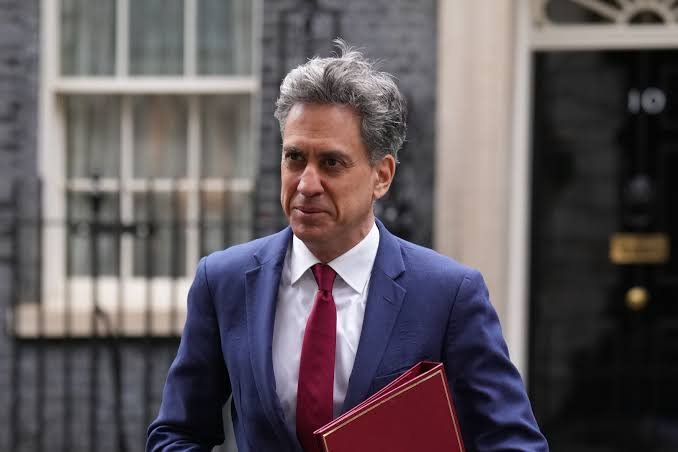
A cross-party group of British MPs is urging Foreign Secretary Ed Miliband to use his ministerial powers to force UK overseas territories to introduce fully public registers revealing the real owners of companies. The demand comes nearly a decade after the UK Parliament voted in favour of greater corporate transparency, with several jurisdictions still failing to provide unrestricted public access to beneficial ownership information.
The MPs argue that continued secrecy surrounding offshore companies creates opportunities for money laundering, tax evasion, sanctions avoidance and the concealment of assets obtained through corruption. They believe the failure to implement the parliamentary decision has weakened Britain’s efforts to combat financial crime and damaged the country’s international reputation.

The campaign is being coordinated by the All-Party Parliamentary Group on Anti-Corruption, with members from Labour, the Conservative Party, the Liberal Democrats and the Green Party joining the appeal. Their intervention comes ahead of a meeting between Miliband and representatives of the overseas territories this week, giving the government an opportunity to address a long-running dispute over financial transparency.
In a letter to the foreign secretary, the MPs said improvements in corporate transparency were essential after years of missed deadlines and commitments that had not been fully delivered. They argued that continued engagement with some overseas territories had produced limited progress despite repeated assurances that public registers would be introduced.
The group particularly criticised the British Virgin Islands, which it said had failed to meet the expectations of the UK Parliament. The Cayman Islands also attracted criticism over increased search fees that MPs described as prohibitively expensive. Meanwhile, the group raised concerns about the Turks and Caicos Islands, where substantial penalties for disclosing information from the company ownership register were said to undermine the purpose of public access.
However, the MPs acknowledged that some overseas territories had made progress. Gibraltar, Montserrat and St Helena were cited as examples of jurisdictions that had successfully opened their corporate ownership registers to public scrutiny. The group believes these developments demonstrate that greater transparency can be achieved without abandoning the regulatory responsibilities of individual territories.
The British Virgin Islands has defended its approach, pointing to a new register introduced earlier this year that allows individuals to request access to company ownership information if they can demonstrate a legitimate interest. Such an interest may include investigating suspected money laundering or other financial wrongdoing.
A spokesperson for the BVI government said the territory was proud of its Legitimate Interest Access register, describing it as a system designed to provide prompt and proportionate access in accordance with international standards. The spokesperson also said the BVI was working closely with the UK government on governance and regulatory reforms intended to combat illicit finance, enforce sanctions and recover criminal assets.
The territory further pointed to progress recognised by the Financial Action Task Force, the international body responsible for developing standards to combat money laundering and terrorist financing. Its position is that the existing arrangements provide a regulated method of sharing information while respecting applicable legal and privacy requirements.
The MPs, however, argue that restricted access does not meet the commitment made by Parliament in 2018. They are calling on Miliband to introduce an order in council requiring jurisdictions that have failed to meet their obligations to establish fully public registers of beneficial ownership.
An order in council would allow the UK government to impose the requirement through a formal legal mechanism. The MPs believe this power should now be used because voluntary commitments and diplomatic engagement have not delivered the results expected.
The issue has implications beyond financial regulation. In their letter, the parliamentarians described corporate transparency as an important national security concern. They warned that anonymous ownership structures could be exploited by hostile state actors, criminal networks and individuals seeking to conceal assets or evade international sanctions.
They also highlighted the consequences for developing countries, where corrupt officials and wealthy individuals may use offshore financial centres to hide money taken from public resources. According to the MPs, funds that could otherwise support hospitals, schools, infrastructure and essential public services are instead concealed through complex corporate arrangements.
Phil Brickell, Labour chair of the anti-corruption parliamentary group, said the situation should never have continued for so long. He warned that every additional year of delay allowed kleptocrats, tax evaders and money launderers to exploit the secrecy offered by British-linked jurisdictions.
Brickell argued that the issue had become a stain on the reputation of the wider British family of territories. He called on the forthcoming joint ministerial council to become a turning point, with the government finally establishing a clear position on public ownership registers.
Former Conservative Foreign Office minister Andrew Mitchell, who serves as a vice-chair of the parliamentary group, also criticised the failure to implement Parliament’s decision. He said the 2018 vote represented a clear cross-party position rather than a simple recommendation that overseas territories could disregard.
Mitchell, who previously served as development secretary, argued that money stolen from some of the world’s poorest communities continued to be hidden through anonymous companies operating in British jurisdictions. He said such funds should be supporting essential services rather than financing luxury properties, yachts and other private assets.
His comments underline the development concerns surrounding offshore financial secrecy. When public resources are diverted through corruption, the consequences can be particularly severe in countries where governments already struggle to provide adequate healthcare, education and infrastructure. Greater transparency, campaigners argue, could help investigators trace assets and improve the prospects of recovering stolen wealth.
The dispute has a lengthy political history. In 2018, the UK Parliament voted in favour of introducing public registers of beneficial ownership in overseas territories. The objective was to make information about the individuals who ultimately own or control companies more accessible, reducing the ability of criminals and corrupt officials to hide behind anonymous corporate structures.
The UK government had expected public access registers to be established across all overseas territories and Crown dependencies by 2023. However, that deadline passed without the full implementation of the policy.
In 2020, the government prepared an order in council that could have been used to require the territories to introduce public registers. The measure was ultimately not activated because ministers said the overseas territories had made firm commitments to deliver the necessary reforms. The government indicated that the decision would remain under review.
The latest appeal suggests that patience among some parliamentarians has now diminished. They argue that repeated promises have not produced consistent results and that the government should no longer rely exclusively on negotiations where jurisdictions continue to resist full public access.
The Foreign Office has acknowledged the security implications of opaque corporate structures. A spokesperson said national security was the first responsibility of any government and warned that hostile states and other harmful actors could exploit financial secrecy in jurisdictions such as the British Virgin Islands.
The spokesperson added that ministers were actively considering how best to ensure law enforcement agencies could obtain the information needed to carry out important investigations, particularly where security risks were greatest. The government also said engagement with overseas territories would continue.
The Foreign Office’s response indicates that the government recognises the risks associated with hidden company ownership, although it has not yet confirmed whether Miliband will use an order in council to impose public registers.
The forthcoming meeting is therefore likely to attract significant attention from anti-corruption campaigners, financial regulators and politicians seeking stronger enforcement of the 2018 parliamentary decision. The central challenge will be finding a way to ensure transparency while addressing the legal and constitutional responsibilities of the overseas territories.
For the UK, the issue also carries wider implications for its international standing. British-linked offshore financial centres have long faced scrutiny over their role in global financial flows. Critics argue that the country’s credibility in combating corruption depends partly on whether it can ensure that jurisdictions under its constitutional responsibility maintain effective standards of financial accountability.

The outcome of the discussions could determine whether the government moves towards compulsory measures or continues to pursue negotiated reforms. For the MPs behind the campaign, however, the priority is clear: the commitments made by Parliament must be respected, and company ownership information should not remain hidden behind structures that can be exploited for financial crime.
As pressure builds on Miliband, the government faces a decision that reaches beyond offshore regulation. It concerns the balance between territorial autonomy, democratic accountability, national security and the international fight against corruption. Whether the latest intervention produces meaningful action will be closely watched by those seeking a more transparent global financial system.
Related News:
 Reform Faces Questions Over £72m Donations
 Reform UK Faces Internal Debate Over £72m Spending
 Reform UK Councillor Linked to $1.9bn Crypto Scandal
 Tories Push to Dilute Labour’s Workers’ Rights Bill
 BBC News Faces Deep Cuts in 2,000 Job Plan
 City & Guilds Faces Governance Crisis Over Sale
 Reeves Fights to Keep Treasury Role Amid Labour Turmoil
 Trump Refuses to Sign Housing Bill, But Law Takes Effect
 Unions Warn Labour Over Zero-Hours Contract Reforms
 Burnham Faces Mounting Budget Challenges
 Reform Faces Fresh Financial Controversy
 UK plans tougher Israel stance with settlement trade ban
 Reform UK Receives Record £36m Donation From Crypto Billionaire
 UK Retailers Accused of Breaking Refund Laws
 Farage Threatens Union Funding Ban Over Reform Donations
 Tories Press Healey Over Tax Rises Ahead of Budget
 Trump Threatens EU With Tariffs Over Canada Proposal
 Trump Threatens EU Over Canada Partnership Proposal
 Thinktank Calls for Abolition of UK State Pension
 MPs Defend UK Economic Watchdog Against Critics
 Tony Blair Calls for Britain to Rejoin EU Within a Decade
 Burnham Opens Door to Possible UK Return to EU
 Royal Nursing Union Ends Partnership With Teva UK
 Badenoch Raises Prospect of 2027 UK Election
 London Council Warns of 150% Council Tax Rise
 Informa Agrees £2.24bn Deal to Buy Clarion
 UK Billionaire Exodus Raises Wealth and Tax Concerns
 US Senate Debates Turn Bitter as Midterms Near
 Labour Fears Budget Will Fail to Lift Living Standards
 IFS Warns UK Budget Faces £35bn Spending Gap
 Brazil Court Scandal Threatens Lula as Bolsonaros Rise
IMF Raises UK Growth Forecast Ahead of Healey’s Budget
 UK Urges Interpol to Reject Argentina’s Falklands Arrest Requests
 Trump Rallies GOP as Senate Democrats Boost Key Races
 Business Chief Urges Burnham to Fix Brexit Damage
 UK Could Rejoin EU Through a Switzerland Plus Deal
 UK Family Linked to Offshore Gambling Licence Controversy
 Alberta Voters Reject Push for Canadian Independence
 Trump Pledges $400m to Boost Republicans in Midterms
UK Borrowing Hits £24.5bn Ahead of Healey’s Budget
 Tax Online Sales to Save High Street, Burnham Urged
 Labour MPs Urge Burnham to Lead UK Reindustrialisation
 UK Land Registry Plan Faces Opposition From Landowners
 UK Budget Leaves Households Facing Higher Energy Bills
Burnham Admits First Budget Fell Short of His Ambitions
 Global Crises Test Diplomacy as Trump’s Policies Face Scrutiny
 UK Employers to Be Forced to Publish Job Salaries
 Paraguay President Impeached and Arrested After Banking Crisis
 Badenoch Unveils £36bn Tory Welfare Cuts Plan
 Tories Face Pension Age Rise Beyond 70, Labour Warns
 Argentina Threatens UK Oil Boss with Jail Over Falklands
 NSW Delays Tougher Rules on Property Underquoting
 Bank of England Faces £160m Renovation Challenge
 Trump’s UK Ambassador Urges North Sea Drilling to Strengthen US Ties
 Millionaires group urge Reeves to introduce wealth tax to ‘lift kids out of poverty’
 Major Rent Reform Ends No-Fault Evictions in England
 Starmer Says Labour’s Economic Plan Needs Years to Deliver
 Farage Faces Backlash Over Crypto Cameo Endorsements
 Silent Tracks: Rail Line Without Passengers
 Burnham unveils £65m drought aid for farmers
 Billionaire Chris Rokos poised to leave UK
 Trump gives $45,000 holiday gifts to White House aides
 JPMorgan Boss Warns Against UK Bank Tax Rise
 North Sea Firms Urge Early End to Windfall Tax
 Entain Plans 400 Job Cuts After Profit Update
 Tom Watson Takes Senior Role at Palantir
 UK Rent Gap Puts Low-Income Families Under Pressure
 AO Acquires Jessops in Camera Retail Expansion
 The Tests Awaiting Andy Burnham After Labour Conference
 UK University Strikes Spread as Financial Pressure Grows
 Healey urged to act as UK energy bills rise 4%
 Palace Rejects Funding Andrew’s Police Legal Challenge
 Ministers Push ATO to Reconsider Credit Card Ban
 UK Chancellor Moves to Scrap Gas Standing Charges
 Poundland Remains Vulnerable as Rescue Talks Continue
 Early-Release Prisoners Face Rising Risk of Homelessness
 Labor Minister Defends Chalmers Amid Budget Tensions
 US Treasury Chief Moves to Military Base Over Iran Threat
 Zelenskyy Sees Peace Opportunity as US Envoys Meet Putin
 Labor Faces Five Major Battles Before Year-End