Published: 16 June 2026. The English Chronicle Desk. The English Chronicle Online.
A profound sense of grief has settled over the global aviation community following a catastrophic military accident in the United States. Eight people are now presumed dead after a massive American bomber crashed during a routine operation on Monday morning. The tragic incident occurred shortly after takeoff at a major military installation situated within California’s vast Mojave Desert. Emergency response teams rushed to the scene immediately, but they found no signs of any survivors among the wreckage.
The aircraft involved was a historic Boeing B-52 Stratofortress, a cornerstone of American aerial military power. According to an official statement from Edwards Air Force Base, the flight was a routine test mission. The heavy bomber took off at exactly eleven twenty in the morning before suffering a fatal malfunction. Military officials confirmed that initial indications from the crash site suggested the impact was entirely non-survivable. The base immediately shifted its focus toward emergency response operations and securing the expansive debris field.
Those who lost their lives in the desert tragedy represented a diverse group of dedicated personnel. The eight occupants comprised active military members, federal government employees, and private civilian contractors working together. James Hayes, the deputy commander at Edwards Air Force Base, shared these somber details during a press briefing. He explained that the names of the deceased would be withheld out of respect for privacy. Officials do not plan to release any identities until all next of kin are fully notified.
During an emotional afternoon news conference, Deputy Commander Hayes expressed the deep sorrow felt across the entire installation. He stated that their thoughts and prayers are completely focused on the grieving families right now. The loss has sent shockwaves through the close-knit community of military personnel and aerospace contractors in California. Neighbors and colleagues have expressed their profound heartbreak as they await further updates from base officials.
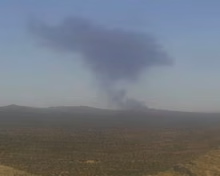
Dramatic aerial footage broadcast by local news stations revealed the devastating extent of the morning crash. The video images showed virtually nothing recognizable left of the massive, eight-engine strategic military aircraft. Dense black smoke rose steadily from a very large swath of charred desert sand near the runway. Several emergency vehicles and fire engines could be seen parked near the perimeter of the impact zone. At this stage, the military has not disclosed whether the aircraft was carrying any weapons.
The Boeing B-52 Stratofortress is a legendary long-range bomber that originally entered active service back in 1955. While a standard mission crew typically consists of five people, test flights often carry additional technical personnel. The aircraft was designed during the Cold War to carry both conventional explosives and thermonuclear weapons. Over the decades, this specific model has seen extensive combat action from Vietnam to the Middle East.
Monday’s fatal flight was part of an ambitious and highly sophisticated technical upgrade program for the fleet. The aging bomber was being flown specifically to test a brand-new digital radar modernization system. According to reports from ABC News Seven, this program replaces obsolete analog equipment with modern technology. The overarching goal of these upgrades is to keep the venerable aircraft flying until the year 2050. This extension would remarkably allow the bomber model to serve for nearly one full century.
Base officials stated they could not yet provide specific details regarding how the crash actually occurred. Authorities have already begun the painstaking process of collecting physical evidence for a formal safety review. This gathered information will eventually be submitted to an official military accident investigation board for evaluation. The board will then determine how much of its final report to make available to the public. Deputy Commander Hayes noted that this complex investigative process could take up to six months.
The busy military airfield remained completely closed on Monday afternoon as emergency operations continued without interruption. All inbound military and transport aircraft were actively being diverted to other airfields in the region. Furthermore, all non-commercial visitor passes for the desert base were suspended until further notice by leadership. Officials stated this temporary restriction allows the entire installation to focus exclusively on critical emergency response efforts.
Edwards Air Force Base holds a uniquely legendary status within the global history of aviation and aerospace. It is the vast desert location where legendary pilot Chuck Yeager famously broke the sound barrier in 1947. The historic installation is located approximately one hundred miles north of the major metropolis of Los Angeles. It serves as the primary testing ground for the most advanced aircraft in the American arsenal.
Jeff Guzzetti, a prominent aviation safety expert, shared his professional insights regarding the potential causes of the disaster. He strongly suspects that some kind of major flight control malfunction occurred during the initial takeoff sequence. This suspicion arises because the heavy bomber crashed so quickly without gaining significant altitude or traveling very far. However, he cautioned that it is still far too early to definitively establish the root cause.
The veteran expert noted it is possible the complex flight controls were rigged incorrectly during recent maintenance. Alternatively, the aircraft may have experienced a catastrophic engine failure or a sudden failure of the test equipment. Guzzetti previously investigated major aviation accidents for both the Federal Aviation Administration and National Transportation Safety Board. He emphasized that a definitive conclusion would require a meticulous reconstruction of the final moments of flight.
The seasoned investigator stated he firmly believes the tragedy was definitively rooted in a serious controllability issue. He remains unsure whether that issue was tied to an engine failure or a testing device malfunction. Although the air force has successfully operated the B-52 for seventy years, modifications always introduce new risks. Introducing entirely new digital equipment to an older airframe naturally creates unique engineering and aerodynamic challenges.
Conducting a flight test is inherently riskier than participating in normal, everyday military deployment or transport operations. Guzzetti explained that this elevated risk profile is precisely why the military utilizes specially trained test pilots. Furthermore, these dangerous missions require strict adherence to highly specialized safety protocols to mitigate potential disasters. The global aviation community now waits anxiously for answers as investigators begin sift through the desert wreckage.
Related News:
 Saudi Officials Report Zubaidi Flee Before Yemen Peace Talks
 UK Targets in New York Bomb Threat Hoax: Man Jailed
 Gambia Supreme Court Hears Case to Overturn FGM Ban
 Trump targets Iran trade with 25% tariff warning
 US Senate rejects resolution limiting Trump military powers
 Gulf states warn Trump Iran strikes risk wider Middle East war
 Machado Trump medal gesture reshapes Venezuela power struggle
 Geopolitical football: Iran, Trump and the World Cup clash
 Shinzo Abe’s killer receives life sentence in Japan
 China General Under Investigation Amid Leadership Purge
 Philippines ferry disaster leaves 15 dead, dozens missing
 Cambridge Faces Scrutiny Over Arms Investment Transparency
 Concerns rise for Canberra boy amid Iran detention fears
 Ukraine Sends Drone Experts to Defend US Bases in Jordan
 Abramovich Chelsea Sale Cash Faces Jersey Probe
 Yvette Cooper: UK Must Follow Principles, Not US Pressure
 Jury Rules Meta and YouTube Liable for Addictive Design
 The Woman Guarding Earth From the Threat of Asteroids
 Exiled Tycoon Warns of New Russian Attacks on UK Soil
 LA 2028: Millions of Affordable Olympic Tickets Announced
 Trump Slams Europe as Transatlantic Tensions Boil Over
 Inside the Deceptive Machine: A Former Producer Speaks Out
 Spain Faces Backlash Over Xenophobic Chants in Egypt Draw
 A Global Voice For Justice: Stephen Lewis Dies At Age 88
 Hope and Fear as Iranians Flee Across the Turkish Border
 Reform UK Pledges To Halt Visas Over Reparations Demands
 US and Iran Agree to Two-Week Provisional Ceasefire
 Starmer visits Gulf as US and Iran agree ceasefire
 Pakistan Brokers Historic Peace Deal Amid Rising Tensions
 Trump Signals Hope for New Iran Talks as Ceasefire Fades
 US and Iran Pursue Extension of Ceasefire via Pakistan
 Trump’s Islamabad Gamble: The High Stakes of a New Iran Deal
 The General’s Gambit: Pakistan’s New Role in Global Peace
 Mexico, Spain and Brazil call for Cuba dialogue amid crisis
 Pakistan’s Ambitious Bid for Middle East Peace
 Israeli Soldiers Jailed Over Vandalism of Lebanese Statue
 Trump Weighs Sending Afghan Allies to the Congo
 Trump Threatens UK With Big Tariff Over Tech Tax
 Prominent Voices Challenge Palestine Action Ban
 Security Scrutiny After Washington Shooting Incident
 Merz Criticises US Approach in Iran Conflict
 UK Envoy Sparks Controversy Over Special Relationship Claims
 Ukraine Urges UK to Seize Russian Oil Tankers
 US Calls Australia Media Law “Foreign Extortion”
 The Billionaire’s Secretary and the £1m Fraud
 Ukraine strikes Tuapse as oil disaster worsens
 Brewing Tension: Taiwan Baristas Rebrand for World Stage
 Tensions Emerge in Netanyahu-Trump Alliance
 Mission to the World’s Edge: A Heroic Rescue in Tristan
 US and Mexico Face Heatwave as Floods Batter South Africa
 Mexico’s Missing: State Complicity in a Growing Crisis
 French Patient Told Hantavirus Was Just Anxiety
 The Long Way Home: Australia’s High-Stakes Virus Mission
 Putin Signals War End as Russian Momentum Stalls
 Romania’s Judicial Crisis: A System Under Siege
 Lee Lai Makes History with Landmark Stella Prize Victory
 Philippine Senator Flees After Days Under Senate Siege
 Alberta Separatist Bid Blocked by Canadian Court
 Big Tobacco Under Fire Over Controversial New Ad Campaign
 Bolsonaro Son Tape Scandal Sparks Massive Brazil Backlash
 Court Upholds Landmark Win for Transgender Rights
 Liberal Senator Criticises Immigration Rhetoric
 Senate Moves to Restrict Trump’s War Powers on Iran
 ICC Arrest Warrant Threat Sparks West Bank Retaliation
 Taliban Codifies Strict New Marriage and Divorce Legislation
 Tony Abbott Returns as New Liberal Party President
 Tulsi Gabbard exits after turbulent intelligence tenure
 Discontent grows around Putin amid war strain
 Trump Diplomacy Faces Hurdles from Tehran to Tbilisi
 Trump Faces Legal Blow Over Global Tariffs
 Washington Brokerage Sparking Hope Amid Regional Firestorms
 New York Consumer Watchdog Tackles Corporate Lawbreaking
 Global Tech Giants Face Off Against Australia Over Media Levies
 ANU Reputation Crumbles Under Leadership Woes and Huge Losses
 Ukraine Turning the Tide: Zelenskyy Reclaims the Initiative Against Isolated Russia
 Millions in British Charity Funds Linked to Illegal Settlements
 Firearm Fine for Missing Boy’s Grandmother
 Historic Peace Deal Reached Between United States and Iran
 A New Era of Diplomacy Sparks Confusion on the World Stage
 AI to Help Botanists Win the Critical Race Against Extinction