Published: 24 July 2026 | The English Chronicle Desk | The English Chronicle Online
The United States has launched a sweeping new round of tariffs on dozens of its largest trading partners, marking the latest escalation in President Donald Trump’s renewed trade strategy and signalling that Washington remains committed to reshaping global commerce despite legal setbacks earlier this year.
The measures, announced by the White House on Friday, introduce tariffs ranging from 10% to 12.5% on imports from 60 major trading partners, including the United Kingdom, the European Union, China, Japan, Australia and Brazil. According to US officials, the countries affected account for approximately 99.4% of all goods imported into the United States, making the move one of the broadest tariff actions undertaken by the Trump administration since the president returned to office.
The new tariffs replace a temporary tariff regime that expired on Friday. Although the rates remain broadly similar to the previous system, the administration has introduced a different legal justification for maintaining them. Rather than relying on emergency economic powers—which the US Supreme Court ruled earlier this year had been improperly used—the White House now argues that the tariffs are necessary because major trading partners have failed to adequately prevent goods produced through forced labour from entering international supply chains.

US Trade Representative Jamieson Greer defended the decision, describing it as both an economic and human rights measure.
“Today’s action will begin to correct what is both a human rights abuse and distortive trade practice to improve the welfare of workers everywhere,” Greer said while announcing the policy.
Administration officials maintain that forced labour remains a serious concern in global manufacturing and that countries exporting to the United States must strengthen oversight of their supply chains. Washington argues that unfair labour practices not only violate human rights but also distort international competition by allowing lower production costs that disadvantage American manufacturers.
However, many trade specialists believe the human rights argument is largely being used to provide a legally sustainable basis for tariffs that are fundamentally intended to reduce America’s trade deficit and encourage domestic manufacturing.
Caroline Freund, Dean of the School of Global Policy and Strategy at the University of California San Diego and a respected international trade economist, questioned the administration’s stated motivation.
Speaking to the BBC, Freund argued that the policy is “not about forced labour,” suggesting instead that the White House was searching for a legal mechanism to preserve tariffs after the Supreme Court invalidated earlier measures introduced under emergency powers.
According to Freund, President Trump and senior trade officials have consistently framed tariffs as tools for reducing the US trade deficit and bringing manufacturing jobs back to American factories rather than primarily addressing labour rights violations overseas.
The Supreme Court’s earlier ruling represented a significant setback for the administration’s trade agenda. The court concluded that the president had exceeded his legal authority when imposing broad global tariffs under emergency economic legislation, forcing the government to refund billions of dollars collected from importers.
Rather than abandoning its protectionist approach, the administration has pursued alternative legal avenues to maintain import duties. The forced labour justification now appears to be the latest strategy designed to withstand potential legal challenges while preserving the broader objective of protecting domestic industry.
Trade policy experts say the move demonstrates that Washington has no intention of retreating from tariffs as a central component of its economic strategy.
Deborah Elms, Head of Trade Policy at the Hinrich Foundation, said the administration appeared determined to continue using tariffs regardless of legal obstacles.
She also noted that proving compliance with forced labour standards across complex international supply chains would be extremely difficult for many exporting countries, making it challenging for governments to secure exemptions from the new duties.
Businesses around the world are now assessing the likely financial impact.
Economists generally expect the tariffs to increase costs for importers, manufacturers and consumers in the United States. Although some goods remain exempt from the measures, higher import costs are likely to ripple through supply chains over time, affecting prices across a wide range of products.
Wendy Cutler, Vice President of the Asia Society Policy Institute and a former US trade negotiator, believes the overall impact could be moderated by exemptions covering certain categories of imports. Nevertheless, she warned that many governments are likely to respond by accelerating efforts to diversify trade relationships and reduce dependence on the American market.
Instead of relying heavily on exports to the United States, countries may seek stronger commercial ties with regional partners or negotiate new free trade agreements elsewhere.
The announcement has generated particular concern in the United Kingdom, where business groups argue that British exporters have lost an important competitive advantage.
William Bain, Head of Trade Policy at the British Chambers of Commerce, pointed out that while the European Union secured an arrangement involving an all-inclusive 10% tariff rate, UK exporters now face a universal 10% tariff in addition to any existing product-specific duties.
That distinction, Bain argued, leaves British businesses in a relatively weaker position when competing in the American market.
He said companies would be looking to the UK government to determine whether further negotiations with Washington could secure terms similar to those obtained by the European Union.
David Henig, Director of UK Trade Policy at the European Centre for International Political Economy, offered a more cautious assessment. While acknowledging that Britain’s relative position had weakened, he suggested businesses may hesitate before altering investment or export strategies given the unpredictability that has characterised President Trump’s trade policies.
“Anything could change tomorrow or the day after,” Henig observed, reflecting a broader uncertainty shared by many companies engaged in international trade.
The UK government responded by stressing that British businesses are not facing an increase beyond the announced tariff framework and reiterated its commitment to tackling forced labour in global supply chains.
A government spokesperson said the United Kingdom takes forced labour seriously and works to ensure British businesses are not complicit in human rights abuses within international supply chains.
Elsewhere, reactions have been considerably sharper.
Brazil condemned the decision, describing the 12.5% tariff imposed on its exports as unjustified.
Japan expressed regret over the measures, while Australia’s Trade Minister Don Farrell called the tariffs “completely unjustified,” warning they would create unnecessary obstacles for international commerce.
China also rejected Washington’s allegations.
Foreign Ministry spokesperson Mao Ning said Beijing firmly opposes unilateral tariffs and denied accusations that forced labour exists within Chinese manufacturing.
“There is no so-called forced labour in China, and we oppose using this as an excuse for political manipulation,” Mao said.
However, numerous international human rights organisations continue to allege that forced labour exists in China’s Xinjiang region, particularly involving members of Muslim ethnic minority communities. These allegations have remained a persistent source of tension between Beijing and Western governments.
The latest tariffs represent another chapter in President Trump’s long-standing belief that import duties strengthen American industry by encouraging domestic production and reducing dependence on foreign manufacturing.
Since returning to office, Trump has repeatedly argued that previous trade arrangements disadvantaged American workers and allowed overseas competitors to benefit from unfair practices.
His administration first unveiled sweeping tariffs during what became known as “Liberation Day” in April 2025, imposing duties of up to 50% on imports from numerous countries. Although many of those measures were later overturned by the Supreme Court, the White House has consistently sought alternative legal pathways to preserve its protectionist agenda.
The administration has also imposed separate tariffs targeting countries including Canada and Brazil, while maintaining a cautious pause in its prolonged tariff dispute with China.
Tariffs have additionally been used as leverage in negotiations extending beyond trade itself. President Trump has previously linked tariff policy to issues such as migration and border security, particularly in discussions with Mexico.

Further trade action may still be on the horizon.
The US government is currently investigating 16 additional countries over allegations that excessive industrial production and manufacturing overcapacity are distorting global markets. Those investigations could ultimately lead to another wave of tariffs affecting an even greater share of international trade.
For businesses, investors and governments worldwide, the latest announcement reinforces an increasingly uncertain global trading environment. While the White House argues the measures are essential for protecting American workers and addressing unfair practices, critics warn they risk increasing consumer prices, disrupting international supply chains and encouraging trading partners to deepen economic relationships outside the United States.
As legal challenges, diplomatic negotiations and commercial adjustments continue to unfold, the future direction of global trade policy remains one of the defining economic questions facing international markets.
Related News:
 US Awaits Iran Reply on New Ceasefire Proposal
 Trump Administration Probe of Fed’s Powell Draws Pushback
 Trump’s tariff strategy collapse sows global chaos and confusion
 Gulf Oil Shock Sends Global Economic Ripples
 Iran Rejects Ceasefire, Warns Trump With Chilling Message
 Trump Faces New Warning Signs as Iran War Hits Home
 Oil Markets Surge as Investors Await Trump’s Final Iran Ultimatum
 Global Oil Markets Volatile After Trump’s Profane Threat to Iran
 The ‘Relief Rally’: Global Markets Surge as Oil Prices Tank on 14-Day Truce
 The Horns of Dilemma: Why the 2026 Iran War Ignited and Where It Goes Next
 Tectonic Tension: Trump Blasts NATO Costs as Rutte Admits to ‘Very Frank’ Exchange
 Midnight Fire: Israel and Hezbollah Exchange Strikes as Trump Lashes Out at Tehran
 Spirit Airlines shuts down after 34 years amid crisis
 Trump approval plunges amid Iran war fears
 Trump Threatens UN Budget Cuts as US Pushes ‘Trade Over Aid’ Agenda
 Hormuz Talks Near Critical Stage
 Reeves Fights to Keep Treasury Role Amid Labour Turmoil
 Republicans Defy Trump on Ukraine Aid Bill
 Trump Approves $700m Coal Industry Investment
 Why Some African Nations Are Rejecting Trump Aid
 Trump’s New Vision for 250 Years of US Expansion
 Europe Weighs Hormuz Navigation Fee Plan
 Trump Refuses to Sign Housing Bill, But Law Takes Effect
 US-Iran Exchange Fire as Hormuz Tensions Escalate
 China’s Economic Growth Slows, Missing Official Target
 Modi’s London Visit Seals Historic UK-India Trade Pact Amid Global Tensions
 Canada Passes Carney’s First Budget in Tight Parliamentary Vote
 Russia losses Ukraine war peace talks intensify amid rising deaths
 Trump Escalates Minnesota Immigration Surge Amid Rising Tensions
 Trump Threatens Strong Action If Iran Executes Protesters
 EU Says US Ties Have Suffered ‘Big Blow’ After Greenland Crisis
 Trump Praises ‘Terrific’ Petro After White House Talks
 Fears of New Arms Race as US-Russia Nuclear Weapons Treaty Expires
 Stephen Colbert Says CBS Spiked Interview With Democrat Over FCC Fears
 Live Markets Bet on Spring Rate Cut as Inflation Falls
 City Bets on Rate Cuts as Unemployment Soars
 US Will Not Back Out of Tariff Deals with UK and Others, Says Trump Trade Representative
 Bill Gates ‘Took Responsibility’ Over Epstein Ties in Staff Meeting, Foundation Says
 American Citizen Killed in Cuba Boat Shooting, U.S. Officials Say
 Trump Faces Questions Over Iran Conflict Plan
 US Senate Backs Trump War Powers Amid Iran Missile Barrage
 Pete Hegseth Iran War Remarks Spark Alarm
 Iran War Puts Trump at Political Risk Amid Rising Prices
 US Launches Probe into Trading Partners Including EU, China, and India
 Oil Price Jumps Despite Deal to Release Record Amount of Reserves
 UniCredit’s Bold Move to Reshape European Banking
 Trump’s Confidence Undimmed — But Every Iran Option Carries Risk
 UK Wage Growth Slows as Jobs Market Holds Firm
 Badenoch Demands Energy Tax Cuts Over ‘Benefit Street’ Bailouts
 Can Congress Stop US Sports Teams From Moving Cities?
 Oil and Diplomacy: Russian Refineries Burn as Zelenskyy Secures Middle East Shield
 “A Perfect Storm”: UK Small Businesses Face Doubling Energy Bills as Iran War Rattles Markets
 Asian Powers Secure Energy Lifelines as Trump’s Hormuz Deadline Looms
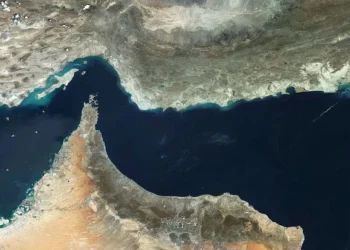 The Great Chokehold: Why the Strait of Hormuz is the Epicenter of the 2026 Crisis
 The Prediction Prohibition: White House Staff Barred from Betting on Political Markets
 Relief at the Pump: Irish PM Unveils €505m Package to Stem Fuel Crisis
 Diplomatic Deadlock: Lebanon Enters High-Stakes Border Talks with ‘No Cards to Play’
 The Fog of War and the Ticker Tape: Suspicious Trades Rile Washington
 Brinkmanship in Islamabad: Tehran Vows ‘New Battlefield Cards’ as Ceasefire Wanes
 Red Lines in Ottawa: PM Carney Insists US “Won’t Dictate Terms” of Trade Review
 “Industrial-Scale Extraction”: White House Memo Accuses China of Mass AI Theft
 Return of the “Skiffs”: Threat Level Raised as Somali Pirates Seize Second Vessel in a Week
 Southeast Asia Turns to Russia Amid Energy Crisis
 US Calls Australia Media Law “Foreign Extortion”
 Capitalism ‘Suicidal’, Warns Petro at Climate Summit
 “Grounded”: Beijing Implements Total Ban on Drone Sales Citing Capital Security
 $13bn World Cup Set to Break All Revenue Records
 US Court Restores Abortion Pill Access Temporarily
 Tensions Emerge in Netanyahu-Trump Alliance
 “The Iron Chancellor of the North”: Andy Burnham’s High-Stakes U-Turn to Prevent a Truss-Style Gilt Market Meltdown
 Nationwide Faces Governance Scrutiny Ahead of AGM
 Zelensky Invites Putin to Direct Peace Talks
 Israel Strikes Iran After Missile Attack
 Trump Reportedly Earned More Than $1 Billion from Cryptocurrency Ventures in First Year Back in Office
 Severn Trent CEO Reward Package Doubled Despite Public Anger
 Bangladesh Balances China Ties as India Relations Improve
 Trump Helps Clear Balogun for Belgium World Cup Clash
 EasyJet Agrees in Principle to £5.2bn Takeover Deal
 Trump’s Major Recruitment Drive Targets Border Patrol Growth
 ICE Arrests Human Rights Lawyer Who Fled Chinese Crackdown