
Published: 13 August 2026. The English Chronicle Desk. The English Chronicle Online
US inflation slowed slightly in July as food and energy costs provided some relief to consumers, although housing expenses continued to put upward pressure on prices and the overall cost of living remained significantly higher than a year ago.
Consumer prices rose 3.4% in the year to July, down from 3.5% in the 12 months to June, according to the latest figures from the Bureau of Labor Statistics. The modest decline suggests that inflation is continuing to cool, although the pace remains above the Federal Reserve’s long-term target of 2%.
On a monthly basis, consumer prices increased by 0.1% in July. Housing costs were the main contributor to that increase, highlighting the persistent difficulty faced by households dealing with rent and other accommodation expenses.
Housing carries considerable weight in inflation measurements because it represents a large proportion of household expenditure. As a result, even relatively small changes in rent and related costs can have a noticeable effect on the overall inflation rate.

The latest figures nevertheless contained some more encouraging developments.
Food prices increased only slightly during July and rose more slowly than they had in June. Energy prices also declined during the month, providing some relief after a period of considerable volatility linked to continuing conflict in the Middle East.
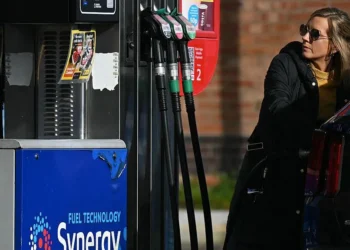
Gasoline prices fell 2.9% in July compared with June. However, the longer-term picture remains less comfortable for motorists. Gasoline prices were still 24.6% higher than they had been a year earlier.
That contrast illustrates an important feature of the current inflation environment. Prices can decline from one month to the next while remaining substantially higher than their previous-year levels.
In other words, falling inflation does not mean that prices are falling. It means that prices are increasing at a slower rate.
For American families, that distinction remains important.
A household that has already seen rent, groceries, insurance and transport costs rise significantly may not feel much relief simply because the annual inflation rate has fallen by a fraction of a percentage point.
The figures excluding food and energy also showed some renewed price pressure.
Core inflation increased by 0.2% in July after remaining unchanged in June. Medical care and airline fares edged higher, although continued declines in car insurance helped offset some of those increases.
The mixed picture leaves policymakers facing a difficult balancing act.
The Federal Reserve wants inflation to continue moving towards its 2% target but must also consider economic growth and the health of the labour market.
The new Federal Reserve chair, Kevin Warsh, has emphasised the importance of keeping inflation on a downward path while avoiding unnecessary disruption to the wider economy.
Warsh has warned against expecting the central bank to quickly reverse the effects of several years of above-target inflation. He has argued that policymakers must remain patient as price pressures gradually ease.
The Federal Reserve’s 2% inflation objective is intended to provide a stable environment in which businesses and households can make long-term financial decisions without facing either rapidly rising prices or the damaging effects of persistent deflation.
The latest figures therefore provide some reassurance that inflation is not accelerating again.
Financial markets reacted relatively calmly after the release of the data. Stock prices were little changed, reflecting the fact that the figures were broadly consistent with market expectations.
Chris Zaccarelli, chief investment officer at Northlight Asset Management, described the figures as unsurprising and said inflation did not appear to be reaccelerating.
The inflation report also needs to be considered alongside recent labour market developments.
July’s employment report showed a loss of jobs, increasing concerns about the strength of the US labour market and reducing expectations for a further interest-rate increase.
Taken together, the employment and inflation figures could give the Federal Reserve more time to assess the economy before making another significant policy move.
That is particularly important because interest rates influence borrowing costs across the economy.
Higher rates can help reduce inflation by discouraging borrowing and spending, but they can also weaken investment, housing activity and business expansion.
Lower rates, by contrast, can encourage economic activity but risk allowing inflation to remain elevated if price pressures have not been fully contained.
The latest data therefore complicates the debate over what the Federal Reserve should do next.
Jeffrey Roach, chief economist at LPL Financial, said inflation appeared to be on a genuine decelerating path, with July’s decline in energy prices helping to reduce some of the pressure.
Bill Adams, chief US economist at Fifth Third Commercial Bank, said the figures kept open the possibility that the Federal Reserve could hold interest rates steady in September.
That cautious approach reflects the uncertainty surrounding the economy.
The central bank must consider not only the latest inflation number but also employment, consumer spending, wages, energy markets and international developments.
The continuing conflict in the Middle East is particularly significant because energy prices can change quickly in response to geopolitical developments.
The decline in gasoline prices during July offers some immediate relief, but the fact that prices remain sharply higher than a year ago demonstrates how vulnerable the American economy remains to energy shocks.
Higher fuel prices can also have wider effects because transportation costs influence the price of goods and services throughout the economy.
Businesses facing higher fuel and energy expenses may eventually pass some of those costs on to consumers, creating additional inflationary pressure.
Food prices are another area that households watch particularly closely.
Although food inflation has slowed, grocery bills remain considerably higher than they were before the recent inflationary period. For lower-income households, food prices can have a particularly significant effect because a larger share of their income is typically spent on essential goods.
Housing is an even more persistent problem.
With shelter costs continuing to rise, consumers may feel that inflation is not easing as quickly as official headline figures suggest.
Rent increases can be especially difficult to absorb because housing is a recurring expense that cannot easily be avoided or postponed.
President Donald Trump has also acknowledged that inflation remains too high for many Americans, pointing to grocery and rental costs as evidence that the cost-of-living problem has not disappeared.
The political significance of inflation is therefore likely to remain considerable.
For the White House, slowing inflation provides an opportunity to argue that price pressures are easing. But households are likely to judge economic conditions by the actual prices they encounter every week rather than by changes in the annual inflation rate.
The July figures offer a mixed but cautiously positive picture.
Headline inflation has fallen from June’s level, monthly price growth was limited, food inflation slowed and energy prices declined. At the same time, housing costs continued to rise and core inflation picked up from zero monthly growth in June to 0.2% in July.
The labour market is also showing signs of weakness, adding another complication for policymakers.
The Federal Reserve must now determine whether inflation is cooling sufficiently to justify a more accommodative approach or whether underlying price pressures remain strong enough to require caution.
For financial markets, the absence of a major inflation surprise reduces the likelihood of an abrupt policy response.
For households, however, the more important question is whether the slowdown in inflation will eventually translate into greater financial stability.
That will depend on whether wages continue to rise, employment remains resilient and essential costs such as housing, food and energy become more manageable.

The latest figures suggest the US economy is moving in the right direction on inflation, but the journey is far from complete.
Prices are still rising, consumers continue to face high living costs and geopolitical uncertainty remains capable of changing the economic outlook quickly.
The Federal Reserve’s challenge is now to ensure that inflation continues to move towards 2% without unnecessarily weakening employment or economic growth.
For now, July’s figures give policymakers some breathing room. They also reinforce the view among economists that inflation is easing rather than accelerating again.
But with housing costs still rising and the labour market showing signs of strain, the next few months could prove crucial in determining whether the current slowdown develops into a sustained return to price stability.
Related News:
 US Unveils Fresh Tariffs on Global Trading Partners
 Trump Warns Iran Over Strait of Hormuz Blockade
 US Awaits Iran Reply on New Ceasefire Proposal
 Reeves Fights to Keep Treasury Role Amid Labour Turmoil
 China’s Economic Growth Slows, Missing Official Target
 US Eyes Frozen Iran Funds for Shipping Damage
 Burnham Faces Bank Tax Battle Over Profits
 UK Economy Grows 0.4% as Growth Faces Fresh Challenges
 Trump Administration Probe of Fed’s Powell Draws Pushback
 US Trade Deficit Hits Fresh High Despite Trump’s Tariffs
 Trump’s tariff strategy collapse sows global chaos and confusion
 Stock Markets and Oil Prices Still Volatile Over Fears Iran War May Drag On
 Iran War Puts Trump at Political Risk Amid Rising Prices
 Gulf Oil Shock Sends Global Economic Ripples
 Iran Rejects Ceasefire, Warns Trump With Chilling Message
 UK Wage Growth Slows as Jobs Market Holds Firm
 Trump Faces New Warning Signs as Iran War Hits Home
 Trump’s Signature to Appear on US Dollars
 Oil Markets Surge as Investors Await Trump’s Final Iran Ultimatum
 Global Oil Markets Volatile After Trump’s Profane Threat to Iran
 The ‘Relief Rally’: Global Markets Surge as Oil Prices Tank on 14-Day Truce
 The Horns of Dilemma: Why the 2026 Iran War Ignited and Where It Goes Next
 Tectonic Tension: Trump Blasts NATO Costs as Rutte Admits to ‘Very Frank’ Exchange
 Midnight Fire: Israel and Hezbollah Exchange Strikes as Trump Lashes Out at Tehran
 The Vance Verdict: How the Vice President Navigated the Islamabad “Pressure Cooker”
 The Blockade Gambit: Trump’s High-Stakes Threat Leaves Middle East Predicaments Unchanged
 Trump Faces Crisis as Iran Reopens Hormuz Tensions
 BBC News Faces Deep Cuts in 2,000 Job Plan
 Spirit Airlines shuts down after 34 years amid crisis
 Trump likens US Navy actions to ‘pirates’
 Trump approval plunges amid Iran war fears
 Ohio’s Battle for Trust: Democrats Vying to Flip the Buckeye State
 Trump Threatens UN Budget Cuts as US Pushes ‘Trade Over Aid’ Agenda
 “The Iron Chancellor of the North”: Andy Burnham’s High-Stakes U-Turn to Prevent a Truss-Style Gilt Market Meltdown
 “A Fragile Lull”: UK Inflation Dips to 2.8% Amid Warnings of a Renewed Climb
 Kevin Warsh sworn in as Fed chair amid economic backlash
 Hormuz Talks Near Critical Stage
 UK Pushes for New EU Goods Trade Deal
 Trump Claims Iran Peace Deal Near Completion
 Republicans Defy Trump on Ukraine Aid Bill
 Trump Approves $700m Coal Industry Investment
 Banks Accused of Steering Customers Away From Basic Accounts
 Why Some African Nations Are Rejecting Trump Aid
 Trump’s New Vision for 250 Years of US Expansion
 Europe Weighs Hormuz Navigation Fee Plan
 Labour MPs Urge Burnham to Revive UK Aid Target
 Trump Refuses to Sign Housing Bill, But Law Takes Effect
 US-Iran Exchange Fire as Hormuz Tensions Escalate
 Iran War Has Cost US $37.5bn So Far as Pentagon Seeks Billions More in Defence Funding
 Oil Prices Return to $100 Amid Global Market Fears
 AI Jitters Send Chip Stocks Tumbling in US and Asia
 US Borrowing Costs Hit 19-Year High as Federal Reserve Holds Interest Rates Steady
 Tennessee Town Backs Trump as War Fuels Its Economy
 Canada Passes Carney’s First Budget in Tight Parliamentary Vote
 EU Says US Ties Have Suffered ‘Big Blow’ After Greenland Crisis
 Bill Gates ‘Took Responsibility’ Over Epstein Ties in Staff Meeting, Foundation Says
 American Citizen Killed in Cuba Boat Shooting, U.S. Officials Say
 Trump Faces Questions Over Iran Conflict Plan
 Oil Price Jumps Despite Deal to Release Record Amount of Reserves
 Trump’s Confidence Undimmed — But Every Iran Option Carries Risk
 UK Forces Ready to Seize Russian Shadow Fleet Vessels
 Can Congress Stop US Sports Teams From Moving Cities?
 Oil and Diplomacy: Russian Refineries Burn as Zelenskyy Secures Middle East Shield
 Asian Powers Secure Energy Lifelines as Trump’s Hormuz Deadline Looms
 The Great Chokehold: Why the Strait of Hormuz is the Epicenter of the 2026 Crisis
 Diplomatic Deadlock: Lebanon Enters High-Stakes Border Talks with ‘No Cards to Play’
 The Fog of War and the Ticker Tape: Suspicious Trades Rile Washington
 Brinkmanship in Islamabad: Tehran Vows ‘New Battlefield Cards’ as Ceasefire Wanes
 “Industrial-Scale Extraction”: White House Memo Accuses China of Mass AI Theft
 Capitalism ‘Suicidal’, Warns Petro at Climate Summit
 “Lotus Blooms in the East”: BJP Scripts History with Landslide Victory in West Bengal
 “The Pivot to Pakistan”: Trump Pauses ‘Project Freedom’ in Hormuz Amid Iran Deal Hopes
 US green card applicants must apply from abroad, DHS says
 Albanese Defends Tax Reforms Amid Emotional Speech
 Discontent grows around Putin amid war strain
 Israel Strikes Iran After Missile Attack
 Severn Trent CEO Reward Package Doubled Despite Public Anger
 Trump Helps Clear Balogun for Belgium World Cup Clash
 Trump’s Major Recruitment Drive Targets Border Patrol Growth
 Trump Renews Push to End Birthright Citizenship