**Published: 31 August 2026. The English Chronicle Desk. The English Chronicle Online**
A US federal judge has ruled that the Trump administration acted unlawfully when it targeted artificial intelligence company Anthropic after the company refused to accept unrestricted military use of its Claude AI models.
US District Judge Rita F. Lin said the Pentagon’s decision to designate Anthropic as a national security supply-chain risk amounted to unlawful retaliation and violated the company’s First Amendment rights. She also found that Anthropic was denied legally required due process and concluded that Defense Secretary Pete Hegseth’s decision was contrary to the governing statutory framework and arbitrary and capricious.
The ruling represents a major victory for Anthropic in a dispute that has become a significant test of how far the US government can go when dealing with private AI companies whose technology may be used for military purposes.

It also raises broader questions about the limits of executive power, free speech and the role of private technology companies in national security.
## A dispute over military use of AI
The confrontation between Anthropic and the US government developed after negotiations over the military’s use of Claude broke down.
Anthropic had sought restrictions on certain applications of its technology, including fully autonomous lethal weapons and mass surveillance of Americans. The company argued that its models were not sufficiently reliable for some weapons applications and that unrestricted domestic surveillance could create serious civil-liberties concerns.
The Pentagon took a different position.
Defence officials argued that private technology companies should not be able to impose restrictions on lawful military activity. The administration also argued that Anthropic’s refusal to accept broader terms created national-security concerns.
The disagreement escalated sharply.
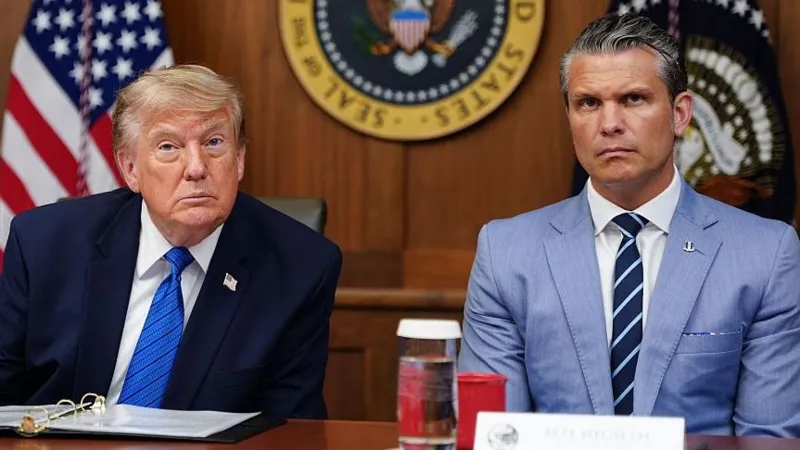
President Donald Trump and Defense Secretary Pete Hegseth publicly criticised Anthropic, while the Pentagon subsequently designated the company a “supply chain risk”.
The designation was highly unusual because the mechanism is generally associated with companies that could expose US systems to infiltration or sabotage by hostile foreign actors. Anthropic became the first American company publicly subjected to such a designation.
Anthropic responded by taking the government to court.
## Judge rejects national-security justification
In her 59-page decision, Judge Lin rejected the government’s attempt to rely broadly on national security to justify its actions.
She wrote that national security considerations are entitled to substantial deference but said that such considerations cannot provide unlimited authority to punish a company for criticising government policy.
Lin described the government’s invocation of national security as insufficient to justify retaliatory action against a government critic.
The judge’s decision went further than simply questioning whether the Pentagon had made the correct policy choice.
She concluded that the government’s actions constituted unlawful retaliation under the First Amendment.
That finding is significant because the First Amendment generally protects speech and prohibits the government from imposing punishment because an individual or organisation has expressed a protected viewpoint.
In this case, the judge found that the record supported the conclusion that Anthropic was being punished for opposing the administration’s position on military use of its technology.
Lin said the government’s contemporaneous statements and actions suggested that it wanted to make a public example of Anthropic for what officials described as the company’s “arrogance” in criticising the administration.
## The unusual supply-chain designation
The supply-chain risk designation became one of the most controversial elements of the dispute.
Such designations can have serious commercial consequences because they can prevent government agencies and defence contractors from doing business with the affected company.
Anthropic argued that being labelled a national-security supply-chain risk could cause enormous financial and reputational damage.
The company maintained that there was no evidence it posed the type of sabotage or infiltration threat normally associated with the designation.
Judge Lin agreed that the government had not established a sufficient legal basis for treating Anthropic in this way.
She found that the designation was not supported by the governing statutory framework and was arbitrary and capricious.
The court therefore rejected the idea that Anthropic’s refusal to accept particular military uses of its technology could, by itself, justify treating the company as a national-security supply-chain threat.
## Due process concerns
The judge also identified problems with how the government reached its decision.
Lin found that Anthropic had been denied the pre-deprivation process required under the Fifth Amendment. In other words, the company had not received the procedural protections the Constitution requires before the government imposed such significant consequences.
That finding adds another important dimension to the case.
The dispute was not simply about whether the Pentagon was entitled to choose another AI provider. Judge Lin made clear that the government has considerable freedom to decide which technology companies it wants to contract with.
The problem arose from the sweeping punitive measures imposed on Anthropic and the legal basis used to justify them.
The ruling therefore does not mean the government must use Anthropic’s technology.
Instead, it places limits on how government officials can exclude the company from federal business and how they can use national-security powers against it.
## A confrontation over AI safety
At the heart of the dispute is an increasingly important question: who should determine how advanced AI systems are used by the military?
Anthropic has argued that some applications require safeguards because AI systems can make mistakes and may produce unpredictable results.
The company’s position on autonomous weapons and mass surveillance reflects a broader debate within the technology industry over whether private AI developers should impose restrictions on military customers.
The Pentagon, meanwhile, has argued that the government must retain control over how AI is used for lawful national-security purposes.
That disagreement is unlikely to disappear following the court ruling.
If anything, the case could become a reference point for future disputes between governments and technology companies over the use of artificial intelligence in warfare, intelligence gathering and domestic security.
## The stakes for America’s AI industry
The case also matters because the US government has become one of the world’s most important potential customers for advanced AI.
Companies including Anthropic, OpenAI, Google and other major technology firms are competing to provide increasingly sophisticated AI systems for government and military applications.
Those contracts can be enormously valuable.
But they also create a difficult relationship between technology companies and the government.
AI developers want access to the enormous government market while maintaining control over how their systems are used.
Government officials, on the other hand, may argue that companies providing critical technology to the military should accept greater responsibility for national-security requirements.
The Anthropic dispute shows what can happen when those expectations collide.
## The political dimension
The dispute has also become politically charged.
The Trump administration previously described Anthropic as a politically motivated or “woke” company attempting to restrict military activity.
The administration argued that the military’s authority derives from the Constitution and federal law rather than from the terms of service imposed by a private AI company.
Anthropic, by contrast, argued that the government’s response was an attempt to punish the company for expressing its position publicly.
Judge Lin’s ruling largely accepted Anthropic’s argument concerning the government’s retaliatory conduct.
Her decision said the government’s actions appeared designed to punish Anthropic for criticising its contracting position rather than being based on a concrete finding that the company would actually sabotage its AI systems.
That conclusion is likely to become one of the most closely examined parts of the ruling.
## A wider First Amendment question
The case has implications beyond artificial intelligence.
At its core is a constitutional question about government retaliation.
Private companies regularly negotiate with federal agencies, challenge government decisions and publicly criticise officials.
If government agencies could respond to such criticism by imposing commercially devastating penalties, companies might become less willing to challenge government policies.
That is why Judge Lin’s finding on the First Amendment is particularly significant.
The court’s reasoning suggests that national-security language cannot automatically shield government action from constitutional scrutiny.
Government officials retain substantial authority over genuine national-security matters, but that authority remains subject to legal and constitutional limits.
## Anthropic welcomes the ruling
Anthropic welcomed the decision.
A company spokesperson said it was pleased that the court had ruled the supply-chain risk designation unlawful and said the company remained committed to working with the US government on national-security applications of AI.
The company has not rejected cooperation with the military altogether.
Instead, it has sought boundaries around particular uses that it considers especially dangerous or inconsistent with its safety principles.
That distinction could become important as the government continues developing its AI strategy.
The Pentagon may still choose to work with other providers, and the ruling does not require federal agencies to select Anthropic for future contracts.
But the government cannot simply reproduce the same punitive measures without complying with constitutional and statutory requirements.
## What comes next
The legal dispute is not necessarily finished.
The government is expected to challenge the ruling, and a separate but related case involving Anthropic remains pending in Washington.
The final outcome could therefore take additional time.
Meanwhile, the administration will have to consider how it handles other technology companies that place restrictions on military applications of their products.
For Anthropic, the immediate ruling provides substantial legal protection and removes one of the most damaging government measures taken against the company.
For the wider AI industry, however, the significance is much larger.

The case establishes a judicial warning that government officials cannot necessarily punish a technology company simply because it disagrees with them over how artificial intelligence should be used.
The dispute between Anthropic and the Trump administration has therefore become about more than one company or one government contract.
It is now part of a much larger argument over who controls the future of military AI, how much independence private technology companies should retain when working with the state, and where the constitutional limits of government power lie.
As artificial intelligence becomes increasingly important to national defence, those questions are likely to become more frequent, more consequential and considerably harder to resolve.
Related News:
 US National Guard Member Killed in DC Shooting
 Trump Escalates Minnesota Immigration Surge Amid Rising Tensions
 Democrats Push Affordability to Challenge Trump Ahead of Votes
 Greenland Faces Pivotal Summit Over Arctic Power Struggle
 Government Unveils Northern Powerhouse Rail Plans
 Trump press secretary attacks reporter over ICE question
 Kyrsten Sinema Faces High-Profile Lawsuit Over Marriage Interference
 Greenland Crisis Forces Europe to Draw a Line With Trump
 ‘He Believed Help Was Coming’: Why Iran’s Protesters Feel Betrayed
 Trump Fed bid heads to Supreme Court
 Historic Abu Dhabi Talks Bring US, Ukraine and Russia Together
 Trump Pulls Canada from His Controversial ‘Board of Peace’ Plan
 Trump officials continue false claims after Alex Pretti shooting
 Fulton election raid hits Georgia election office
 Partial US Government Shutdown Hits Homeland Security Funding
 Thousands Protest ICE Operations in Nationwide US Day of Action
 Epstein Files Reveal Trump Officials’ Emails with Financier
 Thousands Protest ICE in New York Against Trump Deportation Campaign
 Sinema payment row deepens after $9,000 transfer claim
 California Wins Supreme Court Approval for New Map
 Nurses’ families fear breakup under UK immigration crackdown
 California Democrats Vow Trump Reckoning
 Trump’s Surgeon General Pick Evades Vaccine Questions
 Clinton Testimony Erupts in Fiery Exchange
 Adelaide University Faces Backlash Over Event Cancellation
 Thousands Protest Iran Strikes Outside US Embassy London
 US Bombers Arrive at RAF Base Amid Rising Iran Tensions
 Can Congress Stop US Sports Teams From Moving Cities?
 Can King Charles Calm Trump on Key US Visit?
 The Moral Crisis Looming Within the American Chain of Command
 Melania Trump Epstein remarks spark survivor backlash
 Trump Signals Hope for New Iran Talks as Ceasefire Fades
 US Catholics Caught Between President and the Pope
 Iron Worker Challenges Trump Loyalist in Ohio
 Trump Faces Crisis as Iran Reopens Hormuz Tensions
 GOP Senator Criticizes Trump’s Feud With Pope Leo XIV
 Charles Faces Trump Test in High-Stakes US Visit
 UK Stands Firm on Falklands Amid US Rift
 Trump at Press Dinner Sparks Tension
 Reform UK funding: mystery billionaire revealed
 Investigation Into Anti-Trump Motives After Gala Shooting
 Trump Defiant After Washington Hotel Shooting
 Identity Revealed: Suspected Washington Gunman Named
 US Court Weighs Fate of TPS for Migrants
 Florida Redistricting Map Sparks Major US Political Battle
 US states redraw maps after voting rights ruling
 Trump orders US troop pullout from Germany
 Judge halts deportation of Yemeni refugees in US
 White House Security Case Sparks Political Firestorm
 Trump approval plunges amid Iran war fears
 Ohio’s Battle for Trust: Democrats Vying to Flip the Buckeye State
 Trump Threatens UN Budget Cuts as US Pushes ‘Trade Over Aid’ Agenda
 Trump warns Iran as Middle East tensions surge again
 US ‘Narco Boat’ Strikes Draw Global Outcry
 Ohio Primaries Set Stage for Crucial Midterms
 Afghan Families Left in Limbo Face Risk of Deportation
 Tensions Emerge in Netanyahu-Trump Alliance
 US Awaits Iran Reply on New Ceasefire Proposal
 Immigration Judges Fear Pressure in Trump Era
 Trump Sends 5,000 More US Troops to Poland
 Kevin Warsh sworn in as Fed chair amid economic backlash
 US green card applicants must apply from abroad, DHS says
 Tulsi Gabbard exits after turbulent intelligence tenure
 Hormuz Talks Near Critical Stage
 Former ICC prosecutor condemns US sanctions
 Gunman Killed After White House Security Shootout
 DeSantis’s ‘Alligator Alcatraz’ Faces Final Shutdown
 Prosecutor Proposes Law to Combat Election Deceit
 House Curbs Trump’s War Powers in Rare Rebellion
 AOC Backs El-Sayed in Tight Michigan Senate Primary
 US Courts Back Trump on Park Signage Removals
 Trump’s Mount Rushmore Speech: A Divisive Anniversary
 Court Rejects Florida Campus Speech Restrictions
 Graham Platner’s Exit Leaves Democrats in Chaos
 Trump Refuses to Sign Housing Bill, But Law Takes Effect
 Houthis Strike Saudi Arabia as Middle East Tensions Rise
 Trump Orders Signs Criticising Smithsonian Museum
 Is America Ready for an AOC Presidential Run?
 Trump Calls Strait of Hormuz ‘American Territory’
 Trump orders US to rename Lake Ontario ‘Lake America’