Published: 07 September 2026. The English Chronicle Desk. The English Chronicle Online.
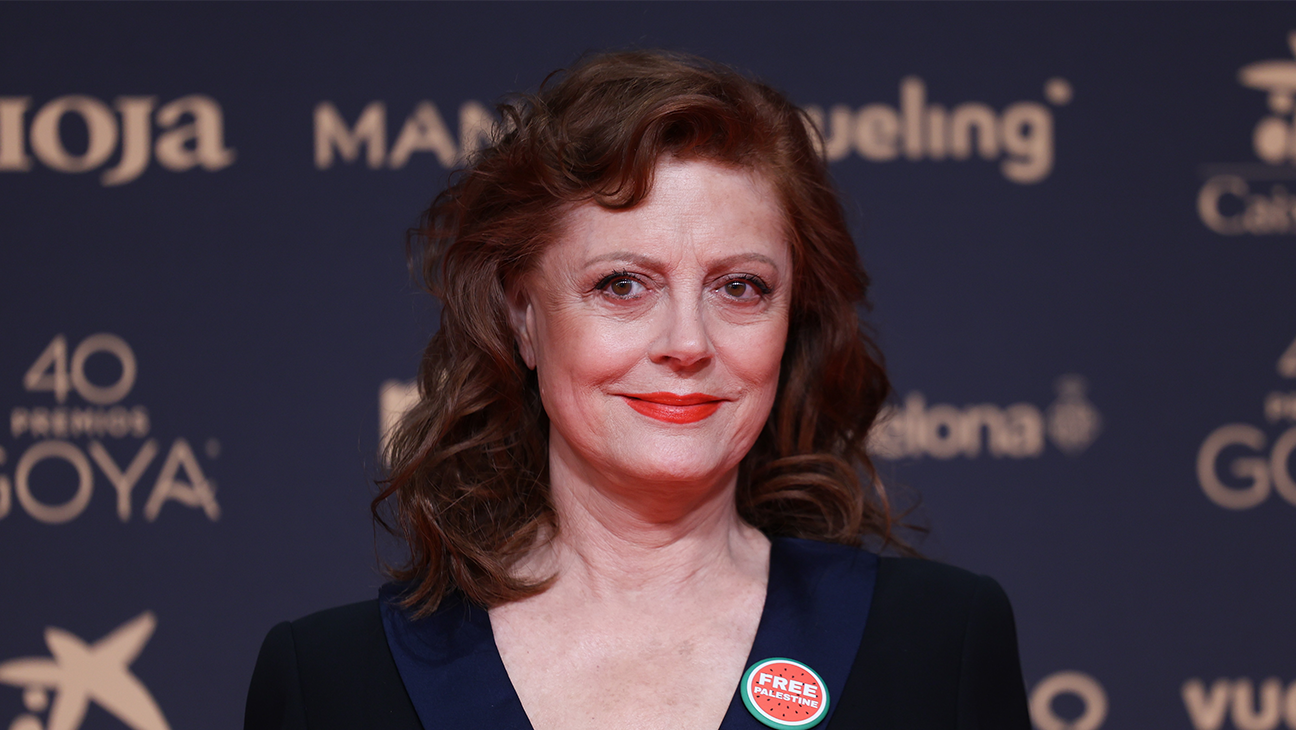
Oscar-winning actor Susan Sarandon has said her outspoken support for Palestinians continues to affect her professional career, claiming that she has recently lost film opportunities because some parts of the entertainment industry remain unwilling to hire actors who publicly criticise Israel.
Sarandon, 79, made the remarks while attending the Venice Film Festival, where she is promoting her latest film, The Echo Chamber. Speaking to reporters, the veteran actor said she believed public discussion surrounding Palestine and US support for Israel had changed significantly in recent years, but argued that the shift in public sentiment had not been matched by the attitudes of some major Hollywood institutions.
According to Sarandon, agencies and industry power structures continue to influence which actors receive major opportunities. She said she had recently seen film projects disappear after agencies allegedly advised filmmakers or other industry figures against hiring her. She suggested that the consequences were not limited to her own career and that other outspoken critics of Israel had experienced similar difficulties.
Her comments bring renewed attention to the relationship between political activism and employment in Hollywood, an industry where actors’ public statements can increasingly become part of debates about casting, commercial risk and institutional reputation.

Sarandon has been an outspoken supporter of Palestinian rights for years, particularly since the escalation of the Israel-Gaza conflict. Her public activism became a major professional issue in late 2023, when she was dropped by her long-standing talent agency following remarks made at pro-Palestinian demonstrations in New York.
At the time, Sarandon said that many Jewish people were experiencing fear and that some were gaining an understanding of what Muslims in the United States had experienced. Her comments generated significant criticism, with opponents accusing her of making insensitive comparisons. Sarandon subsequently apologised for any pain caused by her remarks while continuing to speak publicly about Palestinian rights.
The latest comments suggest that the controversy has continued to affect her working relationships within the entertainment industry.
Sarandon nevertheless said she felt increasingly comfortable among audiences and creative communities outside the structures she described as the industry’s traditional power centres. She told reporters that she felt welcomed internationally and had found a sense of community among people who shared her concerns about the Palestinian situation.
The actor’s career gives her comments particular weight. She won the Academy Award for Best Actress for her performance in Dead Man Walking and has built a career spanning several decades. She became widely recognised through films including The Rocky Horror Picture Show, Bull Durham and Thelma & Louise, establishing herself as one of the most prominent actors of her generation.
Her political activism has also been a defining part of her public identity. Over the years, Sarandon has spoken on a wide range of social and political issues, often using her celebrity platform to support causes that have generated controversy as well as admiration.
The debate over her employment comes against a backdrop of changing public attitudes toward the Israel-Palestine conflict, particularly in the United States and other Western countries. Public opinion surveys conducted since the beginning of the Gaza war have indicated a decline in some forms of support for Israel and increased sympathy for Palestinians.
Those changes have contributed to a broader debate over US foreign policy, military assistance to Israel and the humanitarian consequences of the conflict in Gaza. Yet Sarandon’s experience suggests that Hollywood’s institutional response may not necessarily move at the same pace as public opinion.
The issue has also become visible at this year’s Venice Film Festival, one of the world’s most prestigious cinema events. Activists have called on festival organisers to show solidarity with Palestinians, including through symbolic recognition of Palestinian filmmakers and the Palestinian flag.
Festival artistic director Alberto Barbera has said that displaying the Palestinian flag as an official gesture would not be possible under the circumstances because Italy does not formally recognise Palestine as a state. At the same time, the festival has featured films and filmmakers whose work addresses the experiences and struggles of Palestinians.
Venice has therefore become another international cultural space where the war and its political consequences have intersected with cinema. For artists and activists, film festivals can provide an opportunity to bring attention to humanitarian issues that might otherwise remain outside the traditional entertainment agenda.
Sarandon’s presence at Venice has added another dimension to that discussion. Her participation in The Echo Chamber demonstrates that, despite the professional difficulties she describes, she continues to secure significant roles and work with filmmakers willing to support her.
The film is among the productions competing for the festival’s top prize, the Golden Lion. Directed by Andrea Pallaoro, the movie was adapted from a final screenplay by the late Italian filmmaker Bernardo Bertolucci.
Sarandon plays an ageing singer who attempts to revive her career by hiring a music producer recovering from drug addiction. The story centres on artistic reinvention and personal relationships, themes that contrast with the political controversy surrounding the actor’s own career.
Her casting also illustrates the continuing willingness of independent and international filmmakers to work with performers whose political positions may be controversial in mainstream entertainment circles.
Sarandon said she was grateful to Pallaoro for giving her the opportunity to be part of the film. She described the experience as finding a professional and personal community where she felt accepted.
Her comments also raise questions about the boundaries between artistic expression and political identity. Hollywood has a long history of actors and filmmakers using their public platforms to express political views. At various times, such activism has influenced careers positively or negatively, depending on the political climate and the attitudes of audiences, studios and industry executives.
The current dispute is particularly sensitive because criticism of Israeli government policy can intersect with wider debates over antisemitism, political speech and the treatment of Palestinians. Sarandon’s remarks have previously attracted criticism from Jewish organisations and other groups who argued that some of her statements crossed important lines. Supporters, however, have defended her right to criticise government policy and advocate for Palestinian rights.
The distinction between criticism of Israel, opposition to Israeli government actions and hostility toward Jewish people remains central to the wider debate. Sarandon has framed her position as support for Palestinians and criticism of US and Israeli policies rather than hostility toward Jews.
For the film industry, the controversy presents a difficult question: whether an actor’s political activism should influence employment decisions. Studios and agencies have commercial interests and may be concerned about public controversy, while performers argue that political expression is part of their freedom as citizens and artists.
Sarandon’s allegation that agencies are actively discouraging filmmakers from hiring her has not been independently established in the available account. Her comments represent her own description of what she believes has happened to her career.
Nevertheless, the issue is likely to remain part of the broader cultural debate surrounding Hollywood and political speech. As the Israel-Gaza conflict continues to shape international politics, entertainers who take strong positions are increasingly finding themselves at the intersection of activism, public relations and professional opportunity.

For Sarandon, however, the message from Venice was one of determination rather than retreat. She acknowledged the professional consequences she believes she has faced but indicated that she remains comfortable standing by her political views.
Her latest appearance also demonstrates that her decades-long career remains active. At a time when many performers of her generation have moved away from leading roles, Sarandon is still appearing in major international productions and competing at one of the world’s most important film festivals.
The controversy surrounding her political activism may continue to divide audiences, but her career illustrates the complicated relationship between celebrity, political speech and artistic freedom. Whether Hollywood’s approach changes as public attitudes toward the Israel-Palestine conflict evolve remains uncertain.
For now, Sarandon says she feels increasingly supported by audiences and creative communities around the world, even as she claims that some powerful sections of the film industry continue to close doors. Her experience has once again placed the question of whether political convictions should affect an artist’s career at the centre of an international cultural conversation.
Related News:
 Middle East Flights Halted After Iran Strikes
 UK Prepares Aircraft Carrier for Middle East Crisis
 Mojtaba Khamenei Chosen as Iran’s New Supreme Leader
 Tehran Oil Depot Strikes Darken City With Toxic Smoke
 Mojtaba Khamenei Supporters Rally as Iranians Fear Repression
 Iran Defiance Grows Amid US-Israel War Pressure
 Hormuz Crisis Sparks Global Oil Market Fears
 Iranian Exile Factions Seek US Backing for Iran’s Future
 Injured Mojtaba Khamenei Elevated as Iran Leader
 Trump Iran War Stance Hardens as Conflict Widens
 Ghalibaf Iran: Survivor Emerges in Shifting Power Game
 Army Probes Apache Flyover at Kid Rock’s Nashville Estate
 Iran Crisis Tests Trump’s Global Leadership
 Harry and Meghan’s Australia Visit Sparks Debate
 Canadian astronaut French words ease language row
 Athens Mayor Moves to Tackle Overtourism Crisis
 RAF Typhoons scrambled amid Russian drone threat near Nato
 Trump likens US Navy actions to ‘pirates’
 Global order shifts amid Trump-era turmoil
 Middle East Crisis Escalates as Oil Routes Shake Markets
 Tensions Emerge in Netanyahu-Trump Alliance
 France Faces Record Presidential Crowded Race Amid Far-Right Surge
 Trump’s Revenge Drive Deepens GOP Divide
 Former ICC prosecutor condemns US sanctions
 Trump Claims Iran Peace Deal Near Completion
 Farage and Reform UK Reshape British Politics
 Starmer Leadership Under Pressure After Setbacks
 The ‘Special Relationship’ at 250: Irrelevance or Influence?
 Le Pen’s Popularity Holds Despite Conviction
 Dreyfus Statue Finally Gets Permanent Paris Home
 Houthis Strike Saudi Arabia as Middle East Tensions Rise
 Is America Ready for an AOC Presidential Run?
 Five Years of Taliban Rule Leave Afghanistan in Crisis
 Trump Calls Strait of Hormuz ‘American Territory’
 Trump Faces Iran War Crisis Before Midterm Vote
 Former Diplomats Urge UK and France to Act on Palestine
 Green Leader Targets Starmer’s Former Seat
 Trump Calls Iran War ‘Small Potatoes’ Despite US Deaths
 Masked Protesters Bring Dover Port Traffic to Standstill
 BBC to Apologise Over Edited Trump Speech Amid Backlash
 Britain deploys RAF specialists to assist Belgium with drone threats
 Greene Pushes Epstein Files Amid Trump Fallout
 December Run-Off in Chile as Election Produces No Winner
 Canada Passes Carney’s First Budget in Tight Parliamentary Vote
 Shadow Fleet at Sea: Europe’s Battle Against Illicit Oil Shipping
 Georgians Defy Government Crackdown After Year of Protests
 Trump Policies Boost China’s Global Rise, Survey Finds
 Pentagon Signals Reduced Role in Deterring North Korea
 UK and US Drop in Global Corruption Index Rankings
 Canberra Poster Seizure Sparks Free Speech Row
 Evo Morales Returns After Mysterious Absence
 The Dangerous Rise of Remigration Across Modern Europe
 Jacinda Ardern Moves To Australia Following Her US Fellowships
 Jacinda Ardern Move Sparks Kiwi Reflection
 Nick Greiner Warns Over Election Review Fallout
 Tehran Strikes Mark War’s Most Devastating Night
 US Missile Strike on Iran School Sparks Global Shock
 Gordon Brown urges court for crimes against children
 Gaza Detainee Abuse: Israel Drops Charges Against Soldiers
 Oil Prices Jump After Trump Claims Iran Oil Hub Destroyed
 Pakistan Targets Militant Hideouts in Afghanistan
 Lebanon Ground Campaign Raises Occupation Fears
 Air Canada CEO Faces Outcry Over Recent Language Misstep
 Relationship with Trump may be beyond repair, Starmer warned
 Italian Town Buys Mussolini Villa to Keep Away Fascist Fans
 Trump’s Six-Week Iranian War: The High Cost of Ignorance
 Trump Brokers Landmark Lebanon Ceasefire Amid Regional Hopes
 UK Stands Firm on Falklands Amid US Rift
 Oil Prices Surge Above $120 Amid Iran Blockade Fears
 Trump orders US troop pullout from Germany
 Trump Announces 3-Day Russia–Ukraine Ceasefire Deal
 Trump Rejects Tehran Peace Plan as Regional Truce Crumbles
 Grief and Devotion Amidst the Rubble of Nabatieh
 Trump’s Mount Rushmore Speech: A Divisive Anniversary
 England and Norway Fans Turn Miami Into World Cup Carnival
 Olympus Awaits Unesco Heritage Recognition
 Burnham unveils £65m drought aid for farmers
 Ghent Professors Questioned Cofnas Appointment
 Ukraine Villagers Demand Answers After Deadly Arms Depot Strike
 Bayeux Tapestry Revives Franco-British Ties