Published: 09 September 2026.The English Chronicle Desk. The English Chronicle Online.
Europe’s liberal democracies are facing a renewed political challenge as far-right parties gain electoral ground, nationalist movements strengthen their influence and political forces in Europe increasingly intersect with ideological currents emerging from the United States and Russia.
For decades, Europe was widely associated with liberal internationalism, democratic cooperation and the belief that political differences could be managed through tolerance and compromise. That confidence helped shape the European project and encouraged countries that had once been divided by war and nationalism to pursue closer political and economic integration.
Today, however, that confidence is under growing pressure.
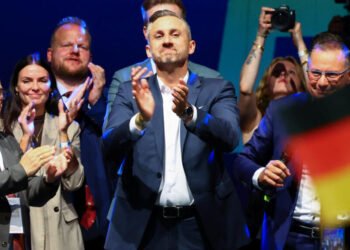
The latest warning signs have emerged from Germany, where the Alternative for Germany, or AfD, secured a major electoral victory in Saxony-Anhalt. The result has attracted particular attention because of Germany’s historical experience with authoritarianism and fascism and its postwar efforts to build strong democratic safeguards against political extremism.

The AfD’s success has intensified debate over the direction of German politics and the wider future of European democracy. Critics of the party argue that its nationalist rhetoric and positions on immigration represent a direct challenge to Germany’s postwar political culture.
The party’s advance also highlights the broader transformation taking place across Europe, where movements once considered politically marginal have increasingly entered mainstream political competition.
In France, Marine Le Pen’s National Rally has spent years attempting to present itself as a more respectable political force. The party has sought to distance itself from some of the most openly extreme elements of the European far right while maintaining its strong opposition to immigration and its emphasis on national sovereignty.
The AfD’s rise has nevertheless created difficulties for that strategy. The German party remains considerably more controversial in some European political circles, particularly because of accusations that parts of its rhetoric and political programme cross boundaries that mainstream nationalist parties have sought to avoid.
The divide has also become increasingly visible across the Atlantic.
Elon Musk has publicly supported the AfD, using his enormous influence on social media to promote messages favourable to the German party. His involvement illustrates how political movements in Europe are now operating within an international digital environment in which influential figures outside Europe can amplify domestic political campaigns.
US Vice-President JD Vance also met AfD co-leader Alice Weidel during a visit to Munich last year. The meeting was viewed as another indication of the changing relationship between sections of the American right and European nationalist movements.
Donald Trump’s administration has also adopted rhetoric that places greater emphasis on supporting nationalist and so-called patriotic movements in Europe. This has raised concerns among critics who believe that American political influence could contribute to the weakening of liberal democratic norms across the continent.
Britain has experienced its own version of this political shift.
Nigel Farage, the leader of Reform UK and one of the most prominent figures behind Brexit, has long maintained close ideological connections with Trump and other figures on the American right. Yet the changing political landscape has created a more complicated environment for Farage.
Other groups and individuals positioned further to the right have increasingly competed for attention within the wider nationalist movement. That has made it more difficult for Farage to combine strong anti-immigration politics with an attempt to present himself as a conventional mainstream political figure.
His relationship with the AfD has also evolved.
Farage once appeared at an AfD rally, but he has since described the German party as a “mixed bag”. He has indicated that some of its cultural positions are acceptable while expressing criticism of its approach to authoritarian leaders and Russia.
The issue of Vladimir Putin has become an important dividing line within the European right.
Some nationalist movements have expressed admiration or sympathy towards the Russian president, while others have attempted to distance themselves from Moscow. The question has become particularly sensitive following Russia’s invasion of Ukraine and the resulting security crisis across Europe.
Britain has experienced its own controversies involving political figures and alleged Russian influence. Former Reform UK Wales leader Nathan Gill was jailed after being convicted of accepting bribes in exchange for making pro-Russian statements while serving as a member of the European Parliament.
Such cases have contributed to concerns about the relationship between political extremism, foreign influence and disinformation.
The challenge is not limited to the political right. Russian propaganda has also found audiences among parts of the political left, demonstrating that susceptibility to foreign narratives can cross traditional ideological boundaries.
Yet Britain remains comparatively resistant to openly pro-Putin politics. Public opinion towards Trump is also weaker than among some supporters of Reform UK, although polling has indicated that Trump is viewed more favourably by Reform voters than by the British public as a whole.
Farage’s political strategy has increasingly focused on domestic issues, particularly immigration. At Reform UK’s recent annual conference, questions about Britain’s international position and its relationship with the wider world received comparatively little attention.
One notable moment came with the appearance of Jordan Bardella, the young French politician and close ally of Marine Le Pen. Bardella and Farage signed an agreement focused on tackling small-boat crossings in the English Channel.
The agreement was quickly criticised in France, with opponents accusing Bardella of making concessions to British interests. The prospect of a future French government led by the far right adopting policies specifically designed to accommodate British demands remains highly uncertain.
The growing links between European nationalist movements therefore contain an inherent contradiction.
Nationalist politics emphasises sovereignty and national interest, yet many of these movements are increasingly connected through international political networks, social media campaigns and shared ideological causes.
Far-right movements across Europe are not necessarily united on every issue. Their nationalist instincts can create rivalry as much as cooperation. Political leaders competing for domestic influence may have little interest in subordinating their national ambitions to a broader international movement.
This fragmentation could provide an opportunity for liberal democratic forces.
Europe’s political future is not predetermined. The rise of nationalist parties does not automatically mean the collapse of democratic institutions or the end of European cooperation.
The continent has faced political crises before and has repeatedly demonstrated an ability to adapt. Democratic institutions, independent courts, free media, civil society organisations and political parties committed to pluralism remain important counterweights to extremist movements.
The central challenge is whether those institutions can respond effectively before political polarisation becomes deeply entrenched.
The rise of the far right has been driven by a combination of factors, including concerns over immigration, economic insecurity, distrust of established political parties, cultural divisions and frustration with government institutions. Addressing those concerns will require more than simply condemning nationalist movements.
Mainstream democratic parties must also convince voters that liberal democracy can deliver security, economic opportunity and effective government.
The danger is that political complacency could allow increasingly radical ideas to become normalised. Once extremist rhetoric becomes part of everyday political discourse, positions that previously appeared unacceptable can gradually become easier to defend.
At the same time, Europe’s democratic forces should not assume that every nationalist voter is committed to authoritarianism. Political coalitions can change, and voters can move between parties when circumstances change.
The European project has survived major political and economic crises because cooperation has repeatedly proved more useful than confrontation. Its future will depend on whether that lesson remains persuasive to a new generation.
The rise of the AfD, the growing influence of nationalist parties elsewhere in Europe and the increasing involvement of American political figures and technology billionaires demonstrate that the political landscape is changing rapidly.
But the outcome remains uncertain.

Nationalist movements may continue to expand, or internal divisions may limit their ability to translate electoral victories into lasting political transformation. Liberal democratic parties may regain support if they address voters’ concerns more effectively and rebuild trust.
Europe therefore faces a choice rather than an inevitable fate.
The continent has already witnessed the consequences of political extremism, nationalism and the destruction of democratic safeguards. Its democratic institutions now face another test.
The warning signs are visible, but the final outcome has not been decided. European democracies still have the ability to strengthen liberal values, protect political pluralism and resist the forces seeking to replace cooperation with confrontation.
The question is whether they will act before the political space for doing so becomes significantly narrower.
Related News:
 Ceasefire Standoff Deepens in Ukraine War
 Deadly Russian Air Raids Strike Across Ukraine
 Ukraine Villagers Demand Answers After Deadly Arms Depot Strike
 Bayeux Tapestry Revives Franco-British Ties
 Reform Faces Fresh Financial Controversy
 British Woman in Iran ‘Losing Hope’ Amid Ongoing Detention
 BBC Journalist Held and Interrogated in Vietnam
 Zohran Mamdani becomes New York City’s first Muslim mayor
 Second world war veterans honoured as King leads Remembrance Sunday
 BBC director-general and news chief resign amid bias row
 Rama Rebukes Mahmood for Targeting Albanian Families
 Russian Vessel Used Lasers on RAF Pilots, UK Claims
 EU weighs response amid Greenland tariff crisis with Trump
 EU Says US Ties Have Suffered ‘Big Blow’ After Greenland Crisis
 Starmer China visit raises human rights pressure on Beijing
 UK and EU Signal Fresh Push for Defence Cooperation Talks
 Cory Bernardi joins One Nation for SA election
 Starmer Condemns ‘Depraved’ Russian Strikes on Ukraine
 Trump Warns Over Chagos Islands Deal
 Trump and Chagos Deal Rift Over Iran Strikes
 Andrew Mountbatten-Windsor Arrest After FBI Radar
 Farage Chagos Islands Row Sparks Fury
 Trump Tariffs Threat Spark UK and EU Alarm
 UK Allows US Base Use Amid Iran Tensions
 Trump Rebukes Starmer Over Iran Strikes Row
 UK Prepares Aircraft Carrier for Middle East Crisis
 Gordon Brown urges court for crimes against children
 Yvette Cooper: UK Must Follow Principles, Not US Pressure
 UK Minister Denies Iran Missile Threat to Britain
 Army Probes Apache Flyover at Kid Rock’s Nashville Estate
 Relationship with Trump may be beyond repair, Starmer warned
 Italian Town Buys Mussolini Villa to Keep Away Fascist Fans
 Hungary election: Orbán faces biggest test amid scandal
 Iran Crisis Tests Trump’s Global Leadership
 Starmer would have blocked Mandelson role, says Lammy
 Richard Tice Faces £100k Tax Controversy
 Charles Faces Trump Test in High-Stakes US Visit
 UK Stands Firm on Falklands Amid US Rift
 Cartel crackdown raises fears of fresh violence
 US states redraw maps after voting rights ruling
 Asylum deal sparks fears over Syria deportations
 Global order shifts amid Trump-era turmoil
 US ‘Narco Boat’ Strikes Draw Global Outcry
 Koh-i-noor Diamond Row Reignites Colonial Debate
 France Faces Record Presidential Crowded Race Amid Far-Right Surge
 Norway Doubles Down on Oil and Gas for Europe Energy Security
 Starmer Faces Revolt After Crushing Election Losses
 Putin Declares Russia Victory at Scaled Victory Day Parade
 UK Pushes for New EU Goods Trade Deal
 Reeves Fights to Keep Treasury Role Amid Labour Turmoil
 Zelenskyy warns over Oreshnik threat as Kyiv hit
 Former ICC prosecutor condemns US sanctions
 Irish Gangland Figure Fails in Dublin Election Bid
 Farage and Reform UK Reshape British Politics
 Starmer Leadership Under Pressure After Setbacks
 EU and UK Set July Date for Critical Post-Brexit Summit
 UK Nations Brace for Potential Breakup Amid Reform Surge
 UK Government Cancels Higher Education Programme for Women and Girls
 New South Wales Premier Chris Minns Signals Tough Road Ahead for Labor
 Le Pen to Run for President Despite Embezzlement Conviction
 Murder Probe Continues After Arrest Release
 Labour MPs Urge Burnham to Revive UK Aid Target
 Farage Defends £5m Gift Amid Threats
 Israeli Strike in Southern Lebanon Kills Seven
 Is America Ready for an AOC Presidential Run?
 Five Years of Taliban Rule Leave Afghanistan in Crisis
 Russian Missiles Intensify Pressure on Kyiv
 Former Diplomats Urge UK and France to Act on Palestine
 Ghent Professors Questioned Cofnas Appointment
 RAF Barnham Protests Fuel Tensions in Norfolk Town
 Exeter Approves Saudi Military Training Partnership
 Green Leader Targets Starmer’s Former Seat
 Daughter Finds Bones in Parents’ Burned-Out Car
 Trump Calls Iran War ‘Small Potatoes’ Despite US Deaths
 Masked Protesters Bring Dover Port Traffic to Standstill
 UN expert urges UK to rethink Israel policy
 AfD election surge leaves Magdeburg residents deeply uneasy
 Argentina to file criminal charges over Falklands oil drilling
 UK plans tougher Israel stance with settlement trade ban
 British widow says deportation from Sweden feels like a death sentence