Published: 10 September 2026. The English Chronicle Desk. The English Chronicle Online.
North Korea has built a new facility at its main Yongbyon nuclear complex that could significantly increase its ability to produce weapons-grade uranium, according to the International Atomic Energy Agency, which has expressed serious concern over the continued expansion of Pyongyang’s nuclear programme.
The development comes as North Korea continues to strengthen its nuclear and ballistic missile capabilities despite international sanctions and repeated calls for the country to abandon its weapons programmes. The latest assessment by the United Nations nuclear watchdog suggests that Pyongyang is expanding not only its existing enrichment operations but also the infrastructure needed to produce additional nuclear material.
According to the IAEA, the newly identified building at Yongbyon could accommodate as many as 28 centrifuge cascades. Centrifuges are machines used to increase the concentration of uranium-235, and large groups of centrifuges can be used to produce highly enriched uranium suitable for nuclear weapons.
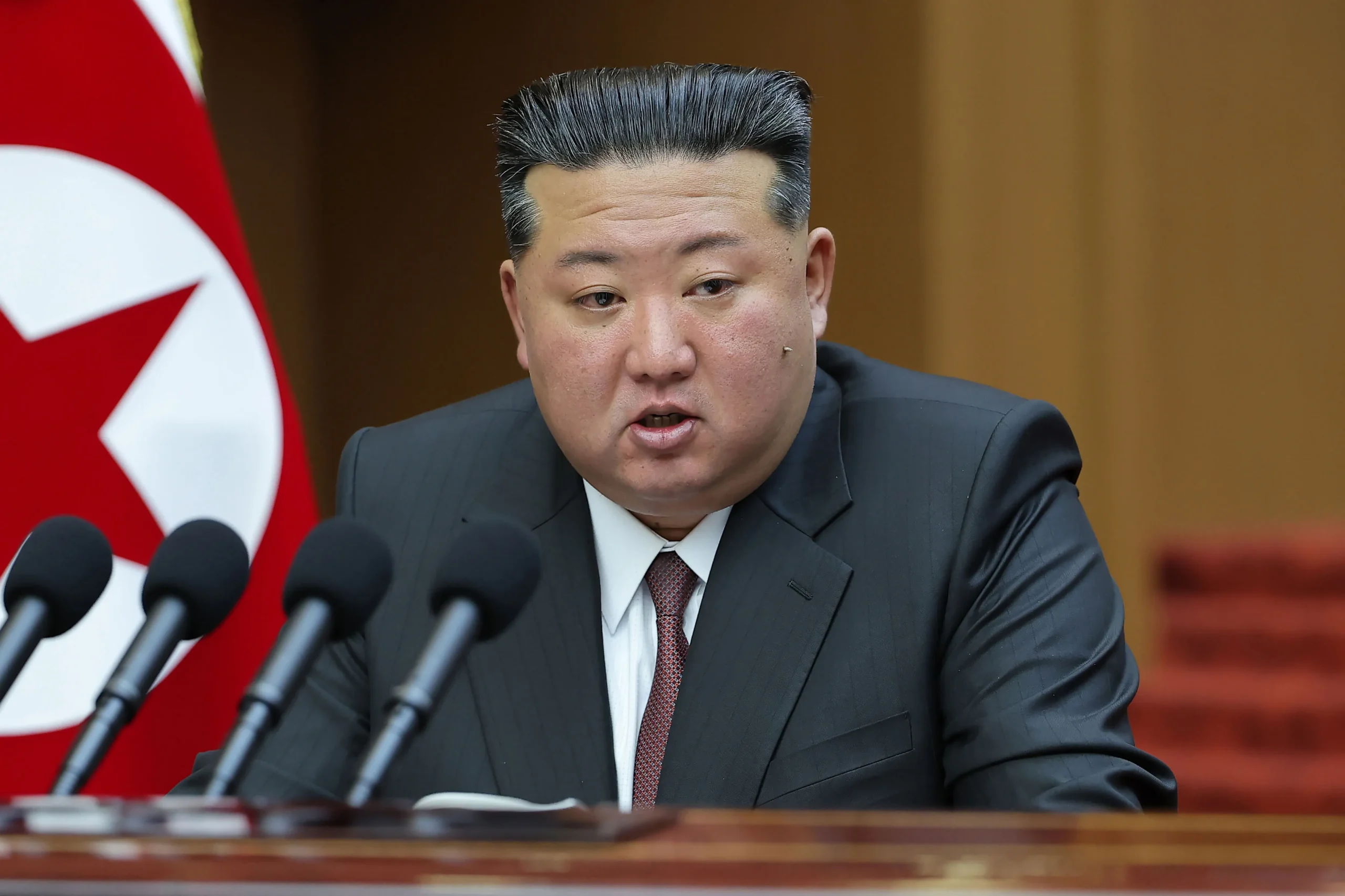
The agency identified the structure by examining satellite imagery showing the construction process and comparing it with photographs released by North Korean state media. The evidence included images from a visit to the facility by North Korean leader Kim Jong-un earlier this year.

The IAEA has not been able to conduct inspections inside North Korea since its inspectors were expelled in 2009. As a result, the agency relies heavily on satellite imagery, publicly available information and other forms of remote analysis to monitor developments in the country’s nuclear programme.
The newly identified structure appears to represent a second uranium-enrichment facility at Yongbyon. The complex has long been at the centre of North Korea’s nuclear programme and contains facilities associated with the production of nuclear material.
The IAEA said enrichment activities were continuing at both Yongbyon and Kangson, another site near the North Korean capital, Pyongyang. The agency said reports of further expansion in North Korea’s production of weapons-grade nuclear material were a matter of serious concern.
IAEA Director General Rafael Grossi said the continued operation and development of the enrichment facilities represented a clear violation of relevant United Nations Security Council resolutions. He also described the ongoing expansion of the country’s nuclear programme as deeply regrettable.
The potential scale of the Yongbyon expansion has attracted particular attention from nuclear experts. A previous analysis by the James Martin Center for Nonproliferation Studies estimated that a facility containing 28 cascades could operate as many as 4,592 centrifuges.
If operated at full capacity, such an arrangement could potentially produce around 85 kilograms of weapons-grade highly enriched uranium annually, according to estimates cited in South Korean media. That quantity could potentially provide enough material for several additional nuclear warheads each year, although the actual output would depend on the configuration and operation of the facility.
The latest development is consistent with statements made by Kim Jong-un regarding the expansion of North Korea’s nuclear capabilities. During a visit to a nuclear materials production facility in June, Kim claimed that the country’s ability to produce weapons-grade nuclear material had more than doubled over the previous five years.
He also promised what North Korean state media described as extensive future plans to strengthen the country’s nuclear forces.
Such statements have reinforced concerns among neighbouring countries and international security experts that Pyongyang is not preparing to reduce its nuclear arsenal. Instead, North Korea appears to be pursuing a long-term strategy aimed at increasing the size and sophistication of its nuclear forces.
South Korea has previously estimated that North Korea could possess between 80 and 120 nuclear warheads. South Korean Defence Minister Ahn Gyu-back presented that estimate to lawmakers in August, while acknowledging that the country’s military could not independently verify the exact number.
The estimate was significantly higher than a figure of 57 nuclear warheads cited by US President Donald Trump around the same period. The difference illustrates the considerable uncertainty surrounding the size of North Korea’s nuclear stockpile.
Because international inspectors have been unable to access North Korea’s nuclear facilities for many years, outside governments and research organisations must rely on estimates derived from satellite imagery, historical production data, intelligence assessments and information released by Pyongyang itself.
North Korea’s nuclear ambitions have developed steadily over several decades. The country carried out its first nuclear test in 2006 and conducted additional tests over the following years. Its most recent confirmed nuclear test took place in 2017, when the country claimed to have tested a hydrogen bomb.
The 2017 test represented a major escalation in North Korea’s nuclear programme. International experts subsequently assessed that Pyongyang had made substantial progress in developing nuclear devices capable of being integrated with ballistic missile warheads.
North Korea has also continued to develop increasingly sophisticated ballistic missiles. Its missile programme has included short-range systems designed to threaten South Korea and Japan as well as longer-range weapons capable of potentially reaching targets much farther away.
The combination of nuclear warheads and increasingly capable missile technology has become one of the most serious security challenges in East Asia.
Pyongyang has repeatedly demanded recognition as a legitimate nuclear-armed state and has resisted international pressure to surrender its nuclear weapons. The United States and its allies, meanwhile, have continued to insist that North Korea should abandon its nuclear weapons programme.
The issue has also complicated relations between North Korea and South Korea. Seoul remains within range of North Korean conventional weapons as well as its developing missile arsenal, while the United States maintains a major security commitment to South Korea.
The international community has attempted to restrict North Korea’s nuclear development through a series of United Nations Security Council resolutions imposing sanctions on the country. Those measures have targeted various sectors of the North Korean economy and sought to restrict access to materials and technology that could support its weapons programmes.
Despite those restrictions, North Korea has continued to develop its nuclear infrastructure.
The IAEA’s latest assessment therefore provides an important indication of the direction in which Pyongyang’s programme is moving. Rather than relying solely on existing facilities, North Korea appears to be increasing its capacity to produce the nuclear material required for additional weapons.
Experts say the development also demonstrates the limitations of international monitoring. Without inspectors on the ground, it is difficult for the international community to determine precisely how many centrifuges are operating, how much enriched uranium is being produced or how quickly the country could convert nuclear material into usable weapons.
Satellite imagery can reveal construction and changes to facilities, but it cannot provide the same level of information that direct inspections would offer.
The absence of international inspectors has been one of the most persistent challenges facing efforts to monitor North Korea’s nuclear activities. The IAEA’s expulsion in 2009 marked a major reduction in the agency’s ability to directly verify developments inside the country.
Since then, analysts have attempted to reconstruct the progress of North Korea’s nuclear programme using publicly available information and intelligence assessments.
The latest evidence suggests that Pyongyang continues to view nuclear weapons as a central component of its national security strategy. Kim Jong-un has repeatedly described strengthening the country’s nuclear forces as a priority, while North Korea’s state media has increasingly presented nuclear weapons as essential to deterring foreign military intervention.
For the United States, South Korea and Japan, the expansion at Yongbyon adds another layer of complexity to an already difficult regional security environment. Any significant increase in North Korea’s stockpile could potentially affect military planning and strategic calculations across Northeast Asia.
The development also raises broader concerns about nuclear proliferation and international security. If North Korea continues increasing its production of weapons-grade material, efforts to eventually negotiate limits on its nuclear programme could become more difficult.

The IAEA’s warning comes at a time when North Korea’s nuclear and missile programmes remain central to discussions about security on the Korean Peninsula. While there is no immediate indication that Pyongyang intends to return to international nuclear negotiations, the continued expansion of its facilities suggests that the country is preparing for a long-term nuclear strategy.
Twenty years after North Korea conducted its first nuclear test, and nine years after its most recent test, the country’s nuclear programme remains active and increasingly sophisticated.
The new Yongbyon facility is therefore significant not simply because of its physical size, but because it could provide North Korea with additional capacity to produce the material needed to expand its nuclear arsenal. The IAEA’s warning underscores the continuing difficulty of monitoring and containing a programme that has developed largely outside direct international inspection.
As North Korea presses ahead with its nuclear ambitions, the international community faces the challenge of balancing diplomatic efforts with deterrence and monitoring. For South Korea, Japan and the United States, the expansion is another reminder that the North Korean nuclear threat remains an evolving security problem rather than a settled issue.
Related News:
 Millions Gather for Khamenei’s Six-Day State Funeral
 Houthis Strike Saudi Arabia as Middle East Tensions Rise
 Taliban global ties grow as rights fears mount
 Israeli Strike in Southern Lebanon Kills Seven
 Britain deploys RAF specialists to assist Belgium with drone threats
 Night after night, Belgium is on high alert.
 Ukraine to Get 100 French Rafale Jets in Historic Deal
Nine Killed in Karachi Consulate Protest
Ukraine to Get 100 French Rafale Jets in Historic Deal
Nine Killed in Karachi Consulate Protest
 UK Prepares Aircraft Carrier for Middle East Crisis
 Anti-Regime Iranians Turn Anger Toward Trump
 Iran Social Media Strategy Shifts to Information War
 Cluster Strikes Test Israel’s Missile Defences
 ‘The frontline is like Terminator’: Ukraine’s fighting robots
 Canadian astronaut French words ease language row
 RAF Typhoons scrambled amid Russian drone threat near Nato
 Southeast Asia Turns to Russia Amid Energy Crisis
 Activists allege abuse after Gaza flotilla seizure
 Australia pushes Pacific security pact amid China tension
 BJP Sweeps West Bengal in Historic Breakthrough
 Ceasefire Standoff Deepens in Ukraine War
 Middle East Crisis Escalates as Oil Routes Shake Markets
 Trump Announces 3-Day Russia–Ukraine Ceasefire Deal
 Doomsday Clock Nears Midnight Amid Global Crises
 US Awaits Iran Reply on New Ceasefire Proposal
 One Nation Stuns Australia With Historic Farrer Win
 Putin Declares Russia Victory at Scaled Victory Day Parade
 Hormuz Talks Near Critical Stage
 China mine blast death toll rises to 90
 Discontent grows around Putin amid war strain
 Venezuela Quake Death Toll Surpasses 4,000
 Seoul proposes historic peace talks to replace Korean War armistice
 Five Years of Taliban Rule Leave Afghanistan in Crisis
 Trump dismisses concerns over 250-day carrier deployment
 Russian Missiles Intensify Pressure on Kyiv
 Trump Calls Strait of Hormuz ‘American Territory’
 Trump Faces Iran War Crisis Before Midterm Vote
 UN expert urges UK to rethink Israel policy
 BBC to Apologise Over Edited Trump Speech Amid Backlash
 Greene Pushes Epstein Files Amid Trump Fallout
 Trump Deploys DHS to Charlotte in Major Arrest Operation
 December Run-Off in Chile as Election Produces No Winner
 Canada Passes Carney’s First Budget in Tight Parliamentary Vote
 Shadow Fleet at Sea: Europe’s Battle Against Illicit Oil Shipping
 Georgians Defy Government Crackdown After Year of Protests
 Trump Policies Boost China’s Global Rise, Survey Finds
 Pentagon Signals Reduced Role in Deterring North Korea
 UK and US Drop in Global Corruption Index Rankings
 Canberra Poster Seizure Sparks Free Speech Row
 Evo Morales Returns After Mysterious Absence
 The Dangerous Rise of Remigration Across Modern Europe
 Jacinda Ardern Moves To Australia Following Her US Fellowships
 Jacinda Ardern Move Sparks Kiwi Reflection
 Nick Greiner Warns Over Election Review Fallout
 Injured Mojtaba Khamenei Elevated as Iran Leader
 Gordon Brown urges court for crimes against children
 The Kill Line: A Shifting Vision of the American Dream
 Oil Prices Jump After Trump Claims Iran Oil Hub Destroyed
 Pakistan Targets Militant Hideouts in Afghanistan
 Air Canada CEO Faces Outcry Over Recent Language Misstep
 Artemis II: Humanity Returns to the Moon After Decades
 Relationship with Trump may be beyond repair, Starmer warned
 Italian Town Buys Mussolini Villa to Keep Away Fascist Fans
 Artemis II Returns After Historic Moon Flyby
 Trump Brokers Landmark Lebanon Ceasefire Amid Regional Hopes
 Robots Outpace Humans in Beijing Half-Marathon
 UK Stands Firm on Falklands Amid US Rift
 Oil Prices Surge Above $120 Amid Iran Blockade Fears
 Trump orders US troop pullout from Germany
 Trump approval plunges amid Iran war fears
 US ‘Narco Boat’ Strikes Draw Global Outcry
 Maldives Cave Diving Tragedy Raises Safety Alarm
 Farage and Reform UK Reshape British Politics
 Trump Faces Backlash Over $2bn Earnings Since Return
 Meta Under Fire: The Battle Over Addictive Social Media Design
 Powerful 7.7-Magnitude Earthquake Hits Eastern Indonesia
 Former Diplomats Urge UK and France to Act on Palestine
 Ghent Professors Questioned Cofnas Appointment
 Ukraine Villagers Demand Answers After Deadly Arms Depot Strike
 Bayeux Tapestry Revives Franco-British Ties
 Trump Calls Iran War ‘Small Potatoes’ Despite US Deaths