Published: 18 September 2026. The English Chronicle Desk. The English Chronicle Online.
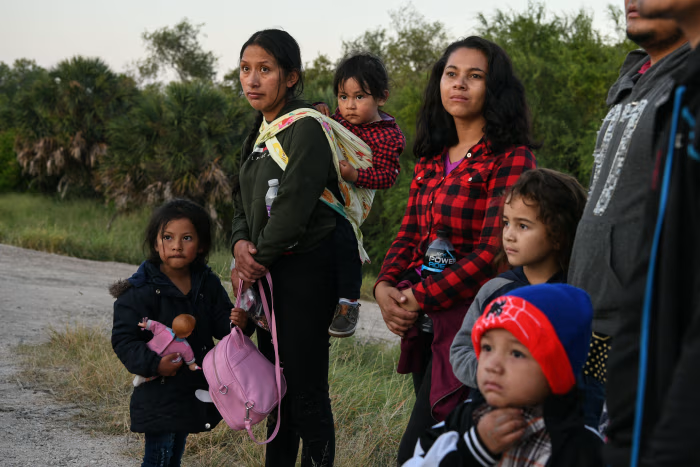
The Trump administration’s decision to direct a growing share of unaccompanied migrant children with active immigration cases toward Texas has triggered concern among immigration lawyers, child advocates and Democratic lawmakers, who fear the transfers could make vulnerable children more exposed to detention and deportation while limiting their access to legal assistance.
Analysis cited by researchers at immigration data platform bklg.org indicates that nearly 80% of unaccompanied children in federal custody who entered immigration court proceedings in July were placed in shelter networks in Texas. The proportion reportedly rose above 90% in August. The figures represent a sharp change from earlier months and have drawn attention because of Texas’s distinctive approach to licensing facilities that care for children in federal custody.
The children involved are among the most vulnerable people in the US immigration system. Many arrived in the country without a parent or legal guardian after experiencing abuse, neglect, abandonment, trafficking or other serious hardships. Once they are referred into federal custody, the Office of Refugee Resettlement, or ORR, within the Department of Health and Human Services, becomes responsible for their care and placement.
The latest figures suggest that hundreds of children with pending immigration proceedings have increasingly been concentrated in Texas. According to the analysis cited in the reporting, 925 children in ORR custody with open immigration court proceedings were based in Texas, with 651 of them transferred there during July and August.

The change has raised questions about why Texas has become the principal destination for so many of these children. Federal officials have not publicly provided a detailed explanation for the sudden increase in transfers.
Immigration advocates argue that location can have a major effect on a child’s ability to understand and navigate the legal system. Immigration proceedings are complicated even for adults, while children appearing before immigration courts often face those proceedings with limited knowledge of US law and, in many cases, without a lawyer.
Nationally, only about 31.7% of children in ORR custody with active immigration court proceedings had a notice of legal representation filed in their cases, according to the research cited in the reporting. In several Texas cities, the reported figures were substantially lower. The proportion was about 17.2% in Houston, 18.6% in El Paso and just 8.7% in San Antonio.
For advocates, the low representation rates are among the most serious concerns surrounding the transfers. Roxana Avila-Cimpeanu, deputy director of the Florence Immigrant and Refugee Rights Project, said concentrating children in Texas could place them in an environment where fewer attorneys are available to represent them.
She warned that children could effectively be placed into a system designed to process immigration cases quickly rather than one focused primarily on ensuring that they understand their legal rights and receive meaningful representation.
The concerns also extend to the facilities where the children are housed. Texas and Florida have taken steps in recent years to prevent state licensing of certain ORR care providers. A 2026 audit by the US Department of Health and Human Services Office of Inspector General found shortcomings in federal monitoring of unlicensed facilities in Texas and Florida, including missed or delayed monitoring visits and problems related to required background checks.
The audit examined 58 unlicensed care-provider facilities in the two states and found that ORR had not completed all of the monitoring visits required during the review period. The inspector general said missed or delayed inspections reduced opportunities to identify failures to comply with background-check requirements and could create risks to children’s health and safety.
The federal government has responsibility for overseeing the children while they remain in ORR custody, meaning the absence of state licensing does not eliminate federal obligations. However, advocates say the lack of state licensing can reduce an additional layer of oversight and create uncertainty about the standards applied to facilities.
Texas’s political environment has also become part of the debate. The state is controlled by Republicans, including Governor Greg Abbott, whose administration has pursued a series of policies supporting stricter immigration enforcement. Democratic Representative Veronica Escobar, who represents part of west Texas, has criticized the transfers and argued that the state’s political leadership is unlikely to challenge federal immigration policies.
The administration’s broader approach to legal representation for unaccompanied children has added to those concerns. In August, federal officials announced plans for a potentially $150 million cooperative agreement with a Houston law firm to provide legal orientation, consultation and representation to eligible children in ORR custody. The firm later withdrew from consideration.
The episode came after existing federal arrangements for legal services had come under increasing pressure. Advocacy groups and Democratic lawmakers have raised concerns that disruptions to legal-service contracts could leave children without continuity of representation at a critical point in their immigration proceedings.
Federal law provides protections intended to help unaccompanied children obtain legal assistance and safeguards against trafficking, exploitation and mistreatment. However, children do not generally receive government-appointed attorneys in immigration proceedings in the same way that defendants in many criminal cases receive court-appointed counsel.
That distinction is especially important for minors who may have possible claims for asylum or other forms of immigration relief. Without effective legal assistance, advocates say, children may struggle to identify the legal protections available to them or to present their circumstances before an immigration judge.
The administration is also seeking contractors for what it describes as emergency intake or influx facilities capable of expanding the federal government’s capacity to receive and care for unaccompanied children. Procurement documents indicate that the facilities are intended to operate nationwide and scale up when referral volumes increase.
The plans have prompted additional questions because the current number of children arriving at the southwest border remains relatively low compared with earlier periods of large-scale migration.
According to the administration’s procurement plans, emergency facilities would be designed to respond rapidly to changes in the number of children referred into federal custody. Contractors could be required to establish facilities and associated services on short timelines, allowing the government to expand its network when necessary.
The proposed facilities could accommodate thousands of children. Officials have described them as contingency infrastructure for potential surges rather than evidence of a predetermined mass detention campaign.
Advocates, however, view the preparations differently. They argue that establishing large facilities while existing shelters have substantial unused capacity raises questions about the government’s longer-term intentions.
Some fear that children could be moved from communities around the country into centralized facilities, particularly in states such as Texas, making it easier for immigration authorities to process cases and arrange removals.
The administration has not publicly confirmed that such a nationwide operation is being planned. The available evidence establishes that children are being transferred to Texas in significantly larger numbers and that federal agencies are preparing additional emergency capacity, but it does not by itself demonstrate that a mass internal apprehension campaign is imminent.
That distinction has become important in the political debate surrounding the policy. Immigration advocates are interpreting the developments as signs of a possible expansion of enforcement, while federal officials describe the emergency facilities as preparations for potential changes in border arrivals.
The situation is also unfolding against the backdrop of the Trump administration’s broader immigration enforcement agenda. Since returning to office, President Donald Trump has made increased immigration enforcement and deportations central elements of his administration’s policy.
For unaccompanied children, however, immigration enforcement intersects with a separate federal responsibility: protecting minors who are in government custody. The government must therefore balance immigration proceedings with obligations concerning children’s safety, welfare and access to legal protections.
The concentration of children in Texas has placed that balance under renewed scrutiny. Advocates argue that the location of a child should not determine whether the child can obtain legal representation or receive adequate protection while pursuing an immigration case.

Government agencies, meanwhile, face the challenge of managing children who enter federal custody while also responding to shifting immigration policies and fluctuating numbers at the southern border.
For the children themselves, the consequences can be significant. A transfer can mean leaving an existing shelter, school environment, community or legal-service provider and entering a new jurisdiction where they may have fewer established relationships. For minors already dealing with the uncertainty of an immigration case, such changes can add another layer of instability.
The debate over Texas therefore extends beyond the question of where children are housed. It touches on how the US government handles minors who arrive without parents or legal guardians, how immigration courts provide access to justice, and what level of oversight should apply to facilities caring for children in federal custody.
As the administration develops its plans for immigration enforcement and emergency shelter capacity, attention is likely to remain focused on whether children transferred to Texas receive adequate care, meaningful legal representation and the protections required under federal law.
For advocates and lawmakers raising concerns, the central issue is whether the government’s growing concentration of unaccompanied children in Texas is primarily an administrative response to current needs or part of a broader strategy for immigration enforcement. Federal officials have yet to publicly provide a comprehensive explanation for the sharp increase in transfers, leaving that question at the centre of the continuing debate.
Related News:
 Immigration Judges Fear Pressure in Trump Era
 US judge dismisses Kilmar Abrego Garcia indictment
 Armed Suspect Attacks Ohio Governor Candidate
 Files Link Andrew to Epstein Dinner After Prison Release
 Melania Trump Epstein remarks spark survivor backlash
 Swalwell Faces Pressure to Quit Governor Race
 Harmeet Dhillon Faces Scrutiny in DOJ Role Debate
 US Labor Department in turmoil after secretary resigns
 Trump DOJ Targets James Comey Again
 Judge Blocks Trump Bid for Arizona Voter Data
 US Court Weighs Fate of TPS for Migrants
 Police Suspect Help in Missing Alice Springs Girl Case
 Judge halts deportation of Yemeni refugees in US
 UK may ban protests amid rising antisemitism fears
 US green card applicants must apply from abroad, DHS says
 Trump’s Revenge Drive Deepens GOP Divide
 Victim says non-custodial rape sentence ‘rock in my face’
 Former ICC prosecutor condemns US sanctions
 Gunman Killed After White House Security Shootout
 Dreyfus Statue Finally Gets Permanent Paris Home
 Trump Orders Signs Criticising Smithsonian Museum
 UN expert urges UK to rethink Israel policy
 Ministers Condemn Far-Right Unrest in Portsmouth
 Turning Point USA Faces Crisis After Kirk Killing
 Miliband Rejects Chief Rabbi’s West Bank Warning
 Patriot Platform Raises Concern Across Britain
 Israel Accused of Undermining Palestinian Life
 UK Urged to Probe US Diplomat Case
 Texas Charges Seven Noncitizens in Voting Crackdown
 French Taxi Driver Cleared in David Lammy Theft Case After Fare Dispute
 Met Police Culture Makes Racial Harm ‘Inevitable’
 Remaining rebel Labour MPs have whip restored
 South African Detained After Neo-Nazi Rally in Australia
 Trump Signs Bill Releasing Justice Department Files on Epstein
 US National Guard Member Killed in DC Shooting
 Trump officials continue false claims after Alex Pretti shooting
 Partial US Government Shutdown Hits Homeland Security Funding
 Thousands Protest ICE Operations in Nationwide US Day of Action
 Thousands Protest ICE in New York Against Trump Deportation Campaign
 NHS Safety Fears as Nurses Cover Doctor Gaps
 Trump at Press Dinner Sparks Tension
 Florida Redistricting Map Sparks Major US Political Battle
 US Charges Sinaloa Governor in Major Cartel Case
 US Court Ruling Reshapes Voting Rights Landscape
 Cartel crackdown raises fears of fresh violence
 US states redraw maps after voting rights ruling
 Asylum deal sparks fears over Syria deportations
 White House Security Case Sparks Political Firestorm
 Trump warns Iran as Middle East tensions surge again
 US ‘Narco Boat’ Strikes Draw Global Outcry
 Afghan Families Left in Limbo Face Risk of Deportation
 Florida Surgeon ‘Devastated’ Over Fatal Surgery Error
 Barrister Criticises Trial After Suicide Case Verdict
 FDA Chaos Deepens as Trump Eyes Makary Exit
 Tulsi Gabbard exits after turbulent intelligence tenure
 DeSantis’s ‘Alligator Alcatraz’ Faces Final Shutdown
 Prosecutor Proposes Law to Combat Election Deceit
 Trump’s Mount Rushmore Speech: A Divisive Anniversary
 New Footage Revives Peter Falconio Mystery
 Ukraine Creates Long-Range Strike Command
 Le Pen’s Popularity Holds Despite Conviction
 Trump Refuses to Sign Housing Bill, But Law Takes Effect
 Westminster Council Threatens Charing Cross Soup Kitchen
 BBC Warned About Missing Clothes of Murder Victim
 Israeli Strike in Southern Lebanon Kills Seven
 Is America Ready for an AOC Presidential Run?
 Cambridge Professor Jason Arday Found Dead at Home
 Ukraine Villagers Demand Answers After Deadly Arms Depot Strike
 Survivor Sues Musk’s xAI Over AI Abuse Images
 Masked Protesters Bring Dover Port Traffic to Standstill
 Councils spend £125m on illegal children’s care
 Trump gives $45,000 holiday gifts to White House aides
 Abusive ex used Tesla to control and harass former partner
 New Mexico Takes Facebook to Trial Over Data Scandal
 Man Arrested in Mississippi Woman’s Death
 Lisa Nandy Calls for Tougher Action on Social Media Doxxing
 Piddington Votes for Symbolic Independence Over Asylum Plan
 Iran School Strike Raises War Crimes Questions, UN Says
 Omar Proposes Bill to Redirect ICE Funding
 Gaza Strike Kills Child and Paramedic