Published: 24 September 2026. The English Chronicle Desk. The English Chronicle Online.
US President Donald Trump has personally welcomed Chinese President Xi Jinping at a military airbase outside Washington, opening a closely watched state visit focused on trade, technology, artificial intelligence and the broader strategic relationship between the world’s two largest economies.
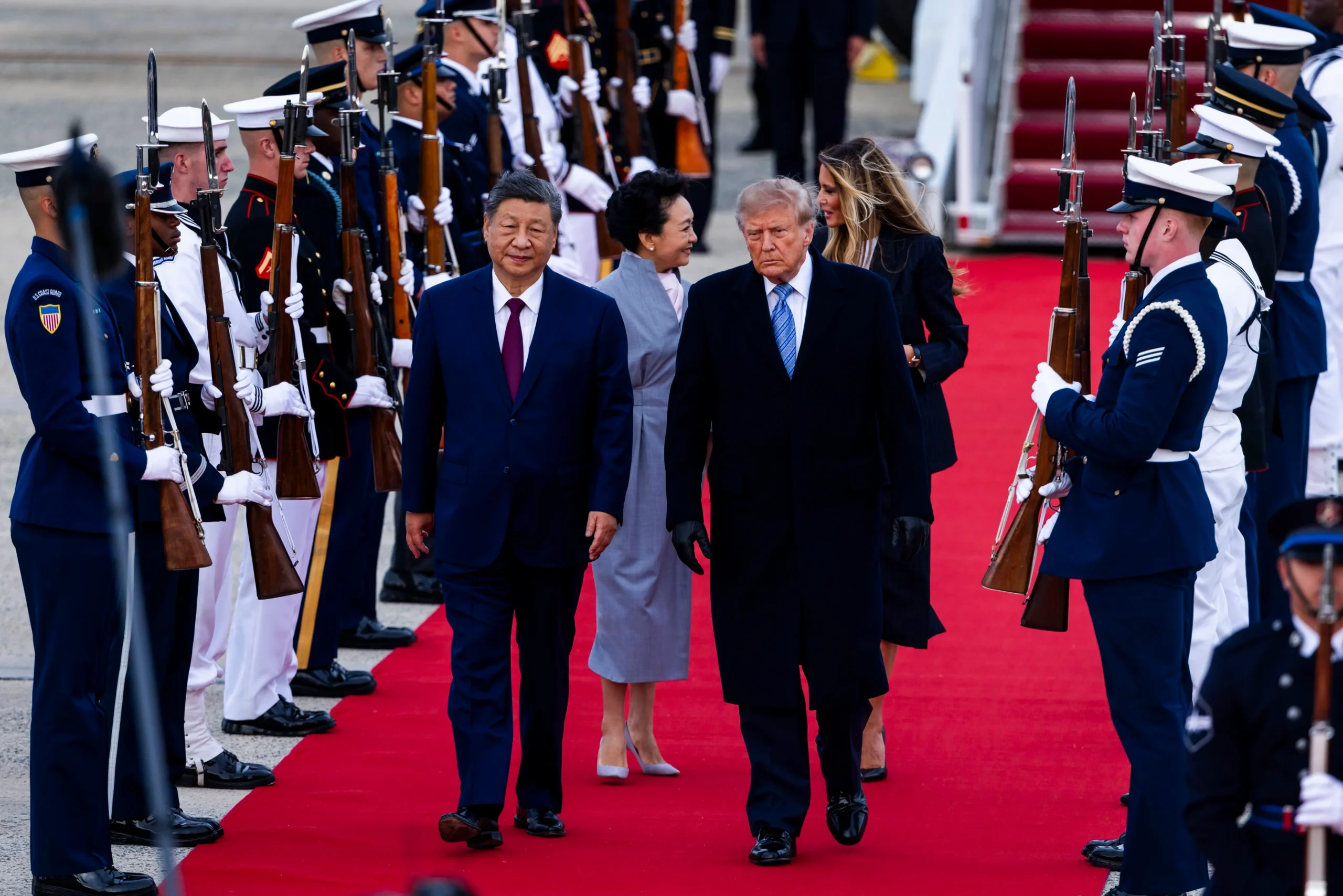
Trump and first lady Melania Trump travelled to Joint Base Andrews in Maryland on Wednesday evening to greet Xi and his wife, Peng Liyuan, as the Chinese delegation arrived in the United States. The unusually personal welcome was accompanied by an elaborate ceremonial display featuring a long red carpet, American and Chinese flags, military personnel, national anthems and a flyover involving two B-1 bombers.
The arrival ceremony highlighted the importance both governments have attached to the visit, which comes at a time when Washington and Beijing remain strategic competitors but are attempting to prevent their economic relationship from deteriorating into another prolonged trade confrontation.
The timing of Xi’s visit is particularly significant because it coincides with the annual United Nations General Assembly in New York. Xi is not attending the UN meeting this year, choosing instead to travel directly to Washington. His decision has drawn attention among diplomats and foreign policy analysts because of the contrast between the large international gathering in New York and the private negotiations taking place between the US and Chinese leadership.

The visit has also produced an immediate economic development. US Treasury Secretary Scott Bessent announced that Washington and Beijing had agreed to extend the temporary trade truce known as the Busan agreement. The arrangement, which had been due to expire, will now remain in place until 10 January.
The extension means the two governments have gained additional time to negotiate their economic differences without immediately returning to the most severe forms of trade retaliation. The agreement does not resolve the underlying disputes between the two countries, but it temporarily reduces the risk of another escalation in tariffs and other trade measures.
Bessent announced the extension after meeting Chinese Vice-Premier He Lifeng earlier on Wednesday. The discussions demonstrated that economic negotiations remain an important part of the relationship even as Washington and Beijing continue to disagree over technology, national security, industrial policy and geopolitical issues.
The trade dispute between the United States and China has affected businesses and consumers around the world because the two countries occupy central positions in global manufacturing, technology and supply chains. Previous rounds of tariffs and retaliatory measures have created uncertainty for companies that rely on international production and trade.
The extension of the agreement therefore provides businesses with a temporary period of greater predictability. However, the arrangement is not a permanent settlement. Major disagreements remain, meaning the possibility of renewed tensions will continue to influence companies and financial markets.
Artificial intelligence is expected to be another major issue during Xi’s visit. Washington and Beijing are competing for leadership in advanced AI, with both governments increasingly treating technological development as a matter of economic strength and national security.
The United States has sought to maintain an advantage in advanced computing, semiconductors and artificial intelligence, while China has invested heavily in domestic technology companies and research. The competition extends beyond commercial applications, because AI is increasingly connected to military capabilities, cybersecurity and strategic decision-making.
Trump has repeatedly presented the AI competition as a contest in which American leadership is essential. His administration has argued that maintaining an advantage in advanced technology will strengthen the US economy and national security.
The White House has invited senior executives from several major American technology companies to a state dinner for Xi. Representatives from leading firms involved in AI, computing, software and consumer technology are expected to participate, underscoring the extent to which technology has become intertwined with US-China diplomacy.
The presence of technology executives also reflects the commercial dimension of the relationship. American companies have significant interests in China, while Chinese firms depend on access to international markets and advanced technologies. Governments in both countries are increasingly imposing restrictions on technologies they consider strategically sensitive.
The Trump administration has argued that the United States must maintain its technological lead, particularly in AI. Trump has publicly rejected some warnings about the risks associated with rapid AI expansion and has instead promoted greater investment in data centres and computing infrastructure.
The president has described AI leadership as closely connected to broader national power, arguing that the country that leads in AI will gain major economic and strategic advantages. China, meanwhile, has made technological self-reliance a major national priority.
The discussions between Trump and Xi are therefore expected to go beyond traditional trade negotiations. Technology restrictions, investment, supply chains and access to advanced computing are likely to form part of the broader strategic conversation between the two governments.
Taiwan is another major issue in the US-China relationship, although the immediate discussions may focus more heavily on economic and technological matters. Beijing regards Taiwan as part of China and has repeatedly opposed US military and political support for the island. Washington maintains a longstanding relationship with Taiwan and has continued to provide support while following its established policy framework on cross-strait relations.
The issue remains one of the most sensitive potential flashpoints between Washington and Beijing. Any deterioration in relations over Taiwan could have consequences far beyond the two countries, affecting global markets, shipping routes, technology supply chains and regional security.
The ceremonial welcome for Xi also carried diplomatic significance. US presidents do not typically travel to Joint Base Andrews to personally greet visiting foreign leaders, making Trump’s decision to do so a visible gesture of respect.
The reception included a 30-metre red carpet and a formal military flyover. The ceremony was designed to emphasise the importance of the Chinese president’s visit and to provide a highly public demonstration of diplomatic hospitality.
At one point during the flyover, Trump visibly reacted to the noise from the aircraft while standing beside Xi. The moment quickly attracted attention online, although it was not included in later edited highlights released by Trump’s aides. Xi remained composed during the ceremony.
Melania Trump also emphasised the importance of treating the Chinese delegation respectfully. She said that because Xi was visiting American soil, the United States should welcome him with respect.
The emphasis on ceremony comes after Trump himself received a high-profile reception during an earlier visit to China. Xi’s visit to Washington is expected to include several formal events intended to reciprocate that treatment.
The leaders are expected to hold discussions during the two-day visit covering the trade relationship and wider geopolitical questions. The outcome could influence the direction of US-China relations for months, particularly as the temporary trade truce now has a new deadline.
For Trump, the visit provides an opportunity to demonstrate that economic competition with China can coexist with direct diplomacy. His administration has taken a firm position on American trade and technological interests, while also seeking agreements that prevent tensions from escalating uncontrollably.
For Xi, the visit offers an opportunity to engage directly with the US president and protect China’s economic interests while maintaining Beijing’s positions on technology, trade and sovereignty issues.
The extension of the Busan agreement is likely to be one of the most immediate practical outcomes. Businesses in both countries now have additional time before the temporary arrangement expires, potentially allowing negotiators to work towards a broader agreement.
However, the underlying relationship remains complicated. The United States and China compete across multiple areas, including artificial intelligence, semiconductors, manufacturing, military technology and global influence. At the same time, their economies remain deeply connected, creating incentives for both governments to maintain channels for negotiation.
The visit also comes as countries around the world attempt to manage the consequences of US-China competition. Many governments depend on trade with both powers and are reluctant to be forced into choosing one side. Disputes between Washington and Beijing can affect energy markets, technology supplies, manufacturing costs and international investment decisions.
The absence of Xi from the UN General Assembly has added another layer to the diplomatic significance of his Washington visit. Rather than participating in the wider gathering of world leaders in New York, Xi has chosen to spend his time in direct talks with the American administration.
That decision underlines the importance Beijing places on the bilateral relationship with Washington. It also suggests that economic and strategic negotiations between the two powers remain a central element of international diplomacy.
The immediate extension of the trade truce provides a temporary period of stability, but the larger questions remain unresolved. Both governments still face disagreements over trade balances, technology restrictions, industrial policy and national security.

The Trump-Xi meeting will therefore be closely watched for signs of whether the two countries can turn the temporary truce into a more durable framework for managing their competition. Any agreement would have implications not only for American and Chinese businesses but also for global supply chains and the wider international economy.
For now, the red-carpet welcome and the extension of the trade agreement have created a more cooperative opening to Xi’s visit. The symbolism of the ceremony, however, should be viewed alongside the substantial disagreements that continue to define US-China relations.
As the two leaders begin their talks, the central challenge will be balancing competition with cooperation. Trade, artificial intelligence and technology have become increasingly connected to national security, while Taiwan and other geopolitical disputes remain potential sources of tension.
The extension of the trade truce gives Washington and Beijing additional time to negotiate. Whether that period ultimately produces a lasting economic understanding or simply postpones another confrontation will depend on the decisions made during the negotiations that follow the summit.
Related News:
 AI Takes Centre Stage in Trump-Xi Talks
 US Awaits Iran Reply on New Ceasefire Proposal
 Hormuz Talks Near Critical Stage
 China mine blast death toll rises to 90
 UK firms accused of ‘AI washing’ boom
 Trump Hardens Canada Trade Stance as Talks Stall
 Saudi Arabia Shuts Oil Pipeline After Drone Attack
 Indonesia Receives First Aircraft Carrier
 Trump Eyes Major Belarus Fertiliser Deal Amid Canada Trade Dispute
 Iran Rejects Claims of Shift in US Talks
 US Clears Nvidia AI Chip Sales to China in Policy Shift
 UK New Car Discounts Near £6,000 as Prices Are Slashed
 ABC Staff Strike Over Pay and AI Concerns
 Apple at 50: Three Products That Changed How We Live
 Artemis II Returns After Historic Moon Flyby
 Europe EV Demand Surges as Fuel Prices Rise
 Robots Outpace Humans in Beijing Half-Marathon
 Reform UK funding: mystery billionaire revealed
 Southeast Asia Turns to Russia Amid Energy Crisis
 Spirit Airlines shuts down after 34 years amid crisis
 Trump approval plunges amid Iran war fears
 Trump Threatens UN Budget Cuts as US Pushes ‘Trade Over Aid’ Agenda
 Canadian Fiddler Sues Google Over AI Defamation Claim
 Doomsday Clock Nears Midnight Amid Global Crises
 Trump: Preventing Nuclear Iran Is ‘The Only Thing That Matters’
 Europe Weighs Hormuz Navigation Fee Plan
 Houthis Strike Saudi Arabia as Middle East Tensions Rise
 Canada to Match Trump’s 50% Tariffs Dollar for Dollar
 Shein targets $27bn valuation in Hong Kong debut
 China recalls millions of cars over hidden door handles
 Firms on both sides fear damage from US-Canada trade war
 Trump announces major US oil deal with Venezuela
 UK Risks Falling Behind in AI Race
 Europe Faces Winter Gas Supply Anxiety
 Turkmenistan Begins Fixing Major Methane Mega-Leaks
 Dutch Bank Moves 86 Tonnes of Gold to London
 London Launches First Self-Driving Taxis
 Trump Calls Iran War ‘Small Potatoes’ Despite US Deaths
 Australia gives users control over social media algorithms
 Oil nears $100 as Saudi attacks shake markets
 Trump Pledges $5,000 if Republicans Win Midterms
 North Korea Expands Uranium Facility at Yongbyon
 Anthropic Blocks AI Misuse Linked to Weapons Threats
 AI CEOs Call for Slower Development
 Why AI Doomsday Warnings Failed to Slow the Race
 Japan Raises Rates to 31-Year High
 South Korea Rules Out Military Role in Iran War
 Tom Watson Takes Senior Role at Palantir
 Middle powers seek new alliances amid Trump era
 Macron and Carney deepen France-Canada ties
 Nvidia chief rejects AI extinction fears
 Trump’s UN Speech Faces Global Scrutiny
 British Columbia Sues OpenAI Over School Shooting
 UK Plans New Centre to Counter Information Warfare
 Virgin Trains Moves Closer to Challenging Eurostar Monopoly
 Britain deploys RAF specialists to assist Belgium with drone threats
 Canada Passes Carney’s First Budget in Tight Parliamentary Vote
 American Mother Extradited From UK to U.S. on Murder Charges
 China Halts Nvidia H200 Chips Despite US Export Approval
 Trump Fed bid heads to Supreme Court
 BT Names New Openreach Chief Amid Major Fibre Expansion
 The Kill Line: A Shifting Vision of the American Dream
 Oil Slides, Stocks Jump on Trump Peace Signals
 Artemis II: Humanity Returns to the Moon After Decades
 UK Stands Firm on Falklands Amid US Rift
 Oil Prices Surge Above $120 Amid Iran Blockade Fears
 Trump orders US troop pullout from Germany
 DeepMind Staff Vote to Unionize Over US Military Contract
 Global Conflict Hits Home As Bullock Warns Of Economic Pain
 Fear and Betrayal: The Chilling Case of Kouri Richins
 Kevin Warsh sworn in as Fed chair amid economic backlash
 Maldives Cave Diving Tragedy Raises Safety Alarm
 Is JD Vance the Ultimate Fall Guy for Trump’s Shaky Iran Deal?
 Trump Faces Backlash Over $2bn Earnings Since Return
 Powerful 7.7-Magnitude Earthquake Hits Eastern Indonesia
 AI Loss of Control Incidents Nearly Double
 Billionaire Chris Rokos poised to leave UK
 JPMorgan Boss Warns Against UK Bank Tax Rise
 US Networks Suspend Trump White House Pool Coverage
 MPs Defend UK Economic Watchdog Against Critics